

Emerging Technologies

Human Oversight with Chinese Characteristics: Lethal Autonomous Weapons in the CCW GGE
Editors' note: This is the second post in a series dedicated to Lethal Autonomous Weapons Systems (LAWS) and the questions of human oversight and legal accountability under international humanitarian law. Previous post focused on LAWS. The rapid rise of AI in warfare...
The Evolving Architecture of the International Law of Military Operations: Mapping the Future of Legal Research in Armed Conflict
International law governing military operations is undergoing a period of profound transformation. Rapid technological innovation including artificial intelligence (AI), the expansion of conflict into new operational domains such as cyberspace and outer space, the...
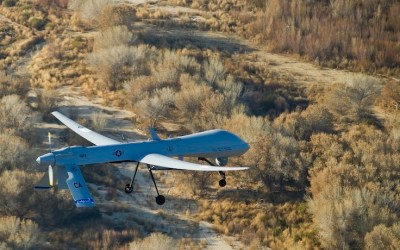
Legal Accountability for AI-Driven Autonomous Weapons
Editors' note: This is the first post in a series dedicated to Lethal Autonomous Weapons Systems (LAWS) and the questions of human oversight and legal accountability under international humanitarian law. As algorithms begin to make decisions that determine who lives...
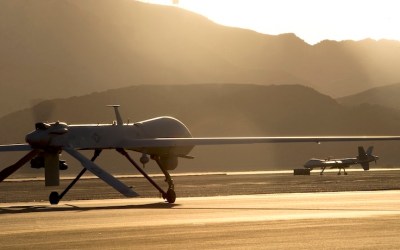
How Lessons Learned from the CCW Can Help Guide the Regulation of AWS
Autonomous weapon systems have become a familiar set piece in contemporary International Humanitarian Law (IHL) debates. The questions are by now well-rehearsed: does the existing law of armed conflict already regulate these systems; can algorithms reliably...

Future of Warfare and Law Series – The Law and LAWS
Editors’ note: This post is part of a series featuring topics discussed during the Third Annual Future of Warfare and the Law Symposium. Christina Colclough’s introductory post is available here. In May of 2025, the third Future of Warfare and the Law Symposium...
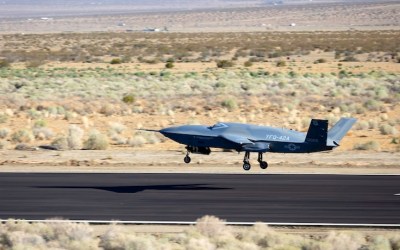
Future of Warfare and Law Series – Addressing Uncertainty in the Use of Autonomous Weapons Systems
Editors’ note: This post is part of a series featuring topics discussed during the Third Annual Future of Warfare and the Law Symposium. LTC Christina Colclough’s introductory post is available here. The Future of Warfare and the Law Symposium, which took place in May...
Future of Warfare and Law Series – Introduction
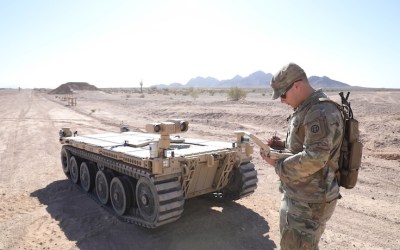
Editors’ note: This post introduces a series featuring topics discussed during the Third Annual Future of Warfare and the Law Symposium. This past May, a community of military legal scholars and technical experts met at the Third Annual Future of Warfare and the Law...

Military Use of Biometrics Series – The Body Does Not Lie, or Does It? Towards a Disability-Inclusive Approach to Military Biometrics
Editors’ note: This post is part of a series relating to the law applicable to the military use of biometrics. It is drawn from the author’s article-length work, “The Military Fantasy of Biometrics: Neglecting the Risks of the Normalizing of Bodies During Armed...

Military Use of Biometrics Series – Israel’s Use of AI-DSS and Facial Recognition Technology: The Erosion of Civilian Protection in Gaza
Editors’ note: This post is part of a series relating to the law applicable to the military use of biometrics. It is drawn from the author’s article-length work, “The Use of the ‘Lavender’ in Gaza and the Law of Targeting: AI-Decision Support Systems and Facial...

Military Use of Biometrics Series – Necrometrics and Contextualising Human Remains in Armed Conflict
Editors’ note: This post is part of a series relating to the law applicable to the military use of biometrics. It is drawn from the author’s article-length work, “Biometrics to Necrometrics: What the Dead Can Tell Us About War” appearing in the Journal of...

Military Use of Biometrics Series – Introduction
On 7-8 May 2024, a conference brought together a group of scholars and practitioners to discuss the law applicable to the use of biometrics by armed forces. The conference, which took place in Tallinn, Estonia, was organized by the War Studies Research Centre (WSRC)...

When Belligerent Drones Knock on Neutral Waters: Archipelagic Sea Lanes in the Age of Kamikaze Systems
In 2024 to 2025, escalating tensions between Israel and Iran saw waves of missiles and drones cross regional skies. Jordan, a neutral (non-belligerent) State, intercepted many of these projectiles as they entered its airspace. From an international law perspective,...
Unleashing Drone Dominance: Rethinking Department of Defense Weapons Reviews
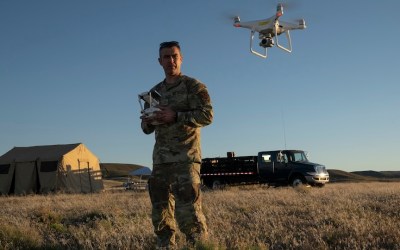
In November 2001, the United States conducted what is considered to be the first ever armed drone attack in Afghanistan. Over the next twenty years, the United States dominated the production of large unmanned systems that cost millions of dollars each to produce. In...
Diverging Standards in the Legal Review of LAWS
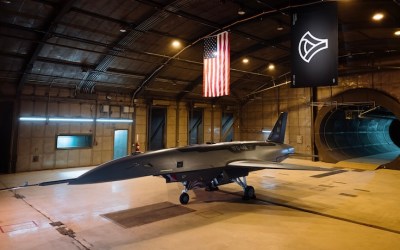
In May 2025, Anduril Industries publicly unveiled Fury (YFQ-44A), a next-generation autonomous aircraft currently under evaluation by the U.S. Air Force as part of its Collaborative Combat Aircraft (CCA) program. Fury takes its first test flights this summer. The goal...

Brian Christian’s The Alignment Problem: A Cautionary Tale to Proponents of LAWS
Brian Christian’s The Alignment Problem: Machine Learning and Human Values is an accessible, comprehensive look under the hood of contemporary machine learning. The title suggests, and Christian states, “This book is about machine learning and human values: about...

Interning a Hacker
Recently, at a workshop at Harvard Law School, I grappled with the question of internment in any international armed conflict (IAC) in the near future. It is a question some are uncomfortable with, although the concept of internment remains legally available under...
How Meaningful is “Meaningful Human Control” in LAWS Regulation?
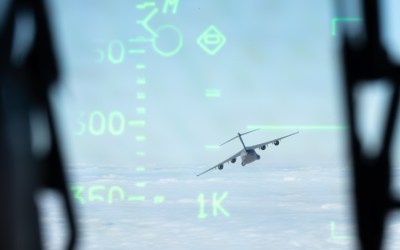
In recent years, the concept of “meaningful human control” (MHC) has emerged as a key consideration in regulating lethal autonomous weapon systems (LAWS). This standard seeks to ensure substantial human involvement in overseeing and directing the operational functions...

Ukraine Symposium – The Continuing Autonomous Arms Race
As Russia’s invasion of Ukraine drags into a grueling war of attrition, both sides are intensifying efforts to achieve a battlefield breakthrough with technological innovation. The invasion has sparked a rapid proliferation of low-cost drones and robotic systems that...
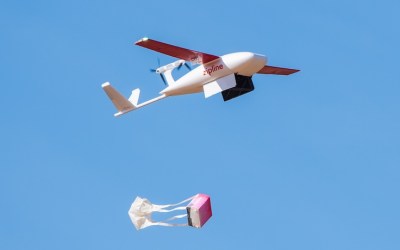
When Technology Meets Humanity: Harnessing New and Emerging Technologies at the End of Conflict
New and emerging technologies offer significant contributions toward facilitating the end of conflict and protecting and easing the effects of conflict on the civilian population. Over the past decade and more, security and legal scholars have devoted enormous...
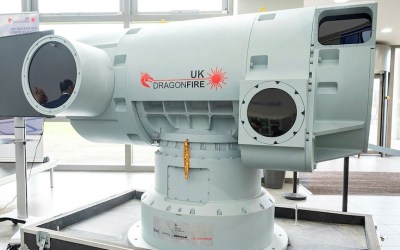
The Drone Threat, the Laser Response, and the Law – Part II
The first part of this two-part post, described and explained the weapons law principles and rules that apply to suicide or kamikaze drones. It also set forth and explained applicable targeting law principles and rules and addressed the legality of mass attacks...

The Drone Threat, the Laser Response, and the Law – Part I
In conflicts during the last few years, unmanned air weapons, commonly referred to as drones, have increasingly been used to undertake attacks of ground targets. These attacks have recently involved large numbers of these drones, often directed at multiple targets....
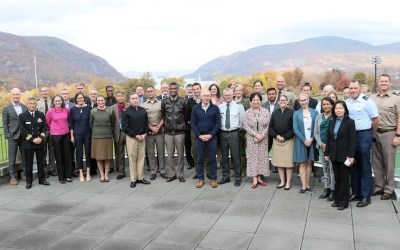
Lieber Workshop 2024: International Law and the Future of Multi-Domain Operations in the Indo-Pacific
Editors’ note: The views expressed in this post are those of the authors and not necessarily those of any other workshop participants. From October 28 to 31, 2024, the Lieber Institute for Law and Warfare hosted its eighth annual Lieber Workshop at its institutional...
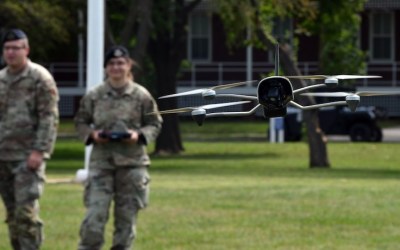
Electronic Warfare and the Law of Armed Conflict
Earlier this year, we had the pleasure of participating in the “Future of Warfare and the Law Symposium” at U.S. Army Futures Command in Austin, Texas. The conference, which was co-sponsored by Army Futures Command, the Strauss Center for International Security and...
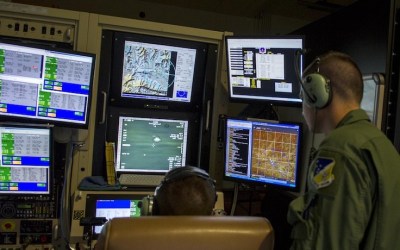
Lawfully Using Autonomous Weapon Technologies
Editor's note: This post is derived from the author’s recently published book Lawfully Using Autonomous Weapon Technologies, published with Springer Press. We, members of the human race in 2024, already live in a world saturated with artificial intelligence (AI). Like...

Russia’s Alleged Nuclear Anti-Satellite Weapon: International Law and Political Rhetoric
The development and testing of anti-satellite weapons (ASATs), as well as debates concerning the legal and policy implications of ASAT testing and use, have existed since soon after the dawn of the Space Age. The centrality of these issues has waxed and waned over...

Israel-Hamas 2024 Symposium – AI-Based Targeting in Gaza: Surveying Expert Responses and Refining the Debate
The reported use of artificial intelligence-enabled decision-support systems (AI-DSS), in particular the Gospel and Lavender, by the Israel Defense Forces (IDF) in their military operations in Gaza has been controversial. Allegedly, these two systems are used to...
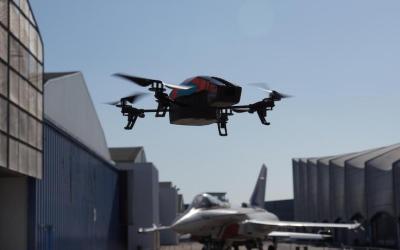
State Submissions on the Legal Review of AWS and Possible Good Practices
The review of weapons, means, and methods of warfare for compliance with international law has attracted significant attention during the international debate about the regulation and use of autonomous weapon systems (AWS). Legal reviews have been cited as one tool...
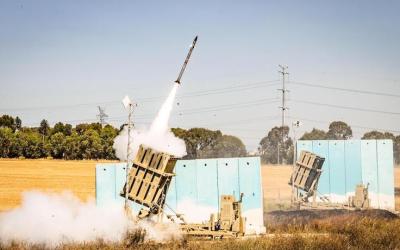
Israel – Hamas 2024 Symposium – Beyond the Headlines: Combat Deployment of Military AI-Based Systems by the IDF
It is well established that new and emerging technologies impact how States conduct military operations. Recently, we have seen notable innovations in the development and deployment of autonomous weapon systems (AWS), military use of cyberspace, and many more....

Lieber Studies Big Data Volume – Big Data and Armed Conflict – Legal Issues Above and Below the Armed Conflict Threshold
Editor’s note: This is the first post in a symposium addressing themes from a new book entitled Big Data and Armed Conflict: Legal Issues Above and Below the Armed Conflict Threshold, the ninth in the Lieber Institute’s Lieber Studies series with Oxford University...

The Influence of Weaponry on the Jus ad Bellum
In an Articles of War post last week, Professor Terry Gill discussed his new book, The Use of Force and the International Legal System, co-authored with Dr. Kinga Tibori Szabó. It is a fascinating journey through the jus ad bellum, the law governing the use of force...

Israel – Hamas 2024 Symposium – Algorithms of War: Military AI and the War in Gaza
January brought with it a new phase in the war in Gaza. Earlier this month, Israeli Defense Minister Yoav Gallant declared that the “intense combat” stage of the war had ended, at least in the northern region of the Gaza Strip, with thousands of reservists returning...

Same but Different: Legal Review of Autonomous Weapons Systems
Editors’ Note: This post is derived from a presentation given at the 2023 Israel Defense Forces Military Advocate General’s 4th International Conference on the Law of Armed Conflict. In 2024, a decade will have passed since an inaugural UN Meeting of Experts initiated...

Year Ahead – The U.S. DoD Replicator Initiative and the Acquisition Process for Autonomous Weapons
On August 28, 2023, U.S. Deputy Defense Secretary Kathleen Hicks unveiled the Replicator Initiative (Replicator), which is “aimed at directly countering the People’s Republic of China’s [PRC] rapid buildup of its armed forces.” Under this initiative, the Department of...

Year Ahead – The Future is at the Edges: Essential Themes for 2024
2023 has witnessed in real-time, and often on social media, the brutality inherent in the conduct of hostilities. Faster visibility, endless opportunities for global communications, and algorithmic skewing expedite simple narratives with winners and losers, heroes and...
Year in Review – 2023
2023 has witnessed not only a continuation of ongoing conflicts, including those in Ukraine and Nagorno-Karabakh, but also the emergence of new hostilities. A notable addition to the global security landscape was the renewed armed conflict between Israel and Hamas....

Digitalize It: Digital Evidence at the ICC
The International Criminal Court (ICC, or the Court) first accepted digital evidence in a legal proceeding in 2013 during the prosecution of Al Faqi Al Mahdi for ordering the destruction of the Timbuktu shrines and mosques in Mali. Since that case, there has been...
U.S. AFRICOM, CENTCOM, EUCOM Legal Conference 2023
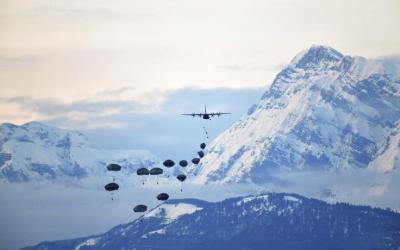
In April 2023, three geographic combatant commands, U.S. Africa Command (USAFRICOM), U.S. Central Command (USCENTCOM), and U.S. European Command (USEUCOM) joined efforts to conduct the “ACE” Legal Conference, the first since the COVID-19 pandemic. The conference...

U.S. Support to the ICC (in AI-Generated Iambic Pentameter)
I never imagined I would submit for publication a poem from Chat-GPT about U.S. policy toward the International Criminal Court (ICC). But that is what I am doing today. The background is as follows. Each day, we hear more about uses of generative artificial...

Balloons are Not Always Joyful: The Legality of Downing the Chinese Spy Balloon
On January 28, 2023, a Chinese high-altitude balloon (HAB) entered U.S. airspace near Alaska and, after transiting Canadian airspace, continued its voyage from the west to the east coast. On February 4, 2023, the United States shot down the HAB over the territorial...

Ukraine Symposium – Field-Modified Weapons under the Law of War
Combatants in armed conflict may choose to modify weapons in the field for a variety of reasons. They may modify them to improve their reliability. They may alter them to increase their range or accuracy. Or they may adapt them to novel purposes. During the...

A Digital Red Cross: What Would It Defend Against?
On November 18, 1991, after enduring a three-month artillery assault, the city of Vukovar in Croatia fell to what was then known as the federal Yugoslav People’s Army (JNA) and Serb paramilitary forces. After JNA units took control of a hospital where hundreds of sick...

Ukraine Symposium – What’s in a Name? Getting it Right for the Naval “Drone” Attack on Sevastopol
Editors’ Note: As part of our 2023 Year Ahead series, our Board of Advisors member Prof. Dr. Wolff Heintschel von Heinegg presciently identified legal issues concerning maritime drones as a subject to watch this year. It did not take long for the field to respond. Our...
Ukraine Symposium – The “I Want to Live” Project and Technologically-Enabled Surrender
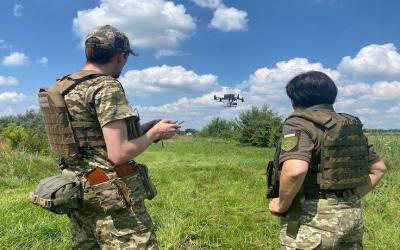
In their ongoing armed conflict, the Russian Federation and Ukraine have engaged in sustained information campaigns using leaflets, social media posts, radio appeals, text messages, and television spots to provoke surrenders. Further leveraging modern communications...
Year Ahead – Emerging Technologies and the Collection of Battlefield Evidence
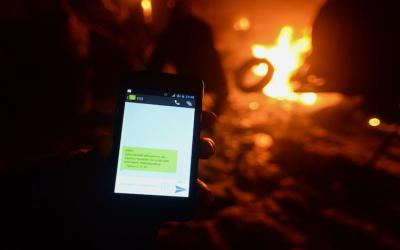
In a recent series of posts on responsible artificial intelligence (AI), various authors (including Chris Jenks) have discussed the role of “responsibility” in the context of using of AI enabled systems, including weapon systems, on the battlefield. In each of these...

Year Ahead – The Legal Status of Unmanned Maritime (Naval) Systems: A Never-Ending Story?
An international workshop held at the U.S. Naval War College in Newport, R.I., from 20 to 21 March 2012, was to discuss the legal status of unmanned maritime systems (UMS) operated by the regular armed forces.[i] The result was not necessarily conclusive. Since then,...

Programming Systems Like Soldiers: Using Military Control Mechanisms to Ensure AWS Are Operated Lawfully
Time is overdue for moving on from discussing whether autonomous weapons should be banned to looking at how to ensure autonomous weapon systems (AWS) are used in a manner that complies with the law of armed conflict (LOAC). This post illustrates that although...

Coding the Law of Armed Conflict: First Steps
[Editor’s note: The following post highlights a subject addressed in the Lieber Studies volume The Future Law of Armed Conflict, which was published 27 May 2022. For a general introduction to this volume, see Professor Matt Waxman’s introductory post.] Killer...

The Law of Armed Conflict in 2040
In the summer of 2020, the Lieber Institute team and I convened a workshop at West Point titled “LOAC 2040.” We invited a group of law of armed conflict (LOAC) scholars and practitioners from around the world, and with a range of perspectives, to consider how that...
Augmented Reality Battlefield
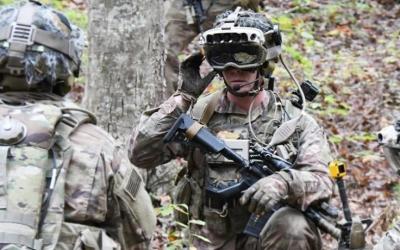
States are prioritizing measures to enhance soldiers’ situational awareness during military operations, including the development of augmented reality capabilities. Augmented reality, as distinguished from virtual reality, superimposes digital content on a live view...

New Edition of The Commander’s Handbook on the Law of Naval Operations
The Stockton Center for International Law (SCIL), U.S. Naval War College (NWC), recently completed a 2-year effort, in coordination with the U.S. Navy, U.S. Marine Corps, and U.S. Coast Guard, to update The Commander’s Handbook on the Law of Naval Operations (NWP...
Hunter 2-S Swarming Attack Drones: Legal & Ethical Dimensions
Halcon, a defense company based in the United Arab Emirates, unveiled its aerial fleet of swarming drones—Hunter 2-S—at the Unmanned System Exhibition and Conference in Abu Dhabi on February 21, 2022. The small-sized Hunter 2-S modular launching system is the latest...
The Law and Character of War in 2035
In fall of 2020, the Lieber Institute for Law and Warfare at West Point joined a U.S. Army Futures Command (AFC) multi-year study on the changing character of warfare. The study has convened three times annually since. Its purpose is to predict and identify...
Deepfake Technology in the Age of Information Warfare
Prior to its invasion of Ukraine, there were speculations that Russia was planning to produce a graphic fake video showing a Ukrainian attack as a pretext for an invasion. Although this “false flag” operation did not play a major role in the end, deepfake technology...
Reentering the Loop
The warfighting advantages of using lethal autonomous systems, and the potential costs of not using them, seem to guarantee their role in future armed conflict. This post argues that optimizing their effectiveness involves not only improving their independent...
Why Binding Limitations on Autonomous Weapons Will Remain Elusive
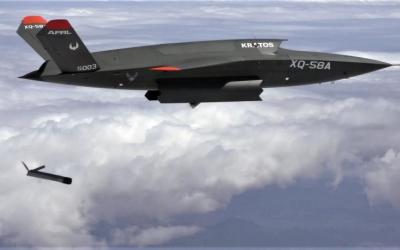
Recent calls to abandon existing and ongoing legal processes to develop regulations for autonomous weapons should be evaluated cautiously or even suspiciously. This post proposes a more productive path toward effective regulation and important international consensus...

Holding Autonomy to Account: Legal Standards for Autonomous Weapon Systems
The March 21 UN Panel of Experts on Libya report, citing the use of an autonomous armed drone by Turkish-backed Government of National Accord Affiliate Forces to attack retreating Hafter-Affiliated Forces in Libya, suggests the prospect of weapons with autonomous...

When Corporations Take Offensive Measures Against States
Cyberattacks are increasingly inundating the private sector, and most States are unable or unwilling to provide adequate protection against these attacks. To mitigate this challenge, numerous corporations acknowledge that they have engaged in some form of active cyber...
The Kargu-2 Autonomous Attack Drone: Legal & Ethical Dimensions
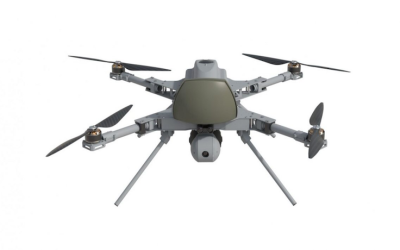
In March 2021, a UN Panel of Experts on Libya reported a possible use of lethal autonomous weapons systems—such as the STM Kargu-2—which “were programmed to attack targets without requiring data connectivity between the operator and the munition: in effect, a true...

Technology, Humanity, and the End of War
The role of new technologies in targeting—including GPS-guided weapons, battle networks, collateral damage estimation methodology (CDEM), cyber, drones, and autonomous weapons—has been the focus of extensive analysis by security and legal scholars. But this...

The Future Character of War and the Law
In 2018, then Army Chief of Staff General Mark Milley wrote that socio-economic, political, and technological changes will “revolutionize battlefields unlike anything since the integration of machine guns, tanks, and aviation which began the era of combined...

A Pacifist-General’s Plan to Win America’s Next War
I’m not an absolute pacifist in the true sense of the word, but I’m about as close as you can get. I firmly believe in using military force only as a last resort. My view is shaped by my experience as both a soldier and lawyer. Most soldiers who have been in combat...

Biometrics on the Battlefield
We use biometrics on a daily basis. You need only think of unlocking your phone with your fingerprint, using iris recognition to pass through airport security, or the biometrics integrated into your passport. Considering the possibilities this technology...

NATO in Outer Space: A Domain Too Far?
This post examines whether Article 5 of the North Atlantic Treaty is applicable to armed attacks in outer space. NATO nations have recently recognized outer space as a new operational domain for the Alliance. Although the drafters of the North Atlantic Treaty...

Space Power, Space Force, and Space Law
Space is a unique operational domain not only due to its physics, but also due to its legal regime. Although Space Power, the inaugural doctrinal manual of the U.S. Space Force, does not focus on legal issues in and of themselves, it does mention at least one...

Cyber Operations and The Imperfect Art of “Translating” the Law of War to New Technologies
Since the inception of combat as an organized endeavor, humans have innovated new means and methods of warfare to gain advantage over their adversaries. Some of these innovations have been subtle. Others have been far more impactful and transformative,...

“DEEPFAKES” AND THE LAW OF ARMED CONFLICT: ARE THEY LEGAL?
The use of misleading “deepfakes” has risen dramatically across the globe. As with so much of emerging technology, deepfakes will inevitably become a part of armed conflict. While perfidious deepfakes would almost certainly violate the law of armed conflict, those...

Will Autonomy in U.S. Military Operations Centralize Legal Decision-making?
The growth of machine learning tools in military operations raises new questions about where the most critical decision points are located. Are the most important political, operational, and legal decisions made out in the field, where the tools are used, or in...
