

Articles of War
The “Obligation” of States to Call for the Respect of IHL in Case of Violations
There are two bases in international law under which there is a discussion of an obligation of States to intervene and to call for the respect of international humanitarian law (IHL) rules in face of their violation: under particular international law, in the context...
featured post
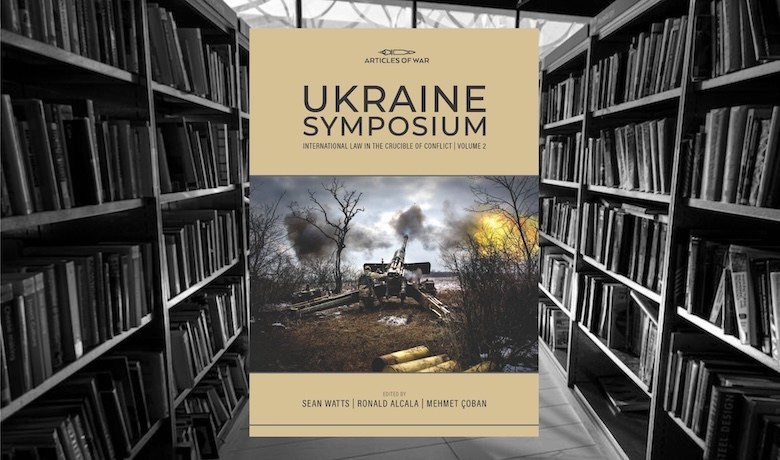
Ukraine Symposium – International Law in the Crucible of Conflict, Volume 2
When we began our Articles of War series on the Ukraine-Russia war over four and a half years ago, we hoped to provide readers timely and fine-grained analysis of the challenges the conflict presented to the international security system and the legal regimes that...

Lieber Studies Non-State Actor Attribution Volume Series – Defining an “Insurrectional Movement”
Editors’ note: This post appears as an entry in a series dedicated to Dr Jennifer Maddocks’ monograph, Attribution of Non-State Actor Conduct during...
Ukraine Symposium – International Law in the Crucible of Conflict, Volume 2
When we began our Articles of War series on the Ukraine-Russia war over four and a half years ago, we hoped to provide readers timely and...

Lieber Studies Non-State Actor Attribution Volume Series – Blowing the Dust Off Article 9 of ARSIWA: Some Clarity and Some Questions
Editors’ note: This post appears as an entry in a series dedicated to Dr Jennifer Maddocks’ monograph, Attribution of Non-State Actor Conduct during...
Lieber Studies Non-State Actor Attribution Volume Series – Shadow Warfare, State Attribution and Substantial Involvement
Editors’ note: This post appears as an entry in a series dedicated to Dr Jennifer Maddocks’ monograph, Attribution of Non-State Actor Conduct during...

Lieber Studies Attribution of Non-State Actor Conduct Volume – Attribution of Non-State Actor Conduct During Armed Conflict
Editors' note: This post appears as an entry in a series dedicated to Dr Jennifer Maddocks' monograph, Attribution of Non-State Actor Conduct during...
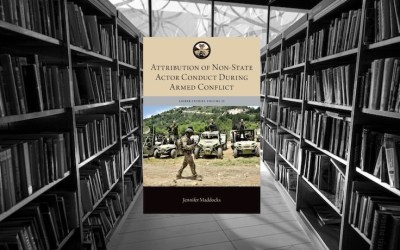
Lieber Studies Attribution of Non-State Actor Conduct Volume – Series Introduction
With this series we are proud to showcase the work of our former colleague Dr. Jennifer Maddocks. While an Assistant Professor with the United...
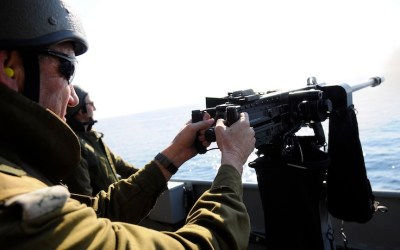
Maritime Blockade and its Starvation Effect: A Key Material Element in the Crime of Genocide?
In modern terms, a maritime blockade can be defined as “a belligerent operation intended to prevent vessel traffic from all States from entering or...
State-Criminal Enterprise
Criminal enterprises, once primarily associated with localized crime, are increasingly becoming a destabilizing force beyond national borders. A...
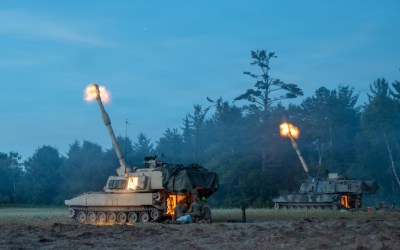
Federated Front: AI-Assisted Targeting, the Rendulic Rule, and Multi-Domain Operations
Consider the following scenario in the not-so-distant future: the Suwałki Gap, Autumn, 203X. In a desperate test of the North Atlantic Treaty’s...

Rethinking Proportionality in the Cloud Age: Reverberating Effects of Attacks on Data Centers
Few issues have attracted more attention in contemporary targeting law than reverberating effects from attacks. Much discussion has focused on...

Compliance by Design V: LOAC in the Israeli Defense Industry
Editors’ note: This is the tenth post in a series dedicated to Lethal Autonomous Weapons Systems (LAWS) and the questions of human oversight and...
How Should Military AI Be Evaluated Under IHL?
Artificial intelligence (AI) is becoming an integral part of military operations. AI-enabled decision-support systems (AI-DSS) support intelligence...
