

Dual-Use Objects and Dual-Purpose Attacks
Editors’ note: This post highlights work in the author’s recent chapter, “Objective and Subjective Tests for Determining Violations of the Law of Targeting: The Unreasonable Commander and the Guilty Mind,” appearing in Volume 27 of the Yearbook of International Humanitarian Law.
The recent conflicts in Ukraine and Iran have prompted debate about the legality of directing attacks against so-called “dual-use” objects, that is, objects which have both civilian and military uses. This is despite (or perhaps because of) the fact that “dual-use” is not a recognized concept in the law of armed conflict (LOAC). However, such attacks could also be analysed under the more developed law on dual-purpose attacks, which has received comparatively little attention, but which has important implications both for State responsibility and for the personal liability of commanders.
This post discusses concepts analysed in greater detail in my chapter in the latest edition of the Yearbook of International Humanitarian Law, which considers what combination of objective and subjective tests are used to determine violations of the law of targeting.
Dual-Use Objects
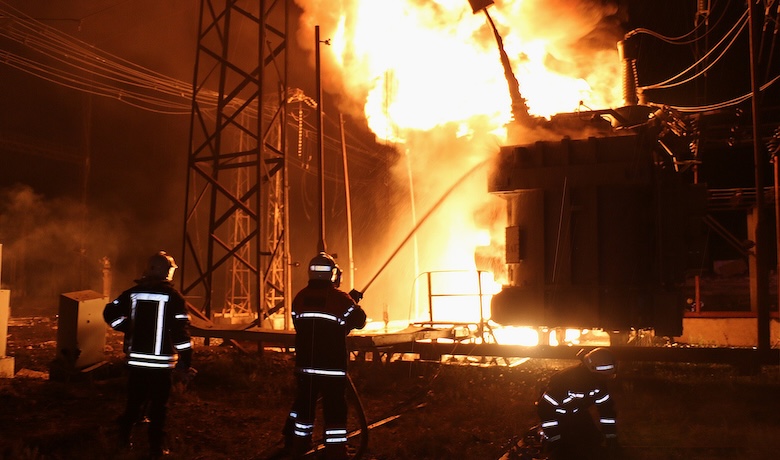
This past winter, repeated attacks on energy infrastructure have been a strategy of Russia’s war on Ukraine, leaving large parts of Kyiv and other cities without light or heat for weeks in sub-zero temperatures. Over the years, such attacks have been strongly condemned by the United States, which has included the destruction of critical infrastructure in a list of presumptive war crimes. Strikes against Ukrainian electrical infrastructure form the basis for arrest warrants against three senior Russian military officials and a defense minister issued by the International Criminal Court (ICC) for directing attacks against civilian objects and causing excessive incidental civilian harm or damage to civilian objects.
However, the United States has recently made extensive threats to attack Iranian power plants and bridges, and destroyed the B1 bridge at Karaj on April 2nd, 2026. Israel has also carried out strikes against Iranian energy infrastructure, including the South Pars gas field. Former senior U.S. military lawyers have argued that, while individual components of civilian infrastructure may be assessed as military objectives on a case-by-case basis, the comprehensive targeting of such infrastructure would be clearly illegal. Nonetheless, the United States has a long history of launching large-scale attacks on energy infrastructure, as well as bridges, including in the 1991 Gulf war, the Kosovo conflict, the 2003 invasion of Iraq, and the later wars against ISIS.
The Department of Defense (DoD) Law of War Manual closely follows the Geneva Convention’s First Additional Protocol (AP I) in defining military objectives as “those objects which by their nature, location, purpose or use make an effective contribution to military action and whose total or partial destruction, capture or neutralization, in the circumstances ruling at the time, offers a definite military advantage” (DoD Manual § 5.6; AP I, art. 52). Civilian objects are defined in the negative, as all objects which are not military objectives. It follows from this that there is no intermediate legal category of “dual-use” object: “If an object is a military objective, it is not a civilian object and may be made the object of attack” (§ 5.6.1.2). Furthermore, “objects that contain military objectives are military objectives” (§ 5.6.4.2).
Whereas it is widely appreciated that the military use by the enemy of a civilian building or other object will make it liable to attack, it is perhaps the inclusion in the definition of the concept of military “purpose,” understood as “future intended use,” which offers the greatest scope for ambiguity, given the imprecision involved in divining enemy intentions. The DoD Law of War Manual, at § 5.6.6.1, uses the phrase “intended or possible use in the future.”
Recognizing an ostensibly civilian object as a military objective may also have important consequences for the application of the proportionality rule, which prohibits attacks where the expected civilian harm is excessive in relation to the concrete and direct military advantage anticipated. Responding to criticism of the 2021 Israeli strike on the Jalaa media building in Gaza, Israel’s view was that use of part of the building by Hamas made the whole structure a military objective, thus excluding the civilian offices in the building from the proportionality analysis. This approach is taken by some other militaries, although not by the International Committee of the Red Cross.
In the case of attacks on energy infrastructure, the consequences of excluding a proportionality analysis of damage to such objects may well be extensive and reverberating civilian harm.
Dual-Purpose Attacks
Just as an object may have both civilian and military uses, so too an attack may have more than one purpose. Alternative or competing purposes may exist at the tactical and strategic level, in different parts of the command and control system, or at the level of the political/military leadership. Is the existence of some military objective (including one defined in relation to the possible future military use of a civilian object) conclusive for determining that an attack is not directed against civilians or civilian objects? The answer under LOAC would appear to be no.
Firstly, the legal prohibition on directing attacks against civilians or civilian objects is absolute and cannot be legitimated by a higher military purpose or argument for military necessity. For example, it would clearly be unlawful to attack the (civilian) family of a commander in order to force him or her to capitulate, or to bombard civilian homes in order to destroy enemy morale.
But what if the actual purpose of an attack is unclear, or there co-exist alternative purposes? The ICC has held that the war crime of attack against civilians “may be established, even if the military operation also targeted a legitimate military objective” (Katanga, para. 802). Furthermore, characterizing the question as “essentially a factual issue,” the ICC has confirmed that there is no “legal requirement that the main aim or object of the relevant acts was to attack civilians. An attack directed against a civilian population may also serve other objectives or motives” but remain an attack on civilians (Ntaganda Appeal, para. 424, emphasis in original).
Identifying whether an attack involved an unlawful purpose is in practice both a matter of the evidence available as to the factual situation at the time of the attack and the correct legal test(s) to be applied.
Scrutinizing Factual Context in Attacks
Responding to allegations by the UN Office of the High Commissioner for Human Rights (OHCHR) that Israel conducted indiscriminate and disproportionate attacks in the war in Gaza, Israel pointed out that the factual context in which operational decisions are made is key. This context includes the specific intelligence and knowledge available to commanders, battlefield characteristics such as presence of civilians and civilian infrastructure, and the military objectives and military advantage gained. Israel argued that “[s]ince the OHCHR has, at best, a partial factual picture, any attempt to reach legal conclusions is inherently flawed” and, at the same time, “[a]s a matter of law, no army or State has an obligation to disclose information or intelligence regarding strikes conducted during hostilities.”
Such an approach may serve to defeat external scrutiny for any particular attack, but is harder to maintain in relation to a pattern of repeated attacks which result in extensive damage to civilian objects. When information on the operational context is incomplete, international tribunals may also come to their own conclusions regarding the purpose of attacks, based on the circumstantial evidence available.
For example, in the trial of General Galić, the commander of the siege of Sarajevo, the International Criminal Tribunal for the Former Yugoslavia held that “certain apparently disproportionate attacks may give rise to the inference that civilians were actually the object of attack.” It came to a similar conclusion in relation to indiscriminate attacks (Galić Appeal, paras. 132-3). Galić was convicted inter alia of directing attacks against civilians, as well as the war crime of spreading terror among the civilian population, with no mention made of disproportionate or indiscriminate attacks as the basis for conviction.
To avoid such an inference in cases where significant civilian harm is expected, there needs to exist a reasonable relationship between the verified military objective and the means and methods chosen to attack it. This is an objective test, one often expressed in U.S. manuals and doctrine (and in Israeli jurisprudence) in terms of what a “reasonable military commander” would do.
Objective and Subjective Tests in the Law of Targeting
In recent years, however, there has been a shift in Israeli and some U.S. practice to insist on a subjective test of intent for determining targeting violations. In other words, without proof of individual intent (criminal mens rea), there is no violation. While such an approach would obviously make it much easier for a State to avoid taking responsibility for alleged violations, its impact on the potential liability of commanders is harder to gauge.
The supplement to the U.S. Uniform Code of Military Justice on Targeting and the Law of War empowers commanders with significant discretion but stipulates both an objective test and a subjective test for determining whether an act or omission amounts to more than a mere error of judgment and can constitute dereliction of duty. Each targeting duty, including target identification, warnings, feasible precautions, application of the proportionality rule and compliance monitoring, “has unique criteria that must be considered in applying the objective test.” If there were “reasonable grounds” for the commander’s conclusion that the act was lawful, “there is no criminal act.”
Target verification of military objectives and the proportionality assessment of expected collateral damage, governed by an objective test of reasonableness, have given generations of U.S. commanders reassurance that they would not be held legally responsible for the unforeseen effects of decisions made in good faith in the context of circumstances ruling at the time. Routine attacks on “dual-use” objects would invite greater external scrutiny of their decisions; the downgrading of proportionality assessments in rules of engagement could leave them very exposed indeed.
Conclusion
Designating whole categories of civilian objects as “dual-use” may appear to have the effect of making them military objectives liable to attack (thereby, some have argued, excluding the need for a proportionality analysis of the damage to those objects). However, it also invites scrutiny of the purpose or purposes of such conduct and whether such purposes include, besides the attack on a military objective, “directing attacks against civilians or civilian objects.” In cases where extensive destruction of infrastructure serving civilians is anticipated, such a finding is made more likely by a failure to justify it as collateral damage. International criminal tribunals have also turned to the law on dual-purpose attacks in circumstances where direct evidence of operational information related to proportionality was unavailable.
Interpreting LOAC effectively to legitimize widespread attacks on so-called “dual-use” objects and to exclude the possibility of assigning responsibility for disproportionate attacks thus comes with considerable legal jeopardy. It may certainly result in impunity, but it could equally result in widened consideration of cases as violations of the primary rule of distinction, with consequences for the individual liability of commanders as well as for State responsibility.
***
Mark Lattimer is executive director of Ceasefire Centre for Civilian Rights.
The views expressed are those of the author, and do not necessarily reflect the official position of the United States Military Academy, Department of the Army, or Department of Defense.
Articles of War is a forum for professionals to share opinions and cultivate ideas. Articles of War does not screen articles to fit a particular editorial agenda, nor endorse or advocate material that is published. Authorship does not indicate affiliation with Articles of War, the Lieber Institute, or the United States Military Academy West Point.
Photo credit: Main Directorate of the State Emergency Service of Ukraine in Kharkiv Oblast
