

Patriotic War: Total Defence, Resistance, and Additional Protocol I
Russia’s clear aggression towards Ukraine and its thinly veiled “hybrid war” against its other European neighbours has rightly caused alarm amongst these threatened States. European countries such as the Scandinavian and Baltic States, are adjusting “their national security postures in the direction of ‘total defence,’ a whole-of-society approach aiming to strengthen societal resilience.” Such societal resilience is consistent with the Article 3 North Atlantic Treaty obligation to “maintain and develop their individual and collective capacity to resist armed attack.” Similarly, Poland is working towards enhancing its total defence capacity (see here and here). Canada has also taken initial steps to develop a whole-of-society approach towards civil defence. However, it is the States bordering Russia facing potential occupation that are most obviously committed to total defence.
The threat posed by Russia was evident before the 2022 invasion of Ukraine (e.g. Russia’s 2008 invasion of Georgia and 2014 hostilities in the Ukrainian Donbas). In 2014, the U.S. Army Special Operations Command Europe initiated a program to develop national resistance and cooperation amongst threatened States. The prescient 2020 Resistance Operating Concept (ROC) highlights that total defence requires both resilience and resistance. The Total Defense concept makes “military and civil defense authorities … jointly responsible for establishing and maintaining a capability to conduct military and civilian resistance activities in their national territory” (ROC, p. 4). By 2021, Ukraine had adopted a Total Defence approach designed to “create a strong backbone for covert operations and underground activities in case of occupation.”
The ROC introduces the spectre of organized resistance movements fighting a tyrannical occupying power on European territory. It relies heavily on examples from the Second World War (e.g. France, Poland, the Philippines, and anti-Soviet resistance in the Baltics) as offering “excellent perspectives into resistance operations” (p. 121). With its “plan for how to fight from inside after an invasion,” the ROC resonates with Ukrainian preparations prior to the 2022 Russian invasion. It is a plan where the “legal framework supporting the development of a resistance capability is an integral part of national resiliency. The population must see this capability as a legitimate form of warfare, grounded in law, which is acceptable and suitable” (ROC, p. xvi).
Assessing the legal status and treatment of members of organized resistance movements is where the ROC approach faces one of its most significant challenges. The unwillingness, or perhaps inability, of States to fully address populations revolting against occupying forces was a fundamental faultline in late 19th and early 20th century efforts to codify international humanitarian law. “Patriotic” countries that might be invaded wanted legal recognition for resistance fighters, while more dominant military States did not. While Articles 1 and 2 of the 1907 Hague Land Warfare Regulations recognized the lawful status of regular armed forces, militia and volunteer corps, and even the levée en masse, that issue was not resolved for those fighting in occupied territory. As 1911 observers suggested, the delegates involved had “almost shirked their task—a task of great difficulty, it must be admitted” (War Rights on Land, p. 55).
During the Second World War, resistance group members were treated as war criminals. At the end of the war the Allies acknowledged, albeit reluctantly and ultimately in a limited fashion, the reliance they had placed on such groups (e.g. the Special Operations Executive (SOE), Office of Strategic Services (OSS), and NKVD/Red Army). Members of organized resistance movements were granted prisoner of war (POW) status under Article 4A(2) of the Third Geneva Convention, but only if they met the same belligerency criteria as State armed forces. It was a small step towards legitimacy, although one largely seen as unrealistic given the usual asymmetry between occupying forces and resistance groups. As G.I.A.D. Draper cynically noted “[i]f memory be short, so is gratitude” (The Legal Classification of Belligerent Individuals, p. 101).
More substantive change was to occur. First, as Richard Baxter noted in 1951, “persons who are not entitled to treatment either as peaceful civilians or as prisoners of war by reason of the fact that they have engaged in hostile conduct without meeting the qualifications established by Article 4 of the Geneva Prisoners of War Convention of 1949” can be equated to spies, and calling them “unprivileged belligerents” (Humanizing the Laws of War, p. 42, 57). Such belligerence was not contrary to international law. However, captured participants could be prosecuted under the domestic law of the detaining power, or the special security provisions permitted under Article 64 of the Fourth Geneva Convention. Unprivileged belligerency is recognized in the U.S. and UK law of armed conflict manuals (see respectively here, § 4.3 and here, paras. 11.4 – 11.4.2). More recently the 2025 International Committee of the Red Cross (ICRC) Commentary on the Fourth Geneva Convention (Article 5, paras. 1056-71) recognizes unprivileged belligerency, although it unfortunately omits reference to the well-established view that members of regular armed forces operating out of uniform also have that status.
Secondly, substantive changes were enacted in the 1977 Additional Protocol I (AP I) that relaxed the combatancy criteria for resistance group members. These provisions come closest to realizing Richard Baxter’s prediction that “it is possible to envisage a day when the law will be so retailored as to place all belligerents, however garbed, in a protected status” (Humanizing the Laws of War, p. 56). Understanding the AP I provisions is especially important given their applicability to the Russia and Ukraine conflict, and the potential for other AP I obligated European States to become involved including through collective defence under Article 5 of the NATO Treaty.
A potential complicating issue regarding NATO is that two of its 32 member States are not parties to AP I (i.e. the United States and Turkey). Notably, the United States rejected AP I in large part because of the way it “relaxed the requirements for obtaining the privileges of combatant status” (Law of War Manual, § 4.6.2.2 and here). However, the coalition approach on the status and treatment of detained resistance members needs to account for the legal obligations the AP I States have towards one another, rather than simply relying on the commonly agreed but far less protective Third Geneva Convention provisions. Importantly, AP I States will want to be able to claim the Protocol protections for their resistance group members and special forces personnel operating in disguise against a Russian occupier and hold that State accountable for failing to meet those standards.
What is the impact of AP I on Total Defence efforts to resist Russian aggression? That impact will be explored by first providing a historical example of resistance operations that highlights their uniqueness and complexity. The analysis then looks at the provisions of AP I, which have a particular impact on contemporary resistance operations.
Second World War Heavy Water Destruction and Resistance in Norway
Ukrainian resistance forces are involved in significant espionage and sabotage in occupied Ukraine. However, due to the nature of these clandestine and covert operations, public reporting about them is limited. Instead, the well-documented Second World War targeting of Norwegian heavy water production intended to support the Nazi nuclear weapon development will be used to outline the complexity and potential range of resistance operations in occupied territory.
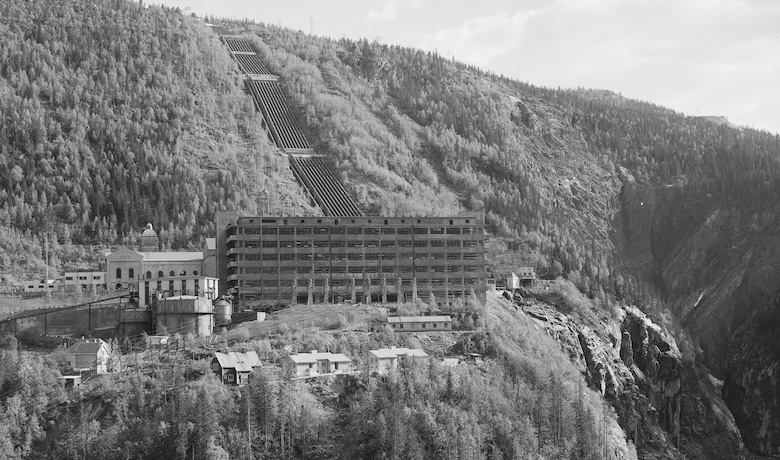
On February 28, 1943, British SOE personnel from Norwegian Independent Company No. 1 carried out Operation Gunnerside, a raid on the Norsk Hydro plant at Vemork Norway (see Neal Bascomb, The Winter Fortress: The Epic Mission to Sabotage Hitler’s Atomic Bomb). Parachuted in harsh winter conditions, the commandos wore British uniforms beneath their snowsuits during an audacious attack that caused significant damage to production facilities, but no deaths or injuries. Most of the saboteurs escaped to neutral Sweden notwithstanding the deployment of nearly 8,000 military and Norwegian police carrying out a ratissage operation to search for them and their collaborators.
Operation Gunnerside has been called the greatest SOE mission during the Second World War. However, it was just one in a series of four attacks on the Norwegian heavy water production and transportation system that highlight the diversity of military operations in occupied territory and their participants. The Gunnerside raid was preceded by Operation Freshman, which involved a failed November 19, 1942, glider insertion of British Royal Engineers. Captured survivors were killed pursuant to Hitler’s infamous Commando Order (Bascomb, p. 119-23). Operation Gunnerside was followed by a failed November 16, 1943, U.S. Eighth Air Force bombing of the Vemork plant intended to stop renewed production. Unfortunately, the attack missed its main target and killed a number of Norwegian civilians (p. 261-69). Ultimately, the heavy water supply was destroyed in the February 20, 1944, sabotage of the Norwegian ferry Hydro, led by a Gunnerside operative who stayed behind to continue resistance along with members of the Norwegian resistance movement and newly recruited participants (p. 286-309).

The Norwegian resistance comprised several groups including the Milorg or “militær organisasjon,” the “XU” intelligence network and the “Shetland Bus” (Norwegian fishing vessels that smuggled people and supplies between Scotland and Norway). It did not operate in isolation as is evident in the support provided by the SOE, eventually the U.S. OSS, and the Royal Air Force. Sabotage operations ordinarily require extensive prior intelligence collection that frequently involves espionage. These missions were no exception. Such espionage is permitted under Article 24 of the 1907 Hague Land Warfare Regulations. Members of the resistance and ordinary Norwegians spied on behalf of the Allied effort and provided a wide range of other support. In addition to the intelligence collected by SOE-trained Norwegian spies, mission planning was based on information from Norwegians who had worked or continued to work in the Vemork Hydro plant. The sinking of the Hydro ferry involved resistance operatives scoping out the boat schedule and operations.
The espionage and sabotage activities were facilitated by ordinary Norwegians and even operatives’ family members by providing material support. This included access to safe accommodation and supplies, or simply by civilians looking the other way. In this regard, resistance activity is often more personal and integrated into civilian society than operations involving conventional means. At times, the population was subjected to security operations, and individual Norwegians were detained, questioned, and sometimes tortured. Such repression is being repeated in occupied Ukraine by an occupier harshly addressing what is viewed as a “baseline civilian disloyalty to Russia in the occupied territories.”
The Second World War effort to impede German access to heavy water highlights the diversity of resistance activities, including the incorporation of conventional means (aerial attack), the insertion of military and special operations personnel (Royal Engineer and SOE-trained personnel), coordination between higher command and personnel operating in occupied territory, and the involvement of ordinary civilians. These operations resonate with 21st Century warfare as is evident in the Ukrainian resistance operations in occupied Ukraine.
Technological advances such as the proliferation of drones and the use of social media to recruit operatives, collect intelligence, direct sabotage, and report on battle damage make aspects of contemporary armed resistance different. However, Ukrainian reliance on resistance groups such as Atesh to carry out sabotage in Crimea and elsewhere (see here, here, and here) highlight such movements have an important role to play in an age where some States focus more on large scale combat operations. Covert warfare can provide the most assured means of accurately destroying a target while limiting collateral casualties and effects.
Additional Protocol I and Organized Resistance
The treatment of resistance activity in occupied territory is a unique feature of AP I. In providing for “all organized armed forces, groups and units which are under a command responsible to that Party for the conduct of its subordinates” to attain lawful combatant status, Article 43 was designed to directly address the historically unresolved issue of a population rising up against an occupier. Importantly, for resistance movements, AP I recognizes that “organized” needs to be interpreted flexibly “as there are a large number of degrees of organization” (ICRC, Additional Protocols Commentary, para. 1672).
While there are historical examples of resistance groups operating in formed units (e.g. Russian Partisans, Yugoslav guerrillas, and French Maquis after D Day) the security environment usually forces the use of a cellular structure. In post-2022 occupied Ukraine it has been noted that exceptional Russian security and bureaucratic controls “have long since driven an organic transition from the classical cell model to the puzzle system, in which agents operate independently, coordinators relay narrowly defined tasks from analysts based in free Ukraine, and analysts synthesize the inputs” (Thresholds of Survival, p. 10).
As a further reflection of resistance movement complexity, the ROC divides its organization into four parts: the underground; auxiliary; guerrilla; and public components. The guerrilla component is most readily associated with combatancy. However, members of the underground and auxiliary may also take a direct part in hostilities by carrying out intelligence gathering, providing crucial logistics, and in the case of the underground, conducting sabotage (ROC, p. 26-28). Under AP I, resistance group organization is intended to be interpreted broadly recognizing that the armed forces can “consist of ‘regular’ and ‘irregular regular’ combatants” (ICRC, Additional Protocols Commentary, para. 1672).
In addition to being organized, the resistance group needs to operate under a responsible command. The command structure must be “familiar with the law applicable in armed conflict” and enforce compliance with it (ICRC, Additional Protocols Commentary, paras. 1672-75). However, the command structure may be dispersed, factional, rely on cooperation amongst various actors, and be subject to change. In 1943 the SOE commanded the Gunnerside and other sabotage operations. However, by 1944 the Norwegian Milorg was planning and conducting most sabotage activities with Norwegian government in exile approval, but still under the overall direction of the Allied leadership (“Sabotaging the Nazis: Norwegian Resistance of World War II”, p. 76).
In the present Ukrainian conflict there is a more direct command relationship with the Resistance Movement being part of its Special Operations Forces. This bolsters the argument for combatant status, and the group belonging to a party to the conflict. That said, the determination of lawful belligerency remains challenging, both in terms of organization and command structure. For example, through the use of social media, Ukrainian military intelligence recruits citizens in occupied territory “to report enemy movements or suspected collaborators … directly integrating civilians into intelligence collection.”
While outlining much of the law applicable to resistance movements the ROC does not address a number of key status and treatment-related AP I provisions. Importantly, Article 44(3) introduces the less stringent criteria for combatant status based on carrying arms openly during the deployment to, and the conduct of an attack. Article 44(4) requires POW treatment to be extended to detained members of resistance groups qualifying as “armed forces” even if they do not comply with the reduced criteria for combatancy. In respect of spying, a key role for resistance forces, the ROC highlights (p. 93) that Article 46(3) allows the collection of open information by a member of the armed force resistance group who are residents of a territory. Espionage is limited to acts involving it being gathered “through an act of false pretences or deliberately in a clandestine manner.” Further, the spy must be “captured while engaged in espionage.”
As identified in an earlier post, attention needs to be paid to what constitutes treacherous action by resistance personnel and the various AP I articles impacting on that issue (e.g. arts. 37, 38, and 39). What is noteworthy is how narrow perfidy is interpreted, including when factors such as remoteness and proximate cause are considered. Unprivileged belligerents who are not “protected persons” under the Fourth Geneva Convention (e.g., a national not a party to the conflict, citizen of an allied State) and therefore do not benefit from its fair trial provisions (see arts. 71-77) are protected under the fundamental human rights guarantees found in AP I Article 75. In any event, human rights law applies if humanitarian law does not provide appropriate protection. Finally, Article 45(3) of the Protocol effectively removes the Fourth Geneva Convention, Article 5 restriction on communication for detained saboteurs and others suspected of hostile activity, leaving it only in place for spies.
Conclusion
A fundamental element of Total Defence is preparing to resist invasion. This includes preparing resistance groups to operate in occupied territory. For European States this means applying the provisions of AP I that uniquely apply to resistance movements. In practical terms, the exceptional courage and resilience demonstrated by Norwegian resistance personnel operating under harsh winter conditions during World War II in defending their own territory provides a stark warning to Russia should it consider invading the Scandinavian or Baltic States.
***
Ken Watkin served for 33 years in the Canadian Forces, including four years (2006-2010) as the Judge Advocate General.
The views expressed are those of the author, and do not necessarily reflect the official position of the United States Military Academy, Department of the Army, or Department of Defense.
Articles of War is a forum for professionals to share opinions and cultivate ideas. Articles of War does not screen articles to fit a particular editorial agenda, nor endorse or advocate material that is published. Authorship does not indicate affiliation with Articles of War, the Lieber Institute, or the United States Military Academy West Point.
Photo credit: National Library of Norway
