

War Crimes in History
Editors’ note: This post is based on the author’s article-length work, “A History of the Law of War Crimes” appearing in International Review of the Red Cross.
International law recognizes three categories of core crimes: genocide; crimes against humanity; and war crimes. Meanwhile, a fourth category, the crime against peace or “aggression,” lurks in the shadow of the first three categories. Much scholarship exists in relation to the first two, genocide and crimes against humanity. Much less is available in relation to war crimes, although this is the oldest of the three core international crimes.
This post synthesizes my research into the history of the notion of war crimes. The full result of my research can be found in the International Review of the Red Cross.
The State of War Crimes Scholarship
There are several apparent reasons for the limited amount of war crimes scholarship. Unlike the rather blunt and straightforward nature of the law of genocide and crimes against humanity, the law of war crimes is a highly technical field of law. It requires in-depth knowledge and understanding of its underlying normative material, namely, international humanitarian law (IHL). It also requires the ability to navigate many normative ambiguities, as well as a good dose of familiarity with the military.
In addition, a lot of the normative material that makes up the law of war crimes is found in jurisprudence (a great deal of it national), in military manuals, and in the practice of States. Finally, unlike the notions of genocide and crimes against humanity that developed mostly (but not only) in the last century, the law of war crimes is a lot older.
As a result of those features, legal scholarship directed to this subject requires a different, more inquisitive, more history-minded, and less opinion-based sort of scholarship than might be the case in respect of other international crimes. For these reasons perhaps, war crimes scholarship has been mostly the preserve of military lawyers, with some brave IHL lawyers daring a dip into the subject, and with international criminal lawyers’ input being far more modest than in respect of other international crimes.
The relative rarity of scholarship on war crimes makes it a particularly interesting subject of research, having to look for the original sources and material, rather than working on a path already labored by existing works of scholarship.
The History of the Notion of War Crimes
I discovered that the history of the notion of war crimes spans at least ten centuries. In the Western hemisphere, it starts in the 12th or 13th century, if not before. It grew out of laws and customs of war that appeared and evolved in many different places at the time. In that context, increasing references to the enforcement of those laws and customs by means of punishment, discipline, and penal enforcement gave rise to the idea of a yet-to-be-named notion of war crimes.
The phrase “war crimes” was in use by the 18th century. It took juridical shape and became an accepted notion in the 19th century. And it began to be enforced with greater regularity in the late nineteenth and twentieth centuries. Among the many early cases of enforcement of this new notion were the prosecutions of Henry Wirz, a Swiss doctor and former Commander of the Confederate prisoner of war camp at Andersonville, Georgia, and Major John Henry Gee, commandant of the Confederate prison at Salisbury, North Carolina.
Normative developments then ran parallel to the first international codifications of principles of IHL, without the notion of war crimes being a central element of that process. The idea of international criminalization grew in relevance and urgency during the First World War, when the need for credible and individualized enforcement of the laws of war became ever more pressing and eventually took its fuller, modern shape in the context of prosecutions linked to the Second World War.
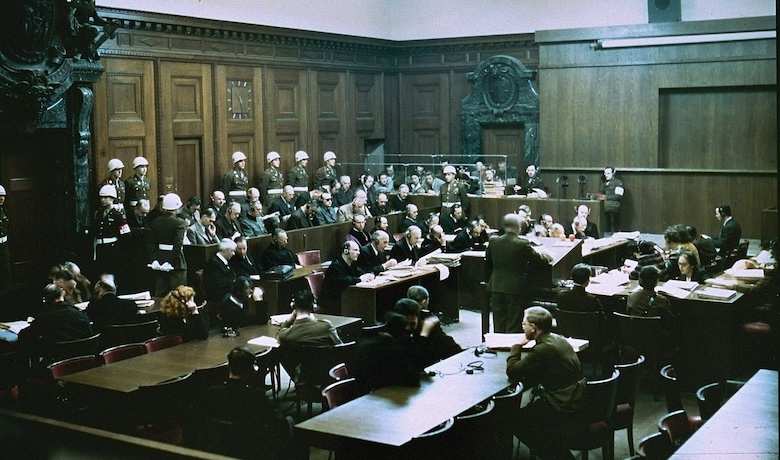
The Charter of the International Military Tribunal at Nuremberg reflected this by providing for the description of war crimes as criminalized violations of the laws or customs of war, which included murder, ill-treatment or deportation to slave labor or for any other purpose of civilian population of or in occupied territory, murder or ill-treatment of prisoners of war or persons on the seas, killing of hostages, plunder of public or private property, and the wanton destruction of cities, towns or villages, or devastation not justified by military necessity.
Some of these categories of acts regarded as war crimes were then codified in international treaties were implemented at the domestic level with increasing frequency. For example, the 1949 Geneva Conventions and their Additional Protocol I codified these war crimes as so-called “grave breaches” of those conventions.
The Expansion of War Crimes
By the 1990s, in large part thanks to the activity and jurisprudence of international(ised) criminal tribunals such as for the former Yugoslavia and for Rwanda, and the negotiations of the Rome Statute of the International Criminal Court, the law of war crimes became more certain, detailed, and specific. War crimes law expanded into new territory such as non-international armed conflict. The law also recognized multiple categories of war crimes as forming part of international law (e.g., starvation) and lost many of the normative constraints that until then had limited the practical effect and applicability of the notion of war crimes.
It is apparent from that history that the notion of war crimes is both the expression and recognition that the effective implementation and enforcement of the basic demands of IHL often depends on the possibility of threatening punishment or enforcing actual punishment on those who fail to comply with those standards. In that sense, war crimes can be defined and should be understood as serious violations of the laws or customs of war for which the perpetrator incurs individual criminal responsibility as a direct result of the operation of international law.
Why Understanding War Crimes’ History Matters
A sound understanding of the history of this notion is critical to its correct interpretation and enforcement. The importance of history to understanding a notion such as war crimes is amplified by the fact that no centralized authority decided its creation and no official history explains its meaning and definition. It is further amplified because war crimes as we know them today have grown in different places, times, and circumstances, which have all affected their texture and content.
In such a context, history provides important juridical insight into the reasons for the normative roots of an underlying legal norm or prohibition, as well as its meaning and protective value. Without such an understanding, the interpretation of the notion of war crimes and many of its sub-categories could be deeply distorted, misunderstood or incorrectly interpreted and applied.
For instance, interpreting the grave breach of compelling a prisoner of war or a civilian to serve in the forces of a hostile power necessarily involves an awareness that this notion reflects “a well-established principle that a protected person may not oblige protected persons to take up arms against their own country,” an early expression of which can be found in Article 23(h) of the 1907 Hague Regulations.
But why study the subject of war crimes when so many laws of war are violated all over the world? Don’t pervasive breaches stand as proof of the irrelevance of these legal prohibitions? The clear answer is no. First, a brief study of history shows that the most significant legal developments that occurred in the field of IHL and international criminal law were all the fruit and legacy of historical events when violence felt little constraint. The law does not die from its violation; it has a tendency to develop the tools necessary to address a new criminal reality.
Secondly, a crime is no less a crime because it is being committed, be it on a massive scale or at a local level. Frequent domestic incidents of terrorism, domestic violence, or school shootings do not bring about the disappearance of the law that is necessary to the punishment of such acts. Instead, the former become raison d’être for the latter.
Thirdly, the law is and remains an important moral compass. It draws a clear distinction between those who need and expect the protection of the law on the one hand, and those who disregard it on the other. Perpetrators of international crimes cannot therefore hope to co-opt the rest of us into accepting the fait accompli of their criminal deeds. Applying and demanding the application of the law where it has been violated is thus an act of resistance and a way to signify our moral disapproval of others’ actions.
Finally, at the receiving end of almost all war crimes are innocent victims, many of them children and other vulnerable communities. The relevance of the law does not disappear for them because it has failed to protect them; it becomes the source of their hope and demand for justice and accountability.
Concluding Thoughts
Knowing why international law recognizes the notion of war crimes is a sobering reminder of the broader reason for the existence of the various branches of international law that seek to protect those most vulnerable from harm. These are not therefore times of despair for those committed to the preservation of the rule of law in its international expression. They are instead a time of opportunity to renew our support and commitment for the most basic demands that international law places upon civilization, namely, demanding respect of our collective and mutual humanity.
History teaches us that international law has systematically been stronger on the other side of violence and that those who had hoped to evade justice for violating that law have found increasingly determined and effective resistance ready to confront their hope of impunity.
***
Dr Guénaël Mettraux is a Judge of the Kosovo Specialist Chambers, an Adjunct Professor at the National University of Ireland, Galway, and a Guest Professor at the University of Fribourg, Switzerland.
The views expressed are those of the author, and do not necessarily reflect the official position of the official position of the Kosovo Specialist Chambers, the United States Military Academy, Department of the Army, or Department of Defense.
Articles of War is a forum for professionals to share opinions and cultivate ideas. Articles of War does not screen articles to fit a particular editorial agenda, nor endorse or advocate material that is published. Authorship does not indicate affiliation with Articles of War, the Lieber Institute, or the United States Military Academy West Point.
Photo credit: United States Holocaust Memorial Museum
