

Military Microreactors and the Law of Targeting
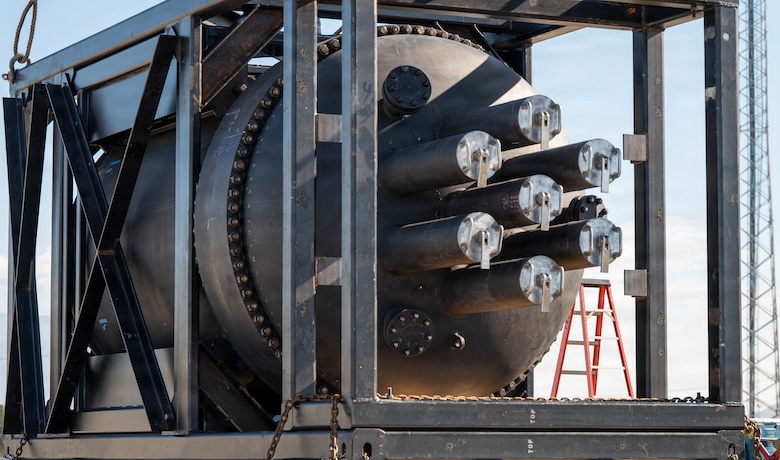
A future military base may not only rely on diesel generators, vulnerable grids, and exposed fuel convoys for energy. It may instead be powered by a small nuclear reactor integrated into AI-enabled command nodes, electronic warfare systems, air-defense radars, counter-drone networks, and directed-energy weapons. For the law of targeting, this integration creates complexity. It also reflects broader trends towards increasingly power intensive warfare and greater vulnerability of military energy supply lines.
The United States has already moved in this direction. Project Pele seeks to design a transportable microreactor capable of providing one to five megawatts of electric power for military use. The Janus program points in a related direction by seeking secure and resilient energy for defense installations, critical infrastructure, and vital missions. Other States are exploring similar possibilities. Canada has supported research into whether microreactors could provide reliable power for remote northern defense infrastructure, while Russia is developing small modular reactors in strategically sensitive Arctic regions, where energy infrastructure, remote settlement, resource extraction, and military infrastructure often overlap.
These developments raise difficult legal questions. If a military facility is supported by the nuclear microreactor, should it be treated as an ordinary military objective, a protected nuclear installation, or a military objective with nuclear-specific targeting risk? The answer is not that every reactor-powered site becomes immune from attack. Nor is it that the presence of a military objective turns the entire nuclear-powered complex into an ordinary, lawful target. The better answer is to treat such sites as nuclear-significant military complexes containing potentially distinct military objectives, rather than a single target. Such treatment requires commanders to distinguish between the reactor, the power-distribution system, and the supported military capability before deciding what may be lawfully and prudently attacked.
Article 56 and Its Limits
Additional Protocol I to the Geneva Conventions provides the most directly relevant treaty rule. Article 56 gives special protection to works and installations containing dangerous forces, including dams, dykes, and nuclear electrical generating stations. Prior Articles of War analysis has explained how Article 56 applies to nuclear electrical generating stations. So have Professors Sean Watts and Gary Corn, here. This article builds on those discussions, focusing on the rule’s application to smaller reactor-powered military facilities.
The rule in Article 56 is based on a basic humanitarian concern: some objects pose special risks to the civilian population due to the dangerous forces they may release if attacked. As a result, works and installations containing dangerous forces (as well as other military objectives located at or in their vicinity) are protected from attack, even when they are military objectives, if such attacks may cause the release of dangerous forces and consequent severe losses among the civilian population.
This protection is not absolute. Under Article 56, special protection may cease in narrow circumstances, including where a nuclear electrical generating station provides electric power in regular, significant, and direct support of military operations, and an attack on the station is the only feasible option to terminate this support. This exception matters for military microreactors because a reactor that continuously supplies essential electricity to an operational air-defense radar, directed-energy weapon, electronic warfare system, or AI-enabled command node, may provide support to military operations that is regular, significant, and direct. A dedicated military microreactor might meet this standard more readily as compared to a civilian nuclear plant which is providing electricity through a connected grid.
However, these requirements are cumulative. Providing power to military equipment, by itself, is not sufficient. The supply must be recurring, operationally significant, and directly connected to military operations. Even if these conditions are satisfied, the reactor retains its capacity to release dangerous forces and cause consequent severe loss among the civilian population. Even if the special protection ends, the loss of that protection does not by itself make an attack lawful. Article 56(3) provides that, if special protection ceases and the station or nearby military objective is attacked, civilians remain entitled to the protection of international law, including Additional Protocol I, Article 57, and all practical precautions must be taken to avoid the release of dangerous forces.
Military microreactors complicate the Article 56 framework in three ways. First, their small size, potential mobility, and deployment within military bases may create uncertainty as to whether they qualify as a “nuclear electrical generating station,” the specific category addressed by Article 56. Second, because a microreactor may be dedicated to a particular military system rather than supplying electricity through an integrated grid, its power supply may more readily constitute regular, significant, and direct support of military operations under Article 56(2)(b). Third, radars, directed energy weapons, electronic warfare systems, and command nodes located at or near the reactor must be assessed separately under Article 56(2)(c), rather than treated as part of the reactor itself.
The result is a fact-sensitive area of legal uncertainty. A microreactor may generate electricity through nuclear fission and therefore raise reactor-specific risks. At the same time, it may provide electric power in regular, significant, and direct support of military operations. These are not two different civilian and military uses. Instead, they create tension between the reactor’s potential protected status under Article 56 and its operational military role.
As a result, applying Article 56 requires a component-specific analysis. The question is not only whether the broader military facility contributes to military operations but whether the reactor itself satisfies the exception under Article 56(2)(b) and whether military objectives located at or near the reactor satisfy Article 56(2)(c). The harder question is: which component of the facility may be attacked, and whether the military support could feasibly be terminated by striking a less hazardous component, such as a transmission line, switching systems, or the military capability receiving the electricity rather than reactor itself.
For States Parties to Additional Protocol I, Article 56 provides the specific treaty framework governing works and installations containing dangerous forces, including nuclear electrical generation stations. The United States is not a party to Additional Protocol I, so Article 56 does not bind U.S. forces as treaty law. Non-party States must instead apply the generally applicable rules governing military objectives, distinction, proportionality, military objective, and precautions.
The International Committee of the Red Cross also identifies a related customary rule requiring particular care when works or installations containing dangerous forces, or military objectives located at or near them, are attacked in order to avoid the release of dangerous forces and consequent severe losses among the civilian population. This customary obligation should not be equated with Article 56’s more specific treaty protection. Earlier Articles of War commentary on dangerous-force installations makes this distinction clear. Nevertheless, the risk of radioactive release remains relevant to proportionality and precautions when non-party States consider attacking a reactor-powered military facility.
Parsing the Target Complex
Regardless of whether Article 56 applies to military microreactors, their use, as well as potential attacks against them, are also governed by the principle of distinction. Article 52(2), which is reflected in the customary law definition of a military objective, provides that a reactor-powered military installation may qualify as a military objective as a whole if, by its nature, location, purpose, or use, it makes an effective contribution to military action and its total or partial destruction, capture, or neutralization offers a definite military advantage in the circumstances ruling at the time. However, it is important to note that this classification does not make every component legally interchangeable as an aim point. Where Article 56 applies, its special protections together with the general rules on precautions, require planners to consider the consequences of selecting the reactor or another component as the object or aim point of attack.
For this purpose, the commander should distinguish among three basic components: the reactor; the power distribution system; and the supported military capability. Each must be assessed according to its function and the circumstances ruling at the time. The analysis therefore begins with three questions. First, what produces the definite military advantage? Second, does attacking or neutralizing the reactor itself offer the definite military advantage anticipated, or is it merely a power source? Third, can the distribution system be disabled instead? Fourth, can the supported military capability be neutralized directly?
The reactor component requires particularly careful legal and technical assessment. Legally, it may fall within Article 56’s special protection for nuclear electric generating station. Technically, damaging it may release dangerous radioactive material or impair systems for nuclear safety. Nevertheless, attacking the nuclear reactor may not be the most direct means of achieving a definite military advantage. The reactor should therefore be assessed separately rather than presumed targetable merely because it forms part of a military installation.
The second component is the power distribution system. This may include components such as substations, transformers, cables, converters, batteries and other supporting elements. These components may be physically and functionally separable from the reactor itself. If the distribution system is treated as a separate object of attack, it must satisfy the definition of a military objective under Article 52(2). Disabling the distribution system may interrupt electricity supplied to a radar, directed energy weapons, electronic warfare system, or AI command node without damaging the reactor.
The third component is the supported military capability. This may include an air-defense radar, directed-energy weapon, counter-drone network, or long-range fires coordination node. If treated as separate object of attack, the capability must satisfy the definition of a military objective under Article 52(2).
Proportionality and Precautions
Under Article 51(5)(b) of Additional Protocol I, as reflected in customary international humanitarian law, an attack is prohibited when the expected incidental loss of civilian life, injury to civilians, damage to civilian objects or a combination thereof would be excessive in relation to the concrete and direct military advantage anticipated. An attack on a military site powered by a microreactor might provide a direct and concrete military advantage. Disruption of the site’s military operations forms part of the anticipated military advantage; it is not incidental civilian harm. Public alarm by itself does not fall within the categories of incidental harm recognized by the proportionality rule.
In the context of microreactors, reasonably foreseeable radiological consequences form part of the proportionality assessment insofar as they may cause civilian death or injury, or damage to civilian objects including civilian infrastructure through contamination. Evacuation, restricted access, emergency response requirements, and environmental remediation are not independent categories of incidental harm. They remain relevant insofar as they may reasonably be expected to cause civilian death or injury, or damage to civilian objects. In reactor-powered target complexes, the proportionality assessment must consider not only the attack’s immediate blast, fragmentation, and fire effects but also reasonably foreseeable civilian death, injury, or damage to civilian objects resulting from radioactive release or the loss reactor-safety functions.
Article (57)(3) further provides that, when a choice is possible between several military objectives offering a similar military advantage, the objective selected must be one whose attack may be expected to cause the least danger to civilian lives and civilian objects. In the reactor powered target complex, this rule may require selecting the power distribution system or the supported military capability instead of the reactor, provided that the alternative offers a similar military advantage.
Assessing expected incidental harm requires attention to the reactor’s design and safety features. Some proposed microreactors are built with passive safety features, including passive cooling, heat-pipe systems, self-regulating reactor behavior and robust fuel such as Tri-structural Isotropic fuel or TRISO. TRISO fuel encases uranium particles in layers of carbon and ceramic material, which makes it resistant to heat, corrosion, oxidation. These features may reduce the likelihood of severe core damage and significant radiological release. However, these features do not eliminate the radiological risks specific to a nuclear reactor.
Under Article 57 (2)(a)(i), those planning or deciding upon an attack must do everything feasible to verify that the selected object is a military objective and is not subject to special protection. Under Article 57(2)(a)(ii), they must take all feasible precautions in the choice of means and methods of attack to avoid, and in any event minimize, incidental civilian harm. An attacker may lack reliable information about the reactor’s design, operating status, fuel inventory, shielding, cooling system, and the likely effects of an attack. Damage to the cooling system, reactor module, shielding, or irradiated fuel may create a risk of radioactive release that is not present in a conventional, non-nuclear generator. Any remaining uncertainty must therefore inform the choice of aim point, weapon, timing, and method of attack.
The expected effect of the attack will depend on several factors: the aim point; weapon type; angle of impact; fire risk; whether the attack damages the reactor’s shielding (material that reduces radiation exposure) and containment features (barriers intended to limit radioactive release); passive heat removal pathways (systems that removes residual heat without external power); or irradiated fuel (used fuel that remains radioactive and produces heat). These factors suggest that a microreactor-powered facility may not present the same risk profile in every case. A shut down reactor, which may still contain radioactive fuel, a buried reactor module, a separated distribution system, and an exposed reactor close to the military system may each produce different legal and operational assessments.
Defender States’ Responsibilities
A defending State also bears some relevant obligations. For States Parties to Additional Protocol I, Article 56(5) is especially relevant because it requires parties to endeavor to avoid locating military objectives near works and installations containing dangerous forces. Prior Articles of War analysis of Zaporizhzhia shows why co-location is not only an attacker’s targeting problem but defender’s passive precautions problem. The same logic applies to military microreactors. Deliberately exploiting a reactor’s protected status to shield military capabilities may raise separate questions concerning the misuse of legal protection or perfidy, although mere co-location would not, by itself, satisfy the legal requirements of perfidy.
The defending State should build risk reduction into the architecture. Where feasible, reactors should be physically separated from weapons systems, command nodes, radar arrays, ammunition storage, and other targetable capabilities. These steps would not remove all legal and operational risks but they would reduce the chance that a military objective and a reactor component capable of creating radiological risks if damaged become fused into a single target complex.
Conclusion
Nuclear powered reactors may serve operational interests. However, their military usefulness does not eliminate their legal sensitivity. Their integration into the military facility may not alter whether those facilities qualify as military objectives, but it introduces additional legal, technical, and radiological considerations into the targeting analysis.
The law should not treat these sites as untouchable, nor should it treat them as ordinary military targets simply because they support military operations. Article 56 provides the most relevant legal framework. But it does not answer every question raised by small, transportable, military-integrated reactors. General targeting rules still apply. But they should be applied with close attention to function, location, expected effects, feasible alternative effects, and precautions. The reactor, power distribution systems, and supported military capability should be analyzed separately before commanders make decisions about targeting. This approach preserves operational flexibility while reducing avoidable humanitarian, legal, and radiological risks.
***
Zohaib Altaf is Associate Director at the Centre for International Strategic Studies (CISS), AJK, Pakistan, and editor of Strategic Perspective.
The views expressed are those of the author, and do not necessarily reflect the official position of the United States Military Academy, Department of the Army, or Department of Defense.
Articles of War is a forum for professionals to share opinions and cultivate ideas. Articles of War does not screen articles to fit a particular editorial agenda, nor endorse or advocate material that is published. Authorship does not indicate affiliation with Articles of War, the Lieber Institute, or the United States Military Academy West Point.
Photo credit: U.S. Air Force, Air Force Staff Sgt. Monique Bright
