

The Alleged Poisoning of Alexei Navalny: Why do Toxin Allegations Go to the Hague?
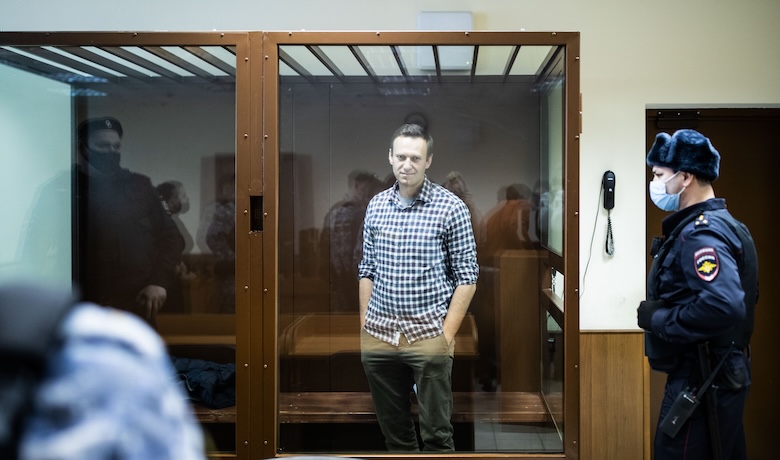
During the 2026 Munich Security Conference, the United Kingdom, Sweden, France, Germany, and the Netherlands made a joint statement concerning the death of Alexei Navalny. They stated that they were confident that Navalny was poisoned with a lethal toxin. In this statement, these States made clear that act was a violation of the Biological and Toxin Weapons Convention (BTWC), as well as the Chemical Weapons Convention (CWC). However, the statement indicated that they were only pursuing the alleged violation in the context of the CWC, raising the question as to why the BTWC is being sidelined.
Background
Alexei Navalny, a prominent critic and political opponent of Vladimir Putin, was allegedly poisoned with the toxic nerve agent Novichok in 2020. In 2021, Putin’s regime imprisoned him for supposedly violating the condition of his suspended sentence. During his imprisonment, the Russian government convicted him of additional offenses in what many saw as a highly-politicized and sham trial. Then, on February 16, 2024, the Federal Penitentiary Service of Russia reported that Alexei Navalny had died, allegedly of natural causes.
New allegations as of February 2026 accuse Russia of poisoning Alexei Navalny with the toxin epibatidine, a substance that originates from frogs in Ecuador and Peru. These frogs produce highly toxic alkaloids that they carry in their skin. In Navalny’s case, it appears likely that this poison did not come directly from a frog itself, rather the poison was synthetically produced in a laboratory. While little information is available at this time, the accusation is not out of line with other allegations Russia faces, oftentimes with substantial supporting evidence, such as the Salisbury-poisonings, the poisoning of Alexander Litvinenko, and a previous assassination attempt of Alexei Navalny.
The Biological and Toxin Weapons Convention
The February 2026 allegations concern the use of a toxin, which the international community has long considered abhorrent and taboo. In modern international law, the most important instrument explicitly referencing and prohibiting toxins is the BTWC. Russia is not only a State party to this treaty, but also one of its depositaries.
Article I of the BTWC specifically prohibits developing, producing, stockpiling or otherwise acquiring or retaining toxins. It does not provide an exact definition of “toxin weapons,” but instead approaches the concept in a broad way, prohibiting toxins “of types and in quantities that have no justification for prophylactic, protective or other peaceful purposes.” Even for synthetic toxins, the BTWC clearly indicates that it governs toxins, whatever their origin or method of production, thereby covering both natural and synthetic toxins. For this reason, the frog poison clearly falls within the BTWC’s scope. Moreover, while the BTWC does not expressly prohibit the use of toxins, States have long understood that its prohibition on toxins is comprehensive and encompasses use.
If the new allegations are correct, the use of such a toxin to assassinate Alexei Navalny would clearly violate the BTWC. However, States did not opt to address these allegations in the context of the BTWC, and therein lies the inadequacy of the BTWC to respond to potential violations, as it lacks a compliance or verification mechanism.
Redress for any potential violation of the treaty is available only through Articles V and VI of the BTWC. Article V states that in the case of any issues concerning the application of the treaty, the States parties can undertake consultations, however, these are entirely voluntary. Article VI of the BTWC makes clear that States parties can lodge a complaint with the UN Security Council in the case of potential breaches of the BTWC. Russia attempted to do just this over allegations concerning the United States’ biosecurity programmes in Ukraine, which the Security Council ultimately rejected. However, as these procedures have shown, this highly politicized process is unlikely to address violations, especially when the violations concern any of the permanent members of the Security Council.
Indeed, the lack of a verification or compliance mechanism is a primary weakness of the BTWC, and is currently a subject of discussion in the Working Group on Strengthening the Convention, which seeks to identify and develop measures on compliance and verification for the Tenth Review Conference in 2027.
Chemical Weapons Convention
As discussed, States opted not to act on the allegations under the BTWC, but instead informed the Director-General of the Organisation for the Prohibition of Chemical Weapons (OPCW) of the allegations. This means States are seeking to address the allegations using the CWC, even though a toxin weapon might lead one to think the BTWC is the more appropriate vehicle for accountability. However, like most toxins, epibatidine also qualifies as a toxic chemical and is therefore governed by both the BTWC and the CWC. This is because toxins, despite originating from living organisms, are still chemicals and therefore still fall under the definition of a toxic chemical under Article II of the CWC. For this reason, they can qualify as a chemical weapon.
This raises the question of why these States specifically went to the CWC, even though Russia is a State party of both the BTWC and CWC. The answer is that the CWC, unlike the BTWC, has a fully fleshed-out verification and compliance mechanism. In the case of violations, the OPCW can conduct investigations and challenge inspections. The CWC and the Verification Annex clearly lay out the challenge inspection regime and allow States to request a challenge inspection in the case of alleged violations of the CWC.
Information sent by States to the Director-General could be part of the procedure under Article IX of the CWC, requesting a challenge inspection, or Article X of the CWC, as a request for assistance. In response to a request under Article X, the Director-General can investigate the alleged use to establish the case’s surrounding facts.
Looking at the statement by the group of States at the Munich Conference, it is not clear whether they sought to invoke either procedure, especially because the statement makes no mention of either. This is consistent with earlier experiences, where States have been hesitant to invoke challenge inspections in a case of alleged use. For example, in Syria, instead of relying on challenge inspections, States relied on ad hoc investigative mechanisms. These mechanisms rest upon the general authority of the Director-General to uphold at all times the object and purpose of the Chemical Weapons Convention, the Executive Council confirmed. States could take a similar approach in response to the allegations concerning Alexei Navalny’s death.
Regardless, Russia is formally obligated to cooperate in any investigation or inspection. Although Syria’s case has shown that States accused of chemical weapons use do not necessarily cooperate with the OPCW, there are consequences to non-compliance. In the case of non-compliance, the Executive Council can restrict or suspend a State party’s rights and privileges, and can, in extreme cases, even recommend collective measures.
Conclusion
This episode shows that a much more robust response is possible under the CWC, which States can pursue independent of Russia’s direct influence. That is not possible in the BTWC. By communicating the allegations to the Director-General of the OPCW, a process begins that can establish the factual situation in an independent and objective manner. Although it is currently not clear how this situation will unfold, by addressing these concerns through the CWC, the likelihood of an international investigation into the circumstances surrounding the death of Alexei Navalny increases.
Further, while it is certainly good that toxins fall under both regimes and the option exists to address them in the context of the CWC, it also shows the need for a verification or compliance mechanism for the BTWC. The BTWC exists to address toxins, but this situation shows how inadequate it is in effectuating its prohibitions. This is especially important given that the CWC does not include many toxins in its annexes, placing them outside the reach of routine declaration and inspection regimes, especially when States do not produce them in large quantities.
Although the discussions surrounding a potential verification or compliance mechanism are difficult and slow to progress, this once again underscores the importance of the current discussions in the Working Group on Strengthening the BTWC and the weakness that remains in effectuating the BTWC until a verification or compliance mechanism finally materializes.
***
Dr Barry de Vries is a Postdoctoral Research Fellow in the project CBWNet at the Chair for Public Law and International Public Law at Justus-Liebig-University Giessen (Germany) and an Associated Research Fellow at the Peace Research Institute Frankfurt.
The views expressed are those of the author, and do not necessarily reflect the official position of the United States Military Academy, Department of the Army, or Department of Defense.
Articles of War is a forum for professionals to share opinions and cultivate ideas. Articles of War does not screen articles to fit a particular editorial agenda, nor endorse or advocate material that is published. Authorship does not indicate affiliation with Articles of War, the Lieber Institute, or the United States Military Academy West Point.
Photo credit: Evgeny Feldman
