

Are Evacuation Orders Unlawful Under International Law? A Case Study of Southern Lebanon
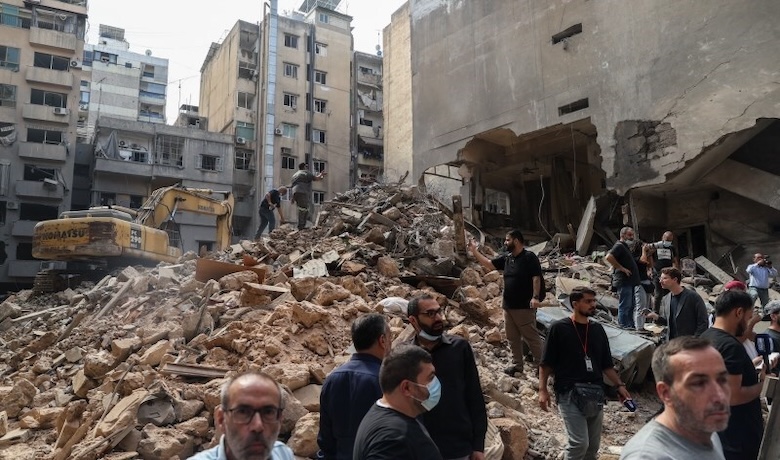
Recent commentaries have characterized evacuation orders in contemporary armed conflicts, including those of the Israel Defense Forces (IDF) in southern Lebanon, as forcible transfer or inherently coercive. This position is reflected in statements by major human rights organizations and UN bodies. The International Commission of Jurists has described the measures as “unlawful mass displacement orders,” while Human Rights Watch has warned that large-scale evacuation orders may amount to forcible displacement and potentially constitute war crimes.
Similarly, the Office of the United Nations High Commissioner for Human Rights has criticized what it terms “blanket” displacement orders affecting broad areas of southern Lebanon, and has raised “serious concern under international humanitarian law,” particularly with respect to the risk that such large-scale evacuation directives may implicate the prohibition on forced transfer.
However, while these concerns reflect genuine humanitarian risks, they often rest on an implicit assumption that large-scale displacement is unlawful, without fully engaging with the conditional structure of international humanitarian law (IHL) governing evacuations. This post argues that IHL does not categorically prohibit evacuation orders. Rather, their legality depends on a context-specific assessment of military necessity, civilian protection, and the operational circumstances in which they are implemented.
Legal Framework: The Conduct of Hostilities under International Law
The legality of evacuation orders under IHL must be assessed within the broader legal framework governing the conduct of hostilities, rather than in isolation. This requires distinguishing between the jus ad bellum question of whether force may be used in the first place and the jus in bello question of how that force is exercised, including the treatment of civilians.
Article 2(4) of the UN Charter prohibits the use of force except in narrowly defined circumstances, most notably self-defense under Article 51. For the purposes of this analysis, the existence of sustained cross-border attacks by Hezbollah, an Iranian-backed armed organization operating from Lebanese territory, provides a factual basis for assessing Israel’s military operations within the framework of self-defense under Article 51.
Importantly, the scope of self-defense against non-State actors remains a contested concept under international law, particularly with respect to the “unwilling or unable” doctrine. While a substantial body of State practice and scholarship supports the view that a State may act in self-defense where the territorial State is unwilling or unable to prevent the threat, the case law of the International Court of Justice in Paramilitary Activities (para. 195) has tended to adopt a more restrictive approach.
To the extent that the intensity of hostilities and the organized nature of Hezbollah are sufficient to establish the existence of an armed conflict, IHL governs the conduct of hostilities and the protection of civilians, including the legality of specific measures such as evacuation orders.
The relevant provisions include Article 49 of the Fourth Geneva Convention, which prohibits the forcible transfer of civilians but explicitly permits evacuation when “the security of the population or imperative military reasons so demand,” and the customary rule reflected in Article 17 of Additional Protocol II, which provides that the “displacement of the civilian population shall not be ordered for reasons related to the conflict unless the security of the civilians involved or imperative military reasons so demand.” This reflects a core feature of IHL: while displacement is recognized as harmful and therefore restricted, it is not categorically prohibited. Rather, it is conditionally permitted where it serves protective or operational necessities that arise during active hostilities.
Some recent critiques characterize evacuation orders as inherently unlawful. These often emphasize the risks associated with large-scale or “blanket” evacuation measures and argue that such orders may fail to meet the requirements of military necessity and in bello proportionality or amount to coercive displacement. While these concerns highlight important constraints under IHL, they may overstate the case by treating large-scale displacement as presumptively unlawful rather than assessing whether it is justified by the relevant operational circumstances. These interpretations often collapse the distinction between prohibited transfer and permitted evacuation, treating displacement itself as evidence of illegality or treating coercive circumstances as sufficient to establish unlawfulness. However, IHL does not prohibit movement per se; it regulates the conditions under which such movement may occur. The relevant inquiry is therefore whether the evacuation is justified by legitimate protective or military considerations, not whether civilians are moved under difficult or constrained circumstances.
This point is reinforced by the obligation to take precautions in attack under Article 57 of Additional Protocol I. Parties to a conflict are required, to the extent feasible, to minimize incidental harm to civilians, including by providing effective advance warnings and adopting measures that reduce civilian exposure to danger. In this context, warnings and evacuation measures may constitute important means of fulfilling precautionary obligations, particularly where civilians are located in areas expected to become sites of active hostilities.
Factual and Operational Context: The Case of Southern Lebanon
The hostilities in southern Lebanon are best understood in the light of the broader regional context in which they emerged. The current cycle of violence traces back to the events of 7 October 2023, when Hamas carried out large-scale attacks against Israel, involving mass atrocities and the taking of hostages. In the immediate aftermath, Hezbollah initiated sustained cross-border attacks beginning on October 8, 2023, explicitly presenting its actions as support for Hamas and linking its operations to the wider conflict. This transformed the northern border into an active front of the same war, rather than a separate or incidental escalation.
Following more than a year of intensive hostilities, during which Israel significantly degraded Hezbollah’s military infrastructure in southern Lebanon, a ceasefire agreement entered into force on November 27, 2024. The agreement aimed to implement United Nations Security Council Resolution 1701, including the requirement that the area south of the Litani River remain free of non-State armed groups. The Government of Lebanon was required to prevent Hezbollah and all other armed groups from carrying out operations against Israel, while Israel undertook not to conduct offensive military operations against Lebanese civilian, military, or State targets.
However, the implementation of these obligations has been partial and increasingly unstable. Subsequent assessments indicate that Hezbollah has rebuilt and maintained a significant military presence in the area, including weapons stockpiles, launch positions, and operational infrastructure embedded within civilian localities. This activity is difficult to reconcile with both the ceasefire framework and the requirements of Resolution 1701, which mandates that the area south of the Litani River remains free of non-State armed forces. At the same time, Hezbollah has not renounced its commitment to armed confrontation, continuing to assert a right of “resistance” and to reject exclusive State control over the use of force.
The renewed escalation in 2026 must be understood against this background. It followed the U.S.–Israeli strikes on Iran, after which Hezbollah initiated its attacks against Israel, explicitly framing its actions as part of a broader confrontation aligned with Iran. Statements by Hezbollah leadership indicate these attacks were not incidental but formed part of a coordinated regional pattern of armed activity. These conditions are directly relevant to evaluating the lawfulness of evacuation measures under IHL.
Application: Evacuation Orders in Civilian Areas Used for Military Purposes
When assessing the legality of evacuation orders issued to civilian populations, it is necessary to consider the prevailing operational conditions, particularly the extent to which armed groups systematically embed military capabilities within civilian areas. In such settings, civilian localities may be used for military purposes, including the placement of weapons, launch sites, and operational infrastructure within or close to residential zones, as documented in frontline villages in southern Lebanon.
Under customary IHL (see e.g. International Committee of the Red Cross, Customary International Humanitarian Law Study, rule 10), civilian objects lose their protection from attack only when they qualify as military objectives, that is, where, by their nature, location, purpose, or use, they make an effective contribution to military action, and their neutralization offers a definite military advantage. When civilian objects in populated areas become military objectives, the continued presence of civilians in these areas significantly increases the risk of incidental harm.
Hence, evacuation orders issued to populations are best understood as measures aimed at protecting civilians by removing them from areas that have become militarily significant and within which lawful targets are situated. In other words, when civilian areas are systematically used for military purposes, military objectives may be widely dispersed within a given locality, thereby strengthening the need to evacuate civilians rather than weakening it. Far from constituting evidence of unlawful conduct, such warnings and evacuation measures reflect an attempt to reduce foreseeable harm in circumstances where the adversary has deliberately undermined the distinction between civilian and military space.
However, this reasoning does not apply uniformly across all areas subject to evacuation orders. Measures affecting areas further removed from active hostilities, or framed in broader and less differentiated terms, require more specific justification grounded in military necessity and the presence of military objectives.
A separate concern, raised in the comments mentioned at the outset of this post, is that the evacuation orders issued by the IDF were under coercive conditions, where civilians lack meaningful alternatives, and may amount to unlawful forcible transfer. This reasoning risks conflating the presence of coercive circumstances with illegality. In situations of active hostilities, displacement will invariably occur under conditions of pressure, urgency, and constrained choice. IHL does not require that evacuation takes place under ideal or pressure-free conditions, and the presence of coercive factors does not render evacuation unlawful. The decisive question remains whether the displacement is justified within the relevant constraints of IHL.
Furthermore, critiques of evacuation orders often rely on an overly static conception of civilian protection that does not adequately reflect the realities of contemporary conflict. In modern warfare, particularly in asymmetric conflicts, armed groups deliberately operate within civilian environments, blurring the distinction between civilian and military spheres. This strategic intermingling complicates the application of traditional legal categories and makes it more difficult to protect civilians without resorting to measures such as evacuation. A legal analysis that fails to engage with this operational environment risks producing conclusions that are formally appealing but practically disconnected from the conditions under which the law must function.
At the same time, this does not imply that all evacuation orders are lawful. The law imposes important constraints: evacuations must be temporary, not carried out for purposes unrelated to civilian protection or imperative military necessity, and must be implemented with due regard for the welfare of the affected population. In addition, their scope and application must remain closely tied to the specific circumstances in which they are applied. These conditions confirm that evacuation is a regulated and context-dependent measure, not a prohibited one.
Conclusions
IHL establishes a framework within which evacuation orders may be lawful under specific conditions, requiring a case-specific assessment of their purpose and implementation. Approaches that treat displacement as presumptively unlawful, or that overlook the operational realities of modern conflict, risk misconstruing this framework and obscuring the role evacuation can play in reducing civilian harm.
In contemporary conflicts, including those in southern Lebanon, measures like advance warnings, evacuation orders, and efforts to move civilians away from active combat zones align with the structure of IHL, which requires parties to take feasible precautions in densely populated areas. In circumstances where military operations are embedded within civilian environments, these measures are better understood not as evidence of a policy of destruction, but as attempts to comply with legal obligations under highly constrained conditions. At the same time, this does not resolve the legality of all evacuation measures. Their permissibility depends on their scope and their connection to specific operational circumstances, particularly in areas further removed from active hostilities or where evacuation orders are framed in broader terms.
***
Oded Hen is a PhD candidate in the Department of Philosophy at Bar-Ilan University. His research focuses on moral philosophy, particularly the ethics of modern warfare and just war theory.
The views expressed are those of the author, and do not necessarily reflect the official position of the United States Military Academy, Department of the Army, or Department of Defense.
Articles of War is a forum for professionals to share opinions and cultivate ideas. Articles of War does not screen articles to fit a particular editorial agenda, nor endorse or advocate material that is published. Authorship does not indicate affiliation with Articles of War, the Lieber Institute, or the United States Military Academy West Point.
Photo credit: Tasnim News Agency, Hamed Malekpour
