

Accountability
Year in Review – 2025
2025 has been a year of persistent conflicts, evolving law of armed conflict (LOAC) questions, and contrasting views. At Articles of War, we strived to provide a platform for nuanced legal analysis and timely discussion in 200 posts, exploring how law restrains war in...

Mission Command Responsibility
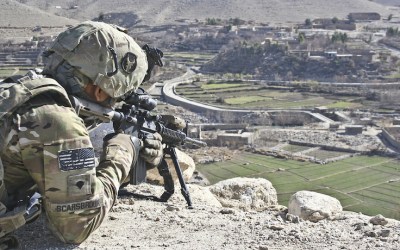
When Justice Paul Brereton’s report on alleged Australian war crimes in Afghanistan was released, it sent shockwaves in Australia and internationally. It confronted and confirmed uncomfortable truths: that within Australia’s most elite military units, a small number...
In Honor of Françoise Hampson – Fact-Finding in Law of Armed Conflict Investigations
Editors’ note: This post is part of a series to honor Françoise Hampson, who passed away on April 18, 2025. These posts recognize Professor Hampson’s work and the significant contribution her scholarship made to our understanding of international law. In preparing to...

Revisiting Customary IHL Series – A Question of Methodology: Should International Criminal Law Shape IHL?
Editors’ note: This post is part of a series relating to the ICRC's Customary International Humanitarian Law Study, featured across Articles of War and Völkerrechtsblog. The introductory post is available here. The series highlights presentations delivered at the...

Non-State Cyber Actors in the 12-Day War – The Gray Zone of LOAC, Part II
Editors’ note: In a prior post Professor Gary Corn described recent cyber operations undertaken during conflict between Iran and Israel. He related details of the hacking group, Predatory Sparrow, and mapped possible legal analysis of its status under the law of armed...

From Outrage to Engagement: Might Promoting Compliance Succeed Where Condemnation Has Failed?
The mood at this year’s European Humanitarian Forum (EHF) oscillated between frustration, foreboding, and a pervasive sense of hyper-normalization. The Secretary-General of the International Federation of the Red Cross, Jagan Chapagain, was quoted as saying “I am...

Prosecuting the Starvation War Crime in Germany: The Yarmouk Case
On 6 June 2024, the Investigative Judge at the Federal Court of Justice issued arrest warrants for five individuals apprehended in Germany. The suspects, taken into custody a month later, allegedly committed war crimes and crimes against humanity in connection with...
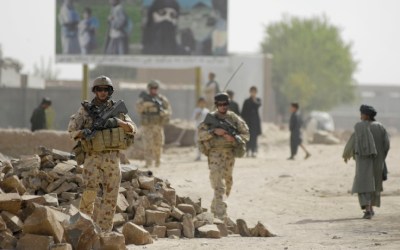
Australia’s Afghanistan Inquiry Compensation Scheme: A Pragmatic Model for Individual Reparations
Editors’ note: This post draws from the author's forthcoming examination of the Afghanistan Inquiry Compensation Scheme's legal framework and international law implications, to be published in the Australian Yearbook of International Law later this year. Professor Ben...

Ukraine Symposium – War Termination: Legal Implications for International Security
The Kremlin announced on June 20 that it would finalize a date for a third round of peace talks with Ukraine. This follows two meetings in Istanbul on May 16 and June 2, 2025, marking the first such negotiations in over three years. But Ukraine and Russia remain...

Prosecuting Rwanda for Aggression in the DRC: Legal Feasibility and Challenges
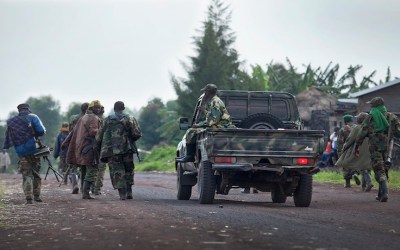
Rwandan involvement in the Democratic Republic of the Congo (DRC) has been reported in two principal forms: first, direct intervention by Rwandan State forces across the border; and second, indirect support for the rebel group M23. UN experts and other observers have...

Analyzing State Support to Non-State Actors – Part II: Response Options and Conflict Classification
As non-State actors assume an increasingly prominent role in international affairs, State support to them as a strategic tool for advancing political objectives has become more common. Such support presents significant challenges to the clear-eyed application of...

Analyzing State Support to Non-State Actors – Part I: Primary Obligations and Attribution
Today, armed conflicts are frequently characterized by State support to non-State actors as a means of advancing the former’s strategic objectives. For instance, Iran continues to enable Hezbollah, Hamas, Houthi, and other militia operations throughout the Middle East...

Lieber Studies Series – Military Investigations
Editors’ note: This post is based on the author’s chapter in Civilian Protection in Armed Conflict: Select Issues (Jelena Pejic and Margaret Kotlik eds. 2025), the eleventh volume of the Lieber Studies Series published with Oxford University Press. Military...

Lieber Studies Series – Civilian Protection in Armed Conflict: Select Issues
Civilian protection is a basic aim and legal obligation of international humanitarian law (IHL) or the law of armed conflict (LOAC). Yet, as recent and ongoing armed conflicts in Gaza, Sudan, Ukraine, Myanmar, and elsewhere demonstrate, State armed forces and...
Sudan: The Case for Recognising All Conflict-Related Sexual Violence as Torture
Conflict-related sexual violence (CRSV) is often framed as an unfortunate byproduct of war rather than as an intentional and strategic act of violence. However, a closer examination of CRSV in modern conflicts reveals it is not incidental. As a deliberate weapon...

A New Tool in the Fight Against Impunity for Core International Crimes
Globalisation has made various aspects of our society more efficient over the past century. At the same time, it also brings with it a certain complexity. This is noticeable, for example, in the prosecution of international crimes. In May 2019, on the occasion of the...

The Conflict in Eastern DRC and the State Responsibility of Rwanda and Uganda
In late January 2025, a rebel alliance involving the militia group M23 seized control over the town of Goma, the provincial capital of North Kivu in the Democratic Republic of the Congo (DRC). Notwithstanding their declaration of a unilateral ceasefire, at the time of...
The Role of the Private Sector in Ensuring Respect for IHL
On September 12th, the International Committee of the Red Cross (ICRC) published its report, International Humanitarian Law and the Challenges of Contemporary Armed Conflicts. It is customary for the ICRC to produce such a report in the run-up to each quadrennial...

EU Support to Ukraine through Windfall Profits: Reparative Value, International Law, and Future Pathways
Over two years into the Russian Federation’s full-scale invasion of Ukraine, the fate of Russian assets frozen by Western sanctions is followed almost as closely as battlefield developments. Considering the figures at play (assets worth an estimated $300 billion),...
Beyond Compliance Symposium – Compliance + Restraint Towards Full(er) Protection in War
Editors’ note: This post forms part of the Beyond Compliance Symposium: How to Prevent Harm and Need in Conflict, featured across Articles of War and Armed Groups and International Law. The introductory post can be found here. The symposium invites reflection on the...
Military Investigations in Armed Conflict: Investigating Themselves?
Editors’ note: This post is based on the author’s recently published book, Military Investigations in Armed Conflict: Independence and Impartiality under International Law, published with Routledge. “We investigated ourselves and found we did nothing wrong.” This...

Legal Black Hole Redux: The 9/11 Military Commission Plea Withdrawal
When a military commander makes a bad call, or a series of them, they are typically relieved of the duty pursuant to which the call was made. President Lincoln took this route with General George McClellan’s strategic dithering during the Civil War, as did President...
The International Humanitarian Fact-Finding Commission and Gaza – How is it Involved?
On 20 June 2024, the government of the Republic of Poland signed a Memorandum of Understanding with the International Humanitarian Fact-Finding Commission (IHFFC) regarding the incident on April 1, 2024 in the Gaza Strip during which seven people working with the...

Space Privateers or Space Pirates? Armed Conflict, Outer Space, and the Attribution of Non-State Activities
Famously, George Clemenceau, Prime Minister of France at the end of the First World War, quipped that “generals always prepare to fight the last war, especially if they won it.” Such flaws of perspicacity, of course, are not limited to generals. After all, as Nobel...
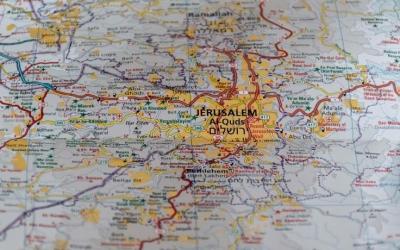
Authoritatively Stating International Law? The ICJ and Israeli Withdrawal from the OPT
On July 21, 2024, the International Court of Justice (“ICJ” or “Court”) delivered its advisory opinion on the Legal Consequences arising from the Policies and Practices of Israel in the Occupied Palestinian Territory, including East Jerusalem. On its own terms, the...

Israel-Hamas 2024 Symposium – Pro-Israel Lawfare, Symbolism, or Genuine Legal Concern?
Israel often perceives itself at the receiving end of what today is termed “lawfare”: warfare by legal means or the use of strategic litigation to achieve in the courtroom what cannot be achieved on the battlefield. South Africa’s case against Israel or Nicaragua’s...

Diversification of Civilian Agency: An Accountability Perspective
Several recent developments have challenged the traditionally assumed passivity of civilians in armed conflict. Most notable are calls to participate in a volunteer IT army, the facilitation of an app that can provide intelligence to armed forces, and calls to...

Israel – Hamas 2024 Symposium – What Happens If the ICC Issues Warrants for Senior Hamas and Israeli Leaders?
In recent days Israeli newspapers and television channels have been reporting rumours that the International Criminal Court (ICC) may soon issue arrest warrants in the Situation in the State of Palestine. Israeli leaders rumoured to be facing warrants include Prime...
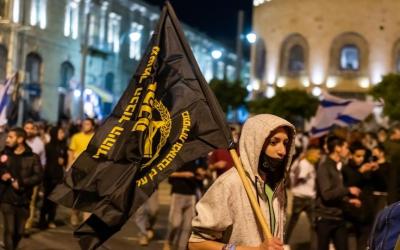
Israel – Hamas 2024 Symposium – Targeted Sanctions against West Bank Settlers
Before and after 7 October, several States, most notably the United States, the United Kingdom, as well as the European Union, imposed multiple rounds of sanctions against Hamas and/or Hamas leaders. Only more recently, sanctions have also been imposed against Israeli...

In Honor of Yoram Dinstein – Co-application of IHL and IHRL: Some Takeaways from the Ukraine and Gaza Wars
Editors’ note: This post is part of a series to honor Professor Yoram Dinstein, who passed away on Saturday February 10, 2024. These posts recognize Professor Dinstein’s work and the significant contribution his scholarship has made to our understanding of...
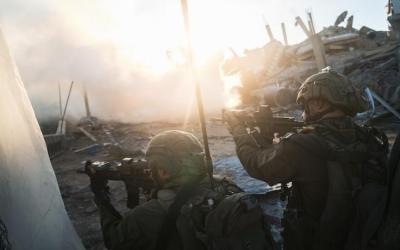
Israel – Hamas 2024 Symposium – Reflections on the Invocation of Common Article 1
The South Africa v. Israel case at the International Court of Justice (ICJ) concerning alleged violations of the Genocide Convention during the Israel-Hamas war has broader implications than the core question at the heart of that proceeding. One consequence became...
Regulating Military Force Series – Hybrid Warfare and Jus ad Bellum
Editors' note: The author delivered remarks on the subject of this post at the conference “International Law and the Regulation of Resort to Force: Exhaustion, Destruction, Rebirth?” at the Centre for International Humanitarian and Operational Law, Palacký University...
Lieber Studies Big Data Volume – Corporate Data Responsibility
Editors’ note: This post is based on the authors’ chapter in Big Data and Armed Conflict (Laura Dickinson and Ed Berg eds. 2024), the ninth volume of the Lieber Studies series published with Oxford University Press. Big data is playing an important role in the global...
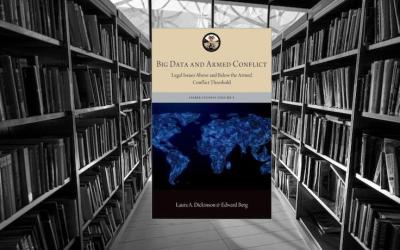
Lieber Studies Big Data Volume – Big Data and Armed Conflict – Legal Issues Above and Below the Armed Conflict Threshold
Editor’s note: This is the first post in a symposium addressing themes from a new book entitled Big Data and Armed Conflict: Legal Issues Above and Below the Armed Conflict Threshold, the ninth in the Lieber Institute’s Lieber Studies series with Oxford University...

Recapping “Cyber in War: Lessons from the Russia-Ukraine Conflict”
We are fast approaching the two-year mark of the massive escalation of Russia’s war of aggression against Ukraine. While much of this war has been fought in the physical realm, to devastating effect, cyber operations have also played a significant role, giving the...
The U.S. DoD’s New Civilian Harm Mitigation and Response Policy and “Harm Resulting From” Military Operations
In a much-celebrated move in late December 2023, the U.S. Department of Defense (DoD) made good on its promise to publish an enterprise-wide policy on civilian harm mitigation and response (CHMR) related to U.S. military operations during armed conflict. Notably, the...
The U.S. Turkish Drone Shootdown Over Syria and the Jus Ad Bellum
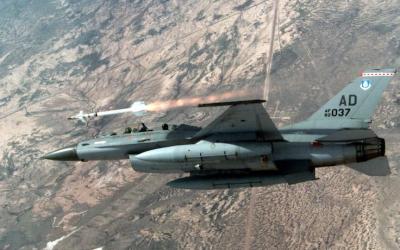
In early October, the United States shot down an armed Turkish unmanned aerial vehicle (drone) operating over Syrian airspace with an F-16 fighter jet. The aerial engagement was unusual, if not unprecedented, in that it targeted an aircraft belonging to “one of...

The Anti-ISIL Coalition, Civilian Harm, and the Obligation to Investigate
This post is drawn from the author’s article-length work, “How Does the Obligation to Investigate Alleged Serious Violations of International Humanitarian Law Apply in Ad Hoc Military Coalitions?” appearing in The Military Law and the Law of War Review. In recent...

Digitalize It: Digital Evidence at the ICC
The International Criminal Court (ICC, or the Court) first accepted digital evidence in a legal proceeding in 2013 during the prosecution of Al Faqi Al Mahdi for ordering the destruction of the Timbuktu shrines and mosques in Mali. Since that case, there has been...

Al Hassan Symposium – “Islam Itself Is Not on Trial”: Culture and Religion in Al Hassan
Editor’s note: This post is part of a joint symposium hosted by the Armed Groups and International Law and Articles of War blogs. This symposium addresses the pending ICC Al Hassan judgment. Katharine Fortin, Sean Watts, and Diletta Marchesi’s introductory post is...

Al Hassan Symposium – Rebel Governance under the Spotlight: the ICC Al Hassan Case
Editor’s note: This post is part of a joint symposium hosted by the Armed Groups and International Law and Articles of War blogs. This symposium addresses the pending ICC Al Hassan judgment. Katharine Fortin, Sean Watts, and Diletta Marchesi’s introductory post is...
The United States Should Ratify the Rome Statute
(Editor’s note: This article is part of a joint symposium hosted by Just Security and Articles of War. The symposium addresses topics discussed at a workshop held at The George Washington University Law School concerning U.S. cooperation with the International...

International Law and Accountability for the Nova Kakhovka Dam Disaster
The Dnieper River is one of the largest transboundary rivers in Europe, originating in Russia, flowing through Belarus and Ukraine before reaching the Black Sea. The river is Ukraine’s primary water source and covers a significant portion of the country. Ukraine has...

Putin Admits to Funding the Wagner Group: Implications for Russia’s State Responsibility
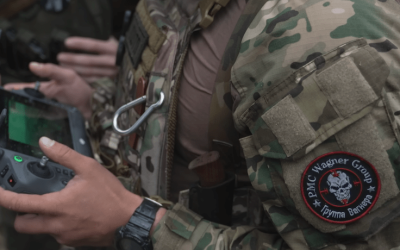
On June 27, 2023, Russian President Vladimir Putin made a remarkable announcement. After years of denying any links between the Wagner Group and the Russian State, Putin stated, “I want to point out and I want everyone to know about it: The maintenance of the entire...

U.S.-ICC Symposium – U.S. Cooperation with the ICC to Investigate and Prosecute Atrocities in Ukraine: Possibilities and Challenges
(Editor’s note: This article provides an overview of a joint symposium hosted by Just Security and Articles of War. The symposium addresses topics discussed at a workshop held at The George Washington University Law School concerning U.S. cooperation with the...

Contracts Between the Wagner Group and Russia’s Defense Ministry: International Law Implications
After months of infighting between Russian defense officials and the Wagner Group, the Deputy Defense Minister, Nikolai Pankov, announced on June 10, 2023, that “volunteer formations” would be required to sign contracts with the Russian Ministry of Defense before the...

The Libel Case Confirming Australian War Crimes in Afghanistan
The Verdict against Ben Roberts-Smith Australia’s “trial of the century” concluded earlier this month in Sydney in a moment that captured international headlines. A man commonly described as Australia’s most decorated living soldier, former Special Air Service...
The Expert Panel’s Review of Amnesty International’s Allegations of Ukrainian IHL Violations
Last week, the New York Times reported that Amnesty International (AI) “sat for months on a report critical of the group after it accused Ukrainian forces of illegally endangering civilians while fighting Russia.” The report in question was prepared by a distinguished...
Reflections on the DoD General Counsel’s Cyber Law Address
On Tuesday, the General Counsel of the Department of Defense, the Honorable Caroline Krass, addressed the annual United States Cyber Command Legal Conference. Her speech followed in the footsteps of Hon. Harold Koh’s 2010 presentation to the conference as Department...
Ukraine Symposium – Accountability for Cyber War Crimes
In our digitally connected and technology-dependent world, cyber-attacks on critical infrastructure such as electric power grids, water treatment facilities, and industrial control systems have far-reaching safety and security consequences. When these attacks are...
The Dutch Chora Judgment: Ex-Gratia Payments and Compensation
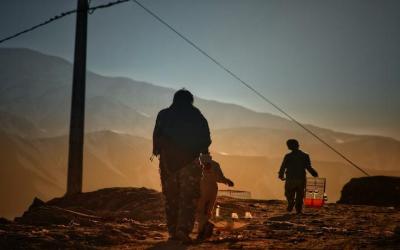
Recently, a Dutch district court in The Hague delivered its judgment concerning claims arising from a 2007 battle in Chora, Afghanistan. Whereas an earlier post by Marten Zwanenburg reviewed the judgment with a focus on the alleged violations of International...
Are States Aiding and Assisting Ukraine and Russia Using Force?
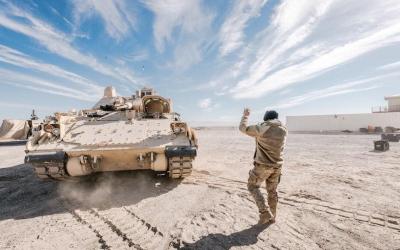
The provision of military aid and assistance from States supporting Ukraine and Russia has been a salient theme in their international armed conflict following Russia’s renewed invasion in February 2022. As of late March 2023, for instance, over fifty States have...
ICJ Ruling on Iran’s Proxy War: The United States Must Pay
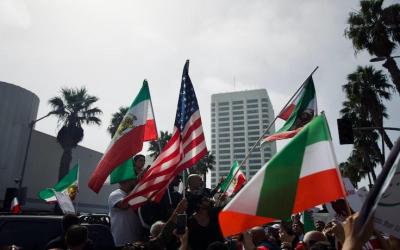
On March 30, the International Court of Justice issued a ruling on financial measures that the United States had adopted against Iranian assets. The case was brought by Iran, seeking to challenge the legality of these financial measures as a breach of the Treaty of...
The Law in War: A Concise Overview
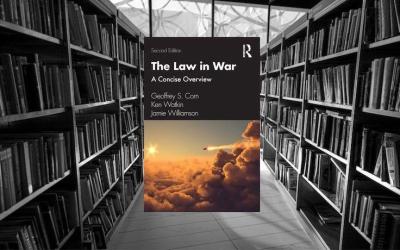
When we first plotted our plan to write the 1st edition of this book, our goal was to offer an accessible narrative overview of international humanitarian law for both lawyers and non-lawyers interested in the topic. To that end, the original 2018 edition addressed...
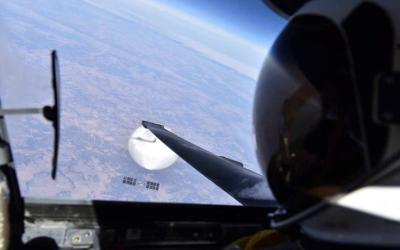
Balloons are Not Always Joyful: The Legality of Downing the Chinese Spy Balloon
On January 28, 2023, a Chinese high-altitude balloon (HAB) entered U.S. airspace near Alaska and, after transiting Canadian airspace, continued its voyage from the west to the east coast. On February 4, 2023, the United States shot down the HAB over the territorial...

U.S. Evidence Sharing with the ICC
The U.S. Supreme Court often reminds our government that it must speak with one voice in the world. This is no less true within an administration than it is across the federal branches or with respect to the community of States. From 1793 when George Washington...
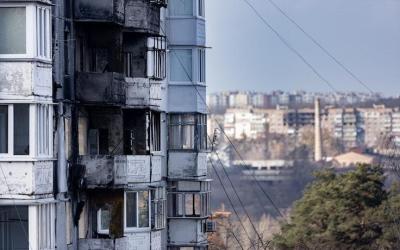
Ukraine Symposium – Seizure of Russian State Assets: State Immunity and Countermeasures
On 24 February 2023, the United Kingdom (UK) government objected to the Seizure of Russian State Assets and Support for Ukraine Bill in the House of Commons, proposed legislation that would require the government to put measures in place to seize frozen Russian State...

Ukraine Symposium – The Law of Crowdsourced War: Democratized Supply Chains – Part I
“Infantry wins battles, logistics wins wars.” General Pershing’s oft cited maxim of warfare is once again proving itself out in Ukraine. Thankfully, from the outset of Russia’s ill-conceived war of aggression, its progress has been hampered by poorly maintained...
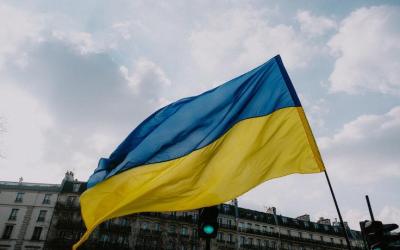
Ukraine One Year On – Defying the Odds
On 24 February 2023, one year has passed since Russia commenced its full-scale invasion of Ukraine. The past year has been filled with acts of aggression, war crimes, and continued atrocities. International humanitarian law (IHL) is one of the most profound and...

Dimensions of Russian Aggression and the International Legal Order
Russia’s war against Ukraine has many dimensions: conventional, economic, cyber, informational, and cultural. Recent research, prepared by the Economic Security Council of Ukraine in cooperation with the State Service of Special Communication and Information...

Ukraine Symposium – The Wagner Group: Status and Accountability
Since Russia commenced its full-scale invasion of Ukraine in February 2022, the Wagner Group has come out of the shadows. Used by the Kremlin as an alternative fighting force since 2014, the private military company (PMC) now operates with a much greater degree of...
![Prosecuting War Crimes Symposium – Justice for Victims of [Some] War Crimes Act?](https://lieber.westpoint.edu/wp-content/uploads/2023/02/pexels-D°DDµNN-NNNND½D°N-11734709.jpg?w=400&h=250&crop=1)
Prosecuting War Crimes Symposium – Justice for Victims of [Some] War Crimes Act?
Editor’s note: The following post highlights a subject addressed at a Lieber Institute expert workshop focusing on Prosecuting War Crimes. For a general introduction to this symposium, see Professor Sean Watts and Jennifer Maddocks’s introductory post. Recent years...
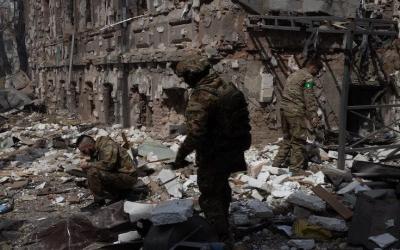
Prosecuting War Crimes Symposium – German Domestic Prosecutorial Experience
Editor’s note: The following post highlights a subject addressed at a Lieber Institute expert workshop focusing on Prosecuting War Crimes. For a general introduction to this symposium, see Professor Sean Watts and Jennifer Maddocks’s introductory post. The...

Prosecuting War Crimes Symposium – Evidentiary Challenges
Editor’s note: The following post highlights a subject addressed at a Lieber Institute expert workshop focusing on Prosecuting War Crimes. For a general introduction to this symposium, see Professor Sean Watts and Jennifer Maddocks’s introductory post. The Commission...
Responsible AI Symposium – The AI Ethics Principle of Responsibility and LOAC
Editor’s note: The following post highlights a subject addressed at an expert workshop conducted by the Geneva Centre for Security Policy focusing on Responsible AI. For a general introduction to this symposium, see Tobias Vestner’s and Professor Sean...
Ukraine Symposium – Reparations for War: What Options for Ukraine?
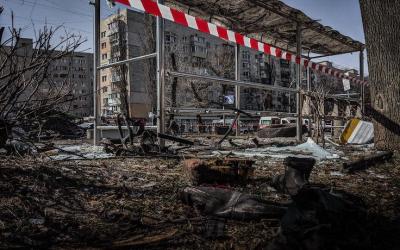
On 14 November, the UN General Assembly received a resolution calling for international support and cooperation on reparations for Ukraine. For thousands of years, reparations have attempted to settle grievances and secure peace between warring nations. However, the...
Ukraine Symposium – The Complicity of Iran in Russia’s Aggression and War Crimes in Ukraine
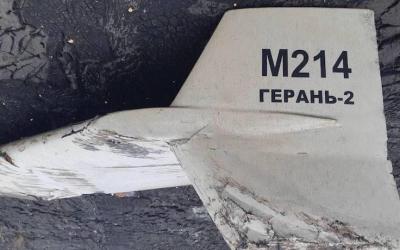
In recent days Russia has attacked Kyiv and other Ukrainian cities using Iranian-made “kamikaze drones” or loitering munitions. While the EU is looking for “concrete evidence” that Iran has sold these weapons to Russia, a spokesman for the Iranian Foreign Ministry has...
Türkiye’s Threats against Greece: A Violation of Article 2(4) of the UN Charter?
On September 5-6, 2022, the Greek Foreign Minister Mr. Nikos Dendias sent letters to the EU, NATO, and the UN to bring to their attention public statements made by Türkiye’s President Recep Tayyip Erdogan whose “openly threatening nature and tone are more than...

Ukraine Symposium – Russian Crimes Against Children
Since the beginning of Russia’s full-scale invasion of Ukraine on 24 February 2022, there has been evidence that indicates Russian political and military leaders, as well as ordinary members of the military, have committed numerous international crimes, including...
Assuming Risk – Artificial Intelligence on the Battlefield
Artificial intelligence and machine learning (AI/ML) have promising potential to bring faster, more accurate analysis to enable holistic decision-making on the battlefield. With the exponential increase of data from numerous battlefield sensors, AI/ML are expected by...
“Reason to Know” in the Law of Command Responsibility
During the U.S.-led invasion and occupation of Afghanistan, the Australian Defence Force (ADF) collaborated with coalition forces to overcome the Taliban, secure peace in large portions of Afghanistan, train Afghan National Army soldiers and officers, complete...
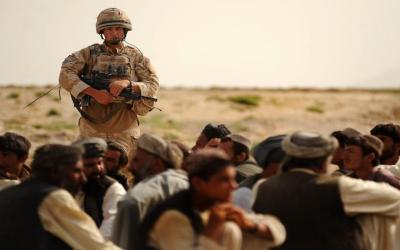
Alleged UK War Crimes in Afghanistan
The Alleged Crimes and the Australian Parallels An investigation by the BBC television news program Panorama has reported that U.K. “SAS operatives in Afghanistan repeatedly killed detainees and unarmed men.” Intentionally killing detained persons or those hors de...
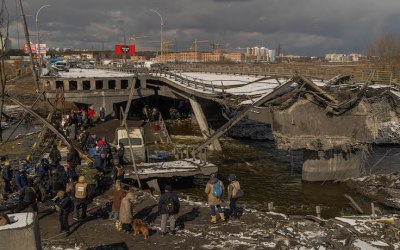
A New Political Declaration on Civilian Harm: Progress or Mythical Panacea?
On June 17, against a backdrop of the Russian invasion of Ukraine that has now killed or wounded over 11,000 civilians in a little more than four months, a group of States, the International Committee of the Red Cross (ICRC), and non-governmental organizations (NGOs)...
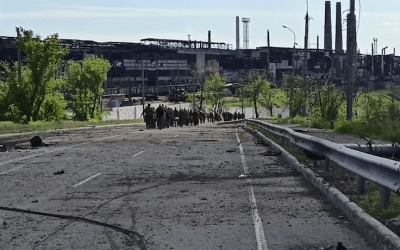
Ukraine Symposium – Rebel Prosecutions of Foreign Fighters in Ukraine
On 1 July 2022 Russian state media reported that two British nationals captured by the “Donetsk People’s Republic” in eastern Ukraine would be prosecuted for “mercenary activities,” in violation of the laws of Donetsk. This comes a few weeks after two British men and...
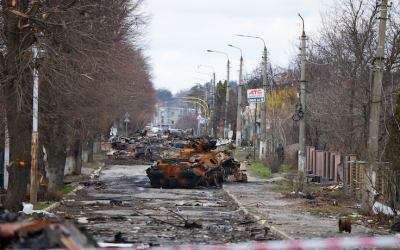
Ukraine Symposium – Documentation and Investigation Responses to Serious International Crimes
The armed conflict in Ukraine dates to 2014 when Russia invaded Crimea. Since that time, a number of important documentation and investigation efforts began, both nationally and internationally. These included efforts undertaken by civil society organizations like...
How Human Rights Law Bodies Handle Situations of Armed Conflict and Human Rights Law
This is the second of two posts dealing with aspects of the relationship between the law of armed conflict (LOAC) and Human Rights Law (HRsL). HRsL bodies have long dealt with cases arising out of situations of armed conflict, even though the applicability of LOAC was...

Ukraine Symposium – The Atrocity Crimes Advisory Group & Ukrainian Prosecutions of Russian POWs – Part 3
In two previous posts (here and here), I addressed guilty pleas by three Russian soldiers recently processed by two Ukrainian domestic, civilian courts. This post synthesizes the previous posts’ observations into considerations for the recently-formed Atrocity Crimes...
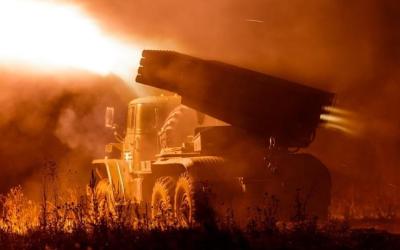
Ukraine Symposium – The Atrocity Crimes Advisory Group & Ukrainian Prosecutions of Russian POWs – Part 2
A prior post recounted the recent trial and guilty plea by Russian Army Sergeant Shishimarin in Ukraine. That post identified a number of important substantive and procedural legal considerations from those proceedings. This post provides similar attention to a...

Ukraine Symposium – The Atrocity Crimes Advisory Group & Ukrainian Prosecutions of Russian POWs – Part 1
On 25 May 2022, the European Union, the United States, and the United Kingdom announced the establishment of the Atrocity Crimes Advisory Group for Ukraine (ACA). According to the announcement, “[t]he overarching mission of the ACA is to support the War Crimes Units...
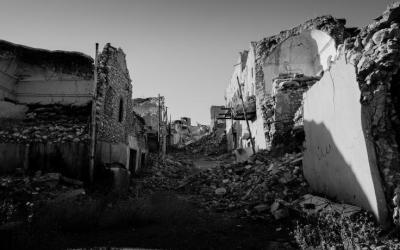
Ukraine Symposium – Effects-Based Enforcement of Targeting Law
The international armed conflict between Russia and Ukraine tragically demonstrates that the European continent is still not immune from war. It also illustrates that the laws of war are only as effective as the leadership and discipline that guides military forces...

Foreign Fighters: The Terrorism/IHL Conundrum and the Need for Cumulative Prosecution
The attack launched by ISIS on 20 January 2022 against the Al-Sina’a Prison in Al-Hasakah, an area situated in North-Eastern Syria and currently under the authority of the Kurdish-led Syrian Democratic Forces, with the intention of freeing ISIS fighters held there,...

Ukraine Symposium – Building Momentum: Next Steps towards Justice for Ukraine
[Author's Note: I am a member of the Legal Task Force on Accountability for Crimes Committed in Ukraine, alongside Amal Clooney and other international lawyers and academics. I am writing in my own capacity.] *** On 27 April, 63 days after the Russian invasion, the UN...
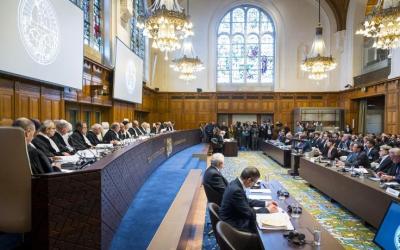
Ukraine Symposium – Litigating Russia’s Invasion of Ukraine
Since the commencement of Russia’s invasion of Ukraine at the end of February, different international courts and tribunals have been engaged as means to invoke international responsibility for the various violations of international law that have occurred. As is...
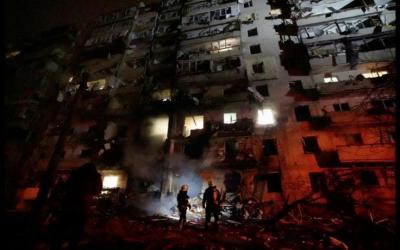
Ukraine Symposium – Comprehensive Justice and Accountability in Ukraine
As the war between Russia and Ukraine enters its second month there are increasing allegations of serious law of armed conflict (LOAC) violations. The allegations, amplified by graphic images and videos which are sometimes even narrated by purported witnesses, have...
Ukraine Symposium – Results of a First Enquiry into Violations of International Humanitarian Law in Ukraine
On 3 March 2022 the Moscow Mechanism of the human dimension of the Organization for Security and Co-operation in Europe (OSCE) was invoked by Ukraine supported by 45 participating States. This mechanism mandated a mission of experts, undertaken by Professor Wolfgang...
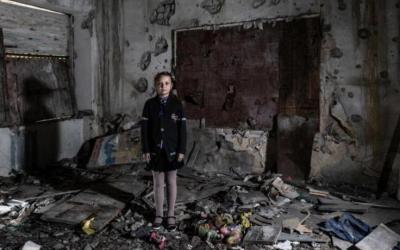
Ukraine Symposium – War Crimes against Children
For the 452 million children living in conflict zones (1 in 6 globally), the effects of conflict are multiple, wide-ranging, and devastating. With an increase in asymmetric warfare globally, children are targets of horrific acts of violence, including killing,...

Ukraine Symposium – A War Crimes Primer on the Ukraine-Russia Conflict
More than a month into the conflict between Russia and Ukraine, allegations of war crimes have proliferated from media, advocacy groups, international organizations, and even States. Meanwhile, the Prosecutor of the International Criminal Court has initiated an...

The Siren Song of Universal Jurisdiction: A Cautionary Note
In the face of the humanitarian crises and government abuses in the Syrian Civil War, the German Office of the Federal Prosecutor General initiated prosecution against a number of Syrian officials for a range of crimes including murder, rape, and arbitrary detention....

Command Responsibility and the Ukraine Conflict
The news on the conflict in Ukraine is replete with violations of international humanitarian law (IHL), conveying the impression that soldiers have either been ordered to commit these crimes or have been allowed to do so (or a combination thereof). In the latter case,...
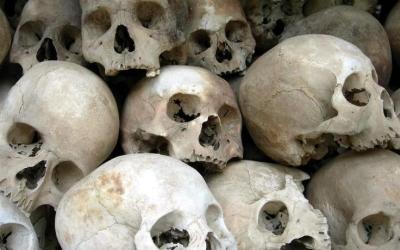
Portending Genocide in Ukraine?
As Russian forces continue their brutal invasion of Ukraine, worrisome signs are emerging about the prospect of genocide. While the term is used rather freely in the media, the prospect of actual genocide returning to Europe for the first time in nearly thirty years...
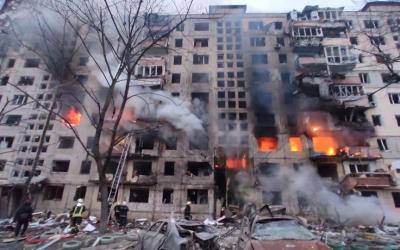
Time for a New War Crimes Commission?
The shock of invasion remains fresh and raw. And yet it must cede room for new shocks, for the quotidian tremors caused by reports that Russian troops have shelled homes and maternity hospitals, dropped cluster bombs on schools, seized nuclear plants, and forced more...
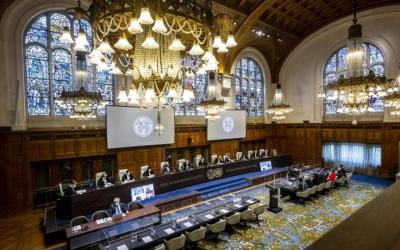
The ICJ’s Provisional Measures Order: Unprecedented
On March 16, 2022, the International Court of Justice (ICJ) rendered its provisional measures order in the application brought by Ukraine against Russia under the Genocide Convention, arguing, inter alia, that Russia’s invasion was an unlawful abuse of its obligation...

Ukraine’s Legal Counterattack
Beyond its endurance on the battlefield, Ukraine has launched a legal counterattack against Russia in the courts. The normally slow-moving, process-heavy gears of international justice are now moving at relative lightspeed in response to Russia’s illegal invasion of...

Fact-Finding in Ukraine: Can Anything Be Learned from Yemen?
On 4 March 2022, the United Nations Human Rights Council voted to establish a Commission of Inquiry to investigate “all alleged violations and abuses of human rights and violations of international humanitarian law, and related crimes in the context of the aggression...

Accountability and Ukraine: Hurdles to Prosecuting War Crimes and Aggression
Social media and news outlets are replete with examples of misconduct occurring during the Russian invasion of Ukraine. In fact, this conflict is being conducted under the public eye—more so even than recent conflicts in Syria or Iraq—given the absence of...

Terrorist Offences and IHL: The Armed Conflict Exclusion Clause
In our current article in the International Review of the Red Cross, we discuss the so-called “armed conflict exclusion clause” (also known as an “international humanitarian law (IHL) exclusion clause” or “IHL savings clause”). This clause regulates the relationship...

A Primer on the ICJ’s Upcoming Armed Activities Reparations Judgment
On February 9, 2022, the International Court of Justice (ICJ) will render its judgment on the question of reparations in the Armed Activities on the Territory of the Congo case between the Democratic Republic of the Congo (DRC) and Uganda. The principal judicial...
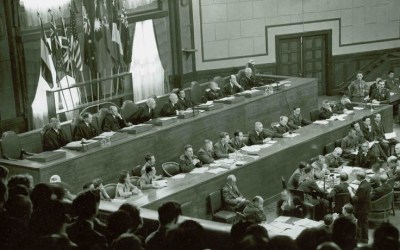
Hays Parks and the Doctrine of Command Responsibility
While he was a graduate student at the Army’s Judge Advocate General’s School in 1973, then-Major Hays Parks wrote a thesis titled “Command Responsibility for War Crimes” that was published in the Military Law Review. To say that this rather simply titled thesis...
Holding Autonomy to Account: Legal Standards for Autonomous Weapon Systems
The March 21 UN Panel of Experts on Libya report, citing the use of an autonomous armed drone by Turkish-backed Government of National Accord Affiliate Forces to attack retreating Hafter-Affiliated Forces in Libya, suggests the prospect of weapons with autonomous...
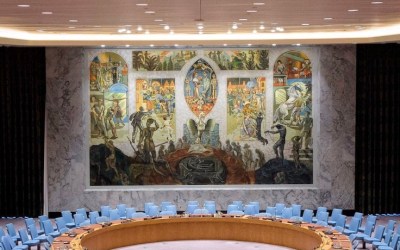
The Security Council Veto in Syria: Imagining a Way Out of Deadlock
Editor’s note: This post concludes the Articles of War Symposium on Beth Van Schaack’s book, Imagining Justice for Syria. The symposium offers a platform for the contributing experts to carry the conversation on justice and accountability in Syria forward. In...
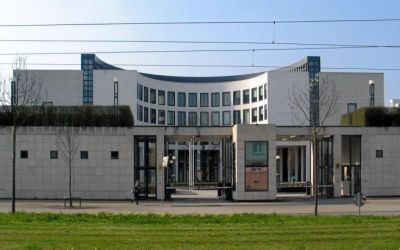
“Water finds its way”? Universal Jurisdiction as an Avenue for Justice in Syria
Editor’s note: Germany’s recent charges against a Syrian doctor, Alaa M., bring renewed attention to universal jurisdiction cases around the Syrian conflict. Here, Alexandra Lily Kather highlights developments and challenges regarding cases brought under the principle...
The Impact of Military Justice Reform on Command Responsibility
Over the past decade, the prevalence of sexual assault faced by women in the United States armed forces has prompted Congress to enact a series of reforms to the military justice system. The overarching objective of these reforms has been to reduce the...

A Plea for True U.S. Leadership in International Criminal Justice
On April 1, 2021, the Biden administration revoked Executive Order 13928 that formed the legal basis under United States law for the Trump administration to impose financial sanctions against personnel of the International Criminal Court (ICC). These sanctions...
Russia, the Wagner Group, and the Issue of Attribution
Editor’s note: This week, the Modern War Institute and the Lieber Institute for Law and Land Warfare hosted a multi-disciplinary panel discussion on proxy warfare. Here, one of the panel participants, British Army Maj. Jennifer Maddocks, analyzes some of the legal...
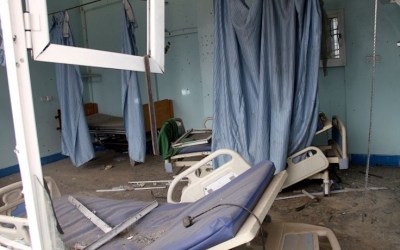
Humanitarian Notification Systems & Intentional Attacks Against Hospitals
Editor’s note: The following post is part of the Articles of War Symposium on Beth Van Schaack’s book, Imagining Justice for Syria. The symposium offers a platform for the contributing experts to carry the conversation on justice and accountability in Syria forward....
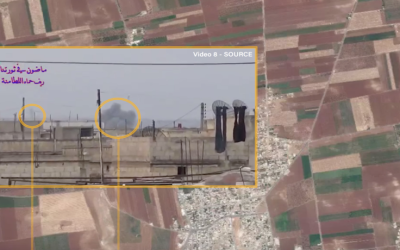
Strengthening Atrocity Cases with Digital Open Source Investigations
Editor’s note: The following post is part of the Articles of War Symposium on Beth Van Schaack’s book, Imagining Justice for Syria. The symposium offers a platform for the contributing experts to carry the conversation on justice and accountability in Syria forward....

Beth van Schaack’s Imagining Justice for Syria
Editor's note: The following post introduces the upcoming Articles of War Symposium on Beth Van Schaack’s book, Imagining Justice for Syria. Ten years into the conflict, this symposium provides an opportunity to assess the state of justice and accountability that...

Experts Weigh in on Law of Armed Conflict Priorities
Presidential transitions present natural opportunities to reconsider national priorities. With the inauguration of a new administration, we asked our Lieber Senior Fellows and Lieber Distinguished Scholar what each considers to be the main law of armed conflict...
Reexamining the Law of War for Great Power Competition
The United States has shifted its national defense posture to focus on “the reemergence of long-term, strategic competition” with “revisionist powers”—namely China and Russia. The government is heavily engaged in framing the assumptions and expectations of what...
Lessons for Legal Advisors from the Brereton Report
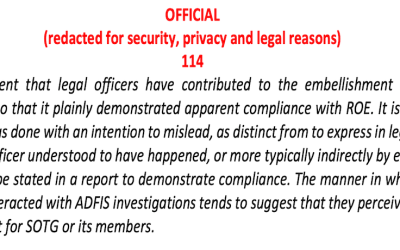
International humanitarian law practitioners and scholars have justifiably dedicated attention to the recent report of the Australian Defence Force (ADF) Inspector General into allegations of violations of the law of armed conflict (LOAC) in Afghanistan, known as the...
The Duty to Investigate War Crimes
On November 19, 2020, a report of the Australian Defence Force’s Inspector-General was released following a four-year investigation into allegations of unlawful killings and mistreatment of non-combatants and persons hors-de-combat in Afghanistan (also known as...
Mercenaries on the Battlefield: What Legal Advisors Must Know
Mercenaries … are useless and dangerous. And if a prince holds on to his state by means of mercenary armies, he will never be stable or secure… -- Niccolò Machiavelli, The Prince Mercenaries have been used since the dawn of war. In recent years, however, there has...
Military Considerations and the Ntaganda “Attack” Question
This post concludes our series featuring the International Criminal Court’s recent hearings on the legal notion of “attack.” As co-editors-in-chief, we wish to extend our sincere gratitude to our contributors. As scholars of the law of war, we wish to add a few...
The Unintended Consequences of International Court Decisions
In response to a prosecution appeal in the case of The Prosecutor v. Bosco Ntaganda, the International Criminal Court (ICC) is currently considering the meaning of “attack” under the Rome Statute. The Court’s decision, however, could have consequences that...
“Attacks” against Hospitals and Cultural Property: Broad in Time, Broad in Substance
On behalf of the Public International Law and Policy Group (PILPG), we recently filed an amicus curiae brief with the International Criminal Court (ICC) in the appellate case of Bosco Ntaganda. In this post, we will briefly discuss the main arguments we raised...
Motive and Control in Defining Attacks
In the appellate case of The Prosecutor v. Bosco Ntaganda, the Appeals Chamber of the International Criminal Court asked for briefs from “qualified publicists with the requisite expertise, who are interested in submitting observations on” the definition of “attack” as...
The Definition of an “Attack” under the Law of Armed Conflict
As in any branch of international law, examining the meaning of a law of armed conflict (LOAC) term, and its incorporation in the Rome Statute of the International Criminal Court, should look first to the treaties—and “attack” is no different. Indeed, as is well...

A Radical Reimagining of the Concept of “Attack”
The Office of the Prosecutor (OTP) filed its Appeals Brief In the Case of the Prosecutor v. Bosco Ntaganda on 7 October 2019, almost precisely a year prior to the time of this writing. The Prosecution argument attempts to expand the war crime found in the Rome...
Symposium Intro: The ICC Considers the Definition of “Attack”
The Ntaganda case—currently pending before the International Criminal Court (ICC) Appeals Chamber—raises an issue of importance to both the law of war (international humanitarian law) community and those working in international criminal law. How should the meaning of...
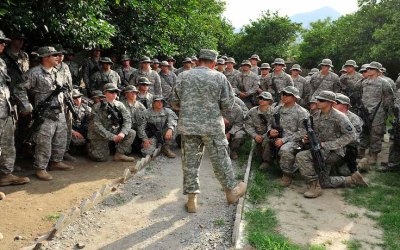
The Efficacy of the U.S. Army’s Law of War Training Program
On July 2, 2020, the Department of Defense reissued DoD Directive 2311.01, the DoD Law of War Program.* Under the previous Directive, issued in 2006, Secretaries of the Military Departments were required to “[i]mplement programs in their respective Military...
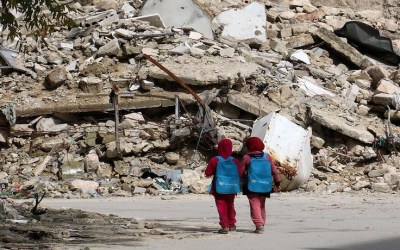
Imagining Justice for Syria
The situation in Syria poses an acute—some might say existential—challenge to the international community’s commitment to justice and accountability. The conflict has been so destructive, the crime base so massive, the pool of potential defendants so...
