

Conflict Types
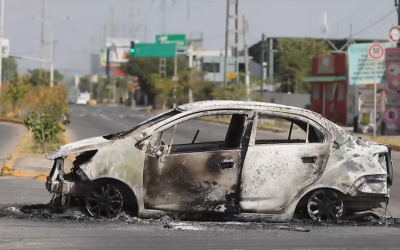
When Cartels Fight Back: El Mencho and the NIAC Question in Mexico
On February 22, 2026, Mexican Army Special Forces launched a pre-dawn raid on a gated residential compound in Tapalpa, a mountainous municipality in the Western state of Jalisco. Their target was Nemesio Oseguera Cervantes, a.k.a. “El Mencho,” the elusive founder and...

Detention Operations on the Korean Peninsula: Historical Insights and Legal Risks
The United States Military Academy (USMA) offers internships and immersion programs every summer as part of the Academic Individual Advanced Development (AIAD) initiative to expand cadets’ knowledge through experiential learning. Within this program, the West Point...

Analyzing State Support to Non-State Actors – Part II: Response Options and Conflict Classification
As non-State actors assume an increasingly prominent role in international affairs, State support to them as a strategic tool for advancing political objectives has become more common. Such support presents significant challenges to the clear-eyed application of...
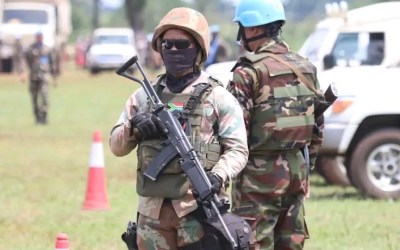
Conflict Classification in Eastern DRC: IAC, NIAC, or Both?
Enveloped in a myriad of armed conflicts, the Democratic Republic of the Congo (DRC) recently witnessed a significant escalation of hostilities when the March 23 Movement (M23) seized the provincial capital Goma. The situation received particular scrutiny given the...

Al Hassan Symposium – Towards the Acceptance of the Aggregated Violence Approach?
Editors’ note: This post is part of a joint symposium hosted by the Armed Groups and International Law and Articles of War blogs. The symposium addresses the ICC’s judgment in the Al Hassan case. The introductory post is available here. On June 26, 2024, Trial Chamber...

Criminal Groups as Parties to Non-International Armed Conflicts: The Standard of the Constitutional Court of Ecuador
Editors’ note: This post builds upon the authors’ article-length work, “Is Ecuador Facing a Non-International Armed Conflict Against Organized Crime Groups? Reality, Inconsistencies and Jurisprudential Developments” appearing in the International Review of the Red...

Taiwan Statehood (or not) and its Ramification for Armed Conflict
As outlined in a previous Articles of War post, the recent 2024 Lieber Workshop focused on international law and the future of multi-domain operations in the Indo-Pacific. One of the workshop’s panels featured rich discussions on the military and political situation...

Iran as a Party to an International Armed Conflict with Israel
A recent Articles of War post argues that Iran’s “substantial involvement” in Hezbollah’s activities is sufficient to render it responsible for the latter’s armed attacks, thus triggering Israel’s right to use self-defense directly against Iran. This is a view I also...

Ukraine Symposium – North Korea’s Entry into International Armed Conflict
In recent months, the world has observed the methodical introduction of the Democratic People’s Republic of Korea (DPRK) into the ongoing Russia-Ukraine international armed conflict (IAC). On June 19, 2024, President Vladimir Putin met with North Korean leader, Kim...

The ICC Palestine Case in the Aftermath of the Arrest Warrants Decisions – Part Two
On November 21, 2024, the Pre-trial Chamber of the International Criminal Court (ICC) issued four decisions dealing with various legal matters arising out of the Prosecutor’s May 20 request to issue arrest warrants in connection with the war in Gaza. In Part One of...

Attacking a Pipeline: Legal Issues for Consideration
Nord Stream 1 and Nord Stream 2 are pipelines constructed by a Russian State-controlled company called Gazprom to transport 110 billion cubic metres of natural gas per year from the Russian Federation under the Baltic Sea to Germany. Gazprom has a 51 percent...

United States v. Najibullah Symposium – Taliban Combatant Immunity in Non-International Armed Conflict
Editors' note: This post is part of a two-post symposium on a pretrial hearing in the case United States v. Najibullah. An introductory post by Professor Sean Watts provides background on the case and the hearing. The purpose of the law of war hearing in United States...

United States v. Najibullah Symposium – Introduction
Almost as soon as hostilities between the United States and the Taliban and al Qaeda groups in Afghanistan began in 2001, important law of war questions emerged. In particular, early stages of the conflict provoked debate concerning its legal character. The question...
Israel-Hamas 2024 Symposium – Israel’s Jus ad Bellum and LOAC Obligations and the Evolving Nature of the Conflict
According to the New York Times, some senior American officials have concluded Israel has achieved all it can militarily in the Gaza Strip. It reports that “a growing number of national security officials” believe that the Israel Defense Force (IDF) will never be able...
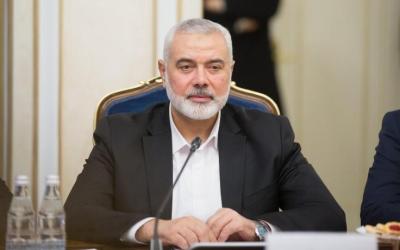
Targeting Hamas’s Ismail Haniyeh and Hezbollah’s Fuad Shukr
On Wednesday morning, Israel killed the Chief of Hamas’s Political Bureau, Ismail Haniyeh, while he was in Tehran to attend the inauguration of Iranian President Masoud Pezeshkian. To do so, it reportedly used a bomb that had been smuggled two months earlier into the...

Space Privateers or Space Pirates? Armed Conflict, Outer Space, and the Attribution of Non-State Activities
Famously, George Clemenceau, Prime Minister of France at the end of the First World War, quipped that “generals always prepare to fight the last war, especially if they won it.” Such flaws of perspicacity, of course, are not limited to generals. After all, as Nobel...

The ICC’s Al Hassan Case: A Rejection of the Bilateral Approach to Conflict Classification?
On June 26, 2024, Trial Chamber X of the International Criminal Court (ICC) finally delivered its judgment in the Al Hassan case. The defendant, Mr. Al Hassan Ag Abdoul Aziz—now convicted of eight counts of war crimes and crimes against humanity—was a member of the...

Lieber Studies Making and Shaping LOAC Volume – The Application of LOAC in Domestic Courts and the Question of Expertise
Editors’ note: This post is based on the author’s chapter in Making and Shaping the Law of Armed Conflict (Sandesh Sivakumaran and Christian R. Burne eds. 2024), the tenth volume of the Lieber Studies Series published with Oxford University Press. The South Africa v....

Lieber Studies Making and Shaping LOAC Volume – The Development of the LOAC by International Criminal Tribunals
Editors’ note: This post is based on the author’s chapter in Making and Shaping the Law of Armed Conflict (Sandesh Sivakumaran and Christian R. Burne eds. 2024), the tenth volume of the Lieber Studies Series published with Oxford University Press. International...
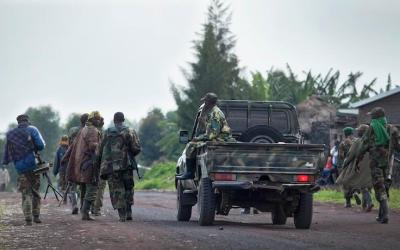
Collective Self-Defense and the Internationalization of Armed Conflicts in Eastern DRC
Nearly a decade after the Democratic Republic of the Congo (DRC) signed a ceasefire agreement with the March 23 (M23) rebel movement, violence has once again erupted in the North-Kivu province. On December 15, 2023, the Southern African Development Community (SADC)...

Houthi Operations in the Red Sea and LOAC?
CAPT (ret.) Pete Pedrozo has recently provided an excellent update on escalating maritime threats and operations by Houthi rebels in the Red Sea area. As he has noted, these attacks are asserted by the perpetrators as targeted against Israeli interests and in support...

Israel – Hamas 2023 Symposium – Strategy and Self-Defence: Israel and its War with Iran
The October 7, 2023 assault by Hamas terrorists into Israel and their perpetration of horrific war crimes has prompted several political, operational, and legal questions about the hostilities. These include: what led to the failure by Israeli security and...
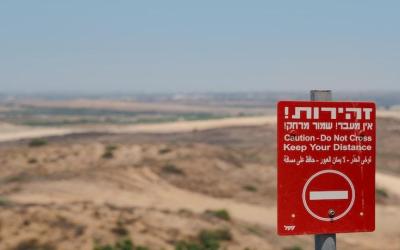
Israel – Hamas 2023 Symposium – The Legal Context of Operations Al-Aqsa Flood and Swords of Iron
On Saturday morning, the armed wing of Hamas, the Izz ad-Din al-Qassam Brigades, launched Operation Al-Aqsa Flood, a brutal surprise attack into Israel that included a barrage of over 3,000 missiles and the air, sea, and land penetration of Israeli territory. This was...
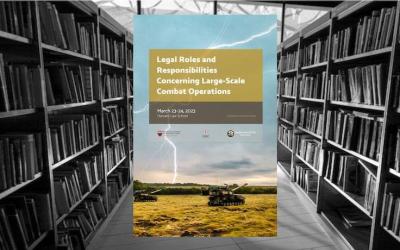
Large-Scale Combat Operations Symposium – Introduction
Editor’s note: The views expressed in this post are those of the authors and not necessarily those of the ICRC, HLS PILAC, or other workshop participants. Large-scale combat operations (LSCOs) involve widespread, devastating violence, usually on a vast scale. They...

Ukraine Symposium – Classification of the Conflict(s)
The threshold questions in any international humanitarian law (IHL) analysis are whether an armed conflict is underway as a matter of law and, if so, what type. They are determinative questions because the existence of an armed conflict is a condition precedent to...
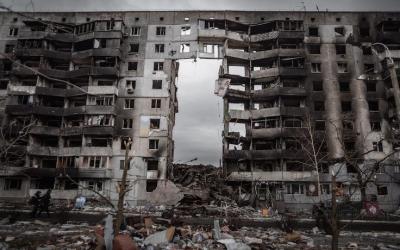
The “General Close of Military Operations” and the End of Armed Conflicts
The temporal scope of applicability of International Humanitarian Law (IHL) or Law of Armed Conflict (LoAC) – terms I use interchangeably in this post – has long been of personal scholarly interest. My academic work on the subject includes a book on the temporal scope...
Classification of Non-Consensual State Interventions against an OAG
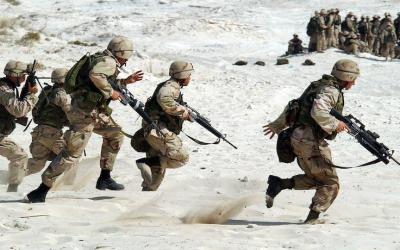
Constant progress in weaponry and means of transportation increasingly enables belligerents to cross borders to fight their enemy. Although not a new reality, cross-border armed conflicts between one or several States and an organized armed group (OAG) surged after...
Ukraine Symposium – Are We at War?
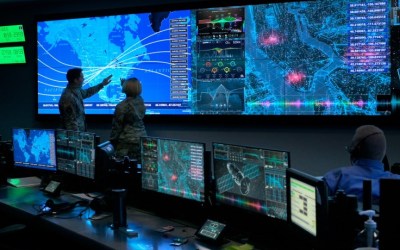
Last week, allegations that the United States and a number of other NATO nations are providing intelligence to Ukraine that enables attacks against Russian forces continued to surface. Broadly speaking, the reports of intelligence sharing are credible. As Chairman of...

Reflections on the Law of Occupation: Afghanistan and Iraq
A recent New York Times article discussed, in part, the occupations of Iraq and Afghanistan, raising important, yet underexplored, questions about occupations under the law of armed conflict (LOAC). The article focuses primarily on the U.S. armed forces’ transition...
Afghanistan 2021: Reflections from the Stockton Center for International Law’s Workshop
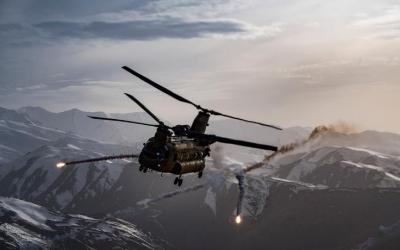
Despite over twenty years of legal analysis, many issues regarding the Afghanistan conflict remain unsettled. At a recent Stockton Center for International Law law of armed conflict (LOAC) workshop, an experienced and diverse group of scholars and practitioners...
Reexamining the Law of War for Great Power Competition
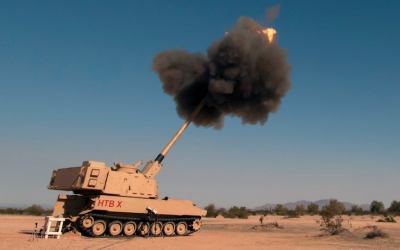
The United States has shifted its national defense posture to focus on “the reemergence of long-term, strategic competition” with “revisionist powers”—namely China and Russia. The government is heavily engaged in framing the assumptions and expectations of what...
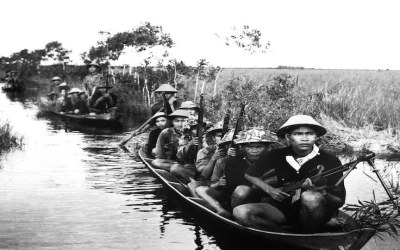
Whither Recognition of Belligerency?
Delineating, defining, and dealing with how the law of armed conflict applies to civil wars and other non-international armed conflicts (NIACs) has presented constant legal challenges over the last two decades. Numerous questions have arisen. What is the legal...
