

Cyber
Year Ahead 2026 – Poisoned Wells Before The War
In April 2026, and as part of my role at the National University of Singapore, I am hosting a regional conference on the intersection between artificial intelligence (AI) and international humanitarian law (IHL). The conference abstracts are, understandably, all about...
Legal Reviews of War Algorithms: From Cyber Weapons to AI Systems
States are obliged to conduct legal reviews of new weapons, means, and methods of warfare. Legal reviews of artificial intelligence (AI) systems pose significant legal and practical challenges due to their technical and operational features. This post explores how...

Gaps and Seams in the Law of Armed Conflict for AI-Enabled Cyber Operations
The continued, robust use of cyber operations in both competition and conflict has inspired many States to express whether and how international law applies to cyber operations. While these attempts at clarity and consensus have led to some convergence of views and...

Tripwires to Trojans: Updating the Law of Booby-traps for the Digital Age
Articles of War has featured discussion of the law of armed conflict (LOAC) rules concerning booby-traps (see, e.g., here, here, here, and here). All have been based in the land domain. I am interested in the application of the idea in the cyber domain. Under the...

Military Objective or Civilian Object? The Italian National Cybersecurity Agency’s Status in Case of Armed Conflict
The increasing reliance of States on cyber infrastructure for both civilian and military purposes has generated renewed debate on the protection of such infrastructure under international humanitarian law (IHL). The Italian National Cybersecurity Agency (Agenzia per...
Future of Warfare and Law Series – Introduction
Editors’ note: This post introduces a series featuring topics discussed during the Third Annual Future of Warfare and the Law Symposium. This past May, a community of military legal scholars and technical experts met at the Third Annual Future of Warfare and the Law...
The Internal Proportionality Assessment in Cyberspace
The International Criminal Tribunal for the former Yugoslavia’s Prosecutor v. Prlić et al. Appeals Chamber judgment, as well as the Eritrea-Ethiopia Claims Commission’s Western Front arbitral award found that a bridge and an electrical power station, respectively,...

CyCon 2025 Series – AI-Enabled Offensive Cyber Operations: Legal Challenges in the Shadows of Automation
Editors’ note: This post is part of a series that features presentations at this year’s 17th International Conference on Cyber Conflict (CyCon) in Tallinn, Estonia. Its subject will be explored further as part of a chapter in the forthcoming book International Law and...

Firewalls and Fault Lines: Cyber War in the Middle East
Following the Iran-Israel War, a conflict blending relentless Israel Defense Force (IDF) airstrikes with Iranian missile and drone barrages, some Middle Eastern battlefields have quieted, making it easy to forget that a less visible but equally perilous cyber war...

Non-State Cyber Actors in the 12-Day War – The Gray Zone of LOAC, Part II
Editors’ note: In a prior post Professor Gary Corn described recent cyber operations undertaken during conflict between Iran and Israel. He related details of the hacking group, Predatory Sparrow, and mapped possible legal analysis of its status under the law of armed...
Non-State Cyber Actors in the 12-Day War – The Gray Zone of LOAC, Part I
Editors’ note: In this two-part series, Professor Gary Corn examines law of armed conflict issues arising from cyber operations conducted during the recent conflict between Israel and Iran. With little fanfare, the traditional line between public and private war was...

Time to Treat Hackers Like Satellites: Why Cyber Needs the Outer Space Rulebook
If you want to understand what’s missing in cyberspace, look up. In 1967, at the height of the Cold War, the international community agreed on the Outer Space Treaty (OST), a legal framework that still governs activity beyond Earth today. The foundational insight of...

Interning a Hacker
Recently, at a workshop at Harvard Law School, I grappled with the question of internment in any international armed conflict (IAC) in the near future. It is a question some are uncomfortable with, although the concept of internment remains legally available under...
One Year On: Are the ICRC’s Principles for Civilian Hackers Shaping the Laws of War?
In October 2023, the International Committee of the Red Cross (ICRC) laid down a stark warning: cyber warfare must not spiral into lawless destruction. Their eight rules for civilian hackers and four obligations for States were a bold attempt to align cyber operations...

Year Ahead – The Coming Year’s Evolution in the Law of Cyber Operations
Editors’ note: We are pleased to announce that Articles of War has recently added several thematic editors to our staff. Each editor has contributed a post to this year’s Year Ahead series with thoughts on issues or situations they recommend our readers track over the...
Lieber Workshop 2024: International Law and the Future of Multi-Domain Operations in the Indo-Pacific
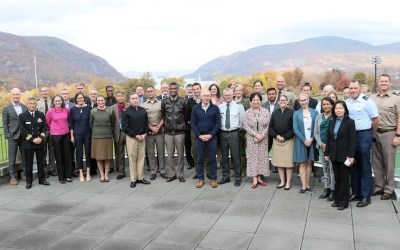
Editors’ note: The views expressed in this post are those of the authors and not necessarily those of any other workshop participants. From October 28 to 31, 2024, the Lieber Institute for Law and Warfare hosted its eighth annual Lieber Workshop at its institutional...

The Evolving Interpretation of the Use of Force in Cyber Operations: Insights from State Practices
Editors’ note: This post is drawn from the author’s article-length work with Professor Michael Schmitt, “Cyberspace and the Jus ad Bellum: The State of Play” appearing in International Law Studies. The post and the article are both based on course work that the author...
Hybrid Threats and Grey Zone Conflict Symposium – Cyber Operations are Thriving in the Grey
Editors note: The following post highlights a chapter that appears in Mitt Regan and Aurel Sari’s recently published book Hybrid Threats and Grey Zone Conflict: The Challenge to Liberal Democracies. For a general introduction to the series, see Prof Mitt Regan and...

Hybrid Threats and Grey Zone Conflict Symposium – Rethinking Coercion in Cyberspace
Editors note: The following post highlights a chapter that appears in Mitt Regan and Aurel Sari’s recently published book Hybrid Threats and Grey Zone Conflict: The Challenge to Liberal Democracies. For a general introduction to the series, see Prof Mitt Regan and...
A Policy Approach for Addressing the “Cyber Attacks” and “Data as an Object” Debates
Among the issues examined at this week’s International Society of Military Law and the Law of War’s annual Silent Leges Inter Arma? (In Times of War, the Law Falls Silent?) Conference in Bruges, Belgium, is the protection of civilians against digital threats during...

The Woomera Manual and Military Space Activities and Operations
The ongoing armed conflict in Ukraine has clearly demonstrated the critical role satellites in outer space play in the conduct of contemporary armed conflict. The conflict itself has been termed the first commercial space war given the heavy reliance by both Ukraine...

Russia’s Alleged Nuclear Anti-Satellite Weapon: International Law and Political Rhetoric
The development and testing of anti-satellite weapons (ASATs), as well as debates concerning the legal and policy implications of ASAT testing and use, have existed since soon after the dawn of the Space Age. The centrality of these issues has waxed and waned over...

Space Privateers or Space Pirates? Armed Conflict, Outer Space, and the Attribution of Non-State Activities
Famously, George Clemenceau, Prime Minister of France at the end of the First World War, quipped that “generals always prepare to fight the last war, especially if they won it.” Such flaws of perspicacity, of course, are not limited to generals. After all, as Nobel...

Lieber Studies Making and Shaping LOAC Volume – The Status and Influence of Expert Manuals
Editors’ note: This post is based on the author’s chapter in Making and Shaping the Law of Armed Conflict (Sandesh Sivakumaran and Christian R. Burne eds. 2024), the tenth volume of the Lieber Studies Series published with Oxford University Press. Since the...

Multi-Domain Legal Warfare: China’s Coordinated Attack on International Rule of Law
Law has emerged as an integral element of gray zone competition. State and non-State actors alike increasingly view law as a means to shape operational spaces, forge perceptions of legitimacy, constrain potential adversaries, and refashion the international system,...

Cyber Attack War Crimes and Ntaganda
Editor’s note: This post is based on a portion of the author’s work, “Addressing Unlawful Cyber Operations in Armed Conflict Through Human Rights Bodies Instead of the International Criminal Court,” published at 57 Vanderbilt Journal of Transnational Law 359 (2024)....
In Honor of Yoram Dinstein – The San Remo and the Newport Manuals on the Law of Naval Warfare
Editors’ note: This post is part of a series to honor Professor Yoram Dinstein, who passed away on Saturday February 10, 2024. These posts recognize Professor Dinstein’s work and the significant contribution his scholarship has made to our understanding of...

In Honor of Yoram Dinstein – Command Responsibility in an Era of New Weapons
Editors’ note: This post is part of a series to honor Professor Yoram Dinstein, who passed away on Saturday February 10, 2024. These posts recognize Professor Dinstein’s work and the significant contribution his scholarship has made to our understanding of...

Israel – Hamas 2024 Symposium – Press Access during Armed Conflict
The conflict between Hamas and Israel remains a focus of global media coverage. The unprecedented nature of Hamas’s attack on October 7, 2023, the troubled, long-standing history of the independence of Palestine, and questions regarding the tactical and operational...
Regulating Military Force Series – Low-Intensity Cyber Operations and Regulation of the Resort to Force
Editors’ note: The author delivered remarks on the subject of this post at the conference “International Law and the Regulation of Resort to Force: Exhaustion, Destruction, Rebirth?” at the Centre for International Humanitarian and Operational Law, Palacký University...

The Influence of Weaponry on the Jus ad Bellum
In an Articles of War post last week, Professor Terry Gill discussed his new book, The Use of Force and the International Legal System, co-authored with Dr. Kinga Tibori Szabó. It is a fascinating journey through the jus ad bellum, the law governing the use of force...

Recapping “Cyber in War: Lessons from the Russia-Ukraine Conflict”
We are fast approaching the two-year mark of the massive escalation of Russia’s war of aggression against Ukraine. While much of this war has been fought in the physical realm, to devastating effect, cyber operations have also played a significant role, giving the...
Israel – Hamas 2023 Symposium – Cyberspace – the Hidden Aspect of the Conflict
The armed conflict between Israel and Hamas is a multi-arena war in two respects. First, in terms of geography, there are active hostilities in Gaza, Lebanon, the West Bank, and even Syria and Yemen. Second, there are several domains of hostilities, including ground,...

Customary International Law, National Law, and Considering Data as Objects
Cyberspace is a relatively new domain. It exists as something of a parallel universe, where properties and rules frequently differ from those of the physical world. And much of what occurs in cyberspace is unseen. Accordingly, the essential elements of customary...
The Emergence of Collective Countermeasures
Editor’s Note: This post is based on a forthcoming article, “War Reparations: The Case for Countermeasures” in the Stanford Law Review, available here. When Russia invaded Ukraine on February 24, 2022, it launched the largest land war in Europe since the Second World...
Limitations on the Strategic Use of Ransomware in Armed Conflicts
Editor’s Note: This post is derived from an article-length work published in the U.S. Naval War College’s International Law Studies journal. Attempts to influence public support for armed conflicts through strategic targeting of civilians and civilian objects during...
Cyber Operations as Crimes at the International Criminal Court
Editors’ Note: The authors co-led a discussion group at the 2023 International Humanitarian Law Roundtable in Chautauqua, New York, on the topic of Cyber Attacks and the Rome Statute. This post reflects discussion points raised during the session. They thank the...
2023 DoD Manual Revision – What Was Left Unsaid for Cyber Operations
Since the long-awaited update to the Department of Defense (DoD) Law of War Manual, there has been no shortage of commentary and scholarship surrounding the new amendments. While updates to the Manual are worthy of attention, what was not updated is equally deserving...

A New Silenus Box: The French Manual on the Law of Military Operations
French armed forces have participated in more than a hundred military operations since 1995. Enhanced operational activity notwithstanding, France strives to consistently keep its military operations in line with international law. The new French Manual on the Law of...
Reflections on the DoD General Counsel’s Cyber Law Address
On Tuesday, the General Counsel of the Department of Defense, the Honorable Caroline Krass, addressed the annual United States Cyber Command Legal Conference. Her speech followed in the footsteps of Hon. Harold Koh’s 2010 presentation to the conference as Department...
Implementing Integrated Deterrence in the Cyber Domain: The Role of Lawyers
Editor's note: Caroline D. Krass, General Counsel of the Department of Defense, delivered the keynote address at the 2023 USCYBERCOM Legal Conference earlier today, Tuesday, April 18. I. Introduction Good morning. I want to thank General Nakasone and Colonel Hayden...
Ukraine Symposium – Accountability for Cyber War Crimes
In our digitally connected and technology-dependent world, cyber-attacks on critical infrastructure such as electric power grids, water treatment facilities, and industrial control systems have far-reaching safety and security consequences. When these attacks are...

Ukraine Symposium – The Law of Crowdsourced War: Democratized Supply Chains – Part II
In the first of this two-part post addressing the legal and practical implications of democratized supply chains, I focused on the individual risks that those who engage in these activities incur. I explored whether their actions can amount to direct participation in...

Dimensions of Russian Aggression and the International Legal Order
Russia’s war against Ukraine has many dimensions: conventional, economic, cyber, informational, and cultural. Recent research, prepared by the Economic Security Council of Ukraine in cooperation with the State Service of Special Communication and Information...

Debate on a Digital Emblem: The Specific Protection of Healthcare Facilities
Recently, debate ramped up around the idea of a digital emblem to signal the legal protection of medical facilities in the cyber domain. The International Committee of the Red Cross (ICRC) published an extensive study in which it proposes different solutions to...

A Digital Red Cross: What Would It Defend Against?
On November 18, 1991, after enduring a three-month artillery assault, the city of Vukovar in Croatia fell to what was then known as the federal Yugoslav People’s Army (JNA) and Serb paramilitary forces. After JNA units took control of a hospital where hundreds of sick...

As Warfare Digitalizes, So Should Protection: Towards a “Digital Emblem”
As societies digitalize, cyber operations have become a reality of armed conflict. In the United Nations, States have identified the increasing likelihood of the use of Information and Communications Technologies (ICTs) in future conflicts between States as a threat...
Cyber Symposium – The Private Sector View on Use of Force
Editor’s note: The following post highlights a subject addressed in the symposium entitled The Evolving Face of Cyber Conflict and International Law: A Futurespective presented by the Lieber Institute for Law and Warfare at the American University, Washington College...
Cyber Symposium – The Evolution of Cyber Jus ad Bellum Thresholds
Editor’s note: The following post highlights a subject addressed in the symposium entitled The Evolving Face of Cyber Conflict and International Law: A Futurespective presented by the Lieber Institute for Law and Warfare at the American University, Washington College...
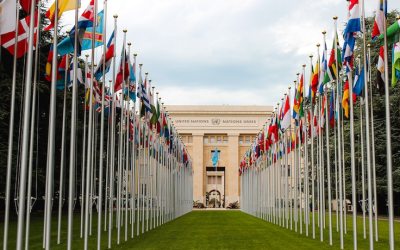
Cyber Symposium – Diplomatic Considerations for Armed Attack
Editor’s note: The following post highlights a subject addressed in the symposium entitled The Evolving Face of Cyber Conflict and International Law: A Futurespective presented by the Lieber Institute for Law and Warfare at the American University, Washington College...
Cyber Symposium – The Evolving Face of Cyber Conflict and the Jus ad Bellum: A Futurespective
From 15 through 17 June 2022, the Lieber Institute for Law and Warfare met in Washington, D.C. with the Tech, Law & Security Program at the American University, Washington College of Law to present a symposium entitled The Evolving Face of Cyber Conflict and...
The Law of Cyber Conflict: Quo Vadis?
[Editor’s note: The following post highlights a subject addressed in the Lieber Studies volume The Future Law of Armed Conflict, which was published 27 May 2022. For a general introduction to this volume, see Professor Matt Waxman’s introductory post.] Using...

Ukraine Symposium – U.S. Offensive Cyber Operations in Support of Ukraine
Last Wednesday, General Paul Nakasone, Commander of United States Cyber Command and Director of the National Security Agency, opened the NATO Cooperative Cyber Defense Centre of Excellence’s annual CyCon Conference. In his address, General Nakasone discussed the...
Ukraine Symposium – Military Networks and Cyber Operations in the War in Ukraine
When Russia launched a full-scale invasion of Ukraine in February, many expected that the kinetic military action would be accompanied by extensive cyber operations. After all, the Sandworm group, an advanced persistent threat (APT) team forming part of Russia’s...

New Edition of The Commander’s Handbook on the Law of Naval Operations
The Stockton Center for International Law (SCIL), U.S. Naval War College (NWC), recently completed a 2-year effort, in coordination with the U.S. Navy, U.S. Marine Corps, and U.S. Coast Guard, to update The Commander’s Handbook on the Law of Naval Operations (NWP...
Ukraine Symposium – Cyber Neutrality, Cyber Recruitment, and Cyber Assistance to Ukraine
The war between Russia and Ukraine has given rise to many challenging international humanitarian law (IHL) questions. In this post I will focus on its cyber dimension and consider how certain customary law obligations imposed on belligerents and neutrals under the law...
Russian Cyber Operations and Ukraine: The Legal Framework
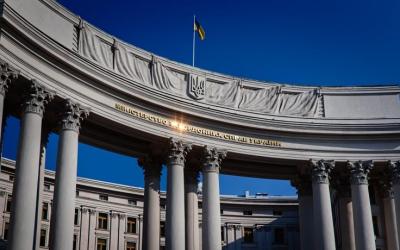
Last week, hostile cyber operations targeted approximately 70 Ukrainian government websites, including that of the Cabinet. Affected sites included Diia, the most widely used site for handling online government services. The operations included posting the message,...
Private Companies in Cyber Operations During Armed Conflict
The legal implications surrounding military offensive cyber operations in armed conflict have received considerable attention from scholars and practitioners. In contrast, this piece assesses the implications for how the rules of international humanitarian law (IHL)...

Hacking International Organizations: The Role of Privileges and Immunities
International organizations (IOs) collect vast quantities of information as part of their daily activities. Depending on the organization’s mandate, this information can relate to the monitoring of sanctions; the enforcement of arms control regimes; counterterrorism...
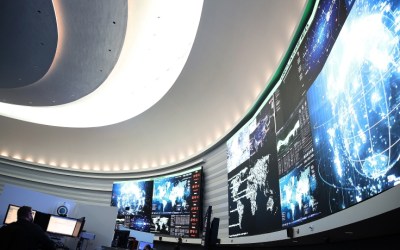
Hays Parks’s Influence on Cyberspace Operations Capabilities
The recent Articles of War series honoring Hays Parks was a fitting tribute to a great American lawyer that reintroduced his work to the military legal community and its newest generations. The series referenced a seminal paper in which he addressed international...

Terminological Precision and International Cyber Law
The recent spate of hostile cyber operations by States, non-State groups affiliated with States, and non-State groups operating on their own has resulted in a cacophony of pronouncements and commentary by political leaders, pundits, journalists, and legal experts. As...

When Corporations Take Offensive Measures Against States
Cyberattacks are increasingly inundating the private sector, and most States are unable or unwilling to provide adequate protection against these attacks. To mitigate this challenge, numerous corporations acknowledge that they have engaged in some form of active cyber...

Cyber Operations and The Imperfect Art of “Translating” the Law of War to New Technologies
Since the inception of combat as an organized endeavor, humans have innovated new means and methods of warfare to gain advantage over their adversaries. Some of these innovations have been subtle. Others have been far more impactful and transformative,...
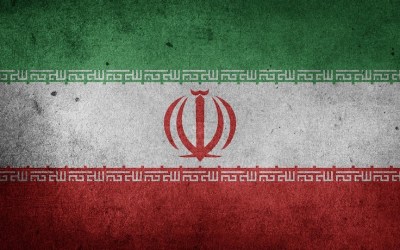
Noteworthy Releases of International Cyber Law Positions—PART II: Iran
Last week, Iran’s Armed Forces released its “Declaration of General Staff of the Armed Forces of the Islamic Republic of Iran Regarding International Law Applicable to the Cyberspace.” Noting that the military has a “mandate…under the command of the Supreme...
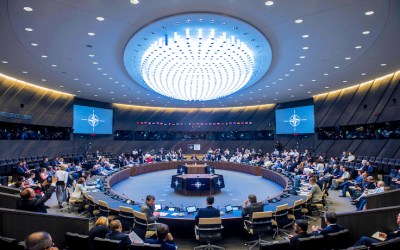
Noteworthy Releases of International Cyber Law Positions—PART I: NATO
Although efforts such as the Tallinn Manual 2.0 project have contributed greatly to understanding how international law rules apply in the cyber context, much work remains to be done. Indeed, a significant grey zone in the international law of cyberspace...
