

LOAC History

Is There a Victim State Exemption from Immunity Ratione Personae Accruing to Heads of Aggressor States?
When considering the application of immunity ratione personae to heads of aggressor States, we invariably assume that it applies erga omnes, that is, vis-à-vis the criminal jurisdiction of all foreign States. How sound is that assumption? Ample State practice and...

Laws of Yesterday’s Wars Symposium – Rules and “Right” in Iban Laws of War
Editor’s note: The following post highlights a chapter that appears in Samuel White’s third edited volume of Laws of Yesterday’s Wars published with Brill. For a general introduction to the series, see Dr Samuel White and Professor Sean Watts’s introductory post....

The ICC’s Al Hassan Case: A Rejection of the Bilateral Approach to Conflict Classification?
On June 26, 2024, Trial Chamber X of the International Criminal Court (ICC) finally delivered its judgment in the Al Hassan case. The defendant, Mr. Al Hassan Ag Abdoul Aziz—now convicted of eight counts of war crimes and crimes against humanity—was a member of the...
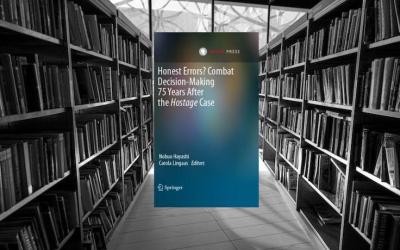
Honest Errors, the Rendulic Rule, and Modern Combat Decision-Making
In 1948, in a judgment commonly known as the Hostage case, a U.S. military tribunal at Nuremberg acquitted Lothar Rendulic, commander of the German 20th Mountain Army, of offences related to the devastation of the Norwegian counties of Finnmark and Troms between late...
2023 DoD Manual Revision – What’s Chivalry Got to Do with It?
Regrettably, the recent update of the U.S. Department of Defense Law of War Manual continues to associate chivalry with the law of armed conflict. No change has been made in Section 2.6 of the Manual or the related footnotes, where chivalry is still celebrated....
Treaties in Armed Conflict: The Sharp Split Between “General” and “Particular” Treaties
The recent completion and publication of the second edition of my text, The Law of Treaties, provides an opportunity to reflect on how treaty law applies to specific subject areas and aspects of international law. In this post, I identify a typology of law of armed...

Laws of Yesterday’s Wars Symposium – East African Laws of War
Editor’s note: The following post highlights a chapter that appears in Samuel White’s edited volumes Laws of Yesterday’s Wars published with Brill. For a general introduction to the series, see Samuel White and Professor Sean Watts’s introductory post. In our chapter...

Dead Bodies of War in Legal-Historical Context
“We have come for the bodies of the slain, wishing to bury them in observance of the universal law ….” Euripides, The Suppliants, ca. 423 BCE[i] Since the early days of the war between Ukraine and Russia, there have been various accounts of what is being done or not...
Laws of Yesterday’s Wars Symposium – Reading the Lieber Code as Strategic Lawfare
Editor’s note: The following post highlights a chapter that appears in Samuel White’s edited volumes Laws of Yesterday’s Wars published with Brill. For a general introduction to the series, see Samuel White and Professor Sean Watts’s introductory post. A book launch...

Ukraine Symposium – Negotiating an End to the Fighting
As the conflict in Ukraine grinds on with no end in sight, speculation over the possibility of negotiating an end to the fighting continues. Most discussion has centered on the terms of any such agreement. Issues on the table have included, inter alia, the withdrawal...

Reflections on the Law of Occupation: Afghanistan and Iraq
A recent New York Times article discussed, in part, the occupations of Iraq and Afghanistan, raising important, yet underexplored, questions about occupations under the law of armed conflict (LOAC). The article focuses primarily on the U.S. armed forces’ transition...

Attacking Dams – Part II: The 1977 Additional Protocols
A recent New York Times report of a 2017 attack by U.S. forces against the Tabqa Dam in Syria has sparked controversy and criticism. In Part I of this series, I described reports of that incident and examined the customary international humanitarian law governing dam...
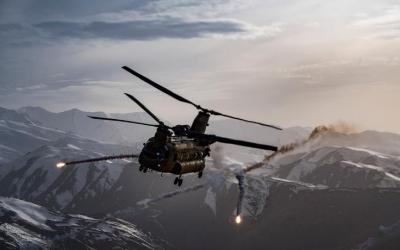
Afghanistan 2021: Reflections from the Stockton Center for International Law’s Workshop
Despite over twenty years of legal analysis, many issues regarding the Afghanistan conflict remain unsettled. At a recent Stockton Center for International Law law of armed conflict (LOAC) workshop, an experienced and diverse group of scholars and practitioners...

Embracing LOAC Pluralism
Although the prospect of war remains, the end of two decades of active hostilities affords the United States and its partners the breathing room to rethink their approaches to developing and interpreting the law of armed conflict (LOAC). In my estimation, careful...
Year Ahead – 2022
In our look back at 2021, affiliates of the Lieber Institute discussed some of the law of armed conflict issues that made an impact in the past year. In the present post, Professors Wolff Heintschel von Heinegg, Chris Jenks, Laurie Blank, Daphné Richemond-Barak, and...

Year in Review – 2021
The approach of a new year provides an opportunity to reflect on the past year and to anticipate what the future may hold in the next. In keeping with the tradition of year-in-review surveys, we asked affiliates of the Lieber Institute what they considered were the...

Hays Parks and U.S. Views on Targeting Law
Three decades after its publication, Colonel W. Hays Parks’s article Air War and the Law of War remains a key resource for attorneys who advise on targeting operations. The article is noteworthy for its deep exploration of the history of the law of war as well as its...
Symposium Intro: Hays Parks’s Influence on the Law of War
Most developments and codifications of the law of war have been responses to the evolving character of warfare. Indeed, a timeline of law of war treaties reads like a chronicle of changes in the tactics, technologies, and participants in war. Yet like war itself,...
Welcome to Articles of War
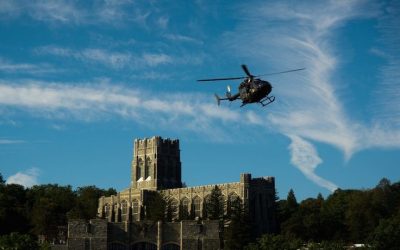
Welcome It’s our sincere pleasure to introduce you to Articles of War, the new digital publication of the Lieber Institute for Law & Land Warfare at West Point. In this initial post we’ll share our plans and introduce you to our editorial team. But first a quick...
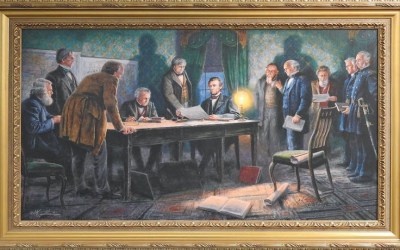
Francis Lieber’s Living Legacy
It is an honor to pen one of the first posts for the Lieber Institute for Law and Land Warfare’s Articles of War. This forum provides an important venue for practitioners of the law of war to engage with each other—both domestically and internationally—to articulate...
