

More Topics

Ukraine Symposium – U.S. Offensive Cyber Operations in Support of Ukraine
Last Wednesday, General Paul Nakasone, Commander of United States Cyber Command and Director of the National Security Agency, opened the NATO Cooperative Cyber Defense Centre of Excellence’s annual CyCon Conference. In his address, General Nakasone discussed the...
Ukraine Symposium – Is the Law of Neutrality Dead?
The 2022 Russia-Ukraine conflict has rekindled the debate about the validity of qualified neutrality during an international armed conflict. The concept is sometimes also referred to as benevolent neutrality. Since Russia’s invasion this year, nearly 40 nations,...

Ukraine Symposium – Neutral State Access to Ukraine’s Food Exports
On May 14, the G7 group of industrialized nations met to devise a plan to ensure the export of Ukrainian grain to avert a global hunger crisis. The Russia-Ukraine conflict has created cascading effects on the region and the world, not least is the impact on food...

Foreign Fighters: The Terrorism/IHL Conundrum and the Need for Cumulative Prosecution
The attack launched by ISIS on 20 January 2022 against the Al-Sina’a Prison in Al-Hasakah, an area situated in North-Eastern Syria and currently under the authority of the Kurdish-led Syrian Democratic Forces, with the intention of freeing ISIS fighters held there,...
Ukraine Symposium – Are We at War?
Last week, allegations that the United States and a number of other NATO nations are providing intelligence to Ukraine that enables attacks against Russian forces continued to surface. Broadly speaking, the reports of intelligence sharing are credible. As Chairman of...
Lieber Institute White Paper: Responding to Malicious or Hostile Actions under International Law
Recent consultations with senior legal advisers have highlighted the need for a clear map of response options available to States facing hostile or malicious actions, whether attributable to another State or a non-State actor. After all, to respond effectively to such...
Ukraine Symposium – The Montreux Convention and Turkey’s Impact on Black Sea Operations
Weeks into Russia’s military campaign into Ukraine, the role homeported Black Sea maritime forces are playing is well documented. Reuters recently published a story in which the Russian Defense Minister confirmed that Russia struck Ukraine with Kalibr cruise missiles...

New Edition of The Commander’s Handbook on the Law of Naval Operations
The Stockton Center for International Law (SCIL), U.S. Naval War College (NWC), recently completed a 2-year effort, in coordination with the U.S. Navy, U.S. Marine Corps, and U.S. Coast Guard, to update The Commander’s Handbook on the Law of Naval Operations (NWP...

Ukraine Symposium – Cyber Neutrality, Cyber Recruitment, and Cyber Assistance to Ukraine
The war between Russia and Ukraine has given rise to many challenging international humanitarian law (IHL) questions. In this post I will focus on its cyber dimension and consider how certain customary law obligations imposed on belligerents and neutrals under the law...
Ukraine Symposium – Maritime Neutrality in the Russia-Ukraine Conflict
Most of the reporting and commentary regarding the conflict between Russia and Ukraine has so far focused on the land domain of warfare. However, there are significant maritime legal aspects to the conflict. An earlier post in this symposium briefly touched on...

Putin and Xi’s Pact for Outer Space
On the eve of the 2022 Olympic Games in Beijing, Chinese President Xi Jinping and Russian President Vladimir Putin signed a joint statement on entering a new era of international relations—including in outer space. The February 4 statement enunciated the importance of...
A No-Fly Zone over Ukraine and International Law
In an impassioned address to the U.S. Congress on March 16, Ukraine’s President, Volodymyr Zelensky, asked the United States for additional military assistance, including the establishment of a no-fly zone. This is a terror that Europe has not seen, has not seen for...

Displacement from Conflict: Old Realities, New Protections?
Globally, conflicts are the main source of both internal and cross-border displacement. The conflict prompted by Russia’s recent invasion of Ukraine, which is a considerable escalation from the original incursion in 2014, has already caused the largest external...
The ICJ’s Provisional Measures Order: Unprecedented
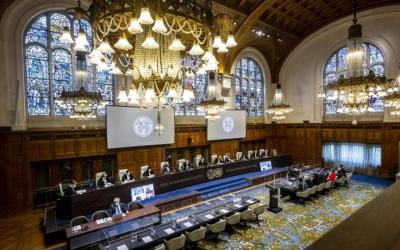
On March 16, 2022, the International Court of Justice (ICJ) rendered its provisional measures order in the application brought by Ukraine against Russia under the Genocide Convention, arguing, inter alia, that Russia’s invasion was an unlawful abuse of its obligation...

Ukraine’s Legal Counterattack
Beyond its endurance on the battlefield, Ukraine has launched a legal counterattack against Russia in the courts. The normally slow-moving, process-heavy gears of international justice are now moving at relative lightspeed in response to Russia’s illegal invasion of...

Law Applicable to Persons Fleeing Armed Conflicts
As early as February 23rd, the U.S. Ambassador to the United Nations in New York, Linda Thomas-Greenfield, estimated that 5 million people may flee if hostilities erupted in Ukraine. As of March 13th, less than three weeks after the Russian Federation launched an...

The Russia-Ukraine War and the Space Domain
As demonstrated by this symposium, every domain of the ongoing Russia-Ukraine War presents critical legal questions. This post focuses on the potential consequences of the war on the space domain. Although Russia continues to play a vital role in the development and...
Special Forces, Unprivileged Belligerency, and the War in the Shadows
The February 24, 2022 invasion of Ukraine resulted in news reports of fear in the streets of Kyiv as Ukrainian forces engaged in “a frantic hunt for spies and traitors,” as well as saboteurs and teams seeking to kill President Zelensky and 23 other leaders within...
On War
As the invasion of Ukraine was starting, the Russian Ambassador to the United Nationals responded to the Ukrainian Special Envoy “Don’t call this a war. This is called a ‘special military operation in Donbass.’” Other Russian Ambassadors reiterated the statement...

The Russia-Ukraine War and the European Convention on Human Rights
As with the 2008 Russia-Georgia conflict, the war between Russia and Ukraine—likely to last much longer and be far more brutal than the Georgian conflict—is fought by two States Parties to the European Convention on Human Rights (ECHR). Both are subject to the...
Neutrality in the War against Ukraine
This contribution briefly addresses the question of whether and to what extent States that are not parties to the war against Ukraine are bound by the law of neutrality. In particular, are these States obliged to refrain from any assistance to Ukraine, including by...

Terrorist Offences and IHL: The Armed Conflict Exclusion Clause
In our current article in the International Review of the Red Cross, we discuss the so-called “armed conflict exclusion clause” (also known as an “international humanitarian law (IHL) exclusion clause” or “IHL savings clause”). This clause regulates the relationship...
The U.S. Legal Obligation to Take Precautions to Minimize Civilian Harm
U.S. Special Forces recently conducted a raid against the residence of the Islamic State’s leader. President Biden and other U.S. Department of Defense officials ordered a ground operation rather than an air strike to conduct the attack. They characterized this...
Through the Drone Looking Glass: Visualization Technologies and Military Decision-Making
On 29 August 2021, the U.S. military launched its last drone strike in Afghanistan before American troops withdrew from the country. The strike targeted a white Toyota Corolla near Kabul’s international airport, driven by Zemari Ahmadi, believed to be carrying an ISIS...
Privacy vs. Precaution in Future Armed Conflict
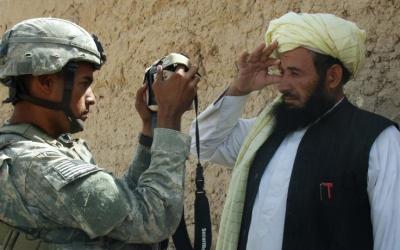
The operational demands of modern armed conflict highlight a pressing need for information, including highly private data about persons. This post examines the balance between personal privacy and armed forces’ need to identify persons with a high degree of integrity...
Over-the-Horizon Operations – Part III: How May Force Be Used?
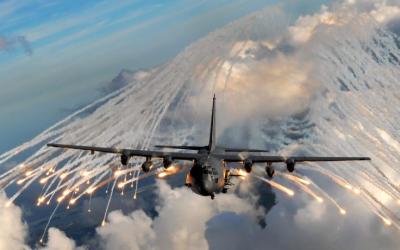
Part I of this series examined when the United States may lawfully resort to force in the form of over-the-horizon (OTH) operations, a question that looms large given President Biden’s July announcement that the United States is developing the capability in light of...
Over-the-Horizon Operations – Part II: Where May Force Be Used?
Part I of this series examined the issue of when the United States would enjoy a legal right to conduct over-the-horizon (OTH) operations. It identified three bases for such operations: UN Charter Chapter VII authorization or mandate, self-defense, and request from...
Over-the-Horizon Operations – Part I: When May Force Be Used?
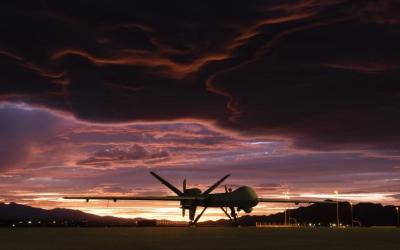
Responding in early July to concerns about the withdrawal of troops from Afghanistan after two decades of war, President Biden announced, “We are developing a counterterrorism over-the-horizon capability that will allow us to keep our eyes firmly fixed on any direct...
Russia’s ASAT Test and the Development of Space Law
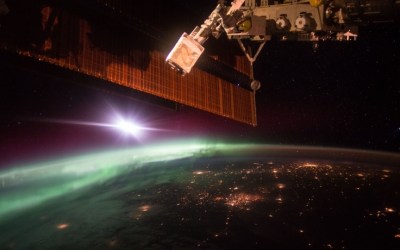
On November 15, Russia launched a direct ascent anti-satellite (ASAT) missile that deliberately struck Cosmos-1408, one of its own satellites that had become inoperable years ago. Massing at about 2,000 kilograms and with an original orbital altitude of about 480...
A Review of U.S. Space Force’s First Year
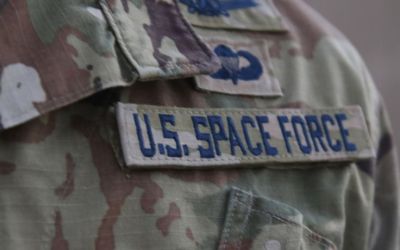
The newest branch of the U.S. military, the United States Space Force, was mandated by Congress and signed into law and existence by the President on December 19, 2019. The Space Force Professionals, now called Guardians, of the U.S. Air Force had been...
Mercenaries on the Battlefield: What Legal Advisors Must Know
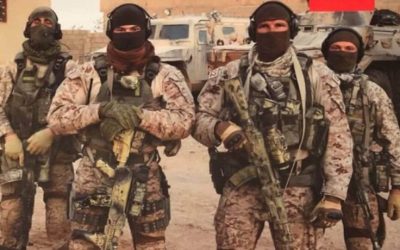
Mercenaries … are useless and dangerous. And if a prince holds on to his state by means of mercenary armies, he will never be stable or secure… -- Niccolò Machiavelli, The Prince Mercenaries have been used since the dawn of war. In recent years, however, there has...
NATO in Outer Space: A Domain Too Far?
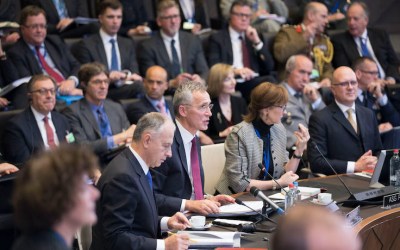
This post examines whether Article 5 of the North Atlantic Treaty is applicable to armed attacks in outer space. NATO nations have recently recognized outer space as a new operational domain for the Alliance. Although the drafters of the North Atlantic Treaty...
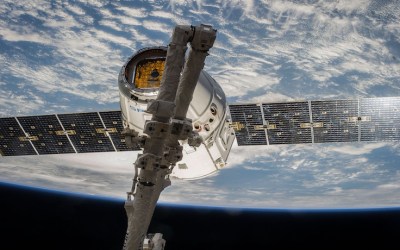
Space Power, Space Force, and Space Law
Space is a unique operational domain not only due to its physics, but also due to its legal regime. Although Space Power, the inaugural doctrinal manual of the U.S. Space Force, does not focus on legal issues in and of themselves, it does mention at least one...
