

Targeting
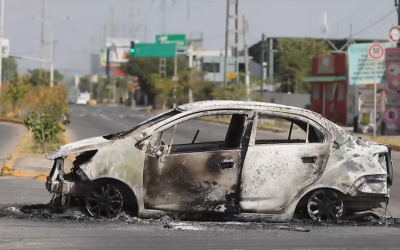
When Cartels Fight Back: El Mencho and the NIAC Question in Mexico
On February 22, 2026, Mexican Army Special Forces launched a pre-dawn raid on a gated residential compound in Tapalpa, a mountainous municipality in the Western state of Jalisco. Their target was Nemesio Oseguera Cervantes, a.k.a. “El Mencho,” the elusive founder and...

When Red Lines Cross Blue Lines: Cyber Attacks on Poland’s Water Infrastructure – Part II
In Part I of this post, we addressed the threshold issue of whether cyber operations targeting water infrastructure qualify as attacks, thus bringing international humanitarian law (IHL)’s targeting rules into effect. This post assumes that the threshold for an attack...
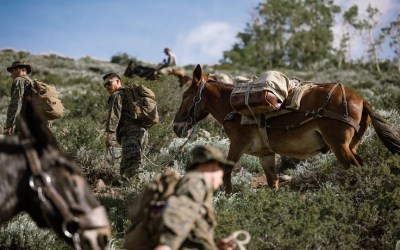
Military Animals in Armed Conflict
For much of human history, armies have relied on military animals to prosecute wars. Horses have served as means of transportation and tactical maneuver since ancient times. Mules, donkeys, camels, and other pack animals have been critical to supplying armies in the...
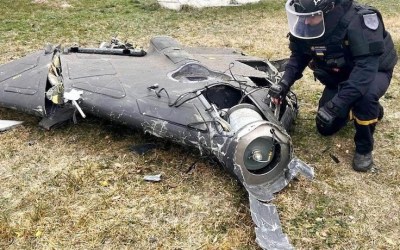
Gamifying War: Reward Incentives and “Outlawry” in Armed Conflict
Both sides of the Ukraine-Russia conflict maintain incentive programs that reward soldiers for kills on the battlefield. Russia offers monetary bonuses for the destruction of enemy equipment, such as helicopters and tanks, while Ukraine awards points redeemable for...

The Ukrainian Attacks Against Gambian-Flagged Oil Tankers in the Black Sea
On October 28, 2025, Ukrainian so-called “Sea Baby drones” attacked two Gambian-flagged oil tankers, the Kairos and Virat. Whereas the vessels were severely damaged, no casualties were reported. Presumably, the ships are part of Russia’s “shadow fleet,” and are on a...
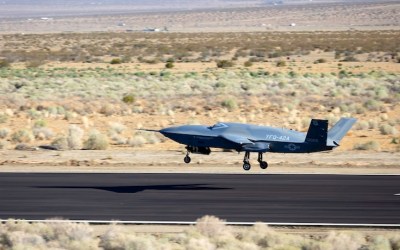
Future of Warfare and Law Series – Addressing Uncertainty in the Use of Autonomous Weapons Systems
Editors’ note: This post is part of a series featuring topics discussed during the Third Annual Future of Warfare and the Law Symposium. LTC Christina Colclough’s introductory post is available here. The Future of Warfare and the Law Symposium, which took place in May...

Operation Spider Web and Instrumentalizing Civilian Objects
On 1 June 2025, in one of the boldest operations of the war, Ukraine carried out a massive surprise attack against Russian military installations. The attack, known as Operation Spider Web, was carried out by drones and resulted in significant damage to strategically...

Non-State Cyber Actors in the 12-Day War – The Gray Zone of LOAC, Part I
Editors’ note: In this two-part series, Professor Gary Corn examines law of armed conflict issues arising from cyber operations conducted during the recent conflict between Israel and Iran. With little fanfare, the traditional line between public and private war was...
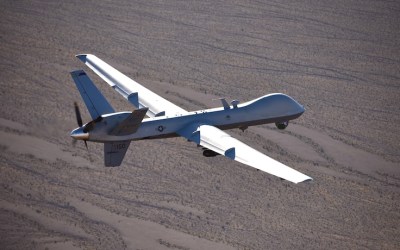
An Operational Perspective of Military Advantage and Proportionality
Scholars have described the law of targeting as lying at the heart of the law of armed conflict (LOAC). Within the law of targeting, the rule of proportionality requires military planners, commanders, and those executing attacks to assess whether the expected harm to...
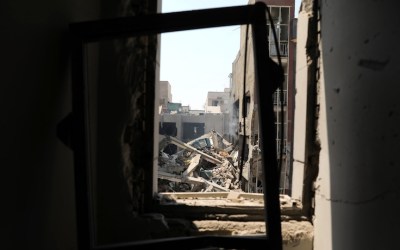
Assessing the Legality of Israel’s Action Against Iran Under International Law
As related in previous Articles of War coverage (here, here, and here), in the early hours of 13 June, Israel launched “Operation Rising Lion” which struck Iran’s nuclear enrichment facilities in Natanz, ballistic facilities, military commanders, and nuclear...

Attacking Scientists and the Law of Armed Conflict
On June 13, 2025, Israel launched Operation Rising Lion, an attack on Iran’s nuclear infrastructure, ballistic missile program, and senior military leadership. Additionally, the Israel Defense Forces (IDF) conducted so-called “targeted killings” of scientists working...

Judging Battlefield Conduct
Editors’ note: This post is based on the author’s article-length work, “The Rule of Law in Armed Conflict” published in volume 34 of the Minnesota Journal of International Law (2025). The rule of law is an appraisal concept that purports to restrict arbitrariness in...

Targeting Iranian Spy Ships
On March 17, 2025, Al-Hadath, a Saudi news outlet, reported that U.S. forces in the Middle East had targeted and sunk Iran’s newest signals intelligence (SIGINT) ship, the IRINS Zagros (H313), while the spy ship was on station in the Red Sea. Both U.S. and Iranian...

Ukraine Symposium – Terrorizing Civilians and the Law of Armed Conflict
Reports from the Kherson Oblast, an area of Ukraine the Ukrainian military recaptured in November 2022, indicate that the Russian military is using drones to target Ukrainian civilians as part of a systematic effort to terrorize the civilian population (see also here,...

I Spy: Espionage, Perfidy, and Fighting in the Shadows
In a 2024 Articles of War post, I identified that intelligence gathering, including espionage, is authorized by both treaty and customary international law during armed conflict. For international armed conflicts, the treaty basis is found in Article 24 of the 1907...

The Status of the U.S. Coast Guard’s People, Bases and Equipment, and Vessels Under LOAC
The U.S. Naval Institute (USNI) recently published an article highlighting the integral role the U.S. Coast Guard might play in a future high-intensity conflict. Set in the context of the American Sea Power Project’s fictional War of 2026 scenario, wherein the United...

Indo-Pacific Legal Topics for Operational Lawyers
The year 2024 was a time of increasing instability for global security. The ongoing war between Russia and Ukraine has resurrected the specter of a world war, in which North Korea is also involved. Perhaps related to that war, November of last year saw an incident in...

The Drone Threat, the Laser Response, and the Law – Part I
In conflicts during the last few years, unmanned air weapons, commonly referred to as drones, have increasingly been used to undertake attacks of ground targets. These attacks have recently involved large numbers of these drones, often directed at multiple targets....
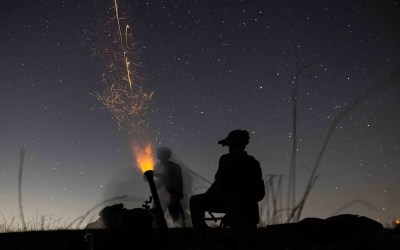
Year in Review – 2024
2024 was defined by a landscape of intensifying conflicts, continuous technological advancements (see here and here), and evolving debates over the application of the law of armed conflict (LOAC). The persistent war in Ukraine, the volatile Israel-Hezbollah and...

Killing General Kirillov: Questions and Answers
On December 17, Lieutenant General Igor Kirillov, the head of Russia’s Radiation, Chemical, and Biological Defense Forces, and his assistant were killed in a bomb explosion outside his Moscow apartment building. The bomb was concealed in an electric scooter and...

Rules of Engagement in Large-Scale Combat Operations: Force Enabler or Much Ado About Nothing?
Rules of Engagement (ROE) have traditionally played a major role in the execution of military operations, particularly when a given situation has not reached the threshold of armed conflict. In more recent years, however, some military operations have used ROE to...

NATO Interoperability When Targeting Indispensable Objects
A recent Lieber Paper strikes an optimistic note concerning legal interoperability, arguing that the dissimilarities stemming from uneven treaty membership between NATO allies are less significant than they may seem. However, one contentious subject has the potential...
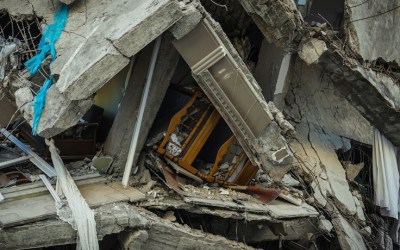
Understanding the Distinction Between Property Destruction Governed by Hague Article 23(g) and the Rules Governing Attacks
This analysis follows my prior post explaining the obligations imposed by Article 23(g) of the Hague Regulations of 1907, annexed to Hague Convention IV. For the reasons stated below, the attack rules contained in Additional Protocol I (AP I) control destruction of...

Israel – Hamas 2024 Symposium – Why Yahya Sinwar Was Not Hors de Combat
On or about October 17, 2024, members of the Israel Defense Force (IDF) killed Yahya Sinwar, the political leader of Hamas and a suspected mastermind behind the October 7, 2023 attack that viciously murdered 1,200 Israeli men, women, and children. Among those...

Hybrid Threats and Grey Zone Conflict Symposium – Challenges in the Twilight of International Law
Editors note: The following post highlights a chapter that appears in Mitt Regan and Aurel Sari’s recently published book Hybrid Threats and Grey Zone Conflict: The Challenge to Liberal Democracies. For a general introduction to the series, see Prof Mitt Regan and...
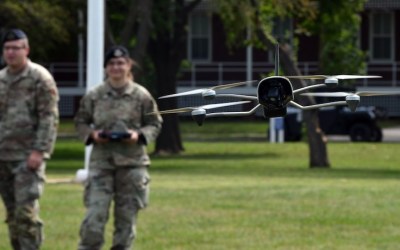
Electronic Warfare and the Law of Armed Conflict
Earlier this year, we had the pleasure of participating in the “Future of Warfare and the Law Symposium” at U.S. Army Futures Command in Austin, Texas. The conference, which was co-sponsored by Army Futures Command, the Strauss Center for International Security and...
