

Use of Force
The Evolving Architecture of the International Law of Military Operations: Mapping the Future of Legal Research in Armed Conflict
International law governing military operations is undergoing a period of profound transformation. Rapid technological innovation including artificial intelligence (AI), the expansion of conflict into new operational domains such as cyberspace and outer space, the...
The Moral Disorder of Jus ad Bellum and Jus in Bello Purity
In my last post, I argued why the law of armed conflict (LOAC) does not require the absolute separation of jus in bello and jus ad bellum. I also identified how leading thinkers throughout history understood the two to be inextricably, fundamentally linked, until very...
Of Open and Closed Systems – War Caught in Lotus and Anti-Lotus
Within every system of law there are open legal sub-systems that offer residual freedom to act and closed sub-systems where residual prohibitions prevail. In the first, the maxim is that what is not prohibited is permitted. In the second, that which is not allowed or...
The Ban on Force or the System: What’s Really Dying?
In the past year, a growing chorus of voices has warned that the international “rule-based” order—along with the prohibition on the use of force—is unraveling, with the United States poised to withdraw from the very system it once built. This post does not seek to...
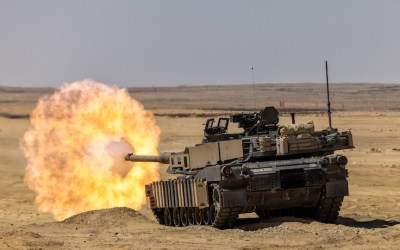
Exceptions to the Separation Between the Jus ad Bellum and Jus in Bello
According to canonic learning and overwhelming practice, the rules of the jus ad bellum and those of the jus in bello are separated in the sense that the application of each depends on its own legal triggers and regulations. This principle of separation works both...

Ukraine Symposium – War Termination: Legal Implications for International Security
The Kremlin announced on June 20 that it would finalize a date for a third round of peace talks with Ukraine. This follows two meetings in Istanbul on May 16 and June 2, 2025, marking the first such negotiations in over three years. But Ukraine and Russia remain...
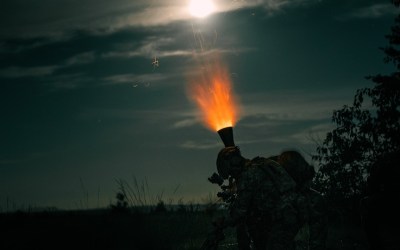
Intelligence Wars, Their Warriors, and Legal Ambiguity – Part II: Ambiguity
Editors' note: This post is the second in a two-part series that explores the role both military and civilian intelligence organizations perform in armed conflict. The first post in this series examined intelligence-based activities related to large scale combat...

Operation Rising Lion and the Self-Defense Condition of Immediacy
On 13 June, Israel launched Operation Rising Lion, striking Iranian military leadership and critical infrastructure as well as key personnel involved in Iran’s nuclear weapons development program. Just over a week later, on 21 June, the United States conducted...
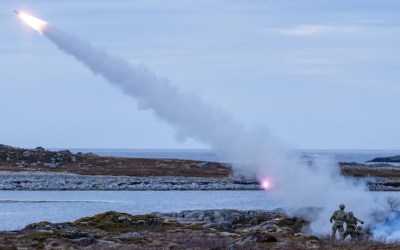
The Myth of Jus ad Bellum–Jus in Bello Purity
In modern international law, the separation of jus ad bellum (the law governing the right to go to war) and jus in bello (the law governing conduct in war) is frequently treated as dogma. For some, this separation is unequivocal, with some going so far as to say jus...

Shadows in Orbit: Unpacking the Cosmos 2588 Amidst Legal Uncertainty in Space
On 23 May, 2025, Russia launched Cosmos 2588, the latest in its Cosmos series of military satellites, into low Earth orbit (LEO). As first reported by independent satellite tracker Bart Hendrickx on the NASA SpaceFlight Forum, its orbital plane lies very close to that...

Interpreting the Law of Self-Defense
The 13 June 2025 Israeli attack (Operation Rising Lion) on Iranian nuclear and military infrastructure, as well as senior military leaders and nuclear scientists, sparked a sophisticated debate over the parameters of the international law right of self-defense (see,...

Israel (and the United States) vs. Iran: Self-Defence and Forcible Counterproliferation
A number of experts have set out their position on whether Israel has a credible claim to self-defence as a legal basis for its recent and ongoing series of strikes against Iranian nuclear facilities. I would like to add a few comments to this discussion and offer my...
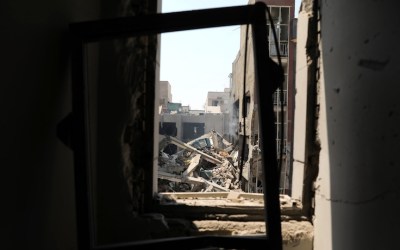
Assessing the Legality of Israel’s Action Against Iran Under International Law
As related in previous Articles of War coverage (here, here, and here), in the early hours of 13 June, Israel launched “Operation Rising Lion” which struck Iran’s nuclear enrichment facilities in Natanz, ballistic facilities, military commanders, and nuclear...
Select IHL Issues Arising from the Israel-Iran Conflict
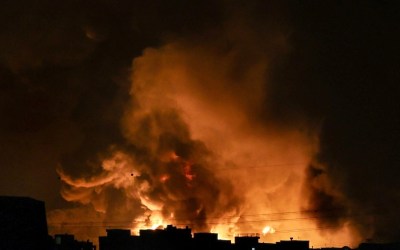
The Israeli strikes on Iran on 13 June 2025 and the ensuing attacks from both sides have raised important questions of international law. Several questions concern the legal basis under the ius ad bellum for the initial Israeli attack. This issue has been addressed by...

Israel’s Operation Rising Lion and the Right of Self-Defense
On Friday morning, June 13, the Israel Defense Forces (IDF) launched Operation Rising Lion, a major strike against Iranian nuclear infrastructure and ballistic missile capability. The IDF also degraded Iran’s air defenses and targeted senior Iranian military leaders....

Can Israel Target Iran in Response to Houthi Attacks? Exploring the Threshold of “Substantial Involvement”
Following the Houthi missile attack on Ben Gurion Airport on Sunday, May 4, 2025, Israeli Prime Minister Benjamin Netanyahu vowed to retaliate not only against the Houthis, but also against their “patron,” Iran, declaring that such action would take place “at a time...

Analyzing State Support to Non-State Actors – Part II: Response Options and Conflict Classification
As non-State actors assume an increasingly prominent role in international affairs, State support to them as a strategic tool for advancing political objectives has become more common. Such support presents significant challenges to the clear-eyed application of...

Analyzing State Support to Non-State Actors – Part I: Primary Obligations and Attribution
Today, armed conflicts are frequently characterized by State support to non-State actors as a means of advancing the former’s strategic objectives. For instance, Iran continues to enable Hezbollah, Hamas, Houthi, and other militia operations throughout the Middle East...

Deterrence Doesn’t Fly in Space: Nuclear Weapons in Outer Space as a Threat of Force
In an interview with German newspaper Die Welt on Friday April 12th, NATO Secretary-General Rutte expressed concern regarding the potential deployment of Russian nuclear weapons in orbit around Earth. While this possibility had already surfaced in 2024, as reported by...

Cross-Border Drone Strikes Against Mexican Drug Cartels
In April 2025, Assistant Secretary of Defense for Special Operations Colby Jenkins testified that U.S. forces did not have legal authority to conduct cross-border drone strikes against drug cartels in Mexico even though President Trump had designated several cartels...

Ukraine Symposium – Litigating the Act of Aggression as Human Rights Claims
The UN Human Rights Monitoring Mission in Ukraine reports that since February 2022, there have been 40,176 verified civilian casualties caused by the conflict in Ukraine: 12,340 killed and 27,836 injured. The number of combatant casualties is much higher. President...
Dilemmas of Defense: The U.S. Role in the Iran-Israel Conflict
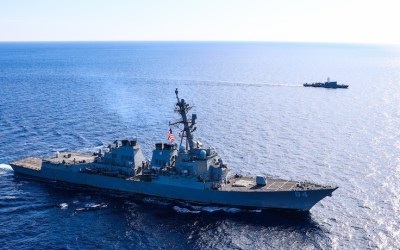
On April 13, 2024, the Islamic Republic of Iran carried out an unprecedented operation, launching hundreds of drones and cruise missiles toward Israel. Reports indicate that Israel intercepted the majority of these drones and missiles with assistance from the United...

If the “Why” of War Shapes the “How” of Law, Who is Accountable?
The ongoing armed conflicts in Ukraine and Gaza illustrate the dangerous consequences of conflating jus ad bellum and jus in bello. This conflation risks undermining the universality of international humanitarian law (IHL) and reducing international criminal law (ICL)...

Israel’s Actions in Syria and the Outer Limits of Self-Defence
Following the fall of the al-Assad regime in Syria, Israel carried out a series of airstrikes across Syria targeting military facilities, weapons and ammunition depots, defence systems, and Syrian naval and aircraft fleets. The targets reportedly housed “chemical...

Taiwan Statehood (or not) and its Ramification for Armed Conflict
As outlined in a previous Articles of War post, the recent 2024 Lieber Workshop focused on international law and the future of multi-domain operations in the Indo-Pacific. One of the workshop’s panels featured rich discussions on the military and political situation...

Rules of Engagement in Large-Scale Combat Operations: Force Enabler or Much Ado About Nothing?
Rules of Engagement (ROE) have traditionally played a major role in the execution of military operations, particularly when a given situation has not reached the threshold of armed conflict. In more recent years, however, some military operations have used ROE to...
The Operational Consequences of Conflating the “Why” and “How” of War
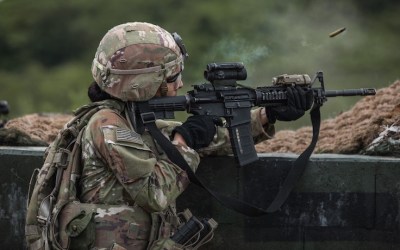
In conflict, determining whose cause is “more just” can span the spectrum of opinion and complexity. For example, most States consider Ukraine to be the “victim” State in its international armed conflict (IAC) with Russia. Shortly after the invasion, the UN Security...

Iran and Israel: The Light Treatment of Jus ad Bellum
In the early hours of October 26, 2024, the Israel Defence Forces (IDF) launched a large-scale attack against Iran. According to the IDF, these were “precise and targeted strikes against military targets in a number of areas in Iran.” While details on the nature and...

The Evolving Interpretation of the Use of Force in Cyber Operations: Insights from State Practices
Editors’ note: This post is drawn from the author’s article-length work with Professor Michael Schmitt, “Cyberspace and the Jus ad Bellum: The State of Play” appearing in International Law Studies. The post and the article are both based on course work that the author...

Ukraine Symposium – Ukraine, International Law, and Humanitarian Intervention
Responses to States that commit atrocities against their own people have long eluded international law. Some have pinned hopes on the concept of “humanitarian intervention,” whereby a State uses force (or threatens to use force) within the borders of a non-consenting...
The Virginia-Georgetown Manual Concerning the Use of Force Under International Law: Rules and Commentaries on Jus Ad Bellum
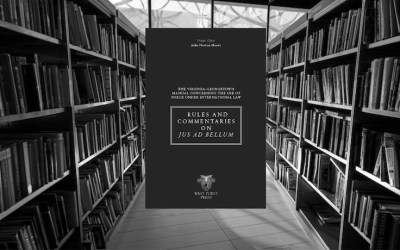
As current events so clearly demonstrate, there is no subject more fundamentally important to the maintenance of global security than that of the jus ad bellum, the rules and procedures for assessing the permissibility of a State’s resort to force in its international...

Ukraine Symposium – Ukraine’s “Indefinite” Incursion into Russia and the Jus ad Bellum
In early August, following two and a half years of attempts to repulse invading Russian forces from its eastern territories, Ukraine conducted a large-scale ground counteroffensive into Russia from its northern border. In the largest incursion of its kind since the...

“Well, it Depends”: The Explosive Pagers Attack Revisited
On 17 September, 2024, thousands of pagers distributed by Hezbollah to its operatives in Lebanon and Syria exploded. On the following day, hundreds of walkie talkies used by Hezbollah operatives also exploded. According to the Lebanese Ministry of Health, more than 30...

Attacking Iran: Retaliation or Self-Defense?
On October 1, Iran launched a major two-wave attack consisting of over 180 missiles against Israel. The primary targets were the headquarters of Mossad and three Israeli Air Force bases. However, Israel’s multi-layered air defense systems, supported by U.S. warships,...

EU Support to Ukraine through Windfall Profits: Reparative Value, International Law, and Future Pathways
Over two years into the Russian Federation’s full-scale invasion of Ukraine, the fate of Russian assets frozen by Western sanctions is followed almost as closely as battlefield developments. Considering the figures at play (assets worth an estimated $300 billion),...

Crimea and the Interrelationship Between Military Occupation and Annexation
Every State in the world is protected from the use of force against its sovereignty and territorial integrity. This protection and the corresponding right of self-defense, enshrined in Article 51 of the UN Charter, lie at the heart of international law. Put simply,...
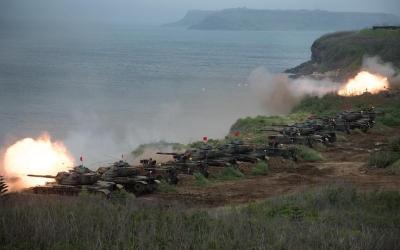
Taiwan’s New Rules of Engagement
In July 2024, Taiwan’s military released to the public its rules of engagement (ROE) prior to testing their effectiveness in the annual Han Kuang exercises, which took place on July 22-26. Taiwan developed the ROE in 2017 and revised them in 2023 as the People’s...
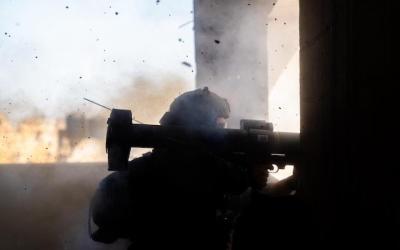
Israel-Hamas 2024 Symposium – Israel’s Jus ad Bellum and LOAC Obligations and the Evolving Nature of the Conflict
According to the New York Times, some senior American officials have concluded Israel has achieved all it can militarily in the Gaza Strip. It reports that “a growing number of national security officials” believe that the Israel Defense Force (IDF) will never be able...

Targeting Hamas’s Ismail Haniyeh and Hezbollah’s Fuad Shukr
On Wednesday morning, Israel killed the Chief of Hamas’s Political Bureau, Ismail Haniyeh, while he was in Tehran to attend the inauguration of Iranian President Masoud Pezeshkian. To do so, it reportedly used a bomb that had been smuggled two months earlier into the...
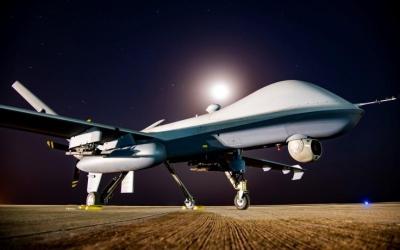
Applying the Unwilling or Unable Test: Israel Strikes Houthi Targets in Yemen
On July 18, 2024, Houthi rebels conducted a drone strike in Tel Aviv, killing one person and wounding at least ten others. The attack was carried out by an Iranian Samad-3 drone that had been modified to conduct the long-range strike. The attack constitutes the first...

Russia’s Alleged Nuclear Anti-Satellite Weapon: International Law and Political Rhetoric
The development and testing of anti-satellite weapons (ASATs), as well as debates concerning the legal and policy implications of ASAT testing and use, have existed since soon after the dawn of the Space Age. The centrality of these issues has waxed and waned over...

Space Privateers or Space Pirates? Armed Conflict, Outer Space, and the Attribution of Non-State Activities
Famously, George Clemenceau, Prime Minister of France at the end of the First World War, quipped that “generals always prepare to fight the last war, especially if they won it.” Such flaws of perspicacity, of course, are not limited to generals. After all, as Nobel...

Houthi Attacks on Merchant Vessels in the Red Sea
The Red Sea has seen a rise in attacks on merchant ships since 19 October 2023. Although the number of ships having been attacked differs depending on the sources used, the number has by now at the very least exceeded 50 (see here and here). Beyond injuries to crew,...
Reconceptualizing Norm Conflict in International Law
Editor’s Note: This post is drawn from the author’s article-length work, “Reconceptualizing Norm Conflict in International Law,” recently published in The Asian Journal of International Law. Representative of the traditional approach to defining “norm conflict” under...

In Honor of Yoram Dinstein – (Not) The Day After in Gaza
Editors’ note: This post is part of a series to honor Professor Yoram Dinstein, who passed away on Saturday February 10, 2024. These posts recognize Professor Dinstein’s work and the significant contribution his scholarship has made to our understanding of...
In Honor of Yoram Dinstein – The Separation Between the Jus in Bello and the Jus ad Bellum
Editors’ note: This post is part of a series to honor Professor Yoram Dinstein, who passed away on Saturday February 10, 2024. These posts recognize Professor Dinstein’s work and the significant contribution his scholarship has made to our understanding of...

In Honor of Yoram Dinstein – Will the Separation Between Jus ad Bellum and Jus in Bello Survive the Conflicts in Ukraine and Gaza?
Editors’ note: This post is part of a series to honor Professor Yoram Dinstein, who passed away on Saturday February 10, 2024. These posts recognize Professor Dinstein’s work and the significant contribution his scholarship has made to our understanding of...
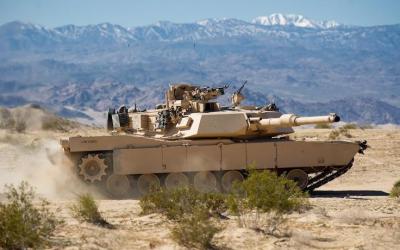
The Department of Defense’s In Extremis Legal Challenges During Modern Warfare
A Department of Defense (DoD) lawyer has for a client an organization with a remarkable number of dilemmas, all of which must be resolved (or at least addressed) lawfully, consistent with the norms and duties of the profession of arms, and in full view of an...
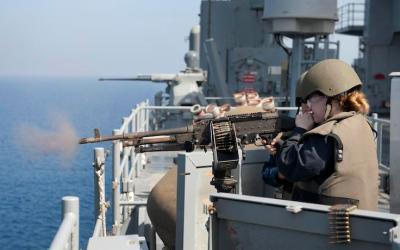
In Honor of Yoram Dinstein – The San Remo and the Newport Manuals on the Law of Naval Warfare
Editors’ note: This post is part of a series to honor Professor Yoram Dinstein, who passed away on Saturday February 10, 2024. These posts recognize Professor Dinstein’s work and the significant contribution his scholarship has made to our understanding of...
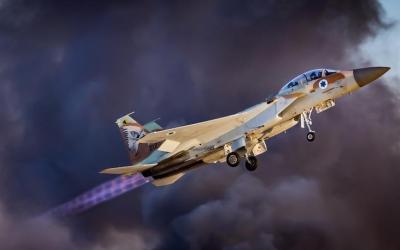
Retaliation, Retribution, and Punishment and International Law
On April 13, Iran launched a massive missile and drone attack on Israel. Hezbollah and Houthi attacks took place contemporaneously. Israel, alongside forces from France, the United Kingdom, the United States, and Jordan, successfully neutralized most of these threats,...
Subscribe
