

Use of Force
“On the Brink”: The Geneva Conventions at 75
Editor’s note: The views expressed in this post are those of the author and not necessarily those of the ICRC, HLS PILAC, or other workshop participants. From March 12-13, 2024, Harvard Law School’s Program on International Law and Armed Conflict (PILAC), the...
Regulating Military Force Series – The Meaning of Prohibited “Use of Force” in Article 2(4) of the UN Charter
Editors’ note: The author delivered remarks on the subject of this post at the conference “International Law and the Regulation of Resort to Force: Exhaustion, Destruction, Rebirth?” at the Centre for International Humanitarian and Operational Law, Palacký University...
Regulating Military Force Series – A UK Perspective on the Use of Force and the UN Security Council
Editors’ note: The author delivered remarks on the subject of this post at the conference “International Law and the Regulation of Resort to Force: Exhaustion, Destruction, Rebirth?” at the Centre for International Humanitarian and Operational Law, Palacký University...
Regulating Military Force Series – Justice and Accountability in the Era of Modern Mercenarism
Editors’ note: The author delivered remarks on the subject of this post at the conference “International Law and the Regulation of Resort to Force: Exhaustion, Destruction, Rebirth?” at the Centre for International Humanitarian and Operational Law, Palacký University...
Regulating Military Force Series – Enduringly Unwilling and Unable: The Syrian Chapter of the Forever Wars Saga
Editors’ note: The author delivered remarks on the subject of this post at the conference “International Law and the Regulation of Resort to Force: Exhaustion, Destruction, Rebirth?” at the Centre for International Humanitarian and Operational Law, Palacký University...
Regulating Military Force Series – A Future for the UN System of Collective Security?
Editors’ note: This post is a condensed version of the author’s keynote address at the conference “International Law and the Regulation of Resort to Force: Exhaustion, Destruction, Rebirth?” delivered at Palacký University in Olomouc, Czech Republic. It draws on Erika...
Regulating Military Force Series – Low-Intensity Cyber Operations and Regulation of the Resort to Force
Editors’ note: The author delivered remarks on the subject of this post at the conference “International Law and the Regulation of Resort to Force: Exhaustion, Destruction, Rebirth?” at the Centre for International Humanitarian and Operational Law, Palacký University...

Regulating Military Force Series – Hybrid Warfare and Jus ad Bellum
Editors' note: The author delivered remarks on the subject of this post at the conference “International Law and the Regulation of Resort to Force: Exhaustion, Destruction, Rebirth?” at the Centre for International Humanitarian and Operational Law, Palacký University...
Regulating Military Force Series – Introduction
In 1970, Professor Thomas Franck boldly concluded that only 25 years after the adoption of the UN Charter, Article 2(4) had been killed by the very States that had created it. In the 50 years since this conclusion, assaults on Article 2(4) and further aspersions on...

Russian Nuclear Weapons in Space
Recent news reports indicate that U.S. authorities fear Russia “wants to put,” a nuclear weapon into space, with U.S. intelligence describing this as a “serious security threat.” The suggested possible purpose of the weapons would be to target Western satellites in...

Ceasefire in International Armed Conflict: Implications for Jus Ad Bellum Self-Defense
In recent months, various commentators have proposed that Ukraine should agree to a ceasefire with Russia as a means of ending the ongoing hostilities of the Russo-Ukrainian War. This raises an underexplored issue under the laws of war: how does a ceasefire agreement...

Dear Yoram, In Memoriam
Editors’ note: This post honors Professor Yoram Dinstein, who passed away on Saturday February 10, 2024. Over the coming weeks, Articles of War will feature a series of posts to recognize Professor Dinstein’s work and the significant contribution his scholarship has...
Yoram Dinstein (1936-2024)
Editors’ note: This post honors Professor Yoram Dinstein, who passed away on Saturday February 10, 2024. Over the coming weeks, Articles of War will feature a series of posts to recognize Professor Dinstein’s work and the significant contribution his scholarship has...
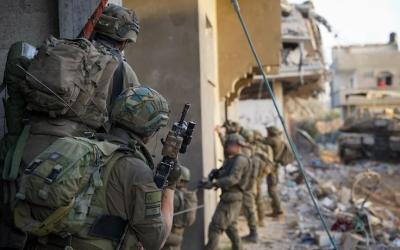
Israel – Hamas 2024 Symposium – Ruminations on the Legal, Policy, and Moral Aspects of Proportionality
On October 7, 2023, Hamas militants executed a devastating surprise attack against Israel, catching many in the Israeli and U.S. intelligence communities off guard. In addition to the operational surprise achieved by Hamas, in relative terms the attack has also been a...
Lieber Studies Big Data Volume – Attacking Big Data: Strategic Competition, the Race for AI, and Cyber Sabotage
Editors’ note: This post is based on the authors’ chapter in Big Data and Armed Conflict (Laura Dickinson and Ed Berg eds. 2024), the ninth volume of the Lieber Studies series published with Oxford University Press. Prevailing in strategic competition with China is...

Strikes against the Houthis: The Relationship between Resolution 2722 (2024) and the Right of Self-Defense
Following their strikes against Houthi positions in Yemen, both the United States and the United Kingdom have based their actions on the inherent right of individual self-defense (S/2024/55 and S/2024/56). Interestingly, both States have also made direct reference to...
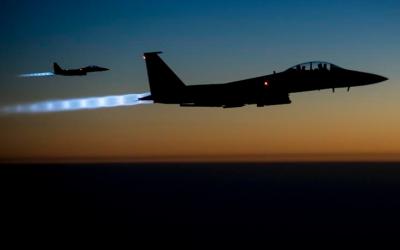
Attacking the Quds Force and Affiliated Groups under the Jus ad Bellum
On 28 January, a drone strike on a U.S. military outpost in Jordan known as Tower 22 killed three soldiers and wounded 34. The Islamic Resistance in Iraq, a non-State militia group, claimed responsibility for the attack which it said was in response to U.S. support...
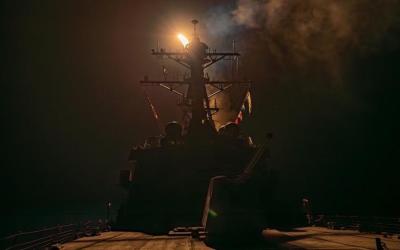
The Law of Self-Defense and the U.S. and UK Strikes against the Houthis
The Houthis are an Iran-aligned armed group that controls large swathes of territory in northern Yemen. Since 19 November 2023, and to support Hamas during its ongoing armed conflict with Israel, the Houthis have launched attacks against vessels transiting through the...
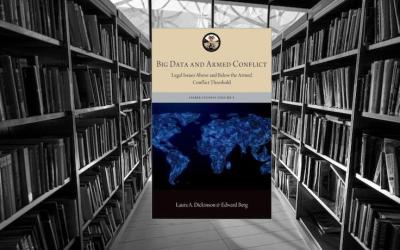
Lieber Studies Big Data Volume – Big Data and Armed Conflict – Legal Issues Above and Below the Armed Conflict Threshold
Editor’s note: This is the first post in a symposium addressing themes from a new book entitled Big Data and Armed Conflict: Legal Issues Above and Below the Armed Conflict Threshold, the ninth in the Lieber Institute’s Lieber Studies series with Oxford University...

The Influence of Weaponry on the Jus ad Bellum
In an Articles of War post last week, Professor Terry Gill discussed his new book, The Use of Force and the International Legal System, co-authored with Dr. Kinga Tibori Szabó. It is a fascinating journey through the jus ad bellum, the law governing the use of force...

The Jus ad Bellum Aspects of the Russian War in Ukraine
Editors’ Note: This post is derived from a presentation given at the 2023 Israel Defense Forces Military Advocate General’s 4th International Conference on the Law of Armed Conflict. In spite of the complex legal issues that Russia’s full-scale war in Ukraine has...

The Use of Force and the International Legal System
The editors of Articles of War kindly invited me to submit a short post regarding the book I co-authored with Kinga Tibori Szabó on the use of force which was recently published by Cambridge University Press under the abovementioned title. I will give a brief overview...
Year Ahead – International Humanitarian Law at Risk
I leave 2023 behind, dismayed about the state of international humanitarian law (IHL) and concerned that its effectiveness on the battlefield is at risk. In this year-ahead post, I highlight five threats as particularly corrosive and urge greater sensitivity to them...

Ukraine Symposium – Retaliatory Warfare and International Humanitarian Law
On 29 December, Russia launched a massive country-wide drone and missile assault on Ukraine. Although Ukraine shot down 114 of the 158 inbound missiles, over 40 Ukrainian civilians died in the attacks, and more than 160 were wounded. In addition to military...

The Korean Space Race
At the end of 2023, we enter a new phase of competition and proxy war on the Korean Peninsula in what could be dubbed the Korean Space Race. Kim Jong-un, the mercurial North Korean leader, has long prioritized placing military spy satellites over the Korean Peninsula....

Securing the Maritime Domain in the Red Sea
Since the brutal Hamas-led massacre of over 1,300 innocent Israeli citizens on October 7, 2023, Houthi rebels based in Yemen have increased their attacks on Israeli and U.S. ships in the Red Sea. A statement issued by the Iranian-backed rebels indicated that they...
Israel – Hamas 2023 Symposium – Israel’s Right to Self-Defence against Hamas
Recent posts (here and here) have discussed Israel’s right to use force by way of self-defence against Hamas following the October 7 attacks. The gist of the first post’s argument, notwithstanding the caveats, is that the right to self-defence provided in Article 51...
Of Hague Law and Geneva Law
For specialists of the law of armed conflict, the term “Hague Law” (HL) designates the rules related to the conduct of hostilities, the so-called means and methods of warfare. Meanwhile, the term “Geneva Law” (GL) refers to the rules concerning the protection of...
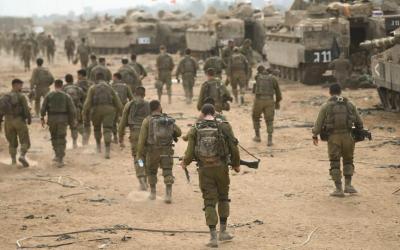
Israel – Hamas 2023 Symposium – International Law “Made in Israel” v. International Law “Made for Israel”
International lawyers inside and outside Israel have long been critical of Israel’s tendency to rely on very specific and problematic interpretations of international law to justify certain military acts and foreign policies (see e.g., here, here, and here). Such...
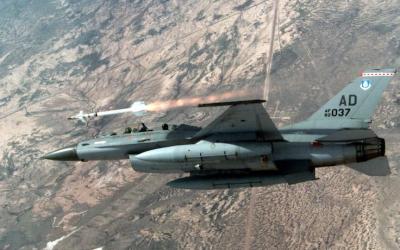
The U.S. Turkish Drone Shootdown Over Syria and the Jus Ad Bellum
In early October, the United States shot down an armed Turkish unmanned aerial vehicle (drone) operating over Syrian airspace with an F-16 fighter jet. The aerial engagement was unusual, if not unprecedented, in that it targeted an aircraft belonging to “one of...

Israel – Hamas 2023 Symposium – Iran’s Responsibility for the Attack on Israel
One important question that arises from Hamas’s surprise offensive against Israel relates to Iran’s involvement in the attack. According to the Wall Street Journal, Iran’s role was significant. Iranian security officials helped to plan the attack and “gave the green...
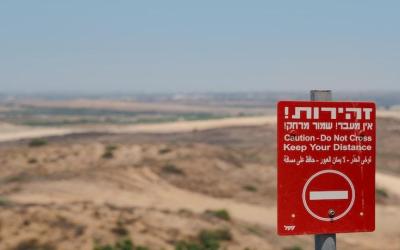
Israel – Hamas 2023 Symposium – The Legal Context of Operations Al-Aqsa Flood and Swords of Iron
On Saturday morning, the armed wing of Hamas, the Izz ad-Din al-Qassam Brigades, launched Operation Al-Aqsa Flood, a brutal surprise attack into Israel that included a barrage of over 3,000 missiles and the air, sea, and land penetration of Israeli territory. This was...
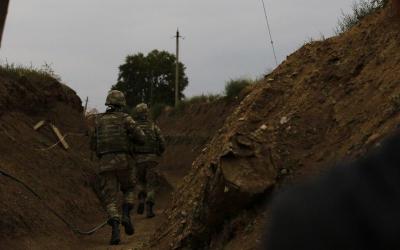
The Evolving Nagorno-Karabakh Conflict – An International Law Perspective – Part I
Editors’ Note: This post is the first in a two-part series addressing international legal issues related to the ongoing situation in Nagorno-Karabakh. On 19 September, Azerbaijan launched an “anti-terror” operation into Nagorno-Karabakh, an enclave in Azerbaijan that...

Islamic Jihadism and the Laws of War
In my position as the International Committee of the Red Cross (ICRC) regional legal coordinator in the Middle East and North Africa for the last ten years, I’ve had the sad privilege to witness the ugly wars between various States and the Islamic jihadist groups that...

Military Aid to Russia and International Law
North Korea’s leader, Kim Jong-un, is in Russia to discuss military support, including supplying artillery shells and rockets, for Russian operations against Ukraine. In the past, North Korea has supplied the Wagner Group with arms and ammunition. Its support to...

Ukraine Symposium – Territorial Acquisition and Armed Conflict
Soon after the outbreak of its international armed conflict with Ukraine in 2014, Russia annexed Crimea. Eight years later, it also annexed territory around the four Ukrainian oblasts of Donetsk, Luhansk, Kherson, and Zaporizhzhia. In each case, the annexations, which...

The Niger Coup and the Prospect of ECOWAS Military Intervention: An International Law Appraisal
On 26 July 2023 the Nigerien military, led by the Head of the Presidential Guard General Abdourahamane Tchiani, seized power from the democratically elected president, Mohamed Bazoum, and suspended the constitution. President Bazoum, along with his family, have been...

Large-Scale Combat Operations Symposium – Counterterrorism Thinking and “Large-Scale Combat Operations”
Editor’s note: The following post highlights a subject addressed during an expert workshop that the Lieber Institute co-convened alongside Harvard Law School’s Program on International Law and Armed Conflict and the International Committee of the Red Cross, focusing...
Are States Aiding and Assisting Ukraine and Russia Using Force?
The provision of military aid and assistance from States supporting Ukraine and Russia has been a salient theme in their international armed conflict following Russia’s renewed invasion in February 2022. As of late March 2023, for instance, over fifty States have...
Use of Force and UN Mandates to Protect Civilians
The UN’s protection of civilians (PoC) concept remains contested twenty-three years after the first PoC mandate given to the United Nations Mission in Sierra Leone (UNAMSIL) in 1999. The PoC component of a UN peacekeeping mandate can consist of all sorts of measures...
BUL Event on the Use of Force, Legitimacy, Non-state Actors, and Bilateral Security Agreements
On January 18, at the Brunel University London (BUL) School of Law, the BUL International Law Group, held an event exploring the use of force and international law (the video can be found here). The discussants addressed questions that are sure to be on the minds of...
Türkiye’s Threats against Greece: A Violation of Article 2(4) of the UN Charter?
On September 5-6, 2022, the Greek Foreign Minister Mr. Nikos Dendias sent letters to the EU, NATO, and the UN to bring to their attention public statements made by Türkiye’s President Recep Tayyip Erdogan whose “openly threatening nature and tone are more than...

Cyber Symposium – The Private Sector View on Use of Force
Editor’s note: The following post highlights a subject addressed in the symposium entitled The Evolving Face of Cyber Conflict and International Law: A Futurespective presented by the Lieber Institute for Law and Warfare at the American University, Washington College...

Cyber Symposium – The Evolution of Cyber Jus ad Bellum Thresholds
Editor’s note: The following post highlights a subject addressed in the symposium entitled The Evolving Face of Cyber Conflict and International Law: A Futurespective presented by the Lieber Institute for Law and Warfare at the American University, Washington College...
Cyber Symposium – Diplomatic Considerations for Armed Attack
Editor’s note: The following post highlights a subject addressed in the symposium entitled The Evolving Face of Cyber Conflict and International Law: A Futurespective presented by the Lieber Institute for Law and Warfare at the American University, Washington College...

Cyber Symposium – The Evolving Face of Cyber Conflict and the Jus ad Bellum: A Futurespective
From 15 through 17 June 2022, the Lieber Institute for Law and Warfare met in Washington, D.C. with the Tech, Law & Security Program at the American University, Washington College of Law to present a symposium entitled The Evolving Face of Cyber Conflict and...
Lieber Institute White Paper: Responding to Malicious or Hostile Actions under International Law
Recent consultations with senior legal advisers have highlighted the need for a clear map of response options available to States facing hostile or malicious actions, whether attributable to another State or a non-State actor. After all, to respond effectively to such...
Remarks on the Law Relating to the Use of Force in the Ukraine Conflict
Professor Mike Schmitt has addressed the application of the right of self-defense to the Russian invasion of Ukraine. This post adds comments on the application of the law relating to the use of force to the present conflict. Specifically, I address whether there is...
Keeping the Ukraine-Russia Jus ad Bellum and Jus in Bello Issues Separate
In any situation of international armed conflict (IAC), such as that between Ukraine and Russia right now, two bodies of law necessarily come into sharp relief: The jus ad bellum, which deals with the “why” of the IAC (the legitimacy or otherwise of going to war); and...
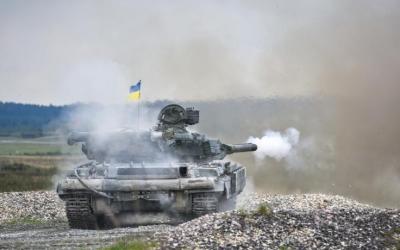
Providing Arms and Materiel to Ukraine: Neutrality, Co-belligerency, and the Use of Force
Since the outbreak of renewed hostilities on February 24, numerous States have provided Ukraine significant military assistance in its ongoing armed conflict with Russia. NATO members that have approved or transferred lethal weapons to Ukraine include Belgium, Canada,...
Subscribe
