

Use of Force
Cyber Symposium – Diplomatic Considerations for Armed Attack
Editor’s note: The following post highlights a subject addressed in the symposium entitled The Evolving Face of Cyber Conflict and International Law: A Futurespective presented by the Lieber Institute for Law and Warfare at the American University, Washington College...

Cyber Symposium – The Evolving Face of Cyber Conflict and the Jus ad Bellum: A Futurespective
From 15 through 17 June 2022, the Lieber Institute for Law and Warfare met in Washington, D.C. with the Tech, Law & Security Program at the American University, Washington College of Law to present a symposium entitled The Evolving Face of Cyber Conflict and...
Lieber Institute White Paper: Responding to Malicious or Hostile Actions under International Law
Recent consultations with senior legal advisers have highlighted the need for a clear map of response options available to States facing hostile or malicious actions, whether attributable to another State or a non-State actor. After all, to respond effectively to such...
Remarks on the Law Relating to the Use of Force in the Ukraine Conflict
Professor Mike Schmitt has addressed the application of the right of self-defense to the Russian invasion of Ukraine. This post adds comments on the application of the law relating to the use of force to the present conflict. Specifically, I address whether there is...
Keeping the Ukraine-Russia Jus ad Bellum and Jus in Bello Issues Separate
In any situation of international armed conflict (IAC), such as that between Ukraine and Russia right now, two bodies of law necessarily come into sharp relief: The jus ad bellum, which deals with the “why” of the IAC (the legitimacy or otherwise of going to war); and...
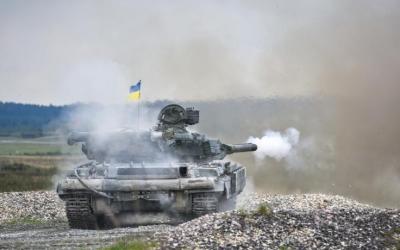
Providing Arms and Materiel to Ukraine: Neutrality, Co-belligerency, and the Use of Force
Since the outbreak of renewed hostilities on February 24, numerous States have provided Ukraine significant military assistance in its ongoing armed conflict with Russia. NATO members that have approved or transferred lethal weapons to Ukraine include Belgium, Canada,...
Russia’s Illegal Invasion of Ukraine & The Role of International Law
The United States’ leadership of Western opposition to Russia’s invasion of Ukraine is the correct response. No question. The entire international system of States is based upon Westphalian notions of sovereign equality, border inviolability, territorial integrity,...
Russia’s “Special Military Operation” and the (Claimed) Right of Self-Defense
On 24 February, Russia attacked Ukraine on several fronts. Two days earlier, President Vladimir Putin had announced Russia’s recognition of Luhansk and Donetsk People’s Republics in the Donbas region and ordered in so-called “peacekeepers.” Those breakaway entities...
Russian Cyber Operations and Ukraine: The Legal Framework
Last week, hostile cyber operations targeted approximately 70 Ukrainian government websites, including that of the Cabinet. Affected sites included Diia, the most widely used site for handling online government services. The operations included posting the message,...

Private Companies in Cyber Operations During Armed Conflict
The legal implications surrounding military offensive cyber operations in armed conflict have received considerable attention from scholars and practitioners. In contrast, this piece assesses the implications for how the rules of international humanitarian law (IHL)...
Over-the-Horizon Operations – Part III: How May Force Be Used?
Part I of this series examined when the United States may lawfully resort to force in the form of over-the-horizon (OTH) operations, a question that looms large given President Biden’s July announcement that the United States is developing the capability in light of...
Over-the-Horizon Operations – Part II: Where May Force Be Used?
Part I of this series examined the issue of when the United States would enjoy a legal right to conduct over-the-horizon (OTH) operations. It identified three bases for such operations: UN Charter Chapter VII authorization or mandate, self-defense, and request from...
The Rhetoric of Retaliation
The language we use to justify and describe legal constraints on personal conduct or grants of legal authority to our government is never totally free of bias, ambiguity, flawed premises, or unproveable assumptions. How we fix, manipulate, or comport ourselves to...
“Over-the-Horizon Operations” in Afghanistan
The United States’ withdrawal from Afghanistan has rightly dominated the world’s attention. The suicide bombing at Hamid Karzai International Airport on August 26th, resulting in the loss of 10 Marines, 2 Army Soldiers, 1 Navy Corpsman, and 170 Afghan civilians, will...
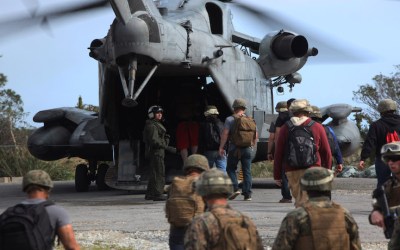
Afghanistan and Noncombatant Evacuation Operations
Last month, President Biden announced the U.S. military mission in Afghanistan would officially conclude by August 31, 2021. Since the drawdown of U.S. and other international forces from Afghanistan began in May, the Taliban has made rapid gains across the...

Terminological Precision and International Cyber Law
The recent spate of hostile cyber operations by States, non-State groups affiliated with States, and non-State groups operating on their own has resulted in a cacophony of pronouncements and commentary by political leaders, pundits, journalists, and legal experts. As...

When Corporations Take Offensive Measures Against States
Cyberattacks are increasingly inundating the private sector, and most States are unable or unwilling to provide adequate protection against these attacks. To mitigate this challenge, numerous corporations acknowledge that they have engaged in some form of active cyber...
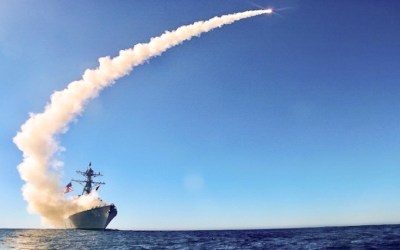
The Legitimate Aims of Self-Defense
The United States' strike on Iranian-backed militias along the Syria-Iraq border on February 25 and the accompanying justifications, communications, and explanations have produced a flurry of legal discourse across the blogosphere and social media (here, here and...
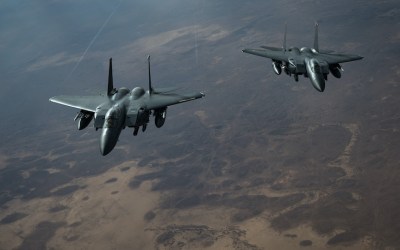
President Biden’s First Use of Force and International Law
On February 25, President Biden authorized the first use of military force since becoming President. The operation involved two F-15s dropping seven 500-pound Joint Direct Attack Munitions (JDAM) bombs on a grouping of buildings at a Syria-Iraq border crossing....
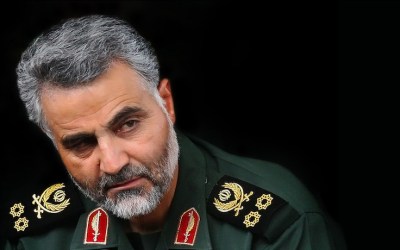
The UN Soleimani Report and the U.S. Article 51 Notification
On July 9, 2020, the UN Special Rapporteur on Extrajudicial, Summary or Arbitrary Executions released a report on the legality of targeted killing by drone strikes. The backdrop for the report is the U.S. strike against Qasem Soleimani on January 2, 2020. And,...
Subscribe
