

Biological Weapons: Why Strengthening the BWC Matters Now
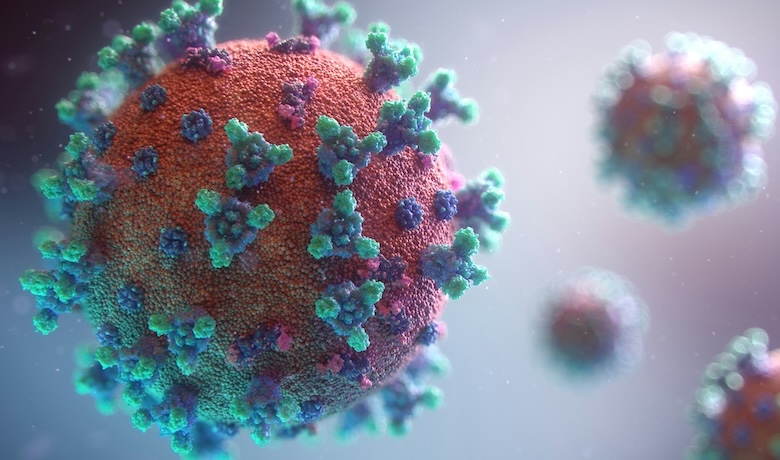
Disease is a constant threat to humanity and in many instances, there is little that can be done to prevent its spread. As shown by the recent experience of SARS-CoV 2, infectious diseases are a serious health concern as well as a societal disruptor. It is therefore not surprising that biological weapons are perhaps the most terrifying weapons, as they weaponize disease. These weapons are unpredictable and indiscriminate and are therefore considered inherently reprehensible.
Biological weapons are the subject of a comprehensive prohibition under the Biological Weapons Convention (BWC). However, today’s era of rapid scientific breakthroughs, potential dual-use technologies, and shifting geopolitical landscapes calls for strengthening this Convention to allow it to effectively respond to current challenges. To provide context to the current meeting of the Working Group on Strengthening the BWC, this post will provide a brief introduction to biological weapons, their prohibition, and the issues currently faced.
What Are Biological Weapons?
Biological weapons disseminate disease-causing organisms or toxins to harm or kill humans, animals, or plants, and generally consist of the biological agent and a delivery mechanism. The biological agent can include any type of bacterial, microbial, and viral agents, such as smallpox, plague, and anthrax.
Primitive forms of biological weapons have been used throughout history, such as the poisoning of wells or hurling disease-ridden corpses over city walls. However, these incidents were generally small-scale, and their effectiveness was debatable. The threat of intentional use of biological agents was negligible until major discoveries in biology in the 19th and 20th centuries, which allowed for the cultivation and potential weaponization of bacteria and viruses, setting the stage for States to develop specific biological weapons programs.
By the Second World War, multiple major powers had active biological weapons programs, and the Japanese even employed different biological weapons during their occupation of China. Since the 1960s, the number of States that are suspected to have biological weapons programs has been decreasing and no State has used biological weapons since. This does not mean that the threat has been entirely eliminated as a few States are still suspected of having biological weapons programs. Outside of State involvement, there have been indicators that terrorist organizations, such as Al-Qaeda and Aum-Shinrikyo, have shown interest in pursuing biological weapons.
Regulating Biological Weapons
The first clear prohibition on biological warfare was found in the 1925 Geneva Protocol, which prohibited their use in international armed conflicts. The Protocol was subject to reservations, which effectively restricted it to a prohibition on the first use of biological weapons. It also failed to address the development and production of biological weapons, enabling States to pursue such programs lawfully and allowing the biological weapons threat to persist.
A more comprehensive treaty was necessary to truly eliminate biological weapons. While discussions started immediately after the Second World War, it was not until the 1960s that progress was finally made. This progress was made possible, in part due to the U.nited States unilaterally renouncing biological weapons and the British initiative to decouple the prohibition of biological weapons from chemical weapons. This ultimately led to the adoption of the BWC, which entered into force in 1975. It currently has 189 States Parties and four Signatory States, with only four States having neither signed nor ratified the Convention.
The main prohibitions of the BWC can be found in Article I, which prohibits State parties from developing, producing, stockpiling, or otherwise acquiring or retaining “microbial or other biological agents, or toxins whatever their origin or method of production, of types and in quantities that have no justification for prophylactic, protective or other peaceful purposes.” As biological weapons exist not only by virtue of the biological agent, Article I also bans weapons, equipment, and means of delivery designed to use such agents or toxins for hostile purposes. The prohibition of agents, equipment, and technology lacking “justification for prophylactic, protective, or other peaceful purposes” reflects the Convention’s use of broad, technologically neutral language, commonly described as the general purpose criterion, which ensures that all biological agents and technologies are covered regardless of future scientific developments.
However, the BWC includes no explicit prohibition on the “use” of biological weapons. During the negotiations, States were reluctant to create a parallel prohibition to the 1925 Geneva Protocol, especially because the Protocol not only prohibited the use of biological weapons, but the use of chemical weapons as well. However, subsequent BWC Review Conferences have clarified that Article I was a comprehensive prohibition, which included a prohibition on use.
A further major flaw of the BWC is that it has no true compliance or verification mechanism. The only responses to potential violations are found in Article V, which encourages consultations to address concerns over treaty implementation, and Article VI, allowing States to lodge complaints with the UN Security Council if they suspect a breach. The latter procedure rose to prominence in the context of Russia’s false allegations of Ukrainian laboratories conducting biological weapons research. The lack of a verification mechanism has long been considered a significant limitation on the effectiveness of the BWC, and there have been multiple efforts seeking to address this concern.
Continuing Threat of Biological Weapons
While the BWC remains important, today, more than 50 years since its entry into force, the world is in a different place. Technology in the life sciences has developed rapidly, with new technologies such as synthetic biology, genetic engineering, and artificial intelligence (AI) poised to revolutionize medicine and industry. However, malicious actors can also use these technologies to develop more potent or targeted biological agents. These capabilities raise concerns about the potential development of novel biological agents as well as increased risks for biological weapons proliferation.
For example, AI presents both opportunities and risks in the biosciences. Its capacity for data processing and predictive modelling has supported breakthroughs in areas such as outbreak prediction, public health response, and disease modelling. On the other hand, AI has also been demonstrated to identify novel biological and chemical weapons, as well as potentially lowering the barriers to developing bioweapons. When combined with synthetic biology, AI could accelerate the design of new biological constructs or optimize laboratory conditions to enhance their effectiveness.
The combination of these technologies is leading to the rise of cloud laboratories, automated, remote-access platforms integrating robotics, AI, and cloud computing, which allow researchers to program and conduct biological experiments remotely. While these platforms offer major efficiencies and lower barriers to innovation, they also introduce jurisdictional and oversight challenges, particularly in the context of dual-use research.
A key concern across several emerging technologies is that they further complicate the verification, detection, and enforcement of existing biological weapons regimes, particularly the BWC. These technologies enable a more decentralized and diffused distribution of biological capabilities, reducing the reliance on State-run or highly specialized facilities. While this has not eliminated the hurdles to developing biological weapons, it has already lowered them and will continue to do so in the future.
It is important to underscore that all of these technologies have legitimate scientific, economic, and public health benefits, and their development should not be unnecessarily constrained. However, their dual-use nature demands proactive and sustained oversight. The dual-use nature of many life science innovations makes regulation and oversight more complicated, forcing policymakers to balance scientific freedom with security concerns. While the BWC’s scope is broad enough to cover these developments under its prohibitions, continuous engagement with the evolving scientific landscape is essential to maintaining the treaty’s relevance and effectiveness.
Current Efforts to Strengthen the Convention
These new developments have raised the urgency of strengthening the BWC so that it can respond effectively to contemporary challenges. It is in this context that the 2022 BWC Review Conference established a dedicated working group on strengthening the Convention. Over the last few years, it has met regularly to discuss several different topics, with some of the most important being a science and technology review mechanism, international cooperation for peaceful use, and verification and compliance.
Part of the group’s mandate focuses on efforts to prevent the misuse of biological science and technology. The group is working to develop proposals toward proposals for mechanisms to address future developments in science and technology. The pace of technological change since the BWC entered into force has been rapid, and specific expertise is necessary to understand the implications of these developments for the Convention. One proposed response is the creation of a science and technology review mechanism to monitor and analyse emerging technologies and assess their implications for the BWC.
Disagreements have long existed concerning the extent of cooperation required under Article X. In particular, many States from the Global South have urged States with more developed biotechnological industries to engage in more robust cooperation to ensure that the benefits of peaceful biological technologies are shared equitably. These concerns have therefore constituted an important strand of discussion within the working group.
Another important and contentious issue before the working group concerns verification and compliance. Absent a verification protocol, States must rely on a politicized process through the UN Security Council for conflict resolution. False allegations of non-compliance, such as the most recent ones by Russia against Ukraine, do not lead to independent fact-finding and thus leave room for misuse. Notwithstanding comments made to the contrary by President Trump at the UN in 2025, there is no verification mechanism available, and AI-assisted verification remains beyond reach. Any verification mechanism will need to be negotiated amongst the State parties to the BWC. Verification has historically been one of the Convention’s most divisive issues, with negotiations breaking down in 2001 when the United States blocked a Verification Protocol. In recent years, however, State parties have renewed discussions with a view to making meaningful progress toward a potential verification mechanism.
Conclusion
The breadth of unresolved issues under the BWC has resulted in an ambitious and crowded agenda for the current working group. Although it was hoped that the group would formulate recommendations in advance of the 2027 Review Conference, this seems unlikely, especially due to the obstruction from Russia. Despite this, some optimism remains, as discussions are ongoing and limited progress has been made. The pace of that progress remains slow, creating a risk that accelerating technological and political developments may leave the Convention increasingly ill-equipped to address emerging challenges.
***
Dr Barry de Vries is a Postdoctoral Research Fellow in the project CBWNet at the Chair for Public Law and International Public Law at Justus-Liebig-University Giessen (Germany) and an Associated Research Fellow at the Peace Research Institute Frankfurt.
The views expressed are those of the author, and do not necessarily reflect the official position of the United States Military Academy, Department of the Army, or Department of Defense.
Articles of War is a forum for professionals to share opinions and cultivate ideas. Articles of War does not screen articles to fit a particular editorial agenda, nor endorse or advocate material that is published. Authorship does not indicate affiliation with Articles of War, the Lieber Institute, or the United States Military Academy West Point.
Photo credit: Fusion Medical Animation via Unsplash
