

Gamifying War: Reward Incentives and “Outlawry” in Armed Conflict
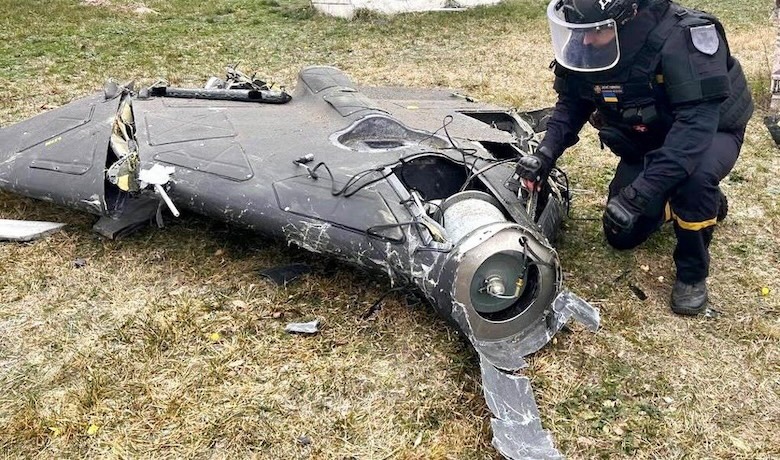
Both sides of the Ukraine-Russia conflict maintain incentive programs that reward soldiers for kills on the battlefield. Russia offers monetary bonuses for the destruction of enemy equipment, such as helicopters and tanks, while Ukraine awards points redeemable for items in an online store. Rather than traditional consumer goods, the store carries an array of weapons and equipment that can be used to augment a unit’s military capabilities.
Offering game-like incentives for the elimination of real-world targets has raised concerns that soldiers will become desensitized to the brutal realities of warfighting. One Ukrainian prosecutor professed, “We want our people to come back from the war as human beings, not as killing machines.” The incentives might also implicate a prohibition on outlawry that is sometimes understood to apply in international armed conflict.
This post discusses the concept of outlawry in armed conflict and examines whether Russian and Ukrainian rewards programs that offer monetary and other incentives for the killing of enemy soldiers are a form of prohibited outlawry under international law.
Outlawry
Outlawry is a murky concept in the law of armed conflict. It is mentioned in the Lieber Code, various State military manuals, and legal commentaries. But the term is notably absent from key law of armed conflict treaties, including the 1907 Hague Regulations, the 1949 Geneva Conventions, and the 1977 Additional Protocols. Reference to outlawry is also missing from the International Committee of the Red Cross’s study of customary international humanitarian law. Outlawry appeared in various U.S. military manuals during the twentieth century, but it failed to find its way into the U.S. Department of Defense (DoD) multiservice Law of War Manual, published in 2015. By contrast, related concepts, such as offering a reward for enemy persons “dead or alive,” did find expression in the new manual (DoD, Law of War Manual, § 5.26.3.1).
The omission of outlawry from treaty law and, apparently, from customary international law suggests that it is not recognized under the law of armed conflict. On the other hand, its persistence in some military manuals and the writings of scholars attests to its perceived relevance as a practice in the conduct of hostilities. What, then, is meant by “outlawry”? And do Russian and Ukrainian incentive programs constitute outlawry as it has been understood in armed conflict?
Outlawry in Historical Sources
Although outlawry is not clearly defined in international law, it appears to involve the repudiation of enemy persons’ legal rights and protections, either by proclamation or implication, and the invitation to make those persons the object of attack. Outlawry essentially denies enemy persons legal status and actively encourages their exposure to unregulated harm, including injury or death, as a consequence of their extralegal character.
It should be emphasized that enemy combatants are lawful targets in armed conflict. Hugo Grotius explained that in war, “it is permitted to harm an enemy,” and that “[n]ot merely by the law of nature but also by the law of nations … it is in fact permissible to kill an enemy in any place whatsoever.” W. Hays Parks likewise stated that “enemy combatants are legitimate targets at all times, regardless of their duties or activities at the time of their attack.” Because enemy combatants may be made the object of attack, it is not the killing of enemy combatants that makes outlawry odious. Rather, it is the deliberate denial of their rights and protections, along with the invitation to kill them in all circumstances, that is objectionable.
The Lieber Code appears to include the first reference to outlawry in the law of armed conflict. Outlawry is mentioned in a section dedicated to assassination, which states,
The law of war does not allow proclaiming either an individual belonging to the hostile army, or a citizen, or a subject of the hostile government, an outlaw, who may be slain without trial by any captor, any more than the modern law of peace allows such intentional outlawry; on the contrary, it abhors such outrage. The sternest retaliation should follow the murder committed in consequence of such proclamation, made by whatever authority. Civilized nations look with horror upon offers of rewards for the assassination of enemies as relapses into barbarism.
As the first modern codification of the law of war, the Lieber Code has been credited with influencing subsequent codification efforts, including the work of the Hague Peace Conferences of 1899 and 1907. However, although clearly indebted to Francis Lieber’s earlier work, the ensuing conventions made no mention of outlawry. The Lieber Code’s genesis in a civil war might account for the omission.
One scholar speculated that outlawry might have been considered a concept that only applied to civil wars because “outlawry as a legal concept is an exception to the law of a State.” Lending some credence to this view, Richard Baxter noted that “[t]he most serious charge which has been levelled at General Orders No. 100 is that it was overly influenced by the existence of a civil war.” Baxter himself believed otherwise and insisted that Lieber intended the code “to be applicable to a war between nations.” Additionally, outlawry’s inclusion in legal commentaries and law of war manuals suggests that at least some practitioners regarded outlawry as a concern in international armed conflict.
Writing in 1912, James Edward Edmonds and Lassa Oppenheim addressed outlawry as an element of the law of land warfare. They declared, “As a consequence of the prohibition of assassination, the proscription or outlawing of any enemy, or the putting a prize on an enemy’s head, or any offer for an enemy ‘dead or alive’ is not permitted.” Two years later, in 1914, the U.S. War Department included a similar provision in its Rules of Land Warfare. The provision stated,
Civilized nations look with horror upon offers of rewards for the assassination of enemies, and the perpetrator of such an act has no claim to be treated as a combatant, but should be treated as a criminal. So, too, the proclaiming of an individual belonging to the hostile army, or a citizen or subject of the hostile government, an outlaw, who may be slain without trial by a captor. The article includes not only assaults upon individuals, but as well any offer for an individual “dead or alive.”
The language on outlawry remained unchanged in the updated 1917 Rules of Land Warfare, but in 1934, outlawry and assassination were combined into a single provision. The U.S. War Department’s Basic Field Manual now prohibited “assassination, proscription, or outlawry of an enemy, or putting upon an enemy’s head, as well as offering a reward for an enemy ‘dead or alive.’” The new rules further declared that “[o]ffenders have no claim to be treated as combatants, but should be tried as criminals.” Identical language was used in the 1940 update of the manual.
In 1956, notably after the Second World War, the formulation was tweaked. The rule on assassination and outlawry was now linked to the Hague Regulations’ prohibition on the treacherous killing or wounding of the enemy and further specified that assassination and outlawry “does not … preclude attacks on individual soldiers or officers of the enemy whether in the zone of hostilities, occupied territory, or elsewhere.” W. Hays Parks, in his seminal memo on the law of assassination, explained that the latter provision was added “so as not to foreclose activity by resistance movements, paratroops, and other belligerents who may attack individual persons.” As revised, the provision on assassination and outlawry remained unchanged through the 1976 update of U.S. Army Field Manual 27-10 and remained in effect until “outlawry” was dropped altogether from the U.S. DoD 2015 Law of War Manual and subsequent revisions.
The most recent articulation of outlawry, then, appears in the UK Ministry of Defence’s Manual of the Law of Armed Conflict. The Manual states,
The proscription or outlawing or the putting of a price on the head of an enemy individual or any offer for an enemy ‘dead or alive’ is prohibited.
The prohibition extends to offers of rewards for the killing or wounding of all enemies, or of a class of enemy persons, such as officers. On the other hand, offers of rewards for the capture unharmed of enemy personnel generally or of particular enemy personnel would be lawful.
It is worth noting that other prominent State law of war manuals, such as those of Canada and Germany, do not mention outlawry.
Assassination
The Lieber Code described outlawry and assassination in association, and subsequent references generally have maintained that close relationship. Michael Schmitt, writing on assassination, concluded that outlawry falls within the definition of wartime assassination. Professor Schmitt emphasized that “‘assassination’ is a legal term of art that takes on different meanings depending on whether it is used in the context of peace or war.” Summarizing the meaning of assassination in armed conflict, Professor Schmitt explained, “Assassination during wartime denotes (1) the treacherous, (2) wounding or killing, of (3) individual adversaries, in other words, perfidious attacks.” Treachery, as described in the Lieber Code, the Hague Regulations, and elsewhere, denotes a “breach of confidence by the attacker in a situation where the victim had reason to trust the attacker,” or what is now understood as “perfidy.” Schmitt further observed that although outlawry and assassination “often appear in the disjunctive, it is also reasonable to include outlawry, such as putting a price on the enemy’s head, within the scope of the definition of assassination.”
Other prohibited conduct frequently mentioned in relation to outlawry includes: (1) proscription; (2) putting a price on an enemy’s head; and (3) offers for an enemy “dead or alive.” These provisions also implicate the unlawful killing of enemy persons.
Proscription
Proscription, which can be traced to ancient Roman practice, is not defined in modern law of war treaties either. As practiced by the Romans, proscription involved the publication of a list of citizens “who were declared outlaws and whose goods were confiscated.” According to the Oxford Classical Dictionary, “[t]he proscribed were hunted down and executed in Rome and throughout Italy by squads of soldiers, and the co-operation of the victims’ families and slaves and of the general public was sought by means of rewards and punishments.” Appian attributes the publication of the first formal proscription lists to Sulla, noting that some of the proscribed “were killed wherever they were caught, in their houses, in the streets, or in the temples.”
In contemporary practice, proscription is more commonly applied as a domestic tool and counterterrorism measure. Broadly speaking, proscription in a domestic sense can involve the criminalization of membership in certain organizations and the implementation of criminal sanctions for proscribed activities. However, proscription remains a possibility in armed conflict. For example, maintaining a “kill list” that specifies the killing of particular individuals in armed conflict might violate the prohibition on proscription if it authorizes the killing of those hors de combat or precludes acceptance of the enemy’s surrender.
Attacking Persons Hors de Combat and Denial of Quarter
Putting a price on an enemy’s head and offering a reward for enemy persons “dead or alive” are additional forms of prohibited conduct. The U.S. Law of War Manual combines the two in a single provision (§ 5.26.3.1), while the UK Manual of the Law of Armed Conflict lumps the two together, along with proscription and outlawry, under the broad heading of “Outlawry” (§5.14). Whatever difference exists between the two, putting a price on an enemy’s head and offering a reward for enemy persons “dead or alive” appear to address overlapping conduct. Both seem to implicate the prohibition against attacks on persons who are hors de combat, as well as the prohibition against denial of quarter. Both concepts are also distinguishable from wartime assassination, which relies on a betrayal of confidence to effect the wounding or killing of the adversary.
The prohibition on attacking persons hors de combat—that is, persons no longer engaged in hostilities, either by choice or circumstances—is a longstanding one. Its modern expression can be found in Article 41 of Additional Protocol I, which is reflective of customary international law. Article 41(2) defines persons hors de combat as those in the power of an adverse party, those who have clearly expressed an intention to surrender, and those incapacitated by wounds or sickness who are incapable of defending themselves. Attacking individuals who are hors de combat is expressly prohibited.
Ordering or threatening the adversary with the denial of quarter is also forbidden under the law of armed conflict. Parks explained, “The prohibition on denial of quarter makes it illegal to refuse to accept an enemy’s surrender under any circumstances, or to put to death those who surrender or who are hors de combat.” Because Article 41 of Additional Protocol I already protects persons hors de combat from direct attack, the prohibition on denial of quarter must be understood as addressing some other aspect of conduct toward the enemy. Nils Melzer contended that “the actual added value of the prohibition of denial of quarter lies in the restraints it imposes on the conduct of military operations, namely in the prohibition of ordering or conducting hostilities on the basis that there shall be no survivors.” The current U.S. Law of War Manual associates placing a price on the head of enemy persons and offering a reward for enemy persons “dead or alive” with this understanding of denial of quarter. Ultimately, an adversary who endeavors to surrender must be afforded a reasonable opportunity to do so under the circumstances.
Both the prohibition on attacking persons hors de combat and the prohibition on denial of quarter rest on limitations imposed by military necessity. The Lieber Code defined military necessity as consisting “in the necessity of those measures which are indispensable for securing the ends of the war, and which are lawful according to the modern law and usages of war.” Because attacks on those who are already out of the fight or who are endeavoring to surrender cannot be justified as necessary for military accomplishment, they are strictly prohibited under the law of armed conflict. Additionally, because neither involves an attempt to secure the enemy’s confidence regarding protections under the law of armed conflict, both are distinguishable from assassination, which implicates perfidious conduct.
Encouraging Violations of the Law of Armed Conflict
More generally, outlawry could be understood as violative of the general obligation to respect and ensure respect for the law of armed conflict. Common Article 1 of the Geneva Conventions establishes that States “undertake to respect and to ensure respect for the present Conventions in all circumstances.” Declaring enemy persons to be outlaws breaches this foundational obligation by stripping them of all rights and protections, including those specifically afforded to combatants in armed conflict, without proper process. These individuals are proclaimed to exist outside the law and beyond the reach of its protections. Consequently, as the Lieber Code indicates with abhorrence, an outlaw “may be slain without trial by any captor.”
Declaring individual combatants or group of combatants to be outlaws opens the door to the more specific offenses of proscription, attacking persons hors de combat, and denial of quarter. Outlawry, therefore, could be considered an umbrella term that encompasses these prohibitions. Perhaps that is why they were sometimes classified under “outlawry” in a broader sense. A.P.V. Rogers further proposed that outlawry might even influence the conduct of non-combatants. Rogers speculated that the possibility that outlawry “would encourage non-combatants to attack members of the opposing armed forces and thus undermine the rule of distinction” might be at the root of the objection to outlawry. The U.S. Law of War Manual asserts that rewards “encourage private persons to take up arms whose participation in hostilities is often undisciplined and associated with the commission of war crimes” (§ 5.26.3.1).
Both the U.S. and UK law of war manuals distinguish rewards for the capture of unharmed enemy personnel from outlawry. Unlike a bounty or reward for enemy persons “dead or alive,” a reward for the capture, unharmed, of the enemy cannot be construed as authorizing unlawful conduct. In contrast, a reward for the killing of enemy personnel could be understood as sanctioning or even inviting potential violations of the law of armed conflict, for example, attacks on persons hors de combat or denial of quarter. Although the phrase “dead or alive” suggests an openness to capture, equal entitlement to the reward for the killing of the enemy vitiates any moderating effect the phrase “or alive” might have. Bounties and rewards for the enemy “dead or alive,” therefore, violate the obligation to respect the law of armed conflict, whereas similar offers for the capture of the enemy unharmed do not.
Reward Incentives in the Ukraine-Russia Conflict
Recent reports indicate that Russia provides cash payments while Ukraine maintains an incentive point system to reward and motivate their soldiers. Apparently, neither party has explicitly designated enemy individuals or groups to be outlaws, and neither party has used the phrase “dead or alive” in relation to the incentive programs. Determining whether the programs promote conduct tantamount to outlawry, however, requires an examination of how they are represented to soldiers and administered.
As reported, Russia has offered bonuses for the destruction or capture of enemy equipment, including $2,400 for the destruction of a helicopter and $12,000 for the capture of a Leopard tank. Because these rewards do not extend to the targeting of personnel, they do not appear to implicate outlawry.
Ukraine’s program, on the other hand, does specify incentives for the killing, wounding, or capture of enemy personnel. Various media outlets have described the program, introduced in August 2024, as employing a point system that assigns a point value to targets. As with the Russian program, soldiers are rewarded for successful attacks on enemy equipment. A damaged tank is worth 20 points, and a destroyed one is worth 40 points. The destruction of a mobile rocket system could yield as many as 70 points. The point values for enemy personnel include eight points for wounding an enemy soldier and 12 points for killing one. Drone operators are worth a premium: 15 points for wounding one and 25 points for killing one. A soldier captured with the aid of a drone is worth a lavish 120 points. The point system is subject to adjustment based on changing battlefield priorities.
Points are awarded to units, rather than individuals, and can be accrued and redeemed for equipment in an online marketplace maintained by Ukraine’s armed forces. A basic kamikaze drone is worth 1.3 points. A more powerful and sophisticated “vampire” drone costs 43 points. When applied across the Ukrainian military, the scale of the program becomes evident. For perspective, one drone warfare unit reportedly redeemed approximately 25,000 points earned in May 2025 for 600 vampire drones. The same unit previously acquired 500 drones for daytime operations, 500 drones for nighttime operations, 100 vampire drones, and 40 reconnaissance drones using rewards points. According to one source, as of last fall, over 80,000 drones and electronic warfare systems worth more than $96 million had been ordered through the program. The use of a video game-like point system is intended to spur competition among Ukrainian soldiers while ensuring valuable resources are allocated efficiently to the military’s most effective units.
Although gamifying combat might have a further dehumanizing effect on warfare, the Ukrainian program does not appear to violate the law of armed conflict or the prohibition on outlawry. As reported, the program recognizes action that is already legally permitted in armed conflict. It does not direct or encourage Ukrainian units to treat enemy persons as outlaws or deny them the rights and protections afforded to them under the law of armed conflict.
Nevertheless, armed conflict violations can occur even in connection with lawful targeting programs, and States have a duty to investigate and prosecute suspected violations (GC I, art. 49; GC II, art. 50; GC III, art. 129; GC IV, art. 146). Ukraine has given no indication that it would ignore these obligations, and the verification process for rewards might even help in this regard. Footage used to confirm the destruction of targets for the purpose of awarding points could be used to identify instances of unlawful conduct and also serve as evidence in war crimes prosecutions.
Still, rewards programs should be treated with caution. The incentives they create could upset the fine balance between military necessity and humanity in armed conflict. For example, the promise of rewards could influence how combatants perceive and react to circumstances on the battlefield, especially in cases of ambiguity or doubt. Operating within an incentive system could also be confused for mercenarism, even though members of the armed forces of a party to the conflict do not fall within the definition of mercenaries.
Concluding Thoughts
By repudiating the legal status of enemy persons, outlawry exposes individuals to unregulated harm that is antithetical to the purposes of the law of armed conflict. That combatants may kill and be killed within certain limits is acknowledged in warfare, and the law of armed conflict accepts that lethal force may be necessary in the conduct of hostilities. Declaring enemy persons to be outlaws signals an unwillingness to be bound by the rules regulating warfare. It is an expression of contempt for the law of armed conflict that invites unlawful conduct on the battlefield.
Today, the vague prohibition against outlawry has been subsumed by more specific rules prohibiting attacks on persons hors de combat and denial of quarter. Incentive programs that do not violate these prohibitions, whether directly or by implication, are unlikely to constitute outlawry; nevertheless, they should be implemented with care. The gamification of war has the potential to alter how combatants perceive and operate on the battlefield, and its implications warrant further examination.
***
Ronald Alcala is a Colonel in the United States Army. He is an Academy Professor of Law and Associate Dean for Strategy & Initiatives at the United States Military Academy, West Point, N.Y. He also serves as Executive Editor of Articles of War and Executive Editor of the West Point Press.
The views expressed are those of the author, and do not necessarily reflect the official position of the United States Military Academy, Department of the Army, or Department of Defense.
Articles of War is a forum for professionals to share opinions and cultivate ideas. Articles of War does not screen articles to fit a particular editorial agenda, nor endorse or advocate material that is published.
Photo credit: State Emergency Service of Ukraine
