

Gravitational Points of the 19th Century Law of War
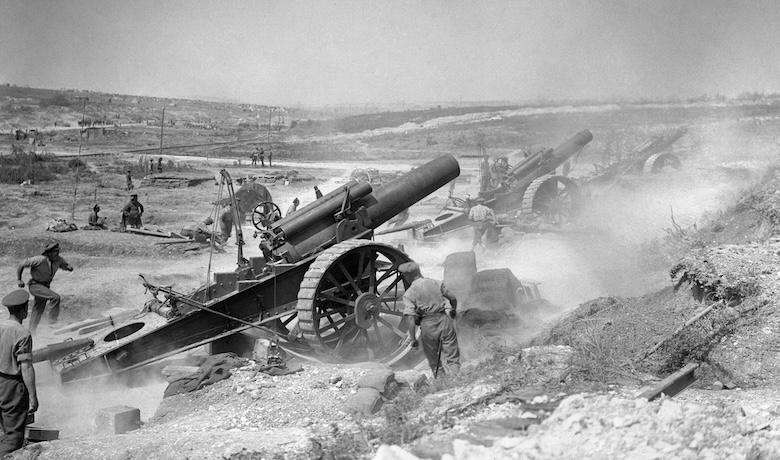
When considering today’s armed conflicts, it may be interesting to devote a glimpse to the systematic pillars on which the 19th century law of war was constructed. On what main strands was that law erected and layered? How did it differ from the international humanitarian law (IHL) we know today?
The point is not so much to gain erudition about things past, but to better understand where we stand today by looking at things from an unusual perspective situated outside commonly known legal spheres. It is particularly useful to understand that old law as based on the pillars discussed below.
Inadequacy of International Rules and the Primary Role of Domestic Law
Despite efforts at codification, the law of war remained very incomplete throughout the 19th century. The Convention for the Amelioration of the Condition of the Wounded in Armies in the Field, signed in Geneva on 22 August 1864 (the 1864 Geneva Convention) was a kind of minimum roster. It contained only ten rather summary articles and was replete with gaps. The document quickly gave rise to problems of interpretation. Moreover, its provisions did not regulate the important theatre of maritime warfare. Yet its subsequent Additional Articles relating to the Condition of the Wounded in War in 1868 were never ratified.
An attempt at a more general codification, the Project of an International Declaration concerning the Laws and Customs of War undertaken in Brussels in 1874, stumbled over insoluble problems as well. The notion of a “patriotic” combatant in cases of mass levying was the main one. Like the 1868 Additional Articles, the effort undertaken could not be translated into an international convention.
It was not until the Hague Conferences of 1899 and 1907 that conventions on the law of war were adopted: one on the laws and customs of war on land (Hague IV, 1907); another on neutrality in war on land (Hague V, 1907); and the others on maritime warfare (Hague VI to XIII, 1907). These instruments became the eminent domain of belligerence rooted in the 19th century.
Still, the product of these codifications remained limited. As but one example among many, significant gaps were left in the law of occupation. They inspired F. de Martens to propose the famous “Martens Clause.” In general, the provisions adopted remain short and concise. The main idea was that things had to be seen according to the following alternative: either a belligerent is in bad faith, and then there will be no point in regulating the details in the face of attitudes that will in any case disregard the rules; or a belligerent is acting in good faith (which is the rule in “civilized States”) and then there is no need to fear that it will behave badly. It was therefore not necessary to prohibit in detail all potential barbarities.
Most international texts of the time refer to a series of issues of domestic legislation. Thus, the 1864 Convention implicitly requires that States Parties organize military medical services to be able to provide necessary care in the event of war (art. 6). States were required to adopt the necessary legislation to protect the Red Cross emblem, even if no provision expressly provided for it.
This approach, anchored in domestic law and filling the many gaps in the international sphere, was emblematically illustrated by the Preamble to the 1880 Oxford Manual on the Laws of War on Land, a private codification of the laws of war proposed by the Institute of International Law. It stated, “The Institute, too, does not propose an international treaty, which might perhaps be premature or at least very difficult to obtain; but … it believes it is fulfilling a duty in offering to the governments a Manual suitable as the basis for national legislation in each State … .” (italics in original). Obeying these invitations, there was in various States during these years a prolific legislative action relating to the laws of war.
The major conceptual consequence of this situation was that there was no unified law of war. There was certainly a skeleton of international rules. But there was also a large body of internal rules that varied among themselves. Consequently, many issues relating to armed conflict remained discretionary for States. In the absence of binding international rules and in the presence of internal rules remaining at the disposal of the legislature of each State, the degree of constraint could only be relative and conditional.
In the event of war, a good part of the applicable rules was consequently not identical, as the principle of equality of belligerents before the law of war would seem to require. Their content varied according to applicable internal regulations. The principle of equality of belligerents in the application of the law of war was not yet guaranteed. The “si omnes clause,” also known as the general participation clause, reveals a similar area of fluctuation in the equal application of the law (see Watts, p. 397-402). According to this clause, all belligerents could stop applying the conventional law of war to which they had committed among themselves, as soon as a State not bound by the otherwise applicable treaty entered the war. It was only gradually, in the face of inconclusive experiences due to divergent practices and traditions, that calls for further codification at the international level were raised.
The second major consequence of this fragmentation of the law was that State freedom remained highly significant in this area. The law of war was at the time essentially prohibitive, against the backdrop of State freedom derived from its sovereignty. It followed that every gap in international regulations granted belligerents a space of freedom. And what was not prohibited by an international rule was permitted to all belligerents. They retained, politically and legally, a considerable reservoir of freedom of action.
The Principle of Military Necessity as the Cardinal Rule of the System
Throughout the 19th century, the importance of the general principle of military necessity stemmed from the very incomplete state of international regulation. In the absence of detailed rules, the tendency was to resort to flexible and malleable general principles. Necessity served a dual purpose. Its two facets are opposed like a Janus head.
First, the principle of necessity operated to limit permissible violence. Belligerent violence was not an end in itself. It was directed toward a specific goal: to obtain the submission of the enemy. As the St. Petersburg Declaration of 1868 recalled, the only legitimate aim of war is the weakening of the enemy’s military forces. However, “this object would be exceeded by the employment of arms which uselessly aggravate the sufferings of disabled men, or render their death inevitable.”
Any unnecessary violence or violence aimed at purposes other than the submission of the enemy was prohibited; any excessive violence (in this sense not necessary in relation to the goal pursued) was proscribed. Therefore, the principle of necessity operated as an additional level of restraint by prohibiting acts which were not otherwise illegal, as long as they were not necessary for the achievement of legitimate goals. This aspect of necessity aimed to contain the destructiveness of war, to curb the use of reprisals, to protect the population against excesses, and to make the return to peace easier by avoiding raising resentments. It thus played an eminent role assigned to the law of war as a whole. Necessity took the place and performed the function of the rules of international law that were absent or deficient.
It is obvious that the principle encountered difficulties that could only be resolved through progress in codification. Indeed, necessity was and remains a very malleable argument. In war, the tendency of each belligerent is to exaggerate its own interests and minimize those of the opposing side. From then on, what seems necessary for oneself tends to swell without limit, while what seems necessary to the enemy is reduced to a bare minimum. Moreover, what could the necessities of German militarism, the English commercial war, and the French patriotic war have in common? A late avatar of these dissensions was the violation of Belgian neutrality in 1914, justified by necessity in the German sense of the term.
Second, military necessity allowed belligerents to expand permissible violence by freeing themselves from the grip of a positive norm or by justifying action in the absence of a positive norm. The permissive side of necessity was invoked (but also contested) to adapt war action to what was necessary for the purpose of breaking enemy resistance. Whatever was thus necessary was considered permissible because it was unavoidable. Consequently, rules of the law of war prohibiting such necessary activity were set aside in these cases. The rules of the law of war thus remained bent under a kind of resolutory condition. Necessity could justify an exception to their application.
When it was not “necessity,” the liberating argument put forward to ease belligerent action was based on the doctrine of rebus sic stantibus. According to some authors, every rule of the law of war affecting the vital interests of the State remained subordinate to it. These doctrines plunged this branch of the law into precariousness and uncertainty. One of the tasks of the law of modern armed conflict was to drain these swamps by establishing generally binding rules.
The old law of war was thus too imbued with considerations relating to the variable geometry of necessities to be configured as a system of objective and binding standards. The major turning point came after 1945, with post-war criminal jurisprudence and the adoption of the Geneva Conventions of 1949. From then on, necessity could only constitute an exception to the rules of IHL in cases where the applicable standard expressly provided for it. Hence also the care that these new conventions took to limit “derogations” from their rules.
The Subjectivity of Application of the Law of War
It is also useful to understand that the law of war of the 19th century and until 1949 was essentially based on an act of will as a mere subjective fact triggering the applicability of its rules. War, or at least its outbreak, was configured as a legal act. Expressed or implied will generated legal consequences desired by the declaring or consenting State. It thus also governed the applicability of the rules of the law of war.
Modern law after 1945, on the contrary, relies on objective facts such as the outbreak of hostilities on the ground. In this way, a gap in the application of IHL is filled. As soon as hostilities occur, the rules of law provided for this purpose must be applied to them. However, if, as anciently, the application of humanitarian rules depends on acts of will of the parties, this amounts to saying that it is possible to circumvent their application by not uttering the required will. On the contrary, if an objective fact triggers the application of IHL, the protection of the rules and the criminal penalties for their violation are better assured.
In the 19th century, the subjective loophole had two aspects. For war itself (what we now call an international armed conflict), the creation of a state of war through an animus belligerandi separated the violence of coercive measures short of war from war in the formal sense. Therefore, by resorting to coercive measures without the intention of war, a State could escape a state of war and not apply the related rules. Such practice was common in the 19th century. It manifested itself particularly through “peaceful blockades.” This orientation continued during the era of the League of Nations with operations such as the Italian bombardment of Corfu (1923) or the Japanese intervention in Manchuria (from 1931).
Civil war, for its part, was not subject to the law of war. It remained possible to apply the rules of this law to it (notably relating to neutrality) by proceeding to a “recognition of belligerence.” The recognizing State then treated rebels as belligerents and the rules of the law of war applied. The State carrying out the recognition was generally a third State and not the State facing the insurrection. The interest of the third party was to trade freely with the territory seized by the civil war by applying rules on neutrality.
The government faced with the civil war could also recognize the rebels as belligerents. Its objective was to apply jus in bello and to absolve itself of any responsibility for acts committed by rebels in the territory beyond its control. Here again, the law of war was subject to a kind of suspensive or resolutory condition; its application stemmed from recognition. In internal armed conflicts, an additional legal relativity was added. The rules of the law of war were applicable only between entities that recognized each other. These rules could not be applied between other entities.
The watershed between the subjective and objective conceptions occurred at the end of the 1939-1945 war (or 1931-1945 in Asia), with the adoption of the 1949 Geneva Conventions. These texts opened a new era in IHL. This is not to say, of course, that all the problems were resolved at that moment. There remained significant pockets of subjectivity. Governments sometimes refuse to recognize the existence of a non-international armed conflict by referring to an alleged lack of intensity; or they deny the applicability of IHL in the event of a situation of State secession, with the creation of a new State, while the armed conflict has not ended.
Progress in the Nationalization of the Law of War
In the 19th century, elements of private belligerent action pervaded the law of war. The fact that privateering was not outlawed until 1856 demonstrates this. One of the efforts of the time was to concentrate belligerence in the hands of public power and to repress private interference. Today, partial re-privatization is taking place through private military companies. The 19th century, through the Rousseau/Portalis adage that war is a “state-to-state relationship,” emphasized the State paradigm in the law of war. Individuals did not participate in it for their own interests; they were only agents of the State for which they fight. Consequently, the enmity of war must not be extended to them. The belligerent must restrict itself to the measures required by military operations according to the provisions of the principle of restrictive necessity. Any mistreatment of enemy individuals was prohibited. Combat was limited to the accredited forces of each belligerent.
Maritime warfare stood apart from these developments. It differed in nature from warfare on land. The sea was the scene of an essentially economic war. The belligerent seized and sometimes attacked the private property of the enemy and sometimes even neutrals. It is no coincidence that maritime warfare was sometimes referred to as a generalized “war of spoils.” One of the doctrinal and political struggles of the time was to extend the principles of warfare on land to maritime warfare. The aim was to obtain a limit on the prerogatives of belligerence in the sense of humanizing the law of maritime warfare through respect for private property. This development was placed under the banner of growing “civilization” and the idea of “progress.” These efforts were not crowned with success. The United Kingdom, among others, firmly opposed it.
Conclusion
The traditional system of the law of war that developed during the 19th century was slow to cohere into a well-consolidated body of law. It remained riddled with gaps, discretionary powers, legal fragmentation, and subjective triggering events. During its nascent phases of consolidation, it remained marked by the predominance of a layer of the law centered on State freedoms and powers of action.
It was primarily taken up by the International Committee of the Red Cross to attempt (through its humanitarian initiatives) to advance IHL in specific cases. This organization proposed actions on behalf of soldiers wounded or sick at sea, uninjured prisoners of war, and finally even civilians. Its partial successes served as outposts for further development of the written law and finally led to new conventions on the wounded and sick (since 1906), on prisoners of war (in 1929) and even on civilians (in 1949).
***
Robert Kolb is a Professor of Public International Law at the University of Geneva and former legal staff member of the ICRC. Prof Kolb is also a member of the legal section of the Swiss military high command (IHL section).
The views expressed are those of the author, and do not necessarily reflect the official position of the United States Military Academy, Department of the Army, or Department of Defense.
Articles of War is a forum for professionals to share opinions and cultivate ideas. Articles of War does not screen articles to fit a particular editorial agenda, nor endorse or advocate material that is published. Authorship does not indicate affiliation with Articles of War, the Lieber Institute, or the United States Military Academy West Point.
Photo credit: Imperial War Museums
