

Humanitarian Assistance in International Law and the Distinction Between Preventive Assistance and Emergency Relief in Armed Conflict
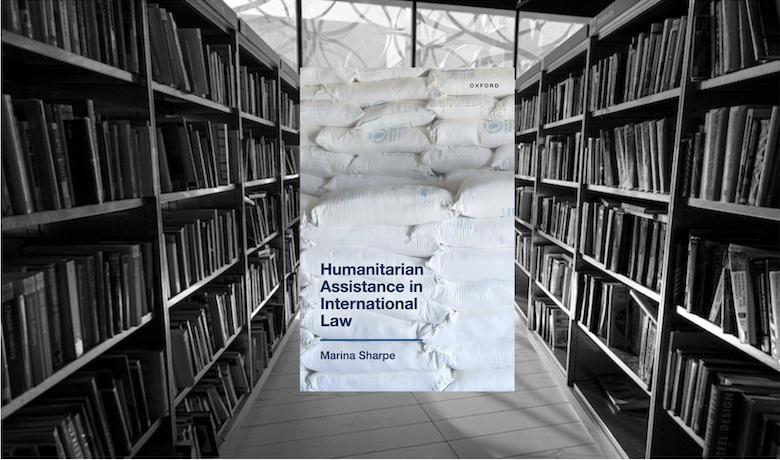
Editors’ note: This post highlights work from the author’s forthcoming book, Humanitarian Assistance in International Law, published with Oxford University Press.
Humanitarian assistance refers to essential goods and services provided in accordance with the core principles of humanity, impartiality, neutrality, and independence (or similar sets of principles) to save lives, alleviate suffering, and uphold human dignity when the State is unable or unwilling to fulfil its primary responsibility in this regard.
People affected by armed conflict and disasters have always needed humanitarian assistance. During the Thirty Years’ War (1618–1648), civilians received assistance from religious organizations, towns, and informal charities. The 1755 earthquake in Lisbon gave rise to what is widely recognized as the first major international disaster response. But it was only around 2014, when the United Nations (UN) Security Council imposed relief operations on opposition-held northwest Syria, that humanitarian assistance emerged as a prominent international legal issue. Subsequent major developments have included the publication of legal guidance on humanitarian assistance in armed conflict; inter-state litigation at, and an advisory opinion from, the International Court of Justice regarding Israel’s conduct in relation to humanitarian assistance for Gaza; the adoption by the International Law Commission (ILC) of Draft Articles on the Protection of Persons in the Event of Disasters; and a General Assembly resolution to elaborate a treaty based on the ILC Draft Articles.
Despite these significant developments, until now there was no comprehensive treatise on how international law regulates humanitarian assistance in all contexts in which it is provided: war, violence not amounting to armed conflict, peacetime disasters, mixed situations, and at sea.
Enter Humanitarian Assistance in International Law, which will be published by Oxford University Press this month. The book has two main parts. First, it sets out the legal framework, including: the core humanitarian principles; the international legal rules applicable in armed conflict; and the legal regulation of humanitarian assistance in peacetime. Second, it examines the major categories of international humanitarian actors: UN entities; non-State actors, including the International Red Cross and Red Crescent Movement and non-governmental organizations; and States. This post focuses on one of the book’s key contributions to the doctrine on humanitarian assistance for civilians in armed conflict: the distinction between preventive assistance and emergency relief.
Various Regimes
The law of armed conflict (LOAC) contains several distinct (and often interlinked) humanitarian assistance regimes, including the Fourth Geneva Convention’s (GC IV) free passage obligations (including Articles 17 and 23); rules applicable in situations of occupation; the right of initiative; and a set of Additional Protocol (AP) rules governing emergency relief operations. All are addressed in the book; the last two are covered here.
The right of initiative, guaranteed by Common Article 3 in non-international armed conflict (NIAC) and Common Articles 9/9/9/10 in international armed conflict (IAC), safeguards the right of impartial humanitarian organizations to offer their services to conflict parties. Crucially, this right does not depend on the existence of unmet needs among the civilian population; humanitarian organizations may offer their services at any time. Once offered, the conduct of relief operations pursuant to the right of initiative is “subject to the consent of the Parties to the conflict concerned.” The International Committee of the Red Cross’s (ICRC) new commentary on Article 10 of GCIV explains that such “consent may not be refused on arbitrary grounds.”
The legal framework on emergency relief operations is comprised in IAC of Articles 69 – 71 of AP I and in NIAC of Article 18(2) of AP II, which are also reflected in customary international humanitarian law. These rules apply in IAC when the civilian population “is not adequately provided with supplies” essential to its survival (AP I, art. 70(1)) and in NIAC when it “is suffering undue hardship owing to a lack of the supplies essential for its survival.”
If this threshold is met, the conflict party in control of civilians in need has two obligations. First, it must provide its strategic consent to any offers of services that are “humanitarian and impartial in character” and will be “conducted without any adverse distinction” (AP I, art 70(1)). In other words, it must allow impartial humanitarian organizations access to the territory where civilians in need are located. Second, the conflict party in control of civilians in need, as well as any transit States, must “allow and facilitate rapid and unimpeded passage of all relief consignments, equipment and personnel” (AP I, art. 70(2)), meaning that they must facilitate the swift distribution of humanitarian assistance.
Syria’s refusal to allow humanitarian access to opposition-held territory in the northwest and the Security Council’s response imposing cross-border relief operations from four points in Iraq, Jordan, and Türkiye, focused attention on emergency relief operations and generated a large body of literature (especially by Professors Akande & Gillard), which elucidated and clarified the AP rules. An unintended consequence of this focus, however, is that the right of initiative has been overlooked.
A Crucial but Missing Distinction
Through its terminology, structure, and focus, Humanitarian Assistance in International Law draws a deliberate distinction between assistance enabled by the right of initiative, on the one hand, and emergency relief operations under the APs, on the other.
Terminologically, the book often refers to humanitarian assistance under the right of initiative as “preventive assistance.” The operations enabled by the APs are termed “emergency relief operations,” rather than the more common “humanitarian relief operations,” to highlight that they are only one type of operation, occurring in emergency situations (when needs are unmet). The book also addresses the right of initiative and emergency relief operations in distinct sections. The section on the AP legal regime situates the focus on, and the evolution in understanding of, the law on emergency relief operations as a product of events in Syria, as well as in Sudan, during the 2010s, rather than the more common uncritical presentation of the AP regime as the LOAC framework on humanitarian assistance.
This is all in service of a crucial distinction: as mentioned above, the right of initiative does not depend on the existence of unmet needs among the civilian population. LOAC does not require humanitarian actors to wait for crisis; they may exercise their right of initiative to prevent it. This is important because once need (especially malnutrition) sets in, it is often too late to prevent irreparable civilian harm. Preventive assistance can help stop health care and food and water distribution from collapsing under the strain of hostilities.
This anticipatory orientation is almost always missing from legal analysis, even when the analysis relates to the right or initiative. For example, in its new commentary on Article 10 of GCIV, the ICRC does not anchor its analysis of conflict party consent in preventive assistance. Instead, it focuses on unmet needs: “If humanitarian needs cannot be met otherwise, the refusal of an offer of services would be arbitrary and therefore in violation of international law.” Similarly, it finds that a refusal of consent may be considered arbitrary “… when the party concerned is unable or unwilling to provide humanitarian assistance to the persons affected by the armed conflict, and even more so if their basic needs enabling them to live in dignity are not met.”
This is the ICRC deploying the same consent analysis across two distinct legal regimes. They should have instead recognized that because Article 10 allows humanitarian organizations to offer assistance before needs go unmet, the space within which consent may be lawfully withheld is even narrower under this provision than under the APs. For example, a lack of acute need among the civilian population would not be a valid reason to withhold consent to a relief action offered pursuant to an impartial humanitarian organization’s right of initiative.
Conclusion
The vast majority of the legal literature on humanitarian assistance consists of article-length works. Articles, by their nature, tend to focus on one dimension of a problem or on one issue. As the first book to provide a comprehensive account of how international law regulates humanitarian assistance across all contexts in which it is provided, Humanitarian Assistance in International Law is well placed to highlight the fact that humanitarian assistance is not solely a means of responding to crisis; it is also a means of preventing it.
The book matters because humanitarian assistance has become central to international law, but analysis of it is fragmented across pieces addressing different actors, contexts, and regimes. The overlooked distinction between preventive assistance and emergency relief operations in armed conflict is a key example of what a comprehensive account reveals.
***
Marina Sharpe is Associate Professor of international law at Canada’s Royal Military College Saint-Jean.
The views expressed are those of the author, and do not necessarily reflect the official position of the United States Military Academy, Department of the Army, or Department of Defense.
Articles of War is a forum for professionals to share opinions and cultivate ideas. Articles of War does not screen articles to fit a particular editorial agenda, nor endorse or advocate material that is published. Authorship does not indicate affiliation with Articles of War, the Lieber Institute, or the United States Military Academy West Point.
Photo credit: Pexels, OUP
