

The ICJ and Factual Controversy in Advisory Proceedings: Deference in Factual Determinations?
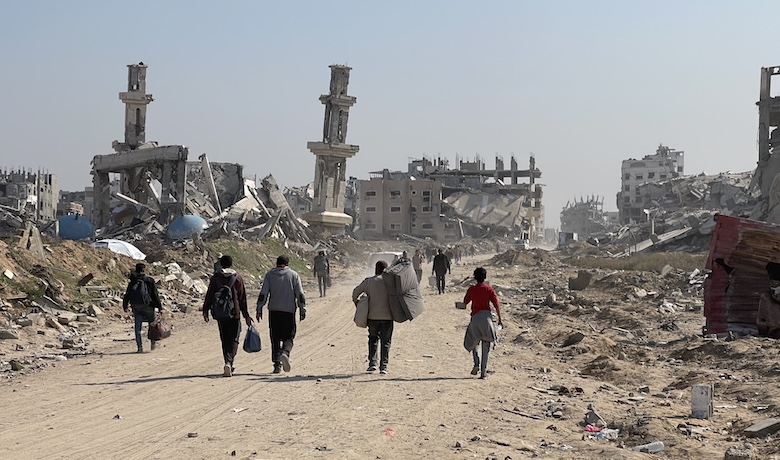
The advisory opinion of the International Court of Justice (ICJ) of 22 October 2025 concerning Obligations of Israel in relation to the Presence and Activities of the United Nations, Other International Organizations and Third States in and in relation to the Occupied Palestinian Territory (Presence and Activities) addressed two main issues: Israel’s obligations relating to humanitarian relief in the West Bank; and (more significantly) Gaza, as well as Israel’s obligations in relation to the United Nations Relief and Works Agency for Palestine Refugees in the Near East (UNRWA). Both these issues raised factual controversies, requiring the Court to make of its own factual determinations if it was to render an opinion on the pertinent issues.
Evidently, instead of exercising its discretion and declining to deliver an advisory opinion, in whole or in part, pursuant to Article 65 of its Statute, the Court did deliver an opinion, incidentally making factual determinations. Yet the Court’s approach in these and other proceedings raise important questions regarding the nature of the advisory function and perhaps whether the Court’s rhetoric on the nature of its advisory function withstands scrutiny when tested against its practice.
In this post, I shall first provide some background on the problem of factual uncertainty in the World Court’s advisory jurisprudence, before briefly recalling how the Court considered the controversial factual issues in its October 2025 opinion. I shall then consider the procedure through which the Court presented the evidence underlying its conclusions, while comparing this procedure to the one it would most likely have followed were the proceedings in question contentious. I shall conclude by offering some observations on how we should view the Court’s approach to questions of evidence, particularly in light of its prior jurisprudence on deference regarding factual questions. I should emphasise that the purpose of this post is not to consider the extent to which the Court’s factual assessments were correct but to focus simply on its approach to factual questions as such.
Factual Controversy and the Advisory Procedure: Some Background
For over a century, the World Court has been faced with disputed questions of fact in advisory proceedings. In its 1923 (non-)advisory opinion on the Status of Eastern Carelia, after concluding that the Council of the League of Nations requested an advisory opinion ultra vires, the ICJ’s predecessor, the Permanent Court of International Justice (PCIJ), proceeded to provide “other cogent reasons which render it very inexpedient” to deliver an opinion. One such “cogent reason” was that there were factual issues of relevance for determining the status of Eastern Carelia which were strongly disputed by Finland and Russia. In this regard, the PCIJ noted that it
… does not say that there is an absolute rule that the request for an advisory opinion may not involve some enquiry as to facts, but, under ordinary circumstances, it is certainly expedient that the facts upon which the opinion of the Court is desired should not be in controversy, and it should not be left to the Court itself to ascertain what they are.
Even if never explicitly saying so, the ICJ has all but departed from the PCIJ’s approach. States have invoked the Eastern Carelia passage on factual controversy in several advisory proceedings. Despite this, highlighting controversy concerning pertinent facts in the given proceedings, the ICJ has consistently rejected such arguments, generally observing that the participants in the advisory proceedings and the UN Secretariat furnished large amounts of information so that it “has before it sufficient information to decide legal questions in a manner consistent with its judicial function” (Policies and Practices; see also Western Sahara, Construction of a Wall, Chagos).
Nevertheless, the Court has made clear that it cannot relinquish its fact-finding capacity to the determination of the organ requesting an advisory opinion. In the Kosovo opinion, the question posed by the General Assembly assumed that the declaration of independence, the legality of which was at issue, was pronounced by the Provisional Institutions of Self-Government of Kosovo. The Court (re)interpreted the question so that the authorship of the declaration was not predetermined, while observing that “[i]t would be incompatible with the proper exercise of the judicial function for the Court to treat that matter as having been determined by the General Assembly.”
Factual Controversies and the Court’s Determination in Presence and Activities
While in Presence and Activities the Court made clear that it was not asked to determine whether Israel violated the international legal obligations in question, a question which would have certainly required a factual assessment, there were several factual controversies with implications for the existence and extent of Israel’s legal obligations.
In particular, first, the degree of Israel’s effective control over the Gaza Strip has implications for whether it is an occupying power per Article 42 of the 1907 Hague Regulations, or, at least in the Court’s analysis, the extent of its obligations under the law of occupation in relation to the degree of its effective control. The Court asserted in this regard that following October 7, 2023, “Israel’s effective control over the Gaza Strip has increased significantly, as evidenced, inter alia, by Israel’s increased military control in large portions of the territory and Israel’s blocking of aid between 2 March and 18 May 2025.” On this basis, it concluded that “Israel’s obligations under the law of occupation have also increased significantly, commensurate with the increase in its effective control over the territory” (para. 86).
Second, aid levels inside the Gaza Strip, particularly if the civilian population is inadequately supplied, have consequences for Israel’s obligations on allowing and facilitating the passage of aid into the Strip, regardless of whether the territory is occupied (c.f., Fourth Geneva Convention (GC IV), art. 55 and art. 59 and Additional Protocol (AP I) art. 70). In this regard the Court observed that “[a] large majority of the participants considered that the population of the Gaza Strip has not been adequately supplied” (para. 102), while further noting reports by the Integrated Food Security Phase Classification (IPC), Office for the Coordination of Humanitarian Affairs (OCHA), the World Food Programme (WFP), and the World Health Organization (WHO), warning of severe lack of supplies (paras. 103-08). On this basis, the Court concluded that Israel’s obligation to consent to relief schemes under Article 59 of GC IV was triggered.
Third, if UNRWA’s impartiality and neutrality have been compromised, Israel would not have an obligation to cooperate therewith in relief efforts, regardless of whether Gaza is occupied (c.f., GC IV, art. 59; AP I, art. 70). While noting Israel’s allegations regarding UNRWA’s lack of neutrality, the Court considered that “the information before it is not sufficient to establish UNRWA’s lack of neutrality,” highlighting that the UN “took Israel’s allegations seriously and responded immediately, as evidenced by both the OIOS [Office of Internal Oversight Services] investigation and the Colonna Report” (para. 118).
Contrasting to Contentious Proceedings
Were this a contentious case, the applicant would have submitted a memorial, with the respondent following up with a counter-memorial. In cases such as these, the applicant would then typically have an opportunity to submit a reply, with the respondent culminating written proceedings with a rejoinder. These would then be followed by two rounds of oral pleadings, following a similar sequence, albeit in a concentrated series of hearings lasting one to several weeks.
It should be apparent to anyone who has practiced litigation that these consecutive exchanges of argument allow for a much more focused and developed engagement with the facts. Weaker factual (and legal) arguments fall wayside, points of convergence emerge, and the precise points of divergence crystalise. Thus, for example, through the consecutive exchange of arguments, the reasons for the differences in assessment of the adequacy of aid available in the Gaza Strip would become more apparent and the strengths and weaknesses in each side’s arguments would become clearer.
Additionally, were Presence and Activities a contentious case, it is also likely that between the two rounds of oral pleadings, the parties would have opportunities to cross-examine witnesses or experts relied upon by the parties in their pleadings. It is no understatement that cross-examination has proven pivotal in several ICJ cases, spanning from Albania in 1948 debunking the United Kingdom’s argument that Yugoslavia had mined the Corfu Channel, to Uganda in 2021 undermining the reliability of the Court’s own appointed expert witnesses who opined on the scale of death and destruction caused by Uganda in the Democratic Republic of the Congo.
However, in practice, the procedure of advisory proceedings is fundamentally different. Participants submit their written submissions simultaneously. In instances where the opinion is requested as a matter of urgency, as occurred in Presence and Activities, the Court will typically (but not always) only allow for one round of written submissions. Each participant is provided one turn at oral pleadings, with the participants most directly concerned by the request allotted more time to present their pleadings presenting consecutively before the remainder of the participants, who generally present in alphabetical order. While it is clear that like-minded States coordinate their arguments with each other, the fact remains that the hearings manifest as a series of individual statements, rather than careful engagement with each other. Additionally, the Court has never provided for the examination of witnesses or experts in advisory proceedings (although the PCIJ, in proceedings in 1926, was open to that possibility). It follows that there are little opportunity and room in advisory proceedings to focus controversies, elaborate on evidence, or effectively retort evidence.
A Deferential Approach to Evidence?
In these circumstances, how should the ICJ’s evidentiary approach in advisory proceedings be characterised? The Court does purport to make factual determinations in the Presence and Activities advisory opinion, but these determinations hardly follow the rigour through which evidence is subjected in contentious proceedings. While the Court does not as such defer to the factual determinations of the requesting organ, the Court’s approach does create an impression of preference for the determinations of UN organs and specialised agencies, and perhaps even that of “[a] large majority of participants.” Certainly, by not explaining why it prefers the determination of such bodies over arguments submitted by Israel, the Court’s approach smacks of a practice of deference to factual determinations of organs part of the same organization, or, in the instance of specialised agencies, of the same family of organizations, as the requesting organ.
Thus, while the Court stated in Kosovo that it will not treat a factual “matter as having been determined by the General Assembly,” its approach in practice does not seem a long distance from such deference. Contrary to the Court in Kosovo, and for reasons well beyond the scope of this post, I do not believe such deference is incompatible as such with the ICJ’s judicial function in advisory proceedings; any such deference should be viewed through the lens of the Court’s discretion whether to render an opinion. However, the contrast between the Court’s rhetoric and its practice on deference should be acknowledged, particularly by the ICJ itself. At the very least, in an age where in certain corners “legal effect” is given to an ICJ advisory opinion, due to the ICJ’s authority, the process through which the ICJ reaches its conclusions in advisory proceedings should be a reason for caution.
***
Ori Pomson is an associate at Gornitzky & Co. and holds a PhD from the Faculty of Law of the University of Cambridge.
The views expressed are those of the author, and do not necessarily reflect the official position of the United States Military Academy, Department of the Army, or Department of Defense.
Articles of War is a forum for professionals to share opinions and cultivate ideas. Articles of War does not screen articles to fit a particular editorial agenda, nor endorse or advocate material that is published. Authorship does not indicate affiliation with Articles of War, the Lieber Institute, or the United States Military Academy West Point.
Photo credit: Jaber Jehad Badwan
