

From Imagery to Targeting: Commercial Satellite Support in War
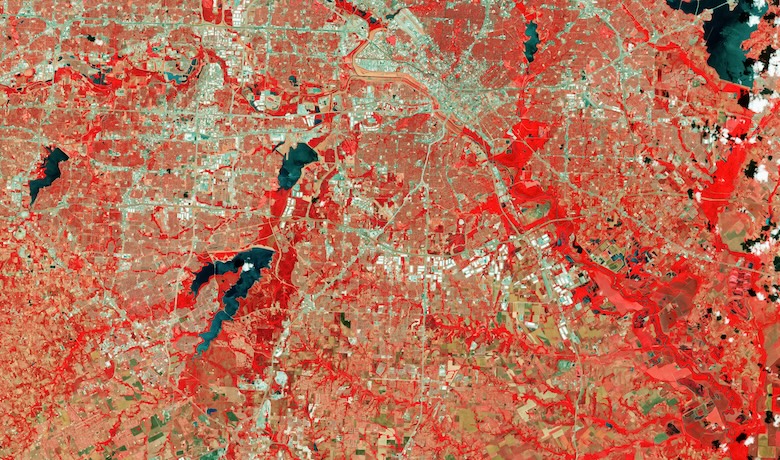
Commercial Earth Observation (EO) and geospatial intelligence firms now provide near-real-time imagery and analysis during active hostilities. Existing international humanitarian law (IHL) applies to these situations, but its application to commercial support embedded in modern targeting cycles remains unsettled. In the ongoing conflict in Iran, MizarVision, a Hangzhou-based firm founded in 2021, has disseminated imagery and analysis of U.S. force movements. Public reporting on Planet and Vantor imagery has mainly focused on post-strike imagery and battle-damage assessment. Planet moved from near-immediate archive availability to conflict-specific delays, first 96 hours and then 14 days, before later shifting to a more restrictive managed-distribution model. The question is whether some forms of commercial satellite support remain protected civilian activity and whether others move close enough to hostilities to alter the legal position of the people and systems involved.
Space Law Frames the Problem
Military activities in outer space are governed by IHL, space law, and general international law, as reflected in the Woomera Manual. The Outer Space Treaty (OST) sets the basic legal architecture: outer space is free for exploration and use by all States and cannot be appropriated, yet activities there must still accord with international law, including the Charter of the United Nations (UN). Within that framework, States remain legally connected to private space activity through the Treaty’s rules on international responsibility, authorization and continuing supervision of non-governmental entities (art. VI), jurisdiction and control over registered space objects (art. VIII), and duties of due regard where others may be affected (art. IX). While this framework does not itself answer targeting questions, it explains why commercial satellite activity in wartime cannot be treated as legally detached from States or third-State interests, a point likewise reflected in earlier Articles of War discussions arising from the Russia-Ukraine war on private support to belligerents, intermingling, and military objectives in space.
That framework also explains why domestic licensing is relevant. In the United States, commercial remote-sensing operators function inside a licensing and compliance regime that reflects Article VI’s obligation to authorize and supervise private actors. Public UN registration records place core Maxar/Vantor EO satellites GeoEye-1, WorldView-2, and WorldView-3 in the United States registry, while Planet-linked satellites appear in both the United States and New Zealand registries. U.S. law also contemplates limited-operations directives for licensed remote-sensing systems, underscoring that conflict-specific restrictions need not remain purely ad hoc corporate decisions. A licence, however, does not answer whether a company’s conduct amounts to direct participation in hostilities, whether one of its satellites becomes a military objective, or whether the relevant State becomes a party to the conflict.
Commercial Imaging Is Now Operationally Significant
Commercial remote sensing is now part of the wider military information environment. The National Reconnaissance Office’s 2022 Electro-Optical Commercial Layer awards to BlackSky, Maxar, and Planet were described as its largest-ever commercial imagery contract effort and a historic expansion of commercial imagery acquisition. The National Geospatial-Intelligence Agency and U.S. Space Force later formalized Tactical Surveillance, Reconnaissance and Tracking (TacSRT) as a mechanism to deliver unclassified commercial sensing and analytics to combatant commands. Orbital Watch was launched to share unclassified threat information with commercial providers through the Space Force’s Front Door structure. State practice since the Russia-Ukraine war points in the same direction. Rather than avoiding intermingling, States are increasingly relying on commercial space support as a matter of operational necessity.
Attacks on, or interference with, space systems can have serious consequences for civilians because so many essential services on Earth depend on them, and recent access restrictions by Planet and Vantor show how a small number of firms can affect military awareness, journalism, and humanitarian visibility. MizarVision also appears to function as a geospatial intelligence integrator, combining commercial imagery with AI and open-source aircraft and vessel tracking. The harder cases may involve not merely the publication of images, but the fusion of multiple data streams into an operationally meaningful product.
Public dissemination of operationally sensitive imagery is not the same as providing tailored, time-sensitive intelligence to a belligerent for a specific hostile act, but the same legal problem arises when commercial support moves closer to the conduct of hostilities.
When Civilians Lose Protection
Under IHL, civilians are protected against attack unless and for such time as they take a direct part in hostilities. The International Committee of the Red Cross (ICRC)’s 2009 guidance frames direct participation through three cumulative elements: threshold of harm; direct causation; and belligerent nexus. While influential, it is not uncontested, and the United States adopts a broader position, extending direct participation beyond combat itself to certain acts integral to combat operations or effectively contributing to an adversary’s ability to conduct or sustain them.
For commercial satellite providers, that distinction is essential. General publication, broad situational awareness, and post-strike documentation will often remain outside direct participation. However, transmitting tactical targeting intelligence for a specific attack may amount to direct participation. The notion of a continuous combat function does not resolve this problem. That concept was developed mainly for members of organized armed groups who assume a lasting combat role, a model which does not fit with most commercial satellite firms. The better inquiry is functional and fact specific. Whether a particular civilian’s conduct is sufficiently integrated into a specific hostile act to amount to direct participation. That approach also helps distinguish such civilians from ordinary military-industrial workers, whose activities usually remain part of the broader war effort rather than the conduct of hostilities itself. Even when individual employees lose protection for such time as they directly participate, that does not automatically render every office, server, or facility targetable. The object must separately satisfy the military-objective test.
When Space Systems Become Military Objectives
The legal position of people is not the same as that of objects. Whether analysts or operators lose protection from attack through direct participation is one question, and whether satellites, ground stations, relays, processing nodes, or terminals become military objectives is another.
For objects, the key rule is Additional Protocol I (AP I) Article 52(2) which provides that an object may be attacked only if, by its nature, location, purpose, or use, it makes an effective contribution to military action and its destruction, capture, or neutralization offers a definite military advantage in the circumstances ruling at the time. If a commercial satellite or related node effectively contributes to military action and its neutralization offers a definite military advantage, it may become a military objective despite concurrent civilian use. That does not mean, however, that any useful satellite is automatically targetable. In a large and redundant constellation, an attack on a single satellite may yield little or no definite military advantage.
The legal question is therefore whether the specific object meets the military-objective test at the relevant time. This is especially important for commercial constellations and related ground architecture because they may be difficult to sever cleanly into civilian and military components. A system may satisfy the military-objective test and still present serious proportionality and precautions problems because its civilian and military functions are intertwined. Space law is also relevant because it keeps private space activity legally tied to States, preserves jurisdiction and control over registered objects, and reinforces third-State interests through due-regard and consultation obligations.
Proportionality and Precautions
Even if an object is a legitimate target, the attack must still comply with distinction, feasible precautions, verification, and proportionality. IHL prohibits attacks expected to cause incidental civilian harm excessive in relation to the concrete and direct military advantage anticipated. Mere loss of service does not automatically count as collateral damage in proportionality analysis. The better view is that planners must consider whether foreseeable loss of service is likely to result in civilian death, injury, or damage to civilian objects. In a commercial constellation, that may require analysis of direct damage in orbit and foreseeable terrestrial consequences. Where feasible, means and methods that affect only the military-use portion of a system, or a more discrete node, rather than a broader constellation should be chosen.
Planet and Vantor’s policies are revealing. Planet initially imposed a 96-hour delay on imagery collected over the Gulf States, Iraq, Kuwait, and adjacent conflict zones, then expanded the restriction to a 14-day delay covering all of Iran, nearby allied bases, the Gulf States, and existing conflict zones. By early April, Planet said it would indefinitely withhold imagery of Iran and the region of conflict in response to a United States government request, while Vantor said its own controls were independently imposed under existing policy. These choices show that commercial operators perceive operational consequences in the timing, scope, and audience of their imagery, and that when access is delayed or restricted, the consequences may be borne not only by adversaries but also by journalists, researchers, and humanitarian observers who depend on timely imagery to verify damage in conflict.
Neutrality, State Responsibility, and Conflict Classification
Neutrality law may also become relevant where a commercial actor operates under the jurisdiction or control of a third State that is not party to the conflict. Classical neutrality law, however, was never an absolute prohibition on all private support. Rather, it focused on specific forms of war-related assistance while preserving private commercial trade and communications. That is why Article 8 of Hague Convention V matters by analogy. A neutral Power is not called upon to forbid or restrict belligerent use of certain privately or commercially operated communications infrastructure. The move from telegraphy to modern commercial space systems is not automatic, especially for remote sensing imagery, but it warns against assuming that any belligerent use of privately operated space-enabled communications or imaging infrastructure breaches neutrality, a point also reflected in Articles of War discussions arising from the Russia-Ukraine war.
Neutrality law is also predominantly territorial in nature. The better view is that neutrality, State responsibility, and participation in the conflict remain distinct questions. The real questions therefore arise from the activities of the individuals and companies enabling the data flow, and from the role of the third State that authorizes, supervises, hosts, or regulates them.
Operational Consequences
For commanders and legal advisers, the real legal danger lies in misclassifying persons and nodes within a distributed commercial architecture. A civilian employee who relays targeting data of immediate use in combat may, for that period, fall on the direct-participation side of the line. A satellite, ground station, terminal, relay, or processing node furnishing targeting support of immediate military value may, depending on the circumstances, qualify as a military objective. The harder operational question is which node should be selected, by what means, and with what expected civilian effects.
Under IHL, parties must take feasible precautions in attack and precautions against the effects of attack. In cases of doubt, persons are presumed civilian, and objects normally dedicated to civilian purposes are presumed civilian. Separately, parties must do everything feasible to verify that proposed targets are military objectives. These principles show why the classification problem matters operationally: before relying on, attacking, or defending against commercial space systems, militaries need a clearer basis for deciding what those systems and their operators are.
If the legal standard remains under-specified in practice, the result may be inconsistent treatment, with some actors being too cautious and others exploiting the ambiguity. Neither outcome serves the protective logic of IHL or provides a stable basis for modern military planning.
Conclusion
Commercial satellite support is an essential feature of armed conflicts. Licensing States that authorize and continuously supervise non-governmental space systems are therefore not merely observers when operators such as Planet or Vantor make conflict-specific access decisions with foreseeable operational consequences, and such choices should not rest on corporate decisions alone. Rather, they should, where feasible, be incorporated into licence conditions, emergency modification authorities, or formal government direction. United States law already shows that such supervision can include limited-operations directives for licensed remote-sensing systems.
Existing IHL makes clear that civilians lose protection only for such time as they directly participate in hostilities. Objects become military objectives if they satisfy the test of effective contribution to military action and definite military advantage, meaning that bespoke, time-sensitive intelligence for a specific hostile act could cross the line in a way that post-strike assessment does not.
States should not leave such decisions to ad hoc operator judgment alone. Where commercial systems are integrated closely enough into military support architectures that access, delay, denial, or selective dissemination can affect ongoing hostilities, licensing States should consider conflict-specific conditions, modification authorities, or standing supervisory mechanisms that can be activated in a crisis. While this would not answer the direct-participation or military-objective questions in advance, it would help align domestic supervision with the OST’s obligation of continuous supervision, removing the improvised element from current access restrictions. The law already ties private space activity to State supervision. States must now exercise that supervisory role with the precision modern conflict demands.
***
Raoul Cardellini Leipertz is a Doctoral Researcher in Defence and Security Studies at the School of Advanced Defence Studies (CASD/SSU).
The views expressed are those of the author, and do not necessarily reflect the official position of the United States Military Academy, Department of the Army, or Department of Defense.
Articles of War is a forum for professionals to share opinions and cultivate ideas. Articles of War does not screen articles to fit a particular editorial agenda, nor endorse or advocate material that is published. Authorship does not indicate affiliation with Articles of War, the Lieber Institute, or the United States Military Academy West Point.
Photo credit: United States Geological Survey
