

Intelligence Wars, Their Warriors, and Legal Ambiguity – Part I: Wars and Warriors
Editors’ note: This post is part of a two-part series that explores the role military and civilian intelligence organizations perform in contemporary hostilities.
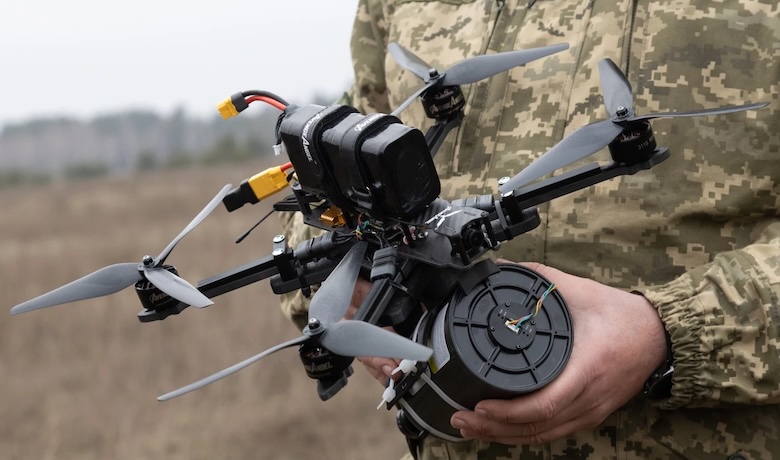
On June 13, 2025, the world was still adjusting to the news of Operation Spider’s Web, the audacious June 3 covert Ukrainian drone assault on Russian strategic bombers, when it was confronted with another equally bold attack. This time it was Operation Rising Lion and Israel’s use of drones smuggled into Iran for strikes against its air defence and missile storage sites. These two attacks are unique in that they involved intelligence operatives using unmanned aircraft deep inside the opposing belligerent’s territory.
In the Ukrainian case, State Security Service (SBU) agents were involved. However, these agents had “disappeared” by the time of the drone attack, with pilots operating drones either by using remote technology or by relying on artificial intelligence. In Israel’s case, “Mossad commandos” operating within Iran carried out the attack.
While the use of drones added a 21st-century imprint, such “behind the lines” action by personnel operating on behalf of military or civilian intelligence agencies is not new. These attacks were only the latest operations involving intelligence-led operatives facilitating sabotage, targeting, and alleged assassinations as part of a shadow conflict taking place alongside more conventional military operations. Other high-profile attacks include the Mossad and Israel Defense Forces’ (IDF) intelligence Unit 8200 pager attack against Hezbollah, as well as the Ukrainian SBU-directed killings in Moscow of senior Russian officers (see here, here, and here).
Such irregular warfare has always been part of armed conflict. However, this secret world of covert and clandestine operations occurs within a broader context that prefers and pays greater attention to inter-State conflict involving conventional armed forces. Evident in both doctrine and law, this preference extends to situations of States acting in self-defence. These operations hide in the shadows of a legally ambiguous environment, one that offers considerable operational flexibility. It is an environment that can also make the governing legal framework challenging to both articulate and apply.
This post will explore this area of legal uncertainty by assessing the increasing reliance placed on “intelligence wars,” the types of units engaged in such hostilities, and the use of “undercover” operations while disguised as civilians or enemy personnel. My second post will then focus on the legal ambiguities arising from the unsettled law governing State uses of force that facilitate and mask such operations and explore the challenges the international legal community faces in regulating such activity.
Intelligence Wars
Since the Second World War, intelligence organizations have been at the forefront of many irregular operations. It is a part of warfare that unfolds in circumstances often shaded from view, and at times, accountability. Israel’s demonstration of aerial and intelligence dominance reveals this issue has reached a defining point in modern conflict. This suggests that intelligence-based operations are even taking on the aura of an operating domain like land, air, sea, space, and cyberspace.
The fact that “spy” agencies are engaged in such operations is reflected in Ayatollah Ali Khamenei’s 2018 statement: “Iran confronted ‘a huge intelligence war’ that required an offensive response” in its struggle with the United States and its allies. In this struggle, the Iranian intelligence community is “linked to assassination and kidnapping plots in the United States, Europe, the Middle East, and South Asia and remains committed to developing networks of informants and agents of influence inside the United States” (p. xxii).
While this “intelligence war” is global, Iran’s main target has been Israel. Although Israel has now carried out large-scale aerial strikes against Iran, the supporting intelligence operation is firmly rooted in its “Campaign Between Wars” doctrine, which involves “proactive, offensive actions based on extremely high-quality intelligence and clandestine efforts.” It set the scene and shaped the battlespace for the more conventional operations. As I outlined in an earlier post, this shadow war included allegations of assassination, sabotage, drone attacks, cyber operations, and attacks on shipping.
A campaign between wars suggests there are hostilities below the level of “war.” This reflects a long-standing binary categorization of conflict. In its purest form “war” is seen as involving large-scale conventional operations between States. Other hostilities are something “short of war,” but “without crossing the line into major conventional or (since 1945) nuclear confrontation” (p. 1). A bias towards decisive conflict involving large conventional military formations is reflected in Russell Weigley’s 1973 description of the American “way of war,” which prefers wars of annihilation over wars of attrition (e.g., irregular war) by using overwhelming technologically superior military forces in decisive conflict (p. xxii). It also conjures up a Taliban proverb relied on when facing such conventional adversaries: “You have the watches, but we have the time.”
A traditional desire by militarily strong States to rid themselves of having to deal with unconventional operations is reflected in the post-Vietnam effort by the United States military to re-focus on inter-State conflict and conventional war against Russia. It represents a visceral disdain for irregular warfare often associated with counterinsurgency operations involving a police primacy effort, a restrained use of force, and reliance on specialized military and police units. That disdain is perhaps best highlighted in Hew Strachan’s observation that “[a]ll armies worth their salt fear the threat that they will become a gendarmerie” (p. 208).
In the post Afghanistan and Iraq wars era the focus by many States is once again on conventional warfare and the prioritization of near-peer and peer-to-peer conflict, and in particular the large scale combat operations (LSCO) threat posed by Russia and China. From a legal practitioner’s perspective this re-orientation is reflected in a 2021 Military Review article by the U.S. Army’s then-Judge Advocate General, Lieutenant-General (LTG) Chuck Pede and Colonel Peter Hayden. They argued that there was a post-9/11 counterterrorism (CT) hangover constraining commanders with “policy-driven rules of engagement” when they were being faced with primarily conventional LSCO threats. What was required instead was a different mindset involving “adherence to the law of war” rather than being burdened with accumulated policy overlays. It is particularly critical that warfighting was being restricted by self-defence concepts (p. 7-8). Unfortunately, the analysis does not address the other legal frameworks applicable in war: the law governing the State use of force; and international human rights law. Looking at conflict in the 21st century requires a lens with a broader aperture.
While refocusing on conventional operations is important, two key questions needed to be addressed. Are such “peer” focused conflicts going to be predominantly conventional ones? If not, is existing treaty and customary law up to the task of regulating both conventional and non-conventional hostilities? The issue whether armed conflict should be seen as uniquely conventional was addressed by the next JAG, LTG Stuart Risch, and Colonel Ryan Dowdy in a 2022 Army Lawyer article. They clarified that armed conflict was also multi-domain and cross-dimensional. This meant “our peer and near-peer competitors will simultaneously present complex symmetric and asymmetric challenges in the physical and virtual world across multiple theaters.” This is consistent with the reference in the U.S. Army Operations Manual that LSCOs “often include both conventional and irregular forces on both sides” (p. 1-10).
The marriage of the conventional and unconventional is evident in the Russia-Ukraine conflict. The idea of large-scale, fast-moving, Clausewitzian-style conventional operations has given way to grinding warfare along an 800-mile trench system frozen in place by the technological innovation of drone warfare. Furthermore, some of the most effective operations have been intelligence led ones taking place in Russia and in occupied Ukraine.
Ironically, although the U.S. military has been most vocal about refocusing on conventional conflict, it was the American special operations community, along with Sweden’s military, that developed the doctrinal basis for irregular operations occurring in occupied Ukraine (i.e., the Resistance Operating Concept). Additionally, the U.S. Central Intelligence Agency (CIA) played a foundational role in reforming Ukraine’s intelligence services, including “Unit 2245, the commando force that received specialized military training from the C.I.A.’s elite paramilitary group, known as the Ground Department.”
Russian intelligence and counterintelligence agencies, including the Federal Security Service of the Russian Federation (FSB), are also fighting in that intelligence war. There is, in effect, a “spy war within a war” which has spilled over the borders of Ukraine and Russia into Europe and beyond. It is a situation commonly referred to as hybrid warfare, or grey zone conflict. The latter “zone” involves “activity that is coercive and aggressive in nature, but that is deliberately designed to remain below the threshold of conventional military conflict and open interstate war.” (emphasis added).
The “Warriors”
Intelligence gathering, including espionage, has ancient roots and continues as a key tool of statecraft both before and during armed conflict. Less often discussed is the “action arm” of clandestine and covert operations. In Christopher Andrew’s epic history of intelligence, a link is highlighted between espionage and the use of the Trojan Horse to infiltrate and capture Troy (p. 27–29). One author referred to this act of treachery as “the fountainhead for all special operations ever since” (p. 53). It is no coincidence that references have been made to “Trojan Horse” operations like the 1944 Otto Skorzeny-led infiltration by a special German unit dressed in American uniforms during the Battle of the Bulge (p. 119), the Israeli 2024 exploding pager and “walkie talkie” operation (see here and here), Ukraine’s Operation Spider’s Web, Israel’s Operation Rising Lion, and even the surreptitious planting of computer malware.
The Second World War witnessed the creation of a myriad of specialized military and paramilitary units designed to operate behind enemy lines (e.g. in occupied territory) to collect intelligence, carry out sabotage, and even commit assassination. The British Special Operations Executive (SOE) and the American Office of Strategic Service (OSS), which were a unique hybrid of civilian/military organizations created to support resistance in occupied territory and carry out clandestine operations, are perhaps the most famous. Other organizations, like the German Brandenburger Regiment (p. 129–31) and the British Special Interrogation Group mimicked enemy units by recruiting personnel with the requisite linguistic skills and cultural background, who in turn used enemy uniforms and equipment to conduct clandestine operations. Otto Skorzeny and nine of his officers faced trial because of the actions of his unit during the Battle of the Bulge. Significantly they were all acquitted of war crimes, a result influenced by similar Allied use of disguised personnel and units (an example of the tu quoque (i.e., “you do it too”) effect).
While the international legal community continues to debate the legal authority for intelligence collection), States have developed a diverse array of organizations to carry out foreign intelligence and domestic counterintelligence operations, as well as various forms of signals and technical intelligence activity. Intelligence gathering frequently involves international cooperation, as seen in the “Five Eyes” relationship (i.e. the United States, the United Kingdom, Canada, Australia, and New Zealand), which “transformed spy warfare by evolving beyond its signals-sharing heritage to form a parallel—and yet unwritten—part between its human-intelligence and law-enforcement agencies” (p. x).
Though not all intelligence gathering involves espionage (a term used interchangeably with spying), this activity is universally conducted by States and non-State actors alike. During wartime spying involves the secret collection of information, which is often carried out clandestinely while in disguise as an uninvolved civilian or wearing an enemy uniform.
How a State organizes itself for intelligence collection depends upon its history, constitutional legal framework, and governing ideology. Autocratic countries frequently have a multiplicity of intelligence agencies with overlapping responsibilities to provide a check on their activities. An often-overlooked aspect of intelligence gathering is that it also includes civilian counterintelligence agencies, which may operate internationally as well as domestically. Furthermore, States rely on national security policing and law enforcement elements (e.g. police special branches, the U.S. FBI, or the Russian FSB) that engage in collection, counterintelligence, and national security crimes.
Police intelligence collection is critical in a counterinsurgency context. However, it can also be crucial for countering resistance in occupied territory, or in addressing external threats operating within a State during an international armed conflict. In the context of “hybrid warfare” European States use domestic legal jurisdiction and law enforcement to address sabotage and other activities linked to Russian intelligence agencies. Even during conventional war there is the potential for espionage-related violence evidenced in the concerns that sleeper cells might be activated in the United States following its bombing of the Iranian nuclear facilities.
Post-Second World War intelligence activity has not been limited to information collection and analysis. While the SOE and the OSS were disbanded following the Second World War, the need for specialized operations units quickly witnessed a rebirth. The American answer was the CIA, with its own paramilitary air, land, and sea forces (the “spy commandos”). However, various military special operations forces (e.g. U.S. Army Special Forces, SEALs, Delta Force, the “Activity”) have also conducted operated in intelligence-led activities.
In contrast, Britain did not resurrect the SOE. Instead, it relies on military special forces (e.g., Special Air Service) as its action arm, working closely with the Secret Intelligence Service (MI 6), the Government Communications Headquarters, and the Foreign Office (p. 9). These examples reflect the symbiotic relationship between intelligence agencies and specialized military forces. As one author noted in an Australian context, “[t]he post-war intelligence community bodies had a large input into the creation and organization of the Special Forces” (p. 68-69).
Other States also employ a variety of intelligence-connected paramilitary and military units. For example, in addition to the Russian military GUR Spetsnaz units, the FSB, which is primarily a domestic security and law enforcement service, has two top-tier specialized units, Alpha and Vympel (p. 35-42). The Ukrainian SBU Alpha unit is modelled after the similar Russian FSB paramilitary force.
In Iran the marriage between intelligence agencies and direct action is evident in the Quds Force, which is reported to include “an intelligence branch, a financial branch, an instructional division, a political wing, a sabotage department, and a special operations division that oversees operations worldwide.” It is identified as being roughly analogous to a combination of the American CIA and Joint Special Operations Command.
Israel also stands out as a country that relies on intelligence-focused specialized paramilitary and military forces. For example, the Sayeret Matkal (the General Staff Reconnaissance Unit) is part of the IDF Intelligence Corps and is primarily engaged in deep reconnaissance behind enemy lines. The counterintelligence organization, the Shin Bet, works so closely with the Israeli Border Police special unit, the Yaman, in Gaza and the West Bank that the latter unit has been referred to as the “spy agency’s soldiers”. The Mossad employs its Kidon unit, which is recruited from military special forces units to carry out surveillance, sabotage, and the killing of Israel’s enemies (p. 128).
In the clandestine and covert world of intelligence wars, States have also relied on private contractors. The CIA, for example, reportedly has a Global Response Staff (GRS) organization of recruited U.S. Special Forces operatives and former police SWAT team members who have become a critical component of conventional espionage by “providing protection for case officers whose counterterrorism assignments carry a level of risk that rarely accompanied the cloak-and- dagger encounters of the Cold War.” Controversially, some State intelligence organizations (e.g., Iran, Russia, and India) are alleged to be contracting with criminal organizations to carry out sabotage and assassination (see here, here, and here).
Mossad is said to have trained and financed People’s Mujahedin of Iran (MEK) operatives to carry out the killing of nuclear scientists (p. 21). In the aftermath of Operation Rising Lion and the American bombing of Iran’s nuclear facilities, Iran reportedly arrested a large number of Kurdish Iranians. Kurdish special forces were alleged to have assisted the United States in its January 2020 killing of Major-General Soleimani in Baghdad. This raises questions about whether the Mossad commandos who launched the drone strike against Iran were Sayeret Matkal or other military special forces units, Mossad operatives, the MEK, or perhaps from minority groups recruited for the operation.
Undercover Operations
Covert and clandestine operations inevitably involve a wide range of “undercover” operations. State military and intelligence personnel, or the agents they recruit, often disguise themselves as uninvolved civilians or members of opposing forces to infiltrate enemy control areas. A feature of Cold War counterinsurgency was “pseudo-operations” where units disguised as insurgents infiltrated enemy-controlled areas. Such operations were conducted by Britian (e.g. in Malaya, Aden, Cyprus, Palestine, and Oman), Portugal, Rhodesia, South Africa and the Philippines.
Reliance was placed primarily on the use of “surrendered enemy personnel” (SEPs) operating under the direction of police and civilian intelligence organizations (e.g., the Special Branch). The use of captured personnel in this role overcame racial, ethnic, and cultural challenges, and provided crucial knowledge about enemy operational approaches that facilitated infiltration. The Rhodesian military unit, the Selous Scouts, is the most famous and perhaps the most controversial. Another example is the Punjab police use of former militants to infiltrate militant groups in the 1980s and 1990s.
Pseudo-operations can have a direct-action component. As Eeban Barlow, a former South African special forces officer and co-founder of Executive Outcomes, noted “[t]he reality is that pseudo teams, despite their ability to conduct reconnaissance of enemy positions and gather intelligence, are highly aggressive, heavily armed, small fighting teams/sticks” (p. 507). During an armed conflict such units operating undercover raise questions about when the war crime of treacherous killing might apply.
Pseudo-operations are just one form of undercover activity that is integrally connected to an operating environment that relies on deception, deceit, and at times treachery. Members of military and civilian intelligence organizations who recruit agents may themselves operate in civilian clothes, although such recruitment for acts, including sabotage increasingly occurs, through cyber means (see here and here). Intelligence may also be clandestinely collected by State civilian intelligence and military organizations and involve individual operatives rather than a unit. For example, the Iraqi Falcon Intelligence Cell infiltrated one of its members into ISIS resulting in the foiling of 30-vehicle bomb and eighteen suicide-bomb attacks before ISIS discovered and killed the spy.
An example of a military unit is the British Special Reconnaissance Regiment. It is a special forces unit specializing in surveillance and reconnaissance that reportedly operates “in civilian attire and uses unmarked vehicles.” Its roots trace back through 14 Intelligence Company, the Force Research Unit, and other units that operated in Northern Ireland (p. 207-08), and ultimately to a culture of pseudo-operations used in Kenya (p. 18-20).
Israel has a long history of employing undercover units dating back to Orde Wingate’s pre-war Special Night Squads, the Second World War “Syrian Section,” and the specialized “Arab Section” of the Palmach. The last of these sections provided the foundation for the Mossad (p. xvii). Modern versions of these undercover units (called the mistra’arvim (i.e., “ones who become like Arabs”) include the military Dudevan unit and a Border Police Yamas unit. These are not the only units that operate “undercover.” In 2007, the Sayeret Matkal carried out reconnaissance in enemy uniforms prior to the aerial destruction of a Syrian nuclear facility (p. 159-60), and in 2018 Israeli special forces were discovered in an unsuccessful to infiltrate Gaza while disguised as civilians. Furthermore, the Border Police special operations Yaman unit is reported to have carried out the 2024 Ibn Sina Hospital undercover operation in the West Bank, which led to the death of three Palestinian militants.
As has been outlined in this post, intelligence wars employing specialized “warriors” operating undercover will continue to be an integral part of 21st century conflict taking place in the shadows. It sets the scene to discuss whether existing international humanitarian law is fully up to the task of regulating such non-conventional operations. The second post in this series several factors that highlight the ambiguous nature of law governing the use of these forces, and which facilitate and mask a wide range of clandestine and covert operations.
***
Ken Watkin served for 33 years in the Canadian Forces, including four years (2006-2010) as the Judge Advocate General.
The views expressed are those of the author, and do not necessarily reflect the official position of the United States Military Academy, Department of the Army, or Department of Defense.
Articles of War is a forum for professionals to share opinions and cultivate ideas. Articles of War does not screen articles to fit a particular editorial agenda, nor endorse or advocate material that is published. Authorship does not indicate affiliation with Articles of War, the Lieber Institute, or the United States Military Academy West Point.
Photo credit: Ministry of Defense of Ukraine; armyinform.com.ua
