

Is There a Victim State Exemption from Immunity Ratione Personae Accruing to Heads of Aggressor States?
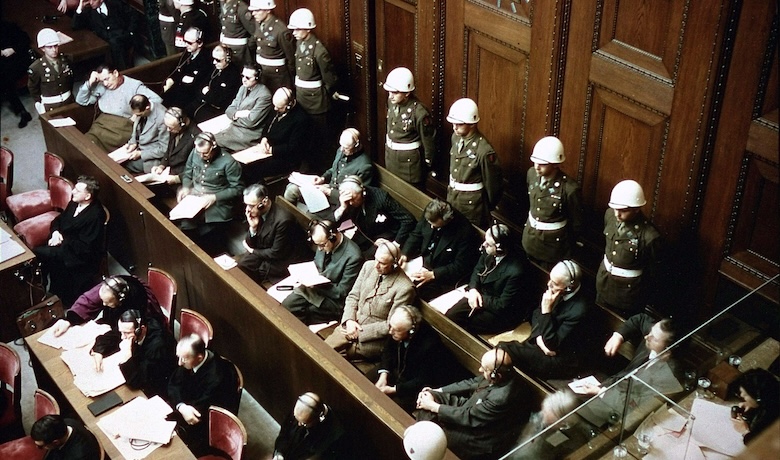
When considering the application of immunity ratione personae to heads of aggressor States, we invariably assume that it applies erga omnes, that is, vis-à-vis the criminal jurisdiction of all foreign States. How sound is that assumption? Ample State practice and opinio juris demonstrate that this immunity bars third States. The same is not so evident, however, when it comes to victim States and those defending them or, by extension, multilateral jurisdictions into which they pool their competence. In fact, there is no consistent practice or opinio juris indicating victim State disempowerment. This post argues that, at least for the crime of aggression, immunity ratione personae of the head of an aggressor State may not bind the State it victimises.
Immunity Vis-à-vis Foreign Criminal Jurisdiction
Immunity ratione materiae raises two questions. Does an act of aggression involve the aggressor State’s officials acting in their official capacity? To the extent it does, does immunity ratione materiae apply to the crime of aggression? Neither question appears to have a clear answer today. Article 7(1) of the International Law Commission (ILC)’s draft Articles on Immunity of State Officials from Foreign Criminal Jurisdiction, as well as the material the commission has so far generated around that article (here, here, here, here, here and here), leaves both positions for and against the application of immunity ratione materiae to the crime of aggression highly uncertain.
Immunity ratione personae accrues to the aggressor State’s so-called “troika” (head of State, head of government, and foreign minister) during their terms of office and covers all acts performed by them while in office. In 2013, while preparing draft Article 4(2), the ILC stated its intention to take up the subject of “possible exceptions to immunity [ratione personae]” at a later stage. It has not acted on that intention, however. It therefore seems safe to say that immunity ratione personae covers acts involved in the commission of the crime of aggression as well.
The sources and authorities upon which the ILC has relied in its work on immunity ratione personae all concern the practice of third States. What is missing is the practice and opinio juris of victim States, as well as their allies that are directly affected, e.g., via the territoriality principle and/or the passive personality principle, by the acts of serving members of another State’s troika. This absence generally concerns international crimes that harm the victim State itself, or persons or property associated with it in some way. Here, the crime of aggression, an offence that by definition harms the victim State’s “sovereignty, territorial integrity or political independence,” is particularly relevant.
Before World War I
There is hardly any pre-World War I precedent where the serving head of one State found him- or herself subjected to something resembling the jurisdiction of another State that his or her forces had attacked. In 1214, Seljuk Turkish forces under Sultan Kaykaus I seized Alexios I Megas Komnenos, Emperor of Trebizond, near the city of Sinope (pp. 27-28). Kaykaus had Alexios tortured and released him on condition that the city revert to Turkish rule and that Alexios become Kaykaus’ vassal as well as pay annual tributes to his treasury.
Earlier, at the Battle of Edessa in 260, Shapur I of Sassanid Persia captured Roman Emperor Valerian. Valerian died in captivity. The 1071 Battle of Manzikert saw Sultan Alp Arslan of the Seljuk Empire capture Byzantine Emperor Romanos IV Diogenes. The sultan detained the emperor for one week and released him following territorial, monetary, and other concessions. These examples are of limited significance here, since both Valerian and Romanos were arguably defending imperial territories at the time.
On September 1, 1870, Napoleon III surrendered to Prussian forces at the Battle of Sedan. France’s Second Empire fell four days later. Prussia made no demands of the now former emperor, as its attention quickly shifted to the Government of National Defence in Paris. Napoleon III was released in March 1871.
After World War I
The Armistice of November 11, 1918, brought World War I to an end. In January 1919, a Commission on the Responsibility of the Authors of the War and on Enforcement of Penalties was formed. It considered, inter alia, the establishment of a special tribunal for individuals responsible for the war’s authorship. Two months later, the commission, consisting of representatives from Belgium, France, Greece, Italy, Japan, Poland, Romania, Serbia, the United Kingdom, and the United States presented its report to Versailles’ Preliminary Peace Conference. The commission concluded:
All persons belonging to enemy countries, however high their position may have been, without distinction of rank, including Chiefs of States, who have been guilty of offences against the laws and customs of war or the law of humanity, are liable to criminal prosecution.
Three observations in the report underscored this finding. First, “there is no reason why rank, however exalted, should in any circumstances protect the holder of it from responsibility … This extends even to the case of heads of states.” Second, any immunity that a sovereign might enjoy vis-à-vis the courts of his or her own State should not extend further, lest “the greatest outrages against the laws and customs of war and the laws of humanity … in no circumstances be punished.” Third, the vindication of these laws “would be incomplete if [heads of State] were not brought to trial and if other offenders less highly placed were punished.”
The commission did not recommend that the proposed tribunal seek criminal responsibility for a war of aggression (which “may not be considered as an act directly contrary to positive law”). Nor, the commission observed, should the tribunal try individuals for the war’s authorship (on account of judicial economy) or the invasion of Luxembourg and Belgium in breach of pre-existing treaties (suggesting formal condemnation instead).
The United States and, albeit less strenuously, Japan, partly dissented from the commission report. U.S. delegates disagreed with the idea of subjecting heads of State to criminal responsibility “hitherto unknown to municipal or international law, for which no precedents are to be found in the modern practice of nations.” A sitting head of State “is, and it is submitted that he should be, only responsible to his country … and subordinating him to foreign jurisdiction to which neither he nor his country owes allegiance or obedience [denies] the very conception of sovereignty.” Though not as an operative part of its reservations, Japan also noted how
[a] question may be raised whether it can be admitted as a principle of the law of nations that a high tribunal constituted by belligerents can, after a war is over, try an individual belonging to the opposite side, who may be presumed to be guilty of a crime against the laws and customs of war.
The Treaty of Versailles was signed on 28 June 1919. Its Article 227 reads, in relevant part:
The Allied and Associated Powers publicly arraign William II of Hohenzollern, formerly German Emperor, for a supreme offence against international morality and the sanctity of treaties.
A special tribunal will be constituted to try the accused, thereby assuming him the guarantees essential to the right of defence. It will be composed of five judges, one appointed by each of the following Powers: namely, the United States of America, Great Britain, France, Italy and Japan … .
Article 227 followed the commission report in that it envisioned the establishment of a special tribunal to try Wilhelm II. By publicly arraigning him in substance for waging a war of aggression, however, the twenty-seven Allied and Associated Powers took the matter further.
Germany initially objected to Article 227. It did so, inter alia, on the ground that no “German should be brought before a foreign special tribunal in virtue of a special law enacted by foreign Powers to apply to him alone.” Although clearly in reference to Article 227, and therefore specifically to Wilhelm II, it is somewhat uncertain whether Germany was raising his head of State immunity or resisting the broader notion that foreign courts would try German nationals for the war. Amid the Allied and Associated Powers’ steadfast refusal to budge, Germany abandoned its stance five days before signing the treaty.
Germany’s signature might create the impression of an implicit waiver. The better view would be that Wilhem II’s accusers enacted their jurisdiction notwithstanding, or regardless of, German positions on immunity. Compare the texts of Articles 227 and 228. Article 228 begins by noting that Germany “recognises the right of the Allied and Associated Powers” to try its nationals accused of breaches of the laws and customs of war. Article 227 contains no such language. Rather, that article simply describes unilateral actions of the Allied and Associated Powers. Had Germany elected to accept Wilhelm II’s public arraignment and the prospect of a special tribunal for his trial, Article 227 would have stipulated, much like Article 228, that Germany recognised the right of the Allied and Associated Powers to do so.
No special tribunal convened after the Netherlands (a neutral power during World War I) refused to surrender Wilhelm II. The Versailles experiment remains important, given the principle it embodies. The extent of its significance to our discussion here is a different matter, however. Ultimately, the post-World War I experience involved Wilhelm II’s authorship of the war while acting in his capacity as a German official. This arguably engages modern-day immunity ratione materiae. Following his November 1918 abdication, Wilhelm II would not have enjoyed what we would call today immunity ratione personae even if the special tribunal for his trial first proposed in 1919 had in fact come into existence.
Ferdinand I was Tsar of Bulgaria when Bulgaria attacked Greece, Romania, and Serbia during World War I. The only sovereign of the Central Powers besides Wilhelm II who had remained alive through the war, Ferdinand I abdicated in October 1918 and went into exile. It appears that neither Greece, Romania, Serbia, nor any other Allied and Associated Power made any attempt to pursue Ferdinand I’s criminal responsibility in a manner similar to Wilhelm II’s.
During World War II and Its Aftermath
Vis-à-vis Germany
As early as 1943, Belgium, Canada, Czechoslovakia, Greece, Luxembourg, the Netherlands, Norway, the United Kingdom, and the United States began exploring criminal responsibility for crimes committed in connection with World War II. Records of semi-official bodies such as the London International Assembly and the International Commission for Penal Reconstruction and Development (ICPRD) chronicle how numerous participating States felt that no immunity should accrue to Axis heads of State. This view coalesced around four main elements:
1. That the interest of international justice and peace necessitates heads of State being subjected to international criminal jurisdiction (see Czechoslovakia’s answer to an ICPRD questionnaire);
2. That heads of totalitarian States disqualify themselves from the benefits of immunity (see France’s answer);
3. That head of State immunity does not exist in time of war (see Greece and Norway’s answers); and
4. That head of State immunity cannot extend to war crimes (see Luxembourg’s answer).
Of particular interest here are Norway’s remarks:
In peacetime immunity of heads of states and other state officials is an accepted principle of international law. However, this principle is based on considerations of expediency and courtesy vital to peaceful intercourse between nations. It is considered that the basis of this principle ceases to exist during hostilities and that it cannot be maintained during wartime for the benefit of the aggressor.
In October 1943, a diplomatic conference attended by seventeen Allied States agreed to set up what later became the UN War Crimes Commission (UNWCC). From late 1944 to early 1945, Belgium, Czechoslovakia, and Poland each filed charges against Hitler, then Germany’s serving head of State and head of government, with the UNWCC. UNWCC documents also show France and the Netherlands filing charges against him. (These charges, brought as they were under the domestic laws of the States concerned, did not relate to the crimes against peace per se.)
Meanwhile, the Moscow Declaration of October 30, 1943, and the Yalta Declaration of February 11, 1945, proclaimed British, American, and Soviet determinations to “bring all war criminals to just and swift punishment.” The travaux of the August 8, 1945, London Agreement, including the Charter of the International Military Tribunal (IMT), reveal two notable developments. In one, the definition of aggression as a punishable offence proved highly contentious at the International Conference on Military Trials tasked with drafting the IMT Charter. Several Allied delegates found themselves locked in heated debates until late July, and the designation “crimes against peace” was only settled on 2 August.
This stood in contrast to the other development, where the idea of denying the senior official position of an accused as a defence plea attracted little attention or resistance. In April 1945, the United States proposed the inadmissibility of this defence to the British, French, and Soviet foreign ministers at San Francisco. A Soviet text tabled on July 2: “[t]he official position of persons guilty of war crimes, their position as heads of state or as heads of various departments shall not be considered as freeing them from or in mitigation of their responsibility,” became Article 7 of the IMT Charter with few changes.
Did Article 7 merely affirm the notion that any person, whatever his or her official position, is capable of assuming responsibility for crimes punishable under international law? Or did the provision specifically exclude official positions as a defence or mitigation plea before the IMT? Or did it repudiate head of State immunity more generally? The most plausible interpretation would be to combine the first two. The second take accords with the fact that Robert H. Jackson deemed head of State immunity “coupled with” the plea of superior orders. Also, these two concepts were always dealt with alongside each other (see arts. 10, 11 of the U.S. draft; arts. 28, 29 of the Soviet draft; arts. 7, 8 of the IMT Charter). The same pattern appears in Article II(4)(a) and (b) of Control Council Law No. 10 (CCL10), implying that neither would be admissible as defence pleas before military tribunals established in each Zone of Occupation in Germany.
Whether Article 7 explicitly rejected what we call today immunity ratione personae is less clear. Perhaps a structural explanation of IMT and CCL10 practices might shed more light. The IMT, as well as each CCL10 military tribunal, was a panel created jointly or separately by France, the United Kingdom, the United States and the Soviet Union. The indictment brought before the IMT and, at least in the American Zone of Occupation, the twelve indictments brought before CCL10 military tribunals, all featured the Allied State(s) publicly arraigning German nationals of the crimes charged. Presumably, the same would have occurred even if serving members of post-war Germany’s troika had been among the defendants. In effect, victim States and their defenders unilaterally empowered criminal courts of their own joint or separate creation to adjudicate cases in which they would accuse nationals of the aggressor State otherwise eligible for immunity ratione personae.
This is a principle to which nineteen States acceded under Article 5 of the London Agreement. In the event, none of the defendants tried before the IMT or CCL10 military tribunals fit the relevant profile. Hitler died on April 30, 1945. Dönitz, named head of State by Hitler, was in that position only until May. Both Ribbentrop and Neurath were German foreign ministers at different moments before the end of World War II.
Vis-à-vis Japan
The July 26, 1945 Potsdam Declaration placed Japan on notice of British, American, Chinese and (subsequently) Soviet intentions to mete out “stern justice … to all war criminals.” After Hiroshima, Nagasaki, and the declaration of war by the Soviet Union, Japan decided to accept Potsdam but sought assurances that Hirohito remain on the Chrysanthemum Throne. The Allies replied: “From the moment of surrender the authority of the Emperor … to rule the state shall be subject to the Supreme Commander of the Allied powers who will take such steps as he deems proper to effectuate the surrender terms.” Diplomatic correspondence between the United Kingdom and Australia shows that, with this formulation, the Allies deliberately left the matter of Hirohito’s culpability and potential trial open (Totani, p. 48-51).
In September 1945, Douglas MacArthur received a general directive from Washington, D.C., in which he was ordered to “take no action against the Emperor as a war criminal pending receipt of a special directive concerning his treatment.” This no-action directive was in effect when, on January 19, 1946, MacArthur issued a special proclamation establishing the International Military Tribunal for the Far East (IMTFE) and affirming in Article 6 of its charter that
[n]either the official position, at any time, of an accused, nor the fact that an accused acted pursuant to order of his government or of a superior shall, of itself, be sufficient to free such accused from responsibility for any crime with which he is charged, but such circumstances may be considered in mitigation of punishment if the Tribunal determines that justice so requires.
No charges were brought against Hirohito. Australian efforts until March 1946 to charge him with crimes against peace, and a Soviet initiative in 1950 to try him for Japan’s bacteriological warfare, both failed (Totani, p. 53-62). Nor were any of the twenty-eight IMTFE defendants a serving member of post-war Japan’s troika. Seven (Tojo, Hiranuma, Hirota, Koiso, Matsuoka, Shigemitsu, and Togo) were Japanese prime and/or foreign ministers during World War II.
It is not out of what we would call immunity ratione personae today that the Allies proved disinclined to try Hirohito. Rather, their disinclination, with which MacArthur himself concurred, reflected the political advantage they saw in retaining the emperor as a stabilising presence for his vanquished nation, combined with the supposed absence of incriminating evidence against him (Totani, pp. 53-62). Far from immunising ratione personae the serving head of their aggressor State, victim States and their allies considered themselves entitled to try him, kept their prerogative to do so alive, and ultimately chose not to act upon it for pragmatic reasons. This interpretation accords with the decision adopted unanimously by ten States present at their Far Eastern Commission meeting on April 3, 1946 (Boister and Cryer, p. xxxvi).
Conclusion
No serving head of an aggressor State has stood trial before the court of its victim for the crime of aggression. The customary status of State practice that has not yet materialised is impossible to assess. There is State practice and opinio juris for a slightly different proposition, however. Versailles, Nuremberg, and Tokyo reveal how victim States and those defending them empowered courts of their own creation to deny the head of their aggressor States immunity ratione personae. Such actions not only went mostly unopposed but also found support amongst other States, too.
I conclude with three brief thoughts. First, the idea of a victim State exemption from immunity ratione personae for international crimes, on the one hand, and this immunity’s wartime inapplicability, on the other, are distinct from each other. The latter view emanates from the operation of the “laws of war lato sensu” and their logical incompatibility with head of State immunity (see also Norway’s response to the ICPRD survey above). The position we are assessing here separates two sets of modern State practice. Against the backdrop of one set that consistently obligates third States to immunise ratione personae the head of aggressor States for the crime of aggression, this piece identifies another set that consistently exempts victim States and their allies from doing so.
Second, this exemption might come across as a recipe for chaos and acrimony, with belligerents threatening to try each other’s head of State for aggression. Examples include a spat that recently erupted between Thailand and Cambodia. Though undoubtedly real, international law is no stranger to vulnerabilities like these. The fact that warring States often invoke their right of self-defence against each other does not affect that right’s validity itself.
Third, Article 4(2) of the Statute of the Special Tribunal for the Crime of Aggression against Ukraine established by the Council of Europe and Ukraine in June 2025 reiterates the irrelevance of official capacity in a manner broadly reminiscent of Article 7 of the IMT Charter. Articles 23(5) and 25(2) of the Special Tribunal Statute also impose upon its pre-trial judges an obligation to suspend proceedings against serving members of a State’s troika until after the termination of their terms of office or the presentation of appropriate waivers. Suspension, which implies the possibility of subsequent lifting and resumption, is clearly distinct from immunity, which implies jurisdictional disempowerment and dismissal.
***
Nobuo Hayashi is an Associate Professor at the Department of International and Operational Law, Swedish Defence University.
The views expressed are those of the author, and do not necessarily reflect the official position of the United States Military Academy, Department of the Army, or Department of Defense.
Articles of War is a forum for professionals to share opinions and cultivate ideas. Articles of War does not screen articles to fit a particular editorial agenda, nor endorse or advocate material that is published. Authorship does not indicate affiliation with Articles of War, the Lieber Institute, or the United States Military Academy West Point.
Photo credit: Raymond D’Addario
