

The Law of Neutrality in Situations of Belligerent Occupation
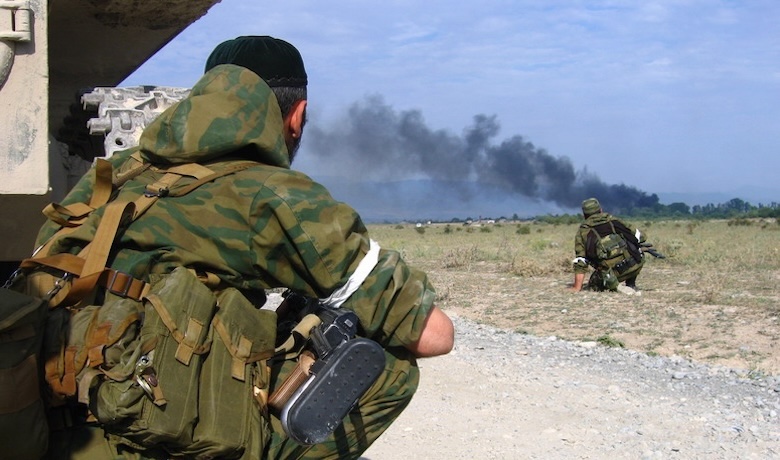
Today, very few situations of belligerent occupation exist. Yet, in a recent advisory opinion, the International Court of Justice (ICJ) analyzed international legal obligations that stem from belligerent occupation, including those respecting offers of humanitarian assistance. But a less frequently addressed question concerns the applicability of the law of neutrality when a situation of occupation arises. Occupation is listed alongside international armed conflict as a condition to which the 1949 Geneva Conventions apply. While the law of neutrality clearly applies to the latter, the question of its application to the former is unsettled.
A starting point for consideration of the question can be drawn from a Swiss Federal Council statement which observes, “Unlike humanitarian law, … the law of neutrality does not apply in the case of military occupation of foreign territory.” Yet it is far from clear that the Swiss approach reflects any sort of international consensus. After addressing the threshold for application of neutrality, this post will categorize a range of situations involving belligerent occupation and will assess whether neutrality applies to each including: short occupation as “an incident of war;” prolonged occupation without hostilities; and prolonged occupation with “recurring” hostilities. It will be suggested that the law of neutrality appears to apply to all such situations, save in instances of prolonged occupation where no hostilities are taking place.
Application of the Law of Neutrality
The law of neutrality is triggered when an international armed conflict reaches a certain duration and intensity, though no specific doctrinal threshold is immediately evident (Bothe, p. 609; von Heinegg; Sassòli, p. 515 (noting also that neutrality does not apply in situations of belligerent occupation)). Others explain more generally that to activate neutrality obligations, a “state of war,” at least in the material sense, must exist (Gioia, p. 60-61). As to the measure of application, it has been suggested that neutrality obligations should apply more widely with the expansion of a conflict, on a sort of sliding scale (Upcher, p. 53). In the same vein, others claim the law of neutrality applies to all international armed conflict, but the extent of the obligations should increase with the intensity of the conflict (Wentker, p. 66-67).
While helpful in some situations, these observations leave unresolved the problem that hostilities giving rise to the operation of the law of neutrality often terminate, or at least significantly taper, as one belligerent party takes control of the territory of another (Kolb, p. 377; Roberts, p. 256). Indeed, as the intensity of a conflict falls below the required threshold, one may be tempted to agree with the Swiss statement. Nonetheless, some resist the conclusion on the basis of an occupation’s origins in an armed conflict and as a residual sort of military action (Seger, p. 254).
One argument for applying the law of neutrality in situations of occupation can be found in the Fourth Geneva Convention’s (GC IV), Article 4. This provision deals, inter alia, with citizens of neutral States who find themselves in occupied territory. Although they are not GC IV protected persons during a purely international armed conflict phase, they are once a belligerent occupation is established (and provided they find themselves in the occupied territory). Consequently, the Convention seems to accept availability of the status of a neutral State in the context of occupation and by implication operation of the law of neutrality.
The main issue with this argument is that at the time of the drafting of GC IV, Article 4, the Convention ceased to apply (except for some listed obligations) “one year after the general close of military operations” according to Article 6(3). At that time, belligerent occupation was mostly seen as a “incident of war” and was not thought to last indefinitely. Therefore, the question of what happens to the applicability of the law of neutrality in situations where the law of occupation has ceased to apply but where the factual situation of occupation persists remained unresolved. One may object that the ICJ has seemed to set aside GC IV, Article 6(3) in its 2024 Legal Consequences Arising from the Policies and Practices of Israel in the Occupied Palestinian Territory, Including East Jerusalem (OPT) advisory opinion. Still, it is uncertain whether the 1949 drafters had in mind what would happen to the law of neutrality in situations of prolonged occupation even when the law of occupation, through GC IV, continues to apply.
In any event, it is submitted here that there exist two distinct regimes: one concerning the application of the law of occupation (including occupying power obligations in relation to protected civilians from non-participating States); and one pertaining to application of the law of neutrality.
An alternate approach, however, may be to parse out situations of belligerent occupation according to their duration and character to assess whether the law of neutrality applies or not.
Short Occupation as an “Incident of War”
Traditionally, occupation was seen as an “incident of war.” That is, while conducting hostilities, a belligerent might take control and exercise authority over part of another State’s territory. However, hostilities might continue outside this area because the occupying power seeks to advance further into enemy territory. The present circumstances in Ukraine reflect this situation, where Russia occupies certain Ukrainian territory and attempts to occupy other portions. Here, it is quite clear that neutrality should apply continuously because third States are aware that hostilities are ongoing outside the occupied territory between the two belligerents.
It is also possible to imagine a situation where intense hostilities cease at the beginning of a belligerent occupation. In such a case, the law of neutrality might continue to apply until the end of the occupation, so long as it is anticipated to be brief. But if the occupation persists and becomes prolonged, neutral third States might later cease to apply the law of neutrality.
The question, of course, is precisely when the occupation transitions from “short” or “brief” to “prolonged.” To determine when it becomes prolonged, an analogy with the end of application of the rules relating to the conduct of hostilities might be made. Under such an approach, the law of neutrality would cease to apply in relation to occupied territories when no hostilities have taken place for either one year or after “the general close of military operations” as stated in Fourth Geneva Convention, Article 6 and Additional Protocol I, Article 3 respectively. After either period, the occupation would become “prolonged.”
Prolonged Occupation without Hostilities
In some cases, a belligerent occupation may endure for an extended period. Some even last for decades. This has been the case, for instance, in Northern Cyprus, Abkhazia, and South Ossetia (Georgia). The decisive element is that the situation is “frozen.” In many cases, the occupying power has been there for so long that its presence is tantamount to an annexation, as the ICJ put it in its 2024 OPT advisory opinion.
If there are no more hostilities or only very rare and low intensity hostilities, the law of neutrality would not apply. Then third States could operate free from neutrality obligations. Accordingly, they might trade weapons with one or another State concerned. State practice seems to align with this approach. Indeed, Switzerland, a permanently neutral State, has delivered war material to Cyprus and to Turkey in the past years (even if it has been limited in some years).
Prolonged Occupation with “Recurring” Hostilities
The issue sharpens, however, concerning a situation of prolonged occupation that involves recurring hostilities. Consider, for example, the Golan Heights since 2012. Hostilities between Israel and Syria have occurred on a regular basis despite the prolonged character of the occupation. Some have been due to spillover of the Syrian Civil war (2012–2024, see for example here, here, and here) for which Israel considered the Assad regime responsible. Other hostilities followed the fall of Assad regime (since December 2024) against the new Syrian Armed forces, where Israel has deepened its occupation (see here, here, and here). In this territory, a prolonged occupation is in place, but one can see that recurring hostilities are observable though not “continuous.”
An interesting question thus arises concerning application of the law of neutrality. On one hand, it could be argued that the required intensity is not reached because the hostilities are not continuous or because the intensity of the invasion phase has not been reached again (for Golan Heights, in relation to the recent events, this argument might fall). On the other hand, one might be tempted to apply the law of neutrality whenever hostilities arise for the duration of those hostilities. This would result in a fluctuating application of neutrality.
While each is reasonable, neither view is entirely convincing. Instead, the law of neutrality might be regarded to apply for the following reasons. First, a third State could and should foresee that hostilities will inevitably take place. Allowing delivery of weapons in “cold” phases of the occupation would be at odds with the purpose of neutrality not to advantage one belligerent over another and to avoid escalation of the conflict.
Second, a third State trading war material with an occupying power or an occupied one in such circumstances would incentivize resumption of hostilities. In situations of prolonged occupation, the occupied State will often want to recover its territory, while the occupying power is likely to defend its control and exercise of authority, especially if it has sovereignty claims on it. Therefore, to rapidly reconstitute a new force would encourage that State to use it and thus would defy the pacific purpose of neutrality.
Third, and most importantly, if today one recognizes the validity of an intermediate status of non-belligerency for a third State, it is difficult to see why a State eager to stay neutral should not apply the law of neutrality throughout a prolonged occupation that features recurring hostilities. A third State that does not want to assume obligations of a neutral could adopt a non-belligerent status and then trade freely with the occupied or the occupying power. In the Golan Heights situation, many States have continued to trade with the parties, notably the United States and Germany with Israel and Russia with Syria. These States have not claimed that they are neutral. They should rather be considered non-belligerents. From this perspective, it should be acknowledged that the export of war material to Israel by Switzerland in 2023, 2019, 2018, 2017 or 2013 (among other years) is problematic in relation to compliance with the law of neutrality.
The main difficulty of this argument, of course, is to define what are recurring hostilities. In any case, a ten-year lapse does seem too long. Meanwhile, hostilities occurring every six or nine months should be enough to foresee that they will happen with a sufficient degree of certainty. A one-year period seems to be sufficient, especially if the analogy with the termination of application of rules pertaining to the conduct of hostilities, referred to above, is taken up. Be that as it may, in uncertain situations, a State eager to freely trade weapons with the occupied or the occupying should not adopt a neutral status.
Concluding Thoughts
It appears from these arguments and categories that the Swiss statement is perhaps not as clear as it hopes to be. As a permanent neutral State, Switzerland should be careful before trading in weapons with occupied or occupying powers. A thorough assessment of the factual situation is warranted in every case. If it happens that a prolonged occupation is regularly accompanied by hostilities, such as the launching of missiles or special operations, neutrality must apparently be strictly observed. Determining that neutrality is not applicable because the intensity has not been reached may also seem reasonable.
However, the aim of containing the conflict, so specific to the law of neutrality, could then be endangered. Further study of the practice pertaining to this kind of belligerent occupation would be useful. The main problem in this context is that very few States currently engage with the law of neutrality.
***
Benjamin Meret is a PhD Candidate and teaching assistant at the University of Geneva.
The views expressed are those of the author, and do not necessarily reflect the official position of the United States Military Academy, Department of the Army, or Department of Defense.
Articles of War is a forum for professionals to share opinions and cultivate ideas. Articles of War does not screen articles to fit a particular editorial agenda, nor endorse or advocate material that is published. Authorship does not indicate affiliation with Articles of War, the Lieber Institute, or the United States Military Academy West Point.
Photo credit: Yana Amelina via Wikimedia Commons
