

From Nuremberg to Lafarge: Corporate War Crimes by Another Name?
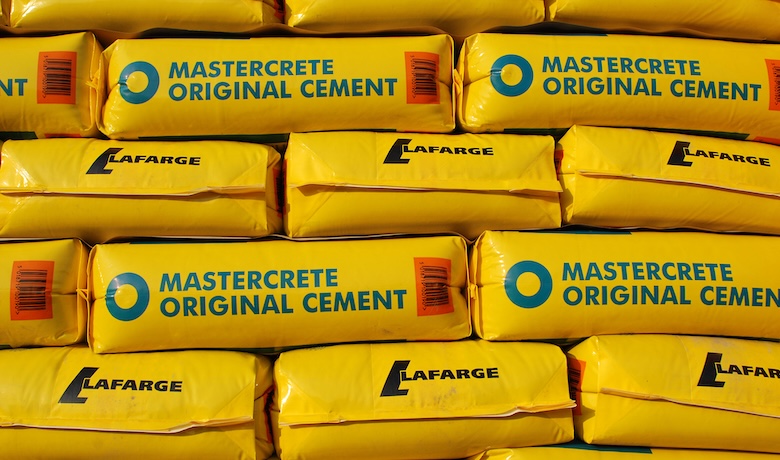
The prosecution of the global corporation Lafarge in the United States and, more recently, in France may signal a major shift in wartime corporate accountability. Rather than relying on traditional war crimes tribunals, prosecutors are increasingly using domestic terrorism and financial crimes statutes to sanction corporate conduct tied to atrocities committed in armed conflict.
Yet corporate wrongdoing in armed conflict is not a new phenomenon. Such actors have long operated in conflict zones, but the law has struggled to consistently hold them accountable for illicit activities in conjunction with their business. The traditional mechanisms for prosecuting illegal activity during armed conflict address State conduct and are therefore ill-suited for corporate crimes. Corporate accountability presents a challenge for international tribunals and domestic war crimes statutes because—even where jurisdiction over the corporations can be established—the causal connection between corporate activity and atrocities is often attenuated.
The 2022 prosecution of Lafarge, a global building materials company, in the Eastern District of New York illustrates a pragmatic shift toward using domestic criminal law to reach corporate conduct in conflict zones. Tying parallels to recent criminal proceedings against Lafarge in France, including criminal charges tied more directly to atrocity-based theories of liability, the Lafarge litigation suggests that domestic courts may be converging on a modern model of corporate accountability that functionally extends war crimes enforcement beyond its traditional institutional limits.
Limits of Traditional War Crimes Enforcement
Traditionally, international prosecutions of war crimes have taken place in ad hoc tribunals, though increasingly they are brought to the International Criminal Court. These fora generally focus on individuals, not corporations. International tribunals work under significant procedural limitations and difficulties. Rules of process are not always well-established and not only create inefficiency, but can have substantive impacts on issues such as ex post facto, double jeopardy, and immunity determinations.
At the Nuremberg Tribunals, industrialists were prosecuted but under exceptional conditions and with varied results. Nuremberg saw the prosecution of executives, not corporations, and a close nexus to the State war machinery was an essential requirement to secure a conviction. Among the three corporations targeted by the U.S. legal team, about half of the defendants were fully acquitted, many on the basis that the company had simply been fulfilling its duty to pursue profit. Nuremberg established the possibility of industrialist accountability, but it did not solidify corporate criminal liability as a whole. Notably, the Nuremberg Tribunals were created to address individual criminal responsibility and thus were not conducive to creating corporate liability doctrine.
Domestically, the U.S. War Crimes Act (WCA) provides a statutory basis for prosecuting the same types of crimes that appear before international tribunals, namely, violations of the law of armed conflict (LOAC). On its face, the WCA applies broadly, allowing for prosecution of anyone, regardless of nationality, who is either present in the United States or whose victim is a U.S. national. However, WCA prosecutions are extraordinarily rare, partly because to demonstrate a violation of LOAC, evidence would have to establish that the conduct occurred during armed conflict and was not otherwise lawful as a legitimate miliary action. Classifying and proving a state of armed conflict as a condition precedent to prosecution is particularly difficult task in modern conditions of war, where non-State actors and indefinite conflicts are more common. Prosecutors’ hesitance to undertake the task in understandable, particularly where charging conduct as a common crime is an available option.
Bringing corporations to account is equally difficult in civil litigation. Additionally, relief for illicit corporate conduct in conflict areas is significantly limited by the precedent of Kiobel v. Royal Dutch Petroleum Co. There, the Court held that under the Alien Tort Statute, there is a presumption against extraterritorial application of U.S. law. Consequently, mere corporate presence in the United States is not sufficient to maintain a lawsuit for actions taken elsewhere, including human rights violations.
Therefore, while traditional pathways to prosecuting war crimes exist, they are structurally ill-equipped to address corporate accountability in modern conflicts. Direct challenges to corporate connections to atrocities force courts to address the intersection of capitalism and warfare: at what point does pursuing business objectives become aiding a belligerent? At Nuremberg, the tribunal seemed to struggle to “draw a line between legitimate pursuit of profit and immoral greed.” Limits to civil liability and the WCA also demonstrate that a direct approach to corporate war crimes accountability is less viable. However, recent prosecutions in the United States and abroad demonstrate how collateral tools can reach the same illicit conduct with greater success.
War Crimes by Another Name
United States v. Lafarge S.A. was the first corporate criminal conviction under the U.S. material support statute, which allows for criminal liability for any person or entity that provides material support—including currency, monetary instruments, or financial services—to a designated terrorist organization. Evidence established that Lafarge made regular payments to the Islamic State of Iraq and al-Sham (ISIS) to maintain its operations in Syria. In addition to monthly “donations” to ensure operations, Lafarge’s Syrian subsidiary purchased raw materials from ISIS-controlled suppliers and effectively created a revenue-sharing agreement whereby payments to ISIS were based on the volume of cement the company sold. Lafarge executives also sought ISIS’s assistance to impose costs on competitors.
Evidence obtained by investigators indicated the company executives’ motivations were purely economic. Regardless, the company went to great lengths to conceal their involvement with ISIS, including limiting the use of “Lafarge” in documents memorializing the agreement and having customers pay ISIS rather than the company. The violations of U.S. material support laws, and the fact that transactions were processed in U.S. banks, allowed prosecutors to pursue criminal charges against the French company and its Syrian subsidiary. Lafarge pled guilty in 2022, agreeing to pay over $700 million in penalties.
Charging Lafarge with material support to terrorism removed proving a state of armed conflict and a nexus thereto from the prosecution’s evidentiary burden. Instead, the case focused on financial transactions and the company’s knowledge of ISIS’s terrorist designation. Though not a replacement for prosections of war crimes and crimes against humanity, these kinds of cases present a collateral avenue for corporate accountability. The Lafarge case demonstrates how, as Deputy Attorney General Lisa O. Monaco said, “corporate crime can intersect with national security.” Assistant Attorney General Matthew G. Olsen further underscored the case’s tangible connection to atrocities, highlighting that Lafarge’s payments were contemporaneous with those groups “brutalizing innocent civilians in Syria and actively plotting to harm Americans.”
Lafarge was not part of a State-led war machine. Rather, it was allegedly managing risk in a conflict market. A similar argument was made in 2007 in Doe v. Chiquita Brands International (Chiquita Brands), where payments made to a designated terrorist group were framed as a business necessity. There, the defendants were charged with, and later pled guilty to engaging in transactions with a Specially-Designated Global Terrorist. Chiquita was the first major U.S. corporation to be prosecuted for such violations.
Chiquita Brands reflects another prosecutorial tool related to but distinct from material support: corporations can be held criminally liable for violating U.S. sanctions. In 2014, the global financial institution BNP Paribas pleaded guilty to conspiring to violate sanctions imposed under the International Emergency Economic Powers Act and the Trading with the Enemy Act. As part of the plea agreement, the bank agreed to pay nearly $9 million.
U.S. prosecutions of corporations demonstrate that financial crimes statutes, including material support and sanctions violations, can have broader implications, depending on where those financial transactions took place and with whom. Prosecutors can target the mechanisms that enable violence rather than the formal legal category of the violence itself. Corporations that could be held accountable for atrocity-based crimes in a traditional war crimes prosecution are now being charged with domestic law that reaches the same conduct.
The French Lafarge Case
In April 2026, in the latest installment of Lafarge’s legal troubles, the company was convicted in a French trial court of financing terrorism. The corporation as well as four former executives were charged with violating sanctions and financing a terrorist enterprise. Stemming from the same underlying facts that led to the U.S. prosecution, the trial was the culmination of years of litigation.
Lafarge and its executives argued that payments made to ISIS were not ideologically based but rather a business expense and effectively a form of extortion. The court rejected this argument, finding that emails and other documents did not take the form of extortion, but evidenced discussion, negotiations, and taxation agreements; Lafarge appeared to maintain decision-making autonomy and chose to continue the payments. The court also rejected any attempt by the defendants to claim ignorance of the terrorist organizations’ status and association with violence.
The sentences handed down underscore the court’s characterization of the case. Bruno Lafont, Chairman and CEO of the Lafarge Saudi Arabia subsidiary, was sentenced to six years’ imprisonment; Christian Herrault, Deputy Chief Operating Officer of the subsidiary, was sentenced to five years. There were also significant fines imposed on the executives and the corporation. The court justified what seem harsh sentences by highlighting the harm to fundamental interests of the nation.
The French case was a groundbreaking example of corporate criminal liability. The convictions are historic for three reasons. First, as with the U.S. prosecution, this was the first major international corporation to be convicted in France on these types of charges. Second, the result had far-reaching symbolic effect: the image of the corporate executives being immediately arrested in the courtroom after the verdict was striking. Finally, the decision may be a harbinger of change in the world of accountability for corporations involved in armed conflict and atrocity crimes.
The potential for the broader implications of this case becomes apparent in the language of the charges and the decision. To establish the defendants’ knowledge of the nature of the terrorist groups, the case necessarily included evidence of atrocities in armed conflict. The verdict emphasized this tangible connection between financial crimes and terrorism activities. The judge wrote, “by knowingly paying extremely large sums over many months to three terrorist organizations, Lafarge SA enabled them to expand their influence and fuel their deadly campaigns, ultimately leading to attacks committed abroad as well as on French soil.”
The scathing verdict took nearly four hours to read, as the judge took pains to demonstrate to the defendants “how choices made in [their] offices … turned into Kalashnikov bullets, into blood.” By using rhetoric emphasizing the violent repercussion of corporation actions, the French proceedings brought the language and legal underpinnings of international crimes into domestic prosecution frameworks.
When taken together, the U.S. and French prosecutions of Lafarge demonstrate the potential for a modern model of corporate accountability—one in which domestic courts, rather than international tribunals, use the flexibility of non-war crimes statutes to not only prosecute corporate misconduct but label it as atrocity-related. While not a replacement for war crimes prosecutions at the international level, these cases are invoking the rhetoric of war crimes to underscore the gravity and enhance the deterrent effect of domestic convictions. Should other domestic jurisdictions similarly be willing to pursue corporate criminal cases, what emerges is a patchwork system of efficient and effective corporation accountability for conduct in areas of hostilities.
Under such a model, domestic prosecutions constitute a more feasible option than international trials. When nations are willing to hold their own citizens and corporations accountable, there is no need for an international tribunal. Jurisdictional and procedural issues can be avoided, and timelines are considerably condensed.
This model of domestic courts incorporating atrocity-based labels does not solve all corporate liability issues. Increased prosecution in domestic courts carries an inherent risk of uneven global enforcement: disparities in which companies are charged, how they are charged, and what sentences they receive will almost inevitably develop. Further, it does not automatically close the gap in individual executive liability.
Notwithstanding its limitations, the modern model presents an alternative for holding corporations criminally responsible for illicit conduct in an area of conflict. By proceeding in domestic courts with established procedures, including for defendants’ rights, cases can progress more efficiently and predictably. By incorporating some of the legal strategy and rhetoric of traditional war crimes trials, domestic proceedings can have the far-reaching impact of an international tribunal without sacrificing efficacy.
Conclusion
Historical war crimes prosecutions like those at Nuremberg demonstrate that corporations can escape criminal liability for their participation in atrocities. In the United States and France, material support to terrorism statutes have become powerful tools of criminal accountability for individuals, non-profit organizations, and private corporations.
As the two Lafarge cases demonstrate, domestic statutes, while not invoking specific war crimes language or labels, can nonetheless allow prosecutors to try the underlying conduct. Moreover, as the French case shows, the advocacy strategy can greatly resemble a war crimes prosecution, thereby adding a war crimes filter to a domestic criminal proceeding.
Support to prosecutions of terrorism and financial crimes may succeed where traditional atrocity mechanisms struggle because they fit modern conflict economics better than classic war crimes doctrine. The future of corporate accountability for wartime conduct may still include prosecution at international tribunals for war crimes and crimes against humanity. But some corporate conduct may also be confronted through refined use of domestic criminal law.
***
Michelle Lukomski is a judge advocate and major in the United States Army.
The views expressed are those of the author, and do not necessarily reflect the official position of the United States Military Academy, Department of the Army, or Department of Defense.
Articles of War is a forum for professionals to share opinions and cultivate ideas. Articles of War does not screen articles to fit a particular editorial agenda, nor endorse or advocate material that is published.
Photo credit: StaraBlazkova via Wikimedia Commons
