

Surrender as a Weapon: Operational Paralysis and the Law of War
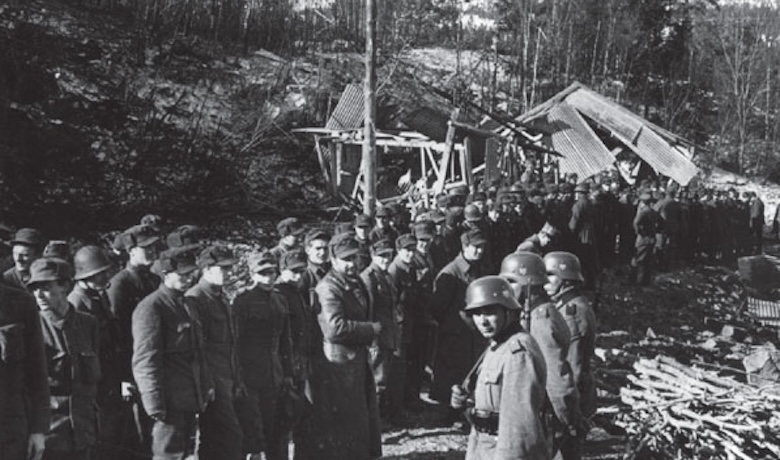
In the opening days of the Operation Desert Storm ground campaign, Iraqi Soldiers surrendered by the tens of thousands. They surrendered to armor, to infantry, and in one famous instance, to a remotely piloted drone hovering overhead. On one hand, the Iraqi prisoners were “the fruits of victory.” On the other, they represented a “tremendous management and logistical problem.” The U.S.-led coalition had prepared to defeat the Iraqi Army; it had not fully prepared to hold it. Feeding, guarding, transporting, and processing that human tide pulled combat power and logistics away from the fight at the very moment momentum mattered most. Victory was never in doubt. But for a brief window, the sheer weight of the defeated threatened to slow the victors.
It is not difficult to imagine a similar dynamic not as an act of capitulation, but as a premeditated plan intended to logistically delay, or even paralyze, an adversary. Such an event may occur in a large-scale combat operation pitting the United States against a capable and numerically superior State adversary. In the conflict’s first hours, before any decisive battle is waged, the adversary’s high command directs expendable units to surrender. Tens of thousands of adversary forces lay down their arms, presenting themselves to dispersed American positions with hands raised. Not as a prelude to a perfidious ambush, but rather fully intending to become prisoners of war. In doing so, they hand the United States an obligation it cannot lawfully refuse and may not be physically able to meet. Namely, the duty under Geneva Convention III (GC III) to receive, protect, evacuate, and care for every one of them. The adversary has not lost a battle. It has imposed one. A battle of logistics, screening, and lawful custody, and it has done so by weaponizing the very humanity the law of war was written to preserve.
It is not a fanciful hypothesis; it is an extrapolation from a historical strain, aimed at a seam in the law. Geneva Convention III was drafted on an unspoken assumption: that surrender reflects defeat. The captor’s burden is treated as the natural consequence of military success. But the Convention says little about what happens when an adversary inverts that logic; when surrender is not the result of defeat but a deliberate instrument for overwhelming an adversary’s capacity to comply with the law.
The Historical Weight of the Defeated
The strain mass surrender imposes is not theoretical. It is one of the most consistent, if underappreciated, features of modern warfare. The Eastern Front of the Second World War offers the starkest illustration. Encirclement battles produced surrenders on a scale almost impossible to administer. Germany captured Soviet armies by the hundreds of thousands in 1941. Two years later, approximately 90,000 members of the German Army surrendered at Stalingrad. The fate of those prisoners, on both sides, stands as a catastrophic record of what happens when captor capacity—and captor will—collapse under volume. The Eastern Front is a cautionary tale less about logistics than about what a captor chooses to do when overwhelmed, and the grim result was frequently mass death through neglect, exposure, and starvation.
The Western Allies confronted their own version of the problem in 1945. As the German Reich disintegrated, its forces surrendered to American and British units in enormous numbers, in no small part to avoid Soviet capture. The United States responded with a controversial administrative innovation, the “Disarmed Enemy Forces” (DEF) designation, a category outside the normal prisoner-of-war framework at the time, adopted partly to manage the sheer numbers and attendant legal and logistical obligations. Whatever one concludes about its legality, the DEF episode shows a captor manipulating legal categories under the pressure of mass surrender. When the numbers became unmanageable, the United States reached for a definitional workaround rather than accepting the full weight of the 1929 Geneva Convention’s obligations. That instinct should give pause, revealing how a capturing power behaves when the law’s demands outpace capacity.
The Persian Gulf War is the cleanest modern analogue to Second World War experience. Estimates of Iraqi prisoners taken during the 1991 ground campaign run to tens of thousands. Commonly cited figures reach 70,000 or more. Exact numbers aside, the massive influx of captives strained coalition forces, requiring units to improvise. Combat formations found themselves managing prisoners they had not planned for. Admittedly, the surrenders stemmed from shattered morale and a hopeless tactical position, not from an Iraqi strategy to burden the coalition. But the effect—the diversion of combat power and logistics toward maintaining custody—is precisely the outcome an adversary might purposely seek.
What Geneva Convention III Demands
To see why a deliberately engineered mass surrender is so dangerous, one must appreciate how comprehensive and non-negotiable the capturing power’s obligations are. Under GC III, the moment enemy combatants fall into the power of an adverse party, they become prisoners of war entitled to a sweeping set of protections. The detaining power is responsible for their humane treatment and physical safety. It must protect them from violence, intimidation, and public curiosity. It must provide adequate food, water, shelter, clothing, and medical care. It must evacuate prisoners from the combat zone to conditions of safety, removing them from danger “as soon as possible” after capture. These obligations attach immediately and individually to every prisoner, and they do not bend to the captor’s convenience. Indeed, the U.S. Law of War Manual specifically addresses the military convenience argument, stating,
Although the feasibility to accept surrender includes consideration of whether it is feasible to take custody of the persons offering to surrender, this does not include consideration of whether it is feasible to care for detainees after taking custody. Offers to surrender may not be refused because it would be militarily inconvenient or impractical to guard or care for detainees (§ 5.9.3.3) (emphasis in original).
Critically, the act of surrender triggers the obligation, not the captor’s consent to be burdened. A combatant who clearly expresses an intention to surrender, and who is hors de combat, may not lawfully be attacked. Refusing quarter—declaring that no prisoners of war will be taken, or attacking those attempting to surrender in good faith—is among the gravest violations of the law of war. The capturing power cannot, in other words, simply wave off an inconvenient surrender and continue the advance.
The Convention does offer the detaining power some operating space, and any honest analysis must acknowledge it. As stated in GC III, Article 19, and emphasized in the U.S. Law of War Manual, prisoners need only be evacuated “as soon as possible,” which builds in tolerance for operational reality. Brief delays justified by genuine military necessity or by danger along evacuation routes are contemplated (§ 9.9). The detaining power also may take security measures, screen and question prisoners, and segregate them as discipline and safety require. While these provisions matter, they were designed to accommodate the friction of war, not to absorb the deliberate, front-loaded delivery of tens of thousands of prisoners engineered to consume a force’s capacity at the decisive moment.
The Seam
Here lies the conceptual gap: GC III assumes that the burden of prisoners is the price of winning. The drafters did not contemplate, and the text does not address, the possibility that an adversary might make surrender an instrument of the captor’s defeat. Consider a commander leading an outnumbered force in a degraded, contested environment. Communications are jammed, evacuation routes have been interdicted, logistics are already stretched thin against a peer adversary. In the conflict’s opening hours, thousands of enemy soldiers approach in good-faith surrender.
The commander confronts a genuine dilemma with no clean exit. He cannot refuse quarter. Attacking or turning away genuine surrenders is unlawful. He cannot abandon prisoners of war once taken; the obligation to protect and care for them, having attached, does not evaporate because it is inconvenient. Yet to comply fully, he must divert combat power to guard them, transportation assets to evacuate them, and sustainment to feed and shelter them at the precise moment those resources are needed for the fight. The adversary, meanwhile, has lost soldiers he may have judged expendable, and gained something more valuable: a paralyzed opponent who may lose because he obeys the law.
The “as soon as possible” standard offers only partial relief, and it carries its own peril. A commander who holds prisoners forward because evacuation is genuinely impracticable is on solid ground, but the longer they remain in the combat zone, the harder it becomes to feed, shelter, and protect them to the Convention’s standard and the greater the risk that necessity hardens into neglect. The DEF precedent looms here as a warning. A stressed captor may be tempted toward definitional escape hatches or corner-cutting, a path that leads away from compliance, not toward it.
Nor does the law of perfidy resolve the problem. Feigned surrender offered to injure or kill is clearly prohibited. But the scenario envisioned by this post involves genuine surrender, offered in good faith and fully intended, though deployed for strategic effect. Choosing to surrender is not unlawful. The weapon is not deceit; it is volume. And the law has no ready answer for lawful conduct undertaken at a scale designed to make the enemy’s lawful response impossible.
Mending the Seam
If the vulnerability is real, the response cannot be to weaken the protections of GC III. Those protections are a cornerstone of the law of war and a reflection of the values the United States should defend, not erode. The answer, therefore, lies in preparation on doctrinal, logistical, and conceptual levels.
First, States should treat mass surrender as a planning factor for large-scale combat operations, not an afterthought. As stated in recently updated Army doctrine on Detainee Operations (common access card required), “U.S. forces have consistently underestimated the number of captured or detained enemy combatants, the characteristics of the detention population, the number of undertrained or limited guard personnel, and the lack of resources available for these operations.” History teaches that surrender comes in waves the victor rarely anticipates. Detainee operations should be resourced, rehearsed, and integrated into operational design from the outset, with scalable capacity for screening, evacuation, and sustainment.
Second, commanders and their legal advisors need clear, pre-developed guidance on the lawful options available when surrender outpaces capacity including how to apply the GC III “as soon as possible” standard responsibly, how to prioritize and triage, how to maintain humane treatment under forward conditions, and how to coordinate with allies and the International Committee of the Red Cross to distribute the burden.
Third, the doctrinal community should name and study the phenomenon directly. An adversary contemplating mass surrender as disruption is exploiting a gap in our imagination as much as in the law. Wargaming the scenario, anticipating its variants, and thinking through the screening challenge of distinguishing genuine prisoners from infiltrators will do more to blunt the tactic than any legal reinterpretation could.
Conclusion
The deepest lesson is the most uncomfortable. The law of armed conflict is designed, in large part, to temper the effects of warfare on the vulnerable. But a sophisticated adversary may come to see fidelity to the law not as a virtue to be admired but a lever to be pulled. The proper response is not to loosen our grip on the law. It is to ensure that compliance never becomes the vulnerability. States must be prepared to honor the obligations imposed by the Convention, even when an enemy delivers those obligations by the thousands, precisely because it hopes States cannot.
***
MAJ Brian Jones is currently a professor and vice chair of the national security law department at The Judge Advocate General’s Legal Center and School.
The views expressed are those of the author, and do not necessarily reflect the official position of the United States Military Academy, Department of the Army, or Department of Defense.
Articles of War is a forum for professionals to share opinions and cultivate ideas. Articles of War does not screen articles to fit a particular editorial agenda, nor endorse or advocate material that is published. Authorship does not indicate affiliation with Articles of War, the Lieber Institute, or the United States Military Academy West Point.
Photo credit: Norwegian military
