

The Ukrainian Attacks Against Gambian-Flagged Oil Tankers in the Black Sea
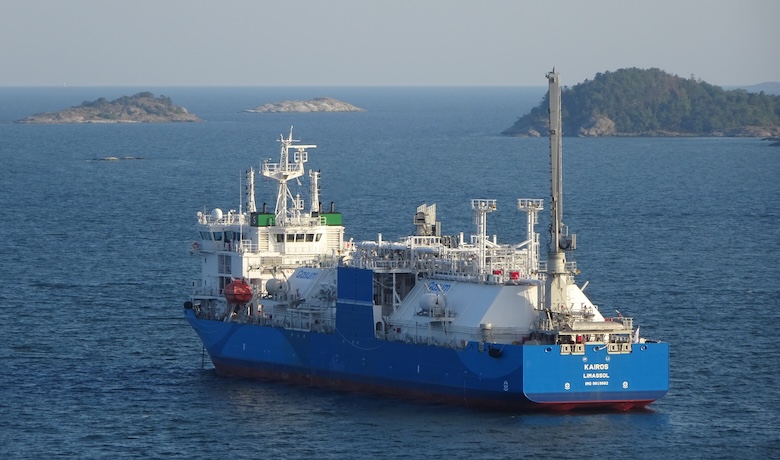
On October 28, 2025, Ukrainian so-called “Sea Baby drones” attacked two Gambian-flagged oil tankers, the Kairos and Virat. Whereas the vessels were severely damaged, no casualties were reported. Presumably, the ships are part of Russia’s “shadow fleet,” and are on a list of ships subject to economic sanctions. The Kairos was struck in the south-west of the Black Sea, approximately 28 nautical miles off the Turkish coast, the Virat in a central area further east. According to a report, “The two tankers were empty and sailing to Novorossiysk, a major Russian Black Sea oil terminal.” The Ukrainian attacks against the two vessels are but two further examples of Ukraine’s efforts “to hit Russia’s oil revenues, which are critical for funding its war in Ukraine.”
Applicable International Legal Framework
Since March 2014, there has been an international armed conflict between the Russian Federation and Ukraine, which escalated with the full-scale Russian invasion of February 24, 2022. Accordingly, the attacks against the Gambian-flagged oil tankers are not to be assessed under the law of the sea or the rules on sanctions’ enforcement, but under the law of armed conflict, particularly the law of naval warfare (for helpful restatements of the law of naval warfare see the San Remo Manual on International Law Applicable to Armed Conflicts at Sea, Part V, paras. 112-58; Newport Manual p. 105).
The law of naval warfare is characterized by specific rules that do not apply in land warfare. This is because most of its rules date back to the 19th and to the beginning of the 20th centuries. It is also due to the fact that belligerent rights are exercised in a special environment, that is, in the world’s oceans that continue be used by international shipping (Newport Manual, para. 1.2).
According to the law of naval warfare, belligerents are entitled to attack lawful targets everywhere outside neutral waters. Such lawful targets include enemy warships, military installations, and enemy or neutral merchant vessels making an effective contribution to the enemy’s military action. Moreover, belligerents at sea may, for the entire duration of the armed conflict, capture enemy merchant vessels irrespective of the cargo they are carrying. Neutral merchant vessels are liable to be captured, if they carry contraband or if they breach, or attempt to breach, a blockade (Newport Manual, ch. 9).
Classification of the Gambian-Flagged Vessels
The first question that arises is whether the Gambian-flagged vessels are neutral merchant vessels. The flag of The Gambia, a State that is not a party to the Russian-Ukrainian war, seems to suggest that they indeed qualify as neutral merchant vessels. It is important to bear in mind that, under the law of naval warfare, the “fact that a merchant vessel is flying the flag of a neutral State … is prima facie evidence of its neutral character” only (San Remo Manual, para. 113; Newport Manual, para. 3.10.3). Accordingly, merchant vessels may bear enemy character, if they, inter alia:
– “Are in the exclusive employment of the enemy government; [or]
– Operate directly under enemy control, orders, charter, employment or direction.” (Newport Manual, para. 3.10.2).
There are good reasons to assume that the two oil tankers belong to the Russian “shadow fleet” and that they either are in the exclusive employment or operate under charter or employment of the Russian government. Therefore, they can be classified as enemy merchant vessels.
Are the Gambian Vessels Lawful Targets?
The classification of the two oil tankers as enemy merchant vessels implies that Ukraine would have been entitled to capture them as prize outside neutral waters, particularly outside the Turkish territorial sea (see Newport Manual, para. 4.1; San Remo Manual, para. 15). Exceptionally, Ukraine would have been allowed to sink or otherwise render them incapable under prize law, if, prior to the attack, passengers, crew, and the ships’ documents had been taken in a place of safety (see Procès-verbal relating to the Rules of Submarine Warfare Set Forth in Part IV of the Treaty of London of 22 April 1930, 6 November 1936; San Remo Manual, para. 139; Newport Manual, para. 9.13.)
Arguably, the Ukrainian armed forces were unable to capture the two oil tankers and to take them to a Ukrainian port for adjudication. However, sinking or rendering them incapable under prize law would nevertheless not have passed the test of legality, because the attacks were conducted by unmanned systems and because, apparently, no efforts were made to take the crews and the ships’ documents to a place of safety.
Accordingly, the legality of the attacks against the two oil tankers depends on whether they qualify as lawful targets under the law of naval warfare. Assuming that the definition of military objectives in Article 52(2) of the 1977 Additional Protocol I to the 1949 Geneva Conventions is reflective of customary law, there exist doubts as to whether the two vessels, by their purpose or use, make an effective contribution to Russian military action. The mere fact that they are part of the Russian “shadow fleet” will hardly suffice to qualify them as lawful targets because their contribution would be, if at all, indirect.
There is, however, no consensus on whether that definition of lawful military objectives is exclusive. The U.S. position has been, and continues to be, that an object contributing to the enemy’s war-supporting or war-sustaining effort also qualifies as a lawful target (see U.S. Navy/U.S. Marine Corps/U.S. Coast Guard, The Commander’s Handbook on the Law of Naval Operations, NWP 1-14M, para. 8.2 (Mar. 2022); U.S. Department of Defense, Law of War Manual, para. 5.6.6.2; see also Newport Manual , para. 8.5.1.1). Because the two oil tankers, as part of the Russian “shadow fleet,” export oil from Russia and, thus, ensure continuing revenues from oil sales, they contribute to the Russian war-sustaining effort and qualify as lawful targets.
Some years ago, many would have rejected the war-sustaining approach as an isolated U.S. position that is not shared by a sufficiently representative number of other States. However, the ongoing Russian-Ukrainian War seems to provide evidence that States are increasingly prepared to accept the war-sustaining approach. The Ukrainian armed forces have repeatedly launched attacks against infrastructure that is crucial for Russian oil exports.
Except for the Hungarian Prime Minister Orbán and the Foreign Minister of Kazakhstan Aibek Smadiyarov, many governments have neither protested nor otherwise doubted the legality of the Ukrainian attacks against the Russian oil export infrastructure, including the attacks against the two oil tankers. The lack of protest or criticism may, therefore, be considered a tacit endorsement of the legality of the Ukrainian attacks, which has the potential of amending the definition of military objectives under the law of armed conflict and the law of naval warfare.
Concluding Remarks
The two Gambian-flagged oil tankers have been intentionally used to avoid the consequences of the sanctions regime imposed on the Russian Federation. Apparently, their owners were unaware of their vessels qualifying as enemy merchant vessels rendering them liable to be captured or destroyed under prize law. Certainly, they were unaware that a contribution to the enemy’s war-sustaining effort could render them liable to be attacked as lawful targets. Indeed, it is not yet settled whether the war-sustaining approach has already become part of customary law. However, the silence of a considerable number of States seems to suggest that—at least in the context of the Russian war of aggression against Ukraine—they are prepared to accept the war-sustaining approach that the United States has adopted for many years.
***
Wolff Heintschel von Heinegg holds the Chair of Public Law, in particular Public International law, European Law and Foreign Constitutional Law at the Europa-Universität Viadrina in Frankfurt (Oder), Germany.
The views expressed are those of the author, and do not necessarily reflect the official position of the United States Military Academy, Department of the Army, or Department of Defense.
Articles of War is a forum for professionals to share opinions and cultivate ideas. Articles of War does not screen articles to fit a particular editorial agenda, nor endorse or advocate material that is published. Authorship does not indicate affiliation with Articles of War, the Lieber Institute, or the United States Military Academy West Point.
Photo credit: Gerd Fahrenhorst
