

Prisoner of War Repatriation and Interpretive Choice – Part II: Involuntary Post-War Repatriation
Part I of this three-part post outlined the law of war applicable to post-war repatriation of prisoners of war. It further recounted how questions concerning reciprocity have arisen from repatriation efforts. This part considers the difficult and close question of involuntary repatriation of prisoners of war.
Involuntary Repatriation
A challenging situation attaches to the question of involuntary post-war repatriations of prisoners of war. The usual reasons for repatriation refusal are fear of retaliation or persecution upon return for surrendering or having been captured. Still, involuntary repatriation was common prior to and following the Second World War, including forced returns of liberated allied prisoners of war by the United States and United Kingdom (p. 450-52).
There is significant support for a view that prisoners of war either may no longer be repatriated involuntarily or that a detaining power may choose to honor a prisoner’s preferences. An early and particularly strong statement by a State with substantial experience with the issue—covered later in Part III of this post—came from the Republic of South Korea. In 1982, upon ratification of the 1977 Additional Protocol I, South Korea declared, “A party detaining prisoners of war may not repatriate its prisoners [against] their openly and freely expressed will, which shall not be regarded as unjustifiable delay in the repatriation of prisoners of war constituting a grave breach of this Protocol.”
The U.S. Army Commanders Handbook on the Law of Land Warfare likewise asserts that the Third Convention does not require involuntary repatriation (§ 3-168). And the International Committee of the Red Cross’s international humanitarian law database provides a helpful collection of similar military legal manuals’ statements on the question. Many of these manuals include passages clearly indicating that prisoners of war may not be repatriated against their wishes (para. 1035). These entries, however, should be read carefully as many are meant to address repatriations carried out during armed conflict rather than post conflict, such as for seriously wounded prisoners of war. These passages reflect Article 109 of the Third Convention which states, “No sick or injured prisoner of war … may be repatriated against his will during hostilities” (emphasis added).
Finally, the view that post-conflict repatriations must be voluntary often casts repatriation as an individual right held by prisoners of war rather than as an obligation owed between States as contracting parties in international law. This view draws much of its support from international human rights law concepts, particularly the notion of non-refoulement which protects persons from deportation to conditions where persecution or severe abuse are likely. This view also reflects a broader sentiment, of relatively recent vintage, that considers whether law of war obligations can be understood from the perspective of individual human protection rather than as mere contractual, inter-State duties owed between and for the benefit of sovereigns and members of their ministries and organs.
But the voluntary view of repatriation is not without significant interpretive difficulties. First, it is at odds with the compulsory and unequivocal language of the Third Convention cited in Part I of this post to support the non-reciprocal nature of the obligation to repatriate. Interpreting “shall” to support an absolute obligation to repatriate regardless of external events such as breach by another party, but simultaneously to permit unilateral derogations from that duty to honor individual choice, involves no small degree of textual tension. It also seems to depart from the Convention’s general theory of repatriation which restrains State and individual discretion as a tradeoff for reducing abuses of discretion and offering protection in a collective or cumulative sense.
Second, the voluntary understanding of repatriation is contrary to a clear prohibition on protected persons waiving the Geneva Conventions’ protections. Article 7 of the Third Convention provides, “Prisoners of war may in no circumstances renounce in part or in entirety the rights secured to them by the present Convention …” (emphasis added). This non-renunciation rule is a fundamental design feature of the Conventions’ protective regime. It might be said that in the case of involuntary repatriation, protection is enhanced rather than compromised by permitting renunciation. However, the Convention’s non-renunciation rule acknowledges that protected persons find themselves in the hands of their nation’s enemy, often under duress. To prevent coerced or contrived waivers, the Conventions remove the possibility of such persons relinquishing protections in any case. Non-renunciation is a critical safeguard against schemes by detaining powers to proffer prisoner consent as a justification to breach obligations, particularly in the coercive context of internment.
Third, the Convention is not oblivious to the need for exceptions to repatriation. In fact, it includes an explicit exception to the post-conflict duty to repatriate. Article 119(5) permits a detaining power to retain prisoners of war “against whom criminal proceedings for an indictable offence are pending … until the completion of the punishment.” The exception is evidence not only of States’ support for enforcing criminal laws against prisoners of war. It is confirmation that the Third Convention resorts to exceptions to repatriation by expression rather than by implication and counsels against reading an involuntary repatriation exception into the Convention.
Fourth, as a “supplementary means of interpretation,” and related to the preceding point, the negotiating history of the Third Convention does not support post-conflict repatriation conditioned on prisoner preference. Records of the Convention’s preparatory work indicate that an early Conference of Government Experts concluded that such an exception would be too difficult to draft responsibly (p. 245). Meanwhile, the Conventions’ diplomatic conference records indicate that States rejected an amendment that would have excused non-repatriation. The rejected draft provided, “Prisoners of war, however, shall be entitled to apply for their transfer to any other country which is ready to accept them” (2A Final Record, p. 324). A “large majority” later rejected a subsequent proposal that read “prisoners of war must have the option of not returning to their country if they so desire” (2A Final Record, p. 462). These rejections and resulting omissions of text are perhaps all-the-more telling considering that preceding treaties had expressly permitted post-conflict refusals of repatriation. For example, the 1919 Treaty of Versailles provided that prisoners of war “who do not desire to be repatriated may be excluded from repatriation” (art. 220).
Finally, the larger legal context in which the post-war prisoner of war repatriation regime sits complicates reading voluntariness into it (art. 31(1)). As noted above, the Third Convention does not neglect the possibility of prisoners of war rejecting repatriation altogether. Although they declined to include such an option in post-conflict repatriation, States easily adopted voluntariness as an element of mid-conflict repatriation of sick or injured prisoners of war (art. 109). Meanwhile, addressing transfers of civilian protected persons, the Fourth Geneva Convention provides “In no circumstances shall a protected person be transferred to a country where he or she may have reason to fear persecution for his or her political opinions or religious beliefs” (art. 45(4)). That both the Third and Fourth Conventions expressly condition repatriation and transfer on a protected person’s consent in other instances, but not in the case of post-conflict prisoner of war repatriation, undermines the case for implying such a condition.
Ultimately, like the issue of reciprocity addressed in Part I of this post, it may be best to concede that the question of involuntary repatriation admits a degree of interpretive choice by States. This is particularly the case where repatriation refusal is not grounded in a clearly established risk of serious abuse on return but rather in personal preference or convenience. Preserving interpretive choice may also serve a detaining power’s legitimate interest in regulating the presence of former enemy personnel on its territory. While the textual case for an absolute repatriation duty, including involuntary repatriation, is quite strong, there is similarly strong evidence that many States have reconsidered and reformed the issue since adoption of the Third Convention through State practice, though whether that practice is actually universal and therefore sufficient to “establish agreement of the parties concerning its interpretation” is unclear (art. 31(3)(b)).
Interpretive choice on involuntary repatriation is also likely to be greatly influenced by a State’s general view on the interface of its law of war and human rights law obligations. In particular, States willing to admit influence by the latter on the former—a reversal of the usual workings of the lex specialis doctrine—will no doubt be more reluctant to support involuntary repatriations (p. 15-17).
Still, at present, insisting on a uniform and universal doctrine for involuntary repatriation, or for reciprocity, in post-conflict prisoner of war repatriations ignores realities of diverse State practice and papers over persistent political, military, and legal complexities. These questions also reflect deeper interpretive complexities concerning repatriation, the Conventions, and the law of war more generally, including the extent to which each should be regarded from an individual or collective perspective, the subject of the next part of this post. Part III will recount prisoner of war repatriation experience during the Korean War and identify potential interpretive lessons that might be drawn from that episode.
***
Sean Watts is a Professor in the Department of Law and Philosophy at the United States Military Academy, Co-Director of the Lieber Institute for Law and Warfare at West Point, and Co-Editor-in-Chief of Articles of War.
The views expressed are those of the authors, and do not necessarily reflect the official position of the United States Military Academy, Department of the Army, or Department of Defense.
Articles of War is a forum for professionals to share opinions and cultivate ideas. Articles of War does not screen articles to fit a particular editorial agenda, nor endorse or advocate material that is published.
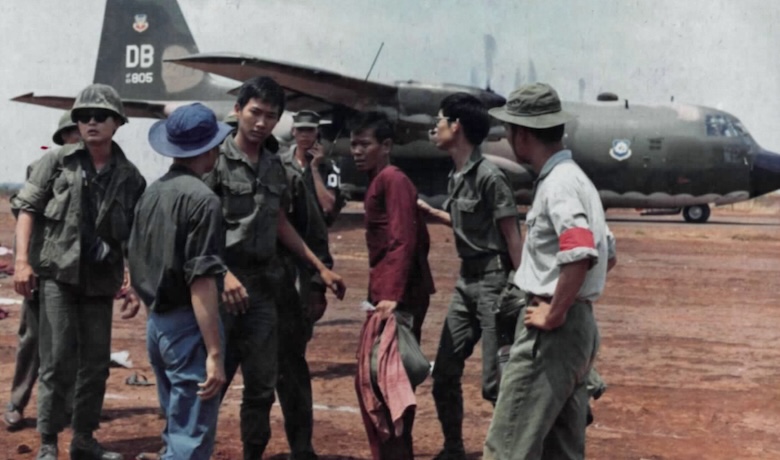
Photo credit: SSGT Richard S. Hiwa, Jr.
RELATED POSTS
Prisoner of War Repatriation and Interpretive Choice – Part I: The Legal Framework and Reciprocity
by Sean Watts
December 15, 2025
