

Haiti’s Gang Violence and the Armed Conflict Threshold: An IHL Analysis
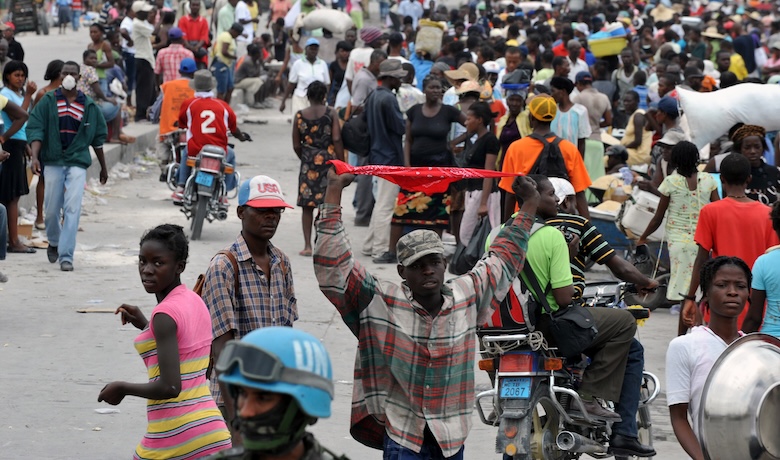
Haiti’s armed violence and humanitarian crisis remain acute. Armed gangs control significant territory, reportedly perpetrating killings, sexual violence, and child exploitation. In 2025 alone, more than 8,000 people were killed, 1.4 million displaced, and over half the population faced serious food insecurity. The Kenyan‑led Multinational Security Support (MSS) mission failed to contain the escalating violence in 2024–2025. The UN Security Council subsequently authorized a transition to the more robust Gang Suppression Force (GSF) to assist the Haitian government in restoring security, which is starting to deploy. As of March 2026, an estimated 1,000 of the envisaged 5,500 personnel, primarily from Kenya, are already operating under the GSF banner in Haiti. A phased reinforcement was planned for April 2026.
Meanwhile, Haitian security forces have launched military‑style operations, including drone strikes causing substantial casualties and displacement. These operations are supported by the United States-based private contractor Vectus Global.
As the crisis goes on, the question remains whether the violence between the Haitian security forces (and supporting forces) and any of the gangs, especially the Viv Ansanm coalition, meets the threshold of a non‑international armed conflict (NIAC), thereby triggering the application of international humanitarian law (IHL), or rather if the situation remains governed exclusively by a human rights-based law enforcement paradigm. The answer has direct consequences for the lawful use of force, civilian protection, detention, accountability, and the characterization of potential violations.
This post explains the assessment recently published by the War Watch project of the Geneva Academy of IHL and Human Rights (in which the authors of this post were also involved) concluding that the situation satisfies the intensity and organization requirements for a NIAC. We set out the factual and legal bases for that conclusion and address key counter‑positions advanced in public reporting and institutional practice, including reliance on human rights framing in Security Council resolutions and by prominent humanitarian and human rights organizations.
Our aim is not to relitigate the peace/armed conflict binary, but to apply the established NIAC criteria to the facts as they have unfolded. On the record before us, it is clear that the violence is sufficiently regular and intense, and the parties sufficiently organized, such that Common Article 3 and customary IHL are engaged, along with Additional Protocol II, given the extent of territorial control and operational capacity of Viv Ansanm.
In this post, we summarize what is at stake in the legal classification, outline the evidence underlying the War Watch determination, and indirectly why a NIAC reading does not extend to all violence across Haiti. Ultimately, it is the facts on the ground that determine the applicable law and not particular, possibly undesirable, policy consequences.
What Is at Stake?
Although IHL is often associated with enhanced civilian protection, such an assumption demands caution because the application of IHL to any situation has profound implications. Namely, IHL both protects persons affected by armed conflict and permits the potentially lethal targeting of opponents who are directly participating in the fighting, alongside the occurrence of lawful incidental civilian harm. This represents a profound shift from the human rights law governing peacetime law enforcement operations, in which intentional lethal use of force is permissible only when strictly unavoidable to protect life, thereby satisfying necessity and proportionality requirements under that body of law.
If the situation is classified as a NIAC, Haitian drone strikes on gang fighters belonging to a party, as well as that party’s attacks on Haitian military forces, would constitute prima facie lawful acts of hostilities, subject to their compliance with IHL rules. Incidental civilian harm may not necessarily be a breach of the law, subject to proportionality and precautions in attack constraints.
Of particular concern is the February 2026 UNICEF report of a 200 percent surge in the recruitment of children into armed groups in Haiti during 2025. Indeed, up to 50 percent of Viv Ansanm’s members are estimated to be children. Article 4(3)(c) of Additional Protocol II and customary IHL rules provide a blanket prohibition on the use of children under fifteen in hostilities. Efforts are ongoing to support the release and reintegration of children associated with the armed groups, such as through the 2024 UN-Haiti Handover Protocol and demobilisation pathways such as PREJEUNES. Despite this, the application of IHL in this circumstance means that even children forced into active fighting roles lose their civilian protection and are lawfully targetable if and when they directly participate in hostilities. Others who are not directly participating in hostilities nevertheless risk death and injury from their physical proximity with the gangs.
A situation that is classified as a NIAC requires what appear to have been serious violations of IHL to be investigated and prosecuted as war crimes. Conversely, if the situation does not amount to a NIAC, but remains one of law enforcement, the drone strikes would likely constitute unlawful extrajudicial killings under international human rights law (IHRL).
Divergent Legal Readings of the Situation
Here, views seemingly diverge as to the appropriate legal reading. As discussed below, the War Watch project concluded that the situation between Haitian authorities and the Viv Ansanm coalition had amounted to a NIAC. Médecins Sans Frontières has likewise used terminology indicating an armed conflict in its 2025 and 2026 communications (terminology such as parties, battlefield, intense fighting, armed groups, protection of civilians, civilian casualties). U.S. State Department testimony before the U.S. Senate Appropriations Committee in February 2026 described “full‑scale urban warfare.”
In contrast, the September 2025 Security Council resolution establishing the GSF referred only to IHRL and not IHL, despite the GSF mandate to utilize “all necessary measures” to reduce gang activities. The most recent Human Rights Council report dated 26 March 2026 also employs only human rights language such as “unnecessary or disproportionate use of force” in the context of anti-gang security forces operations, and concludes that law enforcement operations in the country are governed by IHRL. Human Rights Watch’s March 2026 report on drone strikes also applied a law enforcement analysis. Similarly, the International Committee of the Red Cross (ICRC), which is of course not obliged to publish its classification assessments, continues publicly to employ terms consistent with a non‑NIAC reading (e.g., referring to armed violence, respecting life and dignity, and referring to people rather than civilians).
The law requires classification of the situation within one of these two available paradigms, however challenging that classification may prove in practice. Moreover, the legal classification must rest on the facts at hand, not policy considerations, however sobering they may be. This is what experts with the War Watch project have done: apply the law to the facts.
War Watch’s NIAC Assessment
While the intensity of violence in Haiti is broadly acknowledged, it is the level of organization of the non‑State party that seems to be most contested.
Intensity
War Watch’s assessment highlights catastrophic levels of violence. The Office of the UN High Commissioner for Human Rights (OHCHR) recorded more than 5,600 killings in 2024 and a further 4,239 killings and 1,356 injuries between July 2024 and February 2025. Violence escalated in early 2025, contributing to displacement reaching approximately 1.3 million people by June. Viv Ansanm conducted frequent, coordinated attacks on State infrastructure, expanding territorial control and significantly affecting civilian life. In this context, the exercise of territorial control by a non-State armed group is regarded by the International Criminal Court (ICC) as an indication that the threshold of intensity may be met even in the absence of fighting or protracted armed violence.
The Haitian response intensified in March 2025 with the use of armed drones, including strikes that caused many casualties, including approximately 100 gang fighters reportedly killed in a two-day period in June 2025 in the southern neighbourhoods of Port-au-Prince. The response by Haitian security forces through drones, which are military grade weapons, indicates a shift of the Haitian government’s own assessment of this situation. The deployment of the GSF, while not determinative, is congruent, and underscores the severity of the situation.
War Watch concluded that these elements amounted to “protracted” armed violence satisfying the NIAC intensity requirement.
Organization
Viv Ansanm (“living together” in Haitian creole), is a coalition formed in 2023 through the merger of two previously rival organized gangs, the G9 and G‑Pèp alliances. Viv Ansanm presents itself as a unified non‑State armed actor with political and military components. With Jimmy Chérizier as its spokesperson, the coalition controls an estimated 85-90 percent of Port‑au‑Prince. Despite initial scepticism as to its durability due to long-standing rivalries among its members, the coalition has managed to preserve its cohesion. The UN Security Council put Viv Ansanm on its sanctions list as a single entity in July 2025.
In particular, the coordinated Viv Ansanm attacks on State institutions on February 29, 2024 show hierarchical leadership with demonstrated coordination, strategic planning, financing, and territorial governance. These February 2024 attacks were launched on the precise day Prime Minister Henry arrived in Nairobi to sign the MSS deployment agreement, simultaneously toppling his government and preempting the foreign force before it could deploy.
Sufficient organization for the purpose of an IHL determination is evidenced by the fact that the coalition operates under a multi-tiered leadership structure with sub-commanders who lead constituent gangs and enforce discipline, under the “presidency” of Jimmy Chérizier. Moreover, the coalition maintains internal discipline and negotiated restraint despite episodic infighting, trains its members, articulates unified public positions, pools financing through criminal governance, consolidates arms procurement networks, and exercises sustained and significant territorial control in Port-au-Prince.
Confirming Viv Ansanm’s coordination competencies, the coalition conducts its territorial expansion systematically. Viv Ansanm has physically fortified its strongholds, forced the relocation of over 100 public institutions, and systematically displaced civilians to create depopulated buffer zones between its positions and State forces. This enables planning, coordination, and implementation of IHL obligations (actual respect for those IHL obligations is not required). The coalition has proven its ability to adapt and reorganize in the face of mounting pressure exercised by Haitian security forces.
It is clear that the stable nature of control exercised over territory in Port-au-Prince by Viv Ansanm does not only confirm the existence of responsible command as demanded by Additional Protocol II, Article 1(1), but it further enables this group to satisfy the other requirements of Article 1(1) as it has the ability to implement the Protocol and launch planned and frequent operations against the Haitian government.
Applicable law
In sum, War Watch concluded that the Haitian situation amounted to a NIAC. Accordingly, it is regulated by Common Article 3 of the Geneva Conventions and other rules of customary IHL. Haiti is also a State Party to Additional Protocol II. As noted, War Watch found the additional requirements of Article 1(1) of Additional Protocol II satisfied, and thus the Protocol is directly applicable to the conflict.
Current Developments
Further developments since the launch of War Watch’s Haiti assessment in November 2025 underpin the factual existence of a NIAC in the country. Haitian security forces gradually escalated their response to the violence perpetrated by gangs affiliated with Viv Ansanm. Over the past few months, the Armed Forces of Haiti were more regularly involved in counter-gang security operations. These included operations in Port-au-Prince and Kenscoff commune. They were typically carried out alongside specialized units of the Haitian National Police, the newly established GSF, and the task force incorporating foreign contractors. However, despite this change in tactic, the Haitian gangs have demonstrated adaptive strategies such as their retreat to fortified buildings, the digging of underground shelters, and their use of civilians as human shields to avoid strikes.
Regarding Viv Ansanm’s organization, a December 2025 International Crisis Group (ICG) report stressed the coalition’s military tactic of switching between “periods of fierce offensives” and more defensive phases, which the ICG views as a confirmation of the existence of an internal disciplinary system within the coalition. Since the launch of a new wave of anti-gang security operations in early 2026, Viv Ansanm has adapted a more defensive posture. According to experts cited by ICG, estimates of the coalition’s collective strength range between 12,000 and 20,000 members, of which at least 3,000 are heavily armed.
The fact that Viv Ansanm is made up of different gangs with respective strongholds allows the coalition to fight simultaneously on multiple fronts. A recently published report from the Global Initiative against Transnational Organized Crimes describes the phenomenon of gangs from Port-au-Prince creating franchises by establishing or absorbing satellite cells outside their initial operational areas, described as networked nodes, thereby boosting their dominance. Alluding to their resilience, the report also finds that neutralizing gang leaders seldom destroys their structures.
Conclusion
A NIAC classification does not mean that all violence in Haiti is governed by IHL. Numerous armed gangs operate across the country. Estimates range from 23 operating in metropolitan Port-au-Prince to 200 nationally. Many of these armed gangs do not meet the NIAC intensity or organization thresholds. For instance, although Gran Grif controls significant territory in northern Artibonite, and despite an infamous massacre in Port Sondéin October 2024, War Watch was not able to conclude on available information that Gran Grif’s actions during the reporting period amounted to a separate NIAC.
Haiti has signed but not ratified the Rome Statute of the ICC. Absent its accession, a Security Council referral, or an Article 12(3) declaration by Haiti, the ICC lacks jurisdiction over Haiti. Accountability will therefore depend primarily on other States, and on Haitian institutions when security conditions enable investigatory and judicial processes to function. Prima facie war crimes must be investigated and the perpetrators prosecuted, wherever they may be.
***
Alina-Camille Berdefy is a doctoral candidate at the University of Johannesburg.
Martha M. Bradley is an Associate Professor in the Department of Public Law at the University of Johannesburg, South Africa.
Stuart Casey-Maslen is Visiting Professor at the Faculty of Law of University of Johannesburg.
Juliette Graf is a Scientific Associate for Research and Outreach at the Geneva Academy of International Humanitarian Law and Human Rights.
Marnie Lloydd is a Senior Lecturer at the Faculty of Law, Te Herenga Waka–Victoria University of Wellington (New Zealand), and former Delegate and Legal Advisor with the International Committee of the Red Cross (ICRC).
The views expressed are those of the authors, and do not necessarily reflect the official position of the United States Military Academy, Department of the Army, or Department of Defense.
Articles of War is a forum for professionals to share opinions and cultivate ideas. Articles of War does not screen articles to fit a particular editorial agenda, nor endorse or advocate material that is published. Authorship does not indicate affiliation with Articles of War, the Lieber Institute, or the United States Military Academy West Point.
Photo credit: Marcello Casal Jr/ABr
