

Laws of Yesterday’s Wars Symposium – African Traditions and the Preservation of Humanity during Warfare
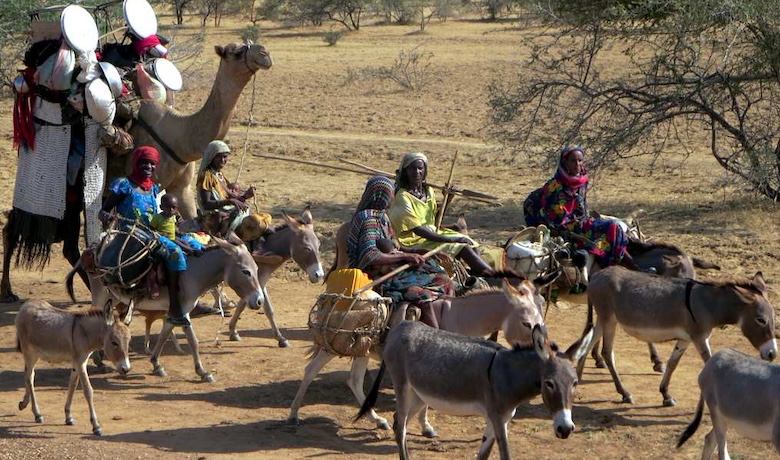
Editor’s note: The following post highlights a chapter that appears in Samuel White’s fourth edited volume of Laws of Yesterday’s Wars published with Brill. For a general introduction to the series, see Dr Samuel White’s introductory post.
Africa’s diverse societies have long maintained complex systems of customary law governing conflict, reconciliation, and the restoration of communal harmony. In Volume 4 of The Laws of Yesterday’s Wars, we examine these traditions through detailed qualitative research, expanding our previous work on The Tool on African Traditions and the Preservation of Humanity During Warfare (The Tool). Our chapter explores the links between law and culture as a means of generating greater respect for International Humanitarian Law (IHL).
Chapter Highlights
To better explain the relevance and authority of IHL, the International Committee of the Red Cross (ICRC) undertook to examine the historical relationship between Africa and IHL, as reflected in traditional customs. They did so with the objective that the resulting research could contribute to current debates on the relevance of IHL to Africa and thereby increase the understanding and acceptance of IHL rules on the African continent. The research showed that established norms regulating the conduct of hostilities existed in many African tribes and cultures.
With the research providing some clarity into the norms of traditional African customs in war, it became important to find a way to show the link between culture and law that would effectively increase understanding and acceptance of IHL rules on the African continent. The outcome was the production of The Tool, a resource with which to engage various audiences regarding the relationship between Africa and IHL.
Our chapter begins by reflecting on the objective behind the creation of The Tool and an assessment of its use to date. At its core, The Tool is a collection of African traditions and customs in warfare that emphasizes the universal nature of the fundamental principles of IHL. The Tool has been used across Africa to engage audiences and stimulate reflection and debate on IHL. We go on to explore the criticisms of The Tool and the challenges faced. While some criticisms of The Tool are valid and need to be addressed, we contend that this Tool has contributed something unique and relevant to regional discussions on IHL.
Our chapter goes on to consider whether there is a role for instruments like The Tool to be used as a reminder of the relevance of IHL to Africa, as well as the responsibility to continue to respect, promote, and develop IHL. Furthermore, we consider the benefit of The Tool for the work of humanitarian actors.
Although its full value has yet to be realized, we believe The Tool has already achieved a great deal, particularly in changing the narrative on IHL in the African context. The Tool has certainly opened a door to deeper engagement on IHL with governments and academic circles, in a sense bringing us closer to one another. In addition, The Tool has, at least to some extent, been a catalyst for further interest and research into the idea of linking culture and IHL on the African continent, and has contributed to mainstreaming the value of researching contextualized evidence of IHL’s relevance.
So What?
Our work challenges the assumption that IHL is primarily a European legal project. The African traditions documented by The Tool show that communities across the continent crafted their own sophisticated approaches to limiting violence. For contemporary humanitarian practitioners, these insights reinforce the importance of culturally literate engagement.
Modern IHL succeeds when it aligns with local values and when communities can see their own traditions reflected in global norms. Our chapter strengthens the core argument of The Laws of Yesterday’s Wars: that the desire to humanise conflict is universal, ancient, and deeply embedded in diverse cultural histories.
***
Tamalin Bolus is a legal advisor for an international organization, specializing in the implementation of international humanitarian law.
Sarah Jean Mabeza is currently a Regional Legal Advisor for an international humanitarian organization and an LLD student at the University of Johannesburg.
The views expressed are those of the authors, and do not necessarily reflect the official position of the United States Military Academy, Department of the Army, or Department of Defense.
Articles of War is a forum for professionals to share opinions and cultivate ideas. Articles of War does not screen articles to fit a particular editorial agenda, nor endorse or advocate material that is published. Authorship does not indicate affiliation with Articles of War, the Lieber Institute, or the United States Military Academy West Point.
Photo credit: David Stanley
RELATED POSTS
by Samuel White
February 9, 2026
–
by Rory Cox
February 11, 2026
–
Jewish Ethics of War in the Torah
February 13, 2026
–
Somali Traditions of Restraint
February 18, 2026
