

Artificial Intelligence
The Impact of AI-Enabled Capabilities on the Application of International Law in the Cyber Domain
This post describes the proceedings and conclusions of a workshop that brought together scholars, some with both operational and technical expertise, to discuss the emerging applications of artificial intelligence (AI) in military cyber operations. This virtual...

Year Ahead 2026 – Poisoned Wells Before The War
In April 2026, and as part of my role at the National University of Singapore, I am hosting a regional conference on the intersection between artificial intelligence (AI) and international humanitarian law (IHL). The conference abstracts are, understandably, all about...
Legal Reviews of War Algorithms: From Cyber Weapons to AI Systems
States are obliged to conduct legal reviews of new weapons, means, and methods of warfare. Legal reviews of artificial intelligence (AI) systems pose significant legal and practical challenges due to their technical and operational features. This post explores how...

Gaps and Seams in the Law of Armed Conflict for AI-Enabled Cyber Operations
The continued, robust use of cyber operations in both competition and conflict has inspired many States to express whether and how international law applies to cyber operations. While these attempts at clarity and consensus have led to some convergence of views and...

Can AI Teach Itself to Abuse IHL-Protected Indicators?
In war, there is every incentive to deceive. Thousands of years ago, humans learnt that misleading the enemy, dissimulating one’s intentions, and misrepresenting the truth often led to tangible tactical and operational benefits. Humans, however, also came to...

Future of Warfare and Law Series – The Law and LAWS
Editors’ note: This post is part of a series featuring topics discussed during the Third Annual Future of Warfare and the Law Symposium. Christina Colclough’s introductory post is available here. In May of 2025, the third Future of Warfare and the Law Symposium...
Future of Warfare and Law Series – Introduction
Editors’ note: This post introduces a series featuring topics discussed during the Third Annual Future of Warfare and the Law Symposium. This past May, a community of military legal scholars and technical experts met at the Third Annual Future of Warfare and the Law...

In Honor of Françoise Hampson – Artificial Intelligence in Military Detention
Editors’ note: This post is part of a series to honor Professor Françoise Hampson, who passed away on April 18, 2025. The posts touch on a few issues—in this case detention—that Professor Hampson worked on and aim to pay tribute to the significant contribution her...

Military Use of Biometrics Series – Israel’s Use of AI-DSS and Facial Recognition Technology: The Erosion of Civilian Protection in Gaza
Editors’ note: This post is part of a series relating to the law applicable to the military use of biometrics. It is drawn from the author’s article-length work, “The Use of the ‘Lavender’ in Gaza and the Law of Targeting: AI-Decision Support Systems and Facial...

Military Use of Biometrics Series – Introduction
On 7-8 May 2024, a conference brought together a group of scholars and practitioners to discuss the law applicable to the use of biometrics by armed forces. The conference, which took place in Tallinn, Estonia, was organized by the War Studies Research Centre (WSRC)...

CyCon 2025 Series – Legal Reviews of Military Artificial Intelligence Capabilities
Editors’ note: This post is part of a series that features presentations at this year’s 17th International Conference on Cyber Conflict (CyCon) in Tallinn, Estonia. Its subject will be explored further as part of a chapter in the forthcoming book International Law and...

CyCon 2025 Series – AI-Enabled Offensive Cyber Operations: Legal Challenges in the Shadows of Automation
Editors’ note: This post is part of a series that features presentations at this year’s 17th International Conference on Cyber Conflict (CyCon) in Tallinn, Estonia. Its subject will be explored further as part of a chapter in the forthcoming book International Law and...

CyCon 2025 Series – Deciding with AI Systems: Rethinking Dynamics in Military Decision-Making
Editors’ note: This post is part of a series that features presentations at this year's 17th International Conference on Cyber Conflict (CyCon) in Tallinn, Estonia. Its subject will be explored further as part of a chapter in the forthcoming book International Law and...
CyCon 2025 Series – Artificial Intelligence in Armed Conflict: The Current State of International Law
Editors’ note: This post is part of a series that features presentations at this year's 17th International Conference on Cyber Conflict (CyCon) in Tallinn, Estonia. Its subject will be explored further as part of a chapter in the forthcoming book International Law and...

Artificial Intelligence in Armed Conflict CyCon 2025 Series – Introduction
Artificial intelligence (AI) is rapidly emerging as the defining disruptive technology of our time. While academics lament the supposed imminent demise of college writing, people turn to ChatGPT instead of their therapists, and agentic AI dangles the promise of an...

Data Poisoning as a Covert Weapon: Securing U.S. Military Superiority in AI-Driven Warfare
Rapid integration of artificial intelligence (AI) into military platforms has revolutionized modern warfare, providing unprecedented capabilities for decision-making, reconnaissance, and targeting. However, reliance on AI systems introduces critical vulnerabilities,...

Military AI as Sociotechnical Systems
Concern about incorporation of AI into the use of weapons over the last several years has focused overwhelmingly on lethal autonomous weapons systems (LAWS). While there is no consensus on the meaning of this term, many States, as well as members of a Group of...
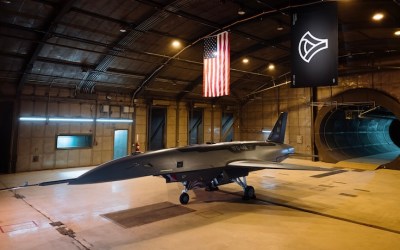
Diverging Standards in the Legal Review of LAWS
In May 2025, Anduril Industries publicly unveiled Fury (YFQ-44A), a next-generation autonomous aircraft currently under evaluation by the U.S. Air Force as part of its Collaborative Combat Aircraft (CCA) program. Fury takes its first test flights this summer. The goal...

Brian Christian’s The Alignment Problem: A Cautionary Tale to Proponents of LAWS
Brian Christian’s The Alignment Problem: Machine Learning and Human Values is an accessible, comprehensive look under the hood of contemporary machine learning. The title suggests, and Christian states, “This book is about machine learning and human values: about...
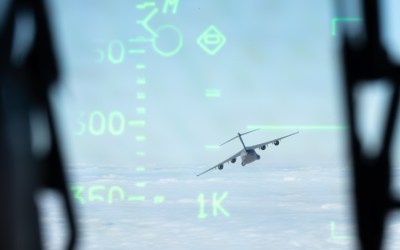
How Meaningful is “Meaningful Human Control” in LAWS Regulation?
In recent years, the concept of “meaningful human control” (MHC) has emerged as a key consideration in regulating lethal autonomous weapon systems (LAWS). This standard seeks to ensure substantial human involvement in overseeing and directing the operational functions...
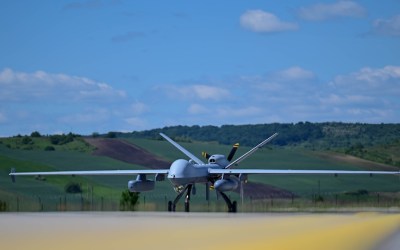
The Future of Warfare: National Positions on the Governance of Lethal Autonomous Weapons Systems
Lethal autonomous weapons systems (LAWS), such as drones and autonomous missile systems, are no longer a theoretical concern. Indeed, they are finding their way onto the battlefield. Amid growing international concern, States have articulated a range of positions on...
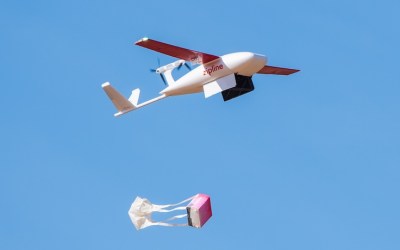
When Technology Meets Humanity: Harnessing New and Emerging Technologies at the End of Conflict
New and emerging technologies offer significant contributions toward facilitating the end of conflict and protecting and easing the effects of conflict on the civilian population. Over the past decade and more, security and legal scholars have devoted enormous...

Year Ahead – The Coming Year’s Evolution in the Law of Cyber Operations
Editors’ note: We are pleased to announce that Articles of War has recently added several thematic editors to our staff. Each editor has contributed a post to this year’s Year Ahead series with thoughts on issues or situations they recommend our readers track over the...
Year in Review – 2024
2024 was defined by a landscape of intensifying conflicts, continuous technological advancements (see here and here), and evolving debates over the application of the law of armed conflict (LOAC). The persistent war in Ukraine, the volatile Israel-Hezbollah and...

From Conflict to Closure: The Role of AI in Identifying and Honouring the Deceased
Editors’ note: This post is drawn from the author’s article-length work, “Advancing Honour and Dignity in Death for Victims of Armed Conflicts: Exploring the Challenges and Opportunities of AI and Machine Learning in Humanitarian Forensic Action Under IHL” appearing...

Anti-AI Countermeasures in Warfare: Terra Incognita for IHL?
In a small town under occupation by Alpha, an utterly baffling bloodbath occurred. Dozens of civilians coming home from the Friday market were gunned down by Alpha’s artificial intelligence (AI)-powered sentry guns which, until that day, had never once mistaken the...
Lawfully Using Autonomous Weapon Technologies
Editor's note: This post is derived from the author’s recently published book Lawfully Using Autonomous Weapon Technologies, published with Springer Press. We, members of the human race in 2024, already live in a world saturated with artificial intelligence (AI). Like...
Targeting in the Black Box: The Need to Reprioritize AI Explainability
States around the world are racing to leverage the rapid evolution of artificial intelligence (AI) to their own military advantage. In the coming decades, AI-based systems are expected to revolutionize logistics, significantly alter targeting processes, and power...

Rules of Engagement as a Regulatory Framework for Military Artificial Intelligence
Proper regulatory frameworks are required for the development, deployment, and use of artificial intelligence (AI) for military purposes. Any such frameworks must comply with international law. In addition, because existing international law does not provide specific...

Israel – Hamas 2024 Symposium – The Gospel, Lavender, and the Law of Armed Conflict
In November 2023, +972 Magazine and Local Call published a joint report on Israel Defense Force (IDF) targeting operations, labeling them a “mass assassination factory.” It correctly stated that the IDF was using “Gospel,” a system characterized as relying upon...

Artificial Intelligence Systems and Humans in Military Decision-Making: Not Better or Worse but Better Together
In conversations about the military use of artificial intelligence (AI), I am frequently presented with the following question: might AI systems be better than humans at complying with international humanitarian law (IHL) in military decisions on the use of force?...

Israel-Hamas 2024 Symposium – AI-Based Targeting in Gaza: Surveying Expert Responses and Refining the Debate
The reported use of artificial intelligence-enabled decision-support systems (AI-DSS), in particular the Gospel and Lavender, by the Israel Defense Forces (IDF) in their military operations in Gaza has been controversial. Allegedly, these two systems are used to...

In Honor of Yoram Dinstein – Command Responsibility in an Era of New Weapons
Editors’ note: This post is part of a series to honor Professor Yoram Dinstein, who passed away on Saturday February 10, 2024. These posts recognize Professor Dinstein’s work and the significant contribution his scholarship has made to our understanding of...
Artificial Intelligence for Better Protection of Civilians During Urban Warfare
Editor’s Note: This post is drawn from the author’s article-length work recently published in The Military Law and the Law of War Review. Images emerging from hostilities in cities such as Gaza, Odesa, Kharkiv, and Donetsk send a stark reminder that warfare causes...
AWS Legal Review Series – A Functional Approach
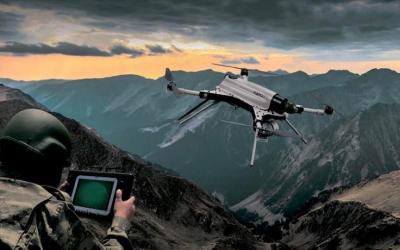
This post appears as part of a series on the legal review of autonomous weapon systems. An introductory post by Professors Rain Liivoja and Sean Watts provides an overview of the series. Autonomous weapon systems (AWS) are no longer confined to works of fiction. The...

AWS Legal Review Series – Introduction
In recent years, discussions about the legal compliance of various novel military uses of technology have shone a spotlight on something that used to be the obscure province of military lawyers: the legal reviews of new weapons, means and methods of warfare. Also...
Designing for Reasonableness: The Algorithmic Mediation of Reasonableness in Targeting Decisions
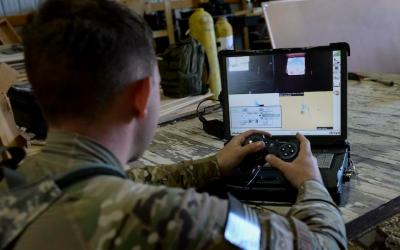
Developments on current battlefields are proving that algorithmic decision-support systems are not a distant future, but a reality that military and civilian populations are already living with. For example, in November 2023, it was reported that defense contractor...
Lieber Studies Big Data Volume – Algorithms of Care: Military AI, Digital Rights, and the Duty of Constant Care
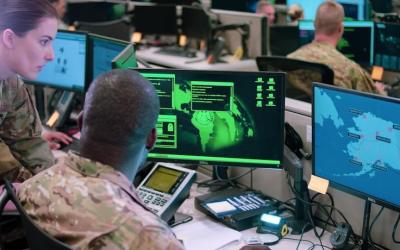
Editors’ note: This post is based on the authors’ chapter in Big Data and Armed Conflict (Laura Dickinson and Ed Berg eds. 2024), the ninth volume of the Lieber Studies series published with Oxford University Press. In Big Data and Armed Conflict: Legal Issues Above...

Lieber Studies Big Data Volume – Attacking Big Data: Strategic Competition, the Race for AI, and Cyber Sabotage
Editors’ note: This post is based on the authors’ chapter in Big Data and Armed Conflict (Laura Dickinson and Ed Berg eds. 2024), the ninth volume of the Lieber Studies series published with Oxford University Press. Prevailing in strategic competition with China is...
Israel – Hamas 2024 Symposium – Beyond the Headlines: Combat Deployment of Military AI-Based Systems by the IDF
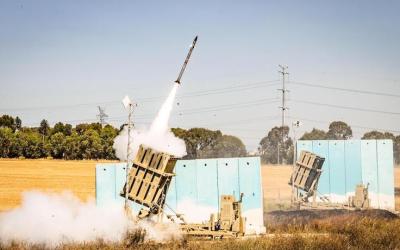
It is well established that new and emerging technologies impact how States conduct military operations. Recently, we have seen notable innovations in the development and deployment of autonomous weapon systems (AWS), military use of cyberspace, and many more....
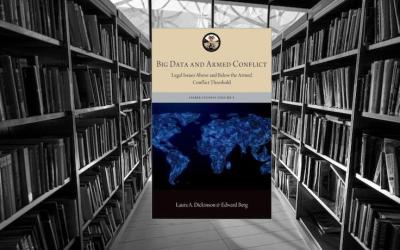
Lieber Studies Big Data Volume – Big Data and Armed Conflict – Legal Issues Above and Below the Armed Conflict Threshold
Editor’s note: This is the first post in a symposium addressing themes from a new book entitled Big Data and Armed Conflict: Legal Issues Above and Below the Armed Conflict Threshold, the ninth in the Lieber Institute’s Lieber Studies series with Oxford University...

Israel – Hamas 2024 Symposium – Algorithms of War: Military AI and the War in Gaza
January brought with it a new phase in the war in Gaza. Earlier this month, Israeli Defense Minister Yoav Gallant declared that the “intense combat” stage of the war had ended, at least in the northern region of the Gaza Strip, with thousands of reservists returning...

Israel – Hamas 2024 Symposium – Information Warfare and the Protection of Civilians in the Gaza Conflict
In the recent Gaza conflict, the battle has extended into a conflict of morality, with each party attempting to demonize the other side to morally justify their own actions. As this battle has mainly been conducted in the media, and in particular social media,...

Same but Different: Legal Review of Autonomous Weapons Systems
Editors’ Note: This post is derived from a presentation given at the 2023 Israel Defense Forces Military Advocate General’s 4th International Conference on the Law of Armed Conflict. In 2024, a decade will have passed since an inaugural UN Meeting of Experts initiated...

Nova 2, Legion-X, and the AI Political Declaration
The race to develop autonomous weapons systems for military deployment has entered a new phase, with the use of artificial intelligence (AI) technology for the navigation of small drones in active combat. In the latest round of Gaza conflicts commencing on October 7,...
The Political Declaration on Responsible Military Use of Artificial Intelligence and Autonomy
On 1 November, Vice President Harris announced that 32 States had endorsed the Political Declaration on the Responsible Military Use of Artificial Intelligence and Autonomy (Declaration) that the United States developed. The number has grown in the days since the Vice...

IHL and Information Operations during Armed Conflict
Material in this post also appeared on the International Committee of the Red Cross site Humanitarian Law and Policy Blog “In war, truth is the first casualty” is perhaps one of the best known aphorisms about armed conflict. Information operations have long been...
2023 DoD Manual Revision – To Shoot, or Not to Shoot . . . Automation and the Presumption of Civilian Status
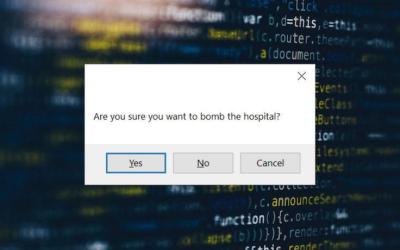
(Editor’s note: This post is part of a series analyzing the 2023 revisions to the U.S. Department of Defense’s Law of War Manual.) One of the most important and inherently complex areas in the conduct of hostilities relates to plans and decisions to attack....

Life, Love & Lethality: History and Delegating Death on the Battlefield
In military circles, the 1939 Einstein-Szilard letter to President Roosevelt is a well-known document that changed the course of history. It was instrumental in the establishment of the Manhattan Project in 1945, resulting in the world’s first atomic bomb. What is...

U.S. Support to the ICC (in AI-Generated Iambic Pentameter)
I never imagined I would submit for publication a poem from Chat-GPT about U.S. policy toward the International Criminal Court (ICC). But that is what I am doing today. The background is as follows. Each day, we hear more about uses of generative artificial...
Responsible AI Symposium – Prioritizing Humanitarian AI as part of “Responsible AI”
Editor’s note: The following post highlights a subject addressed at an expert workshop conducted by the Geneva Centre for Security Policy focusing on Responsible AI. For a general introduction to this symposium, see Tobias Vestner’s and Professor Sean...
The IDF Introduces Artificial Intelligence to the Battlefield – A New Frontier?
New and emerging technologies impact significantly the ways in which military operations are conducted. Advancements have been achieved in the development and deployment of autonomous weapon systems, military use of cyberspace, and more. One emerging field in which...
Year Ahead – Emerging Technologies and the Collection of Battlefield Evidence
In a recent series of posts on responsible artificial intelligence (AI), various authors (including Chris Jenks) have discussed the role of “responsibility” in the context of using of AI enabled systems, including weapon systems, on the battlefield. In each of these...

Year Ahead – The Hurdles to International Regulation of AI Tools
In 2023, non-governmental organizations such as Human Rights Watch and Stop Killer Robots will continue their calls for a new international legal framework to regulate autonomous weapons systems. Some States and scholars are optimistic about the possibility. These...

Responsible AI Symposium – Responsible AI and Legal Review of Weapons
Editor’s note: The following post highlights a subject addressed at an expert workshop conducted by the Geneva Centre for Security Policy focusing on Responsible AI. For a general introduction to this symposium, see Tobias Vestner’s and Professor Sean...
Responsible AI Symposium – The AI Ethics Principle of Responsibility and LOAC
Editor’s note: The following post highlights a subject addressed at an expert workshop conducted by the Geneva Centre for Security Policy focusing on Responsible AI. For a general introduction to this symposium, see Tobias Vestner’s and Professor Sean...

Responsible AI Symposium – Legal Implications of Bias Mitigation
Editor’s note: The following post highlights a subject addressed at an expert workshop conducted by the Geneva Centre for Security Policy focusing on Responsible AI. For a general introduction to this symposium, see Tobias Vestner’s and Professor Sean...

Responsible AI Symposium – Implications of Emergent Behavior for Ethical AI Principles for Defense
Editor’s note: The following post highlights a subject addressed at an expert workshop conducted by the Geneva Centre for Security Policy focusing on Responsible AI. For a general introduction to this symposium, see Tobias Vestner’s and Professor Sean...

Responsible AI Symposium – Translating AI Ethical Principles into Practice: The U.S. DoD Approach to Responsible AI
Editor’s note: The following post highlights a subject addressed at an expert workshop conducted by the Geneva Centre for Security Policy focusing on Responsible AI. For a general introduction to this symposium, see Tobias Vestner’s and Professor Sean...

Responsible AI Symposium – The Nexus between Responsible Military AI and International Law
Editor’s note: The following post highlights a subject addressed at an expert workshop conducted by the Geneva Centre for Security Policy focusing on Responsible AI. For a general introduction to this symposium, see Tobias Vestner’s and Professor Sean...

Responsible AI Symposium – Introduction
Artificial Intelligence (AI) is increasingly developed, deployed, and used for defense and military purposes. This offers opportunities yet also poses challenges regarding its governance and regulation. While diplomatic efforts have focused on regulating lethal...
Assuming Risk – Artificial Intelligence on the Battlefield
Artificial intelligence and machine learning (AI/ML) have promising potential to bring faster, more accurate analysis to enable holistic decision-making on the battlefield. With the exponential increase of data from numerous battlefield sensors, AI/ML are expected by...

Coding the Law of Armed Conflict: First Steps
[Editor’s note: The following post highlights a subject addressed in the Lieber Studies volume The Future Law of Armed Conflict, which was published 27 May 2022. For a general introduction to this volume, see Professor Matt Waxman’s introductory post.] Killer...
Deepfake Technology in the Age of Information Warfare
Prior to its invasion of Ukraine, there were speculations that Russia was planning to produce a graphic fake video showing a Ukrainian attack as a pretext for an invasion. Although this “false flag” operation did not play a major role in the end, deepfake technology...
Reentering the Loop
The warfighting advantages of using lethal autonomous systems, and the potential costs of not using them, seem to guarantee their role in future armed conflict. This post argues that optimizing their effectiveness involves not only improving their independent...
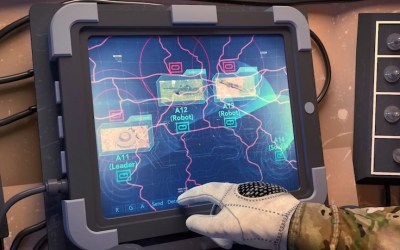
A Pacifist-General’s Plan to Win America’s Next War
I’m not an absolute pacifist in the true sense of the word, but I’m about as close as you can get. I firmly believe in using military force only as a last resort. My view is shaped by my experience as both a soldier and lawyer. Most soldiers who have been in combat...

Will Autonomy in U.S. Military Operations Centralize Legal Decision-making?
The growth of machine learning tools in military operations raises new questions about where the most critical decision points are located. Are the most important political, operational, and legal decisions made out in the field, where the tools are used, or in...
