

More Topics
ILC Draft Articles on Immunity of State Officials: Codification or Progressive Development?
The International Law Commission (ILC) has recently concluded its second reading of the Draft Articles on Immunity of State Officials from Foreign Criminal Jurisdiction. Draft Article 7 has received significant attention, as it addresses the controversial question of...
The ICJ Obligations of Israel Advisory Opinion – Mass Deprivation and Preventive Protection
Editors’ note: This post is part of a series featuring analysis of the 2025 International Court of Justice advisory opinion on obligations of Israel in and in relation to the Occupied Palestinian Territory. The introductory post to the series by Sean Watts is...
The Law of Neutrality in Situations of Belligerent Occupation
Today, very few situations of belligerent occupation exist. Yet, in a recent advisory opinion, the International Court of Justice (ICJ) analyzed international legal obligations that stem from belligerent occupation, including those respecting offers of humanitarian...
In Honor of Françoise Hampson – The Early Interface of IHL and Human Rights: Lessons from the Frontlines of Turkish Litigation
Editors’ note: This post is part of a series to honor Françoise Hampson, who passed away on April 18, 2025. These posts recognize Professor Hampson’s work and the significant contribution her scholarship made to our understanding of international law. It is a...

A Japanese Perspective on Treaty Obligations Regarding Attacks To, From, or Within Space
As States begin to regard outer space as a war-fighting domain, Japan has followed suit. Although it had long interpreted “peaceful” use of outer space in the Outer Space Treaty (OST) as “non-military” use, seventeen years ago Japan changed its interpretation to...
In Honor of Françoise Hampson – Parsing Proportionality
Editors’ note: This post is part of a series to honor Françoise Hampson, who passed away on April 18, 2025. These posts recognize Professor Hampson’s work and the significant contribution her scholarship made to our understanding of international law. It is a...

In Honor of Françoise Hampson – The Persistent Challenge of IHRL Bodies’ Review of Battlefield Situations
Editors’ note: This post is part of a series to honor Françoise Hampson, who passed away on April 18, 2025. These posts recognize Professor Hampson’s work and the significant contribution her scholarship made to our understanding of international law. In 2022,...
Beyond the State: Reforming Africa’s Anti-Torture Framework to Address Non-State Violence
African countries have made significant strides in ratifying international anti-torture instruments like the UN Convention Against Torture (UNCAT). UNCAT Article 1 defines torture as severe pain or suffering intentionally inflicted “by or at the instigation of or with...
In Honor of Françoise Hampson – Fact-Finding in Law of Armed Conflict Investigations
Editors’ note: This post is part of a series to honor Françoise Hampson, who passed away on April 18, 2025. These posts recognize Professor Hampson’s work and the significant contribution her scholarship made to our understanding of international law. In preparing to...
When Belligerent Drones Knock on Neutral Waters: Archipelagic Sea Lanes in the Age of Kamikaze Systems
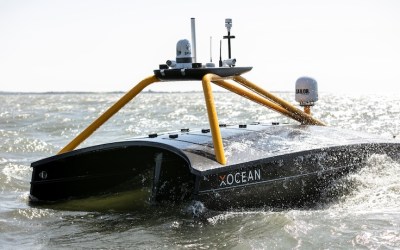
In 2024 to 2025, escalating tensions between Israel and Iran saw waves of missiles and drones cross regional skies. Jordan, a neutral (non-belligerent) State, intercepted many of these projectiles as they entered its airspace. From an international law perspective,...
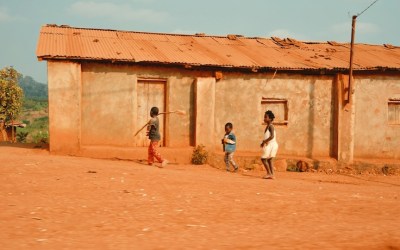
Kinocide as a Strategy of Terrorism: Legal Frameworks and Case Law Analysis
The intentional targeting of families by terrorist organizations constitutes a particularly egregious form of violence that weaponizes the emotional and social core of civilian life. Recently termed as “kinocide,” this strategy involves the systematic destruction of...

Did China Just Violate the Biological Warfare Convention?
In early June, the U.S. Federal Bureau of Investigation (FBI) arrested two nationals of the People’s Republic of China for conspiracy to smuggle a fungus called Fusarium graminearum into the United States, which scientific literature classifies as an agroterrorism...

Non-State Cyber Actors in the 12-Day War – The Gray Zone of LOAC, Part I
Editors’ note: In this two-part series, Professor Gary Corn examines law of armed conflict issues arising from cyber operations conducted during the recent conflict between Israel and Iran. With little fanfare, the traditional line between public and private war was...
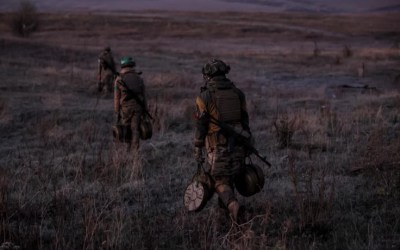
Ukraine Symposium – Ukraine and the Future of the Ottawa Convention
In 1935, the International Labor Organization (ILO) adopted its 45th convention, generally prohibiting the employment of women in underground mining work. The treaty achieved widespread adoption, with 98 member States at its peak. ILO Convention No. 45 emerged from a...

Shadows in Orbit: Unpacking the Cosmos 2588 Amidst Legal Uncertainty in Space
On 23 May, 2025, Russia launched Cosmos 2588, the latest in its Cosmos series of military satellites, into low Earth orbit (LEO). As first reported by independent satellite tracker Bart Hendrickx on the NASA SpaceFlight Forum, its orbital plane lies very close to that...
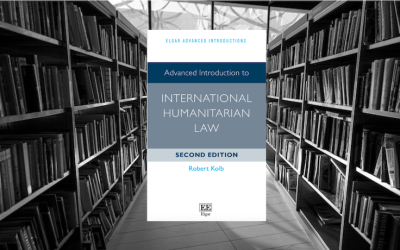
On Robert Kolb’s Advanced Introduction to International Humanitarian Law, Second Edition
This post provides select reflections based upon the experience of writing the second edition of my book, Advanced Introduction to International Humanitarian Law (Edward Elgar Publishing 2025). I wrote the book as an “advanced” introduction, in the sense that it does...

Estonia’s New Push to Seize Immobilised Russian State Assets
Russia’s aggression against Ukraine has caused extensive material damage. The World Bank Group, the government of Ukraine, the European Union, and the United Nations released a latest “Rapid Damage and Needs Assessment,” which estimates that, as of 31 December 2024,...
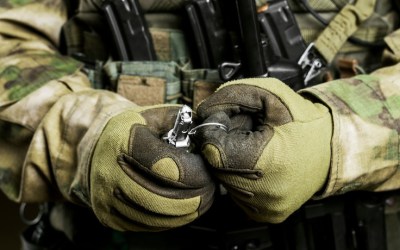
The Prosecution of Terrorism as a War Crime
Despite the persistent condemnation of terrorism by States and international organizations, and the frequent prosecution of terrorism as an offence under domestic law, the prosecution of terrorism as a war crime is a relatively rare occurrence. There is no consensus...

Asia’s Melian Moment
Prior to the siege of Melos, the Melians argued that they had the right to remain neutral when the Athenians demanded their surrender. The famous dialogue depicted by Thucydides in the History of the Peloponnesian War illustrates political realism in international...

Ukraine Symposium – Release of Chinese POWs in Ukraine
In early April, reports emerged indicating that Ukraine had captured two Chinese nationals who were fighting alongside Russian forces in Ukraine. Additional reports shared by Ukraine's intelligence agencies identified nearly two hundred other Chinese nationals also...

Time to Treat Hackers Like Satellites: Why Cyber Needs the Outer Space Rulebook
If you want to understand what’s missing in cyberspace, look up. In 1967, at the height of the Cold War, the international community agreed on the Outer Space Treaty (OST), a legal framework that still governs activity beyond Earth today. The foundational insight of...

Prosecuting Rwanda for Aggression in the DRC: Legal Feasibility and Challenges
Rwandan involvement in the Democratic Republic of the Congo (DRC) has been reported in two principal forms: first, direct intervention by Rwandan State forces across the border; and second, indirect support for the rebel group M23. UN experts and other observers have...

Can Israel Target Iran in Response to Houthi Attacks? Exploring the Threshold of “Substantial Involvement”
Following the Houthi missile attack on Ben Gurion Airport on Sunday, May 4, 2025, Israeli Prime Minister Benjamin Netanyahu vowed to retaliate not only against the Houthis, but also against their “patron,” Iran, declaring that such action would take place “at a time...

Analyzing State Support to Non-State Actors – Part II: Response Options and Conflict Classification
As non-State actors assume an increasingly prominent role in international affairs, State support to them as a strategic tool for advancing political objectives has become more common. Such support presents significant challenges to the clear-eyed application of...

Analyzing State Support to Non-State Actors – Part I: Primary Obligations and Attribution
Today, armed conflicts are frequently characterized by State support to non-State actors as a means of advancing the former’s strategic objectives. For instance, Iran continues to enable Hezbollah, Hamas, Houthi, and other militia operations throughout the Middle East...

Deterrence Doesn’t Fly in Space: Nuclear Weapons in Outer Space as a Threat of Force
In an interview with German newspaper Die Welt on Friday April 12th, NATO Secretary-General Rutte expressed concern regarding the potential deployment of Russian nuclear weapons in orbit around Earth. While this possibility had already surfaced in 2024, as reported by...

Lieber Studies Series – Military Investigations
Editors’ note: This post is based on the author’s chapter in Civilian Protection in Armed Conflict: Select Issues (Jelena Pejic and Margaret Kotlik eds. 2025), the eleventh volume of the Lieber Studies Series published with Oxford University Press. Military...

Cross-Border Drone Strikes Against Mexican Drug Cartels
In April 2025, Assistant Secretary of Defense for Special Operations Colby Jenkins testified that U.S. forces did not have legal authority to conduct cross-border drone strikes against drug cartels in Mexico even though President Trump had designated several cartels...

The So-Called Principle of Equal Treatment of Belligerents by the Neutral State
Conventional legal wisdom says neutral States owe belligerents equality of treatment (see for example here, p. 282–84, here, p. 237, and here, p. 466). This is largely inaccurate, however. What’s more, it is astonishing how persistently some cling to this erroneous...

Using the Proliferation Security Initiative to Disrupt Iran’s Oil Shipments
Since the Islamic revolution of 1979, the Government of the Islamic Republic of Iran has been hostile to the United States and its allies and partners. It is the leading State sponsor of terror in the world. Iran’s nuclear program additionally poses an existential...
Clarifying Neutrality: The Rise of Different Statuses?
With the armed conflict between Russia and Ukraine, one can witness the rebirth of a classical topic of international law: the law of neutrality. Some argue that neutrality is “obsolete.” An alternative perspective is that a new kind of neutrality, called “qualified...

Australian Compensation for War Crimes in Afghanistan: A Rights-Based Approach, Not Military Charity, is Needed
In July 2024, Australia adopted a new legal scheme to compensate victims of war crimes committed by the Australian Defence Force (ADF) in Afghanistan, which was deployed there from 2001 to 2021, including as part of the NATO-led International Security Assistance...

Ukraine Symposium – Litigating the Act of Aggression as Human Rights Claims
The UN Human Rights Monitoring Mission in Ukraine reports that since February 2022, there have been 40,176 verified civilian casualties caused by the conflict in Ukraine: 12,340 killed and 27,836 injured. The number of combatant casualties is much higher. President...

Al Hassan Symposium – Superior Orders: A (Hopefully) Overlooked Afterthought
Editors’ note: This post is part of a joint symposium hosted by the Armed Groups and International Law and Articles of War blogs. The symposium addresses the ICC’s judgment in the Al Hassan case. The introductory post is available here. In its 822-page judgment in the...

The Conflict in Eastern DRC and the State Responsibility of Rwanda and Uganda
In late January 2025, a rebel alliance involving the militia group M23 seized control over the town of Goma, the provincial capital of North Kivu in the Democratic Republic of the Congo (DRC). Notwithstanding their declaration of a unilateral ceasefire, at the time of...

Al Hassan Symposium – (Re) Introduction
In July of 2023, Articles of War and Armed Groups and International Law jointly launched a series of posts covering the forthcoming trial judgment of the International Criminal Court (ICC) in Prosecutor v. Al Hassan. The case addressed charges relating to acts by...

Countering Space-Based Weapons of Mass Destruction
Russia’s alleged effort to develop a space-based nuclear weapon threatens to violate the Outer Space Treaty of 1967, undermine international peace and stability, and hold at risk the peaceful use of space for all nations. Other emerging threats, such as China’s...
Dilemmas of Defense: The U.S. Role in the Iran-Israel Conflict
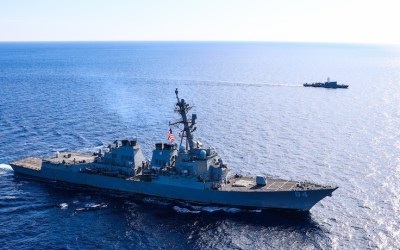
On April 13, 2024, the Islamic Republic of Iran carried out an unprecedented operation, launching hundreds of drones and cruise missiles toward Israel. Reports indicate that Israel intercepted the majority of these drones and missiles with assistance from the United...

Israel’s Actions in Syria and the Outer Limits of Self-Defence
Following the fall of the al-Assad regime in Syria, Israel carried out a series of airstrikes across Syria targeting military facilities, weapons and ammunition depots, defence systems, and Syrian naval and aircraft fleets. The targets reportedly housed “chemical...
Year Ahead – U.S. Department of Defense and Space Force Commercial Space Strategies
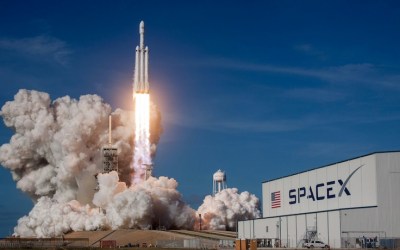
Editors’ note: We are pleased to announce that Articles of War has recently added several thematic editors to our staff. Each editor has contributed a post to this year’s Year Ahead series with thoughts on issues or situations they recommend our readers track over the...

Ukraine Symposium – North Korea’s Entry into International Armed Conflict
In recent months, the world has observed the methodical introduction of the Democratic People’s Republic of Korea (DPRK) into the ongoing Russia-Ukraine international armed conflict (IAC). On June 19, 2024, President Vladimir Putin met with North Korean leader, Kim...
Lieber Workshop 2024: International Law and the Future of Multi-Domain Operations in the Indo-Pacific
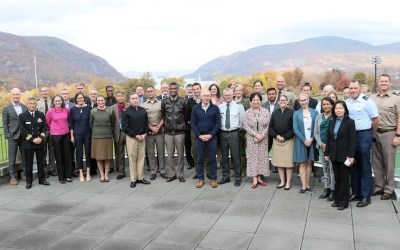
Editors’ note: The views expressed in this post are those of the authors and not necessarily those of any other workshop participants. From October 28 to 31, 2024, the Lieber Institute for Law and Warfare hosted its eighth annual Lieber Workshop at its institutional...
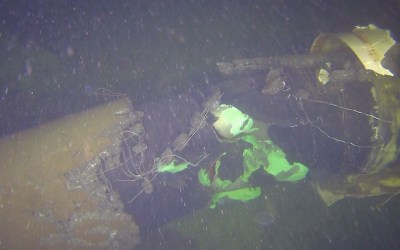
The Baltic Sea Cable-Cuts and Ship Interdiction: The C-Lion1 Incident
According to widely held Russian perceptions, Russia is at war with NATO. In September 2024, Vladimir Putin stated that lifting restrictions on Ukraine’s use of long-range NATO missiles to attack Russia “will mean that NATO countries—the United States and European...

Article 9 and the Attribution of Armed Groups’ Attacks to the Territorial State
The ongoing conflicts between Israel, Hamas, and Hezbollah continue to raise complex questions of international law. Some of these involve issues of State responsibility, requiring an assessment of whether the conduct of the relevant armed groups can be attributed to...

Defeat: Meanings, Consequences, Law, and Doctrine
Victory. Defeat. Two seemingly straightforward words that capture the big-picture objectives and results of war. As many current and recent conflicts over the past few decades demonstrate, however, the reality is anything but straightforward. For example, as media...

Attacking a Pipeline: Legal Issues for Consideration
Nord Stream 1 and Nord Stream 2 are pipelines constructed by a Russian State-controlled company called Gazprom to transport 110 billion cubic metres of natural gas per year from the Russian Federation under the Baltic Sea to Germany. Gazprom has a 51 percent...
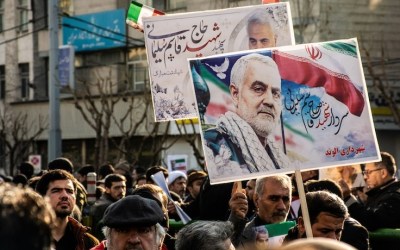
State Practice in Assassination: What is Old is New Again
In July 2024, CNN reported that American and German intelligence agencies had thwarted a Russian plan to kill Armin Papperger, the chief executive of Rheinmetall, a company known as “the largest and most successful German manufacturer of the vital 155mm artillery...
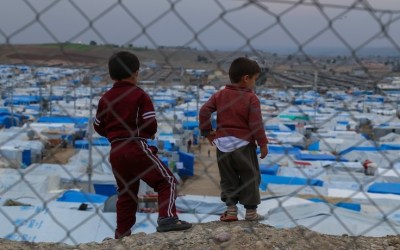
Beyond Compliance Symposium – A Rights-based Approach to Addressing Harm and Need in Armed Conflict?
Editors’ note: This post forms part of the Beyond Compliance Symposium: How to Prevent Harm and Need in Conflict, featured across Articles of War and Armed Groups and International Law. The introductory post can be found here. The symposium invites reflection on the...

United States v. Najibullah Symposium – Bad Apples are Still Apples
Editors’ note: This post is part of a two-post symposium on a pretrial hearing in the case United States v. Najibullah. An introductory post by Professor Sean Watts provides background on the case and the hearing. Earlier this year, I testified as a defense expert...

Killing Nasrallah and the Law of Armed Conflict
Last Friday, the Israel Defense Forces (IDF) conducted air strikes against a Hezbollah command and control bunker in Beirut’s Dahiyeh suburbs, which was located under an apartment complex. The attack, which followed IDF warnings for civilians to evacuate the area,...
