

Humanitarian Protection

Food Security Assessments and International Law
Food security remains an urgent and widespread global issue, with an estimated 281.6 million people in 59 countries or territories facing acute food insecurity in 2023. For nearly half of those people, conflict was the primary driver of their food insecurity. To...

Attacks and Warnings in Urban Warfare
The media coverage of recent armed conflicts has brought to a wider audience the existential nature of urban warfare and its humanitarian costs. For some, the era of urban warfare has arrived. From an historical perspective, however, there is nothing new about...

Israel – Hamas 2023 Symposium – The Obligation to Allow and Facilitate Humanitarian Relief
Much has been written and said over the past few weeks on obligations relating to humanitarian supplies in the context of the Gaza conflict. Certain authors went straight to questions of the prohibition on (intentionally) starving the civilian population (e.g. here...

Israel – Hamas 2023 Symposium – What is and is not Human Shielding?
The use of human shields is looming large in the conflict between Israel and Hamas. President Biden has on numerous occasions charged Hamas with using civilians as human shields, as has European Commission President Ursula von der Leyen. The practice also took center...

Israel – Hamas 2023 Symposium – A Moment of Truth: International Humanitarian Law and the Gaza War
Hamas's horrendous October 7 attack on Israeli civilians and Israel's anticipated response pose a unique challenge to scholars and practitioners of the Law of Armed Conflict or International Humanitarian Law (IHL), possibly a challenge they have never faced before....

Israel – Hamas 2023 Symposium – The Circle of Suffering and the Role of IHL
Great suffering is the cause and consequence of armed conflict. International humanitarian law (IHL) sets a minimum base line of humanity at times when tensions and emotions run at unbearably high levels. By finding a balance between military necessity and the...

Israel – Hamas 2023 Symposium – A “Complete Siege” of Gaza in accordance with International Humanitarian Law
The recent attacks committed by Hamas in Israel can only be described as abhorrent. The death toll of the ongoing escalation of violence has (as at the time of drafting surpassed 1,500 casualties, with thousands more injured. Additionally, Hamas fighters have abducted...

Israel – Hamas 2023 Symposium – The Evacuation of Northern Gaza: Practical and Legal Aspects
Late in the evening of October 12th, the Israel Defense Forces (IDF) began warning residents of Gaza to evacuate to the south in anticipation of large-scale IDF operations. The text of one of the warnings, posted on the IDF website, reads, The IDF calls for the...

Israel – Hamas 2023 Symposium – Siege Law and Military Necessity
It is no surprise that the debate over the legality of Israeli measures directed against Hamas is already gaining momentum. Public discussion has focused, at least for now, on Israeli Defense Minister Gallant’s declaration that, “no electricity, no food, no water, no...

The Evolving Nagorno-Karabakh Conflict – An International Law Perspective – Part II
Editors’ Note: In a prior post, the authors presented background material and jus ad bellum analysis of an ongoing situation between Armenia and Azerbaijan in the Nagorno-Karabakh region. In this post, they address jus in bello and other international legal issues...

2023 DoD Manual Revision – The Civilian Presumption Misnomer
(Editor’s note: This post is part of a series analyzing the 2023 revisions to the U.S. Department of Defense’s Law of War Manual.) The changes made to the U.S. Department of Defense (DoD) Law of War Manual published yesterday have given U.S. military lawyers and their...

Collateral Damage and Innocent Bystanders in War
This post is based on the author’s article in the Stanford Journal of International Law and is posted here with the permission of SJIL. It is generally accepted in moral philosophy that it is prohibited to knowingly kill an innocent bystander even when necessary to...
The Expert Panel’s Review of Amnesty International’s Allegations of Ukrainian IHL Violations
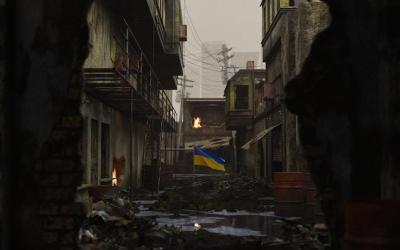
Last week, the New York Times reported that Amnesty International (AI) “sat for months on a report critical of the group after it accused Ukrainian forces of illegally endangering civilians while fighting Russia.” The report in question was prepared by a distinguished...
Year Ahead – U.S. Civilian Harm Mitigation and Response
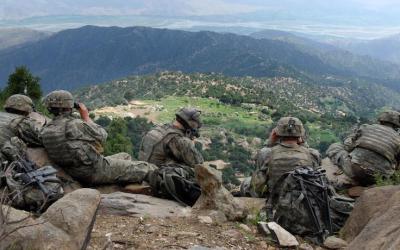
In August 2022, the U.S. Secretary of Defense released the Civilian Harm Mitigation and Response Action Plan (CHMR-AP) which lays out a series of measures the Department of Defense will implement over the coming years to enhance the services’ efforts to mitigate...

Ukraine Symposium – Russia’s Forcible Transfer of Children
Earlier last month, the European Parliament adopted a resolution condemning the forced transfer of Ukrainian children to Russia. The resolution follows months of reporting that Russian authorities have been separating children from their parents, conducting abductions...
Civilian Risk Mitigation: Why Context Matters
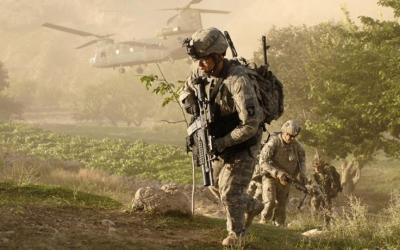
The proverbial dust is now settling on the blast that was the publication of the new Civilian Mitigation Response and Action Plan (CHMR-AP). The reaction to this “response” plan has been mixed to say the least, with some commentators raising concerns that the Plan...
The U.S. DoD Civilian Harm Mitigation and Response Action Plan on Future Battlefields
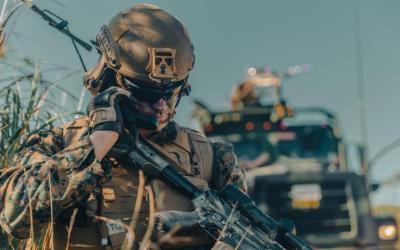
On August 25, 2022, the U.S. Department of Defense (DoD) released the Civilian Harm Mitigation and Response Action Plan (CHMR-AP). In a previous post, Dan E. Stigall and Anna Williams provided a useful snapshot of the report, with the rationale underscoring the...
Urban Siege Warfare: A Workshop Report
[Editor's note: The views expressed in this piece are those of the authors and not necessarily those of the ICRC, PILAC, or other participants.] Siege is a well-established practice in warfare. It seeks to compel surrender, reduce adversary resistance, or lay the...
Who Is Protected by the Fourth Geneva Convention? The Case of Civilians in Invaded Territory
Since the 19th century, the International Committee of the Red Cross (ICRC) has produced a long line of commentaries explaining the core treaties of international humanitarian law (IHL). It is currently in the process of updating its commentaries on the 1949 Geneva...
Ukraine Symposium – Amnesty International’s Allegations of Ukrainian IHL Violations
On 4 August, Amnesty International released a report criticizing Ukraine for placing civilians at risk “by establishing bases and operating weapons systems in populated residential areas, including in schools and hospitals.” The organization asserted that “such...
A New Political Declaration on Civilian Harm: Progress or Mythical Panacea?
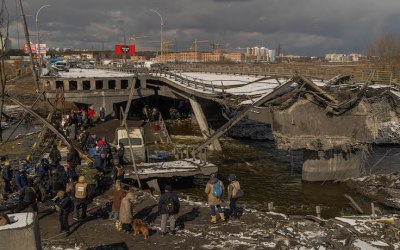
On June 17, against a backdrop of the Russian invasion of Ukraine that has now killed or wounded over 11,000 civilians in a little more than four months, a group of States, the International Committee of the Red Cross (ICRC), and non-governmental organizations (NGOs)...
Ukraine Symposium – Results of a First Enquiry into Violations of International Humanitarian Law in Ukraine
On 3 March 2022 the Moscow Mechanism of the human dimension of the Organization for Security and Co-operation in Europe (OSCE) was invoked by Ukraine supported by 45 participating States. This mechanism mandated a mission of experts, undertaken by Professor Wolfgang...
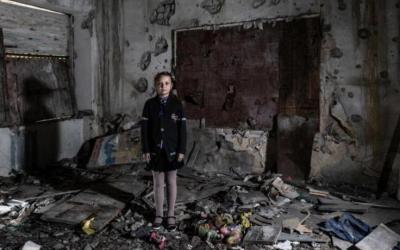
Ukraine Symposium – War Crimes against Children
For the 452 million children living in conflict zones (1 in 6 globally), the effects of conflict are multiple, wide-ranging, and devastating. With an increase in asymmetric warfare globally, children are targets of horrific acts of violence, including killing,...

Ukraine Symposium – The Ukraine Conflict, Smart Phones, and the LOAC of Takings
According to at least one report, in the course of their operations Russian forces entered residential complexes in the suburbs of Kyiv, displaced residents from their apartments, held them captive in basements, and seized many of their cell phones and laptops...

Weaponizing Food
The conflict in Ukraine is threatening the world’s food system. For instance, Ukraine and Russia supply around 30% of global wheat and barley exports. And over 40% of Ukrainian wheat export goes to Africa, where food shortages are endemic. In a March 25 update, the UN...
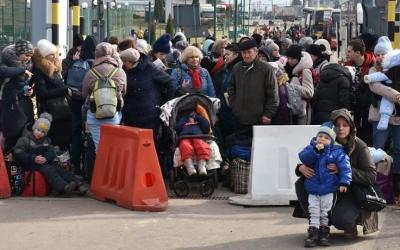
Deportation of Ukrainian Civilians to Russia: The Legal Framework
The United Nations estimates that the conflict in Ukraine has displaced over 10 million people. As of March 16, there are an estimated 6.4 million internally displaced persons (IDP) within the country. The UN Guiding Principles on Internal Displacement sets out...
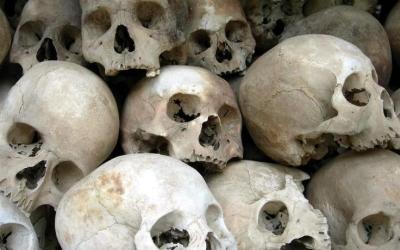
Portending Genocide in Ukraine?
As Russian forces continue their brutal invasion of Ukraine, worrisome signs are emerging about the prospect of genocide. While the term is used rather freely in the media, the prospect of actual genocide returning to Europe for the first time in nearly thirty years...

Displacement from Conflict: Old Realities, New Protections?
Globally, conflicts are the main source of both internal and cross-border displacement. The conflict prompted by Russia’s recent invasion of Ukraine, which is a considerable escalation from the original incursion in 2014, has already caused the largest external...

Law Applicable to Persons Fleeing Armed Conflicts
As early as February 23rd, the U.S. Ambassador to the United Nations in New York, Linda Thomas-Greenfield, estimated that 5 million people may flee if hostilities erupted in Ukraine. As of March 13th, less than three weeks after the Russian Federation launched an...
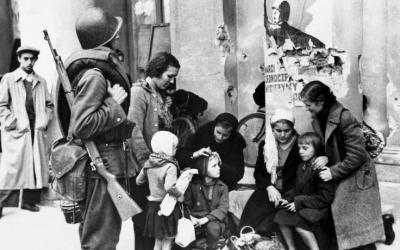
The Other Side of Civilian Protection: The 1949 Fourth Geneva Convention
The initial stage of an international armed conflict, such as the one in Ukraine, inevitably focuses international attention on the conduct of hostilities. This is to be expected, given the immediate, visible and usually devastating effects of the use of force on the...
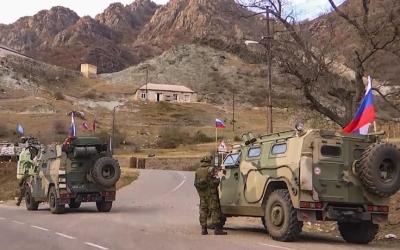
The Abuse of “Peacekeeping”
On 21 February, President Vladimir Putin explained that Russian forces would enter Ukraine to “perform peacekeeping functions.” Earlier this year the Collective Security Treaty Organization (CSTO) also deployed “peacekeeping forces” to Kazakhstan, predominately made...
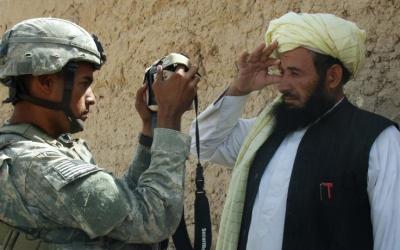
Privacy vs. Precaution in Future Armed Conflict
The operational demands of modern armed conflict highlight a pressing need for information, including highly private data about persons. This post examines the balance between personal privacy and armed forces’ need to identify persons with a high degree of integrity...

Down Is Not Always Out: Hors De Combat in the Close Fight
Note: this piece builds on a recent article published in Infantry Magazine. While that article was intended “to equip infantry leaders with the knowledge required to train their soldiers to make confident, split-second decisions in combat,” this piece is focused on...
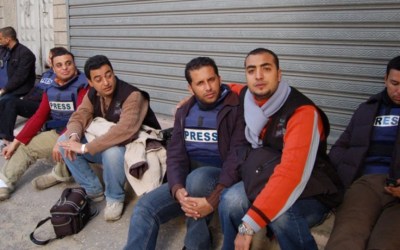
Legal Protection of the Media in Armed Conflict: Gaza
On May 15, the Israel Defense Forces (IDF) conducted an airstrike on Al Jalaa Tower, a 12-story building in the Gaza Strip. Conducted as part of Operation Guardian of the Walls, the attack destroyed the tower, which housed the Associated Press and Al Jazeera...
Civilian Casualty Aversion and the Potential Nullification of “Shock”
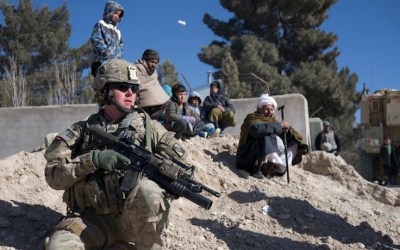
In recent years, there has been a growing critical focus on the infliction of civilian casualties during hostilities, especially during counter-insurgency operations. But U.S. and NATO armed forces are not myopically focused on this domain of operations. Indeed, they...
