

In Honor of Françoise Hampson – Fact-Finding in Law of Armed Conflict Investigations
Editors’ note: This post is part of a series to honor Françoise Hampson, who passed away on April 18, 2025. These posts recognize Professor Hampson’s work and the significant contribution her scholarship made to our understanding of international law.
In preparing to write this piece, I revisited a podcast that Françoise Hampson and I had done for the University of Essex. At the time, we were both involved in UN fact-finding commissions, Burundi in her case, and Yemen in mine. As we talked, both of us reflected on how the majority of fact-finding inquiries were established under the auspices of human rights bodies, even while an increasing number of inquiries involved situations where the law of armed conflict (LOAC) applied.
Apart from trying to apply two distinct bodies of international law to such situations, we also noted how different philosophies applied. Françoise began as a human rights lawyer, though her knowledge of LOAC and its nuances was second to none. My journey came from the other end, beginning as a LOAC adviser in the military and then developing my interest in human rights law. We thus approached this intertwining of philosophies from different angles, yet we agreed on the need to understand our differences and find common ground.
Human Rights Fact-Finding
The first question to be asked concerns the purpose of any fact-finding mission. Under human rights law, the underlying issue is the State’s possible responsibility. Accountability, therefore, plays a large part. However, increasingly, both in human rights law and LOAC fact-finding, there has been a greater emphasis on individual accountability with the development of international criminal law. Assessing accountability is one of the major differences between human rights and LOAC fact-finding.
Human rights law, being primarily concerned with the responsibility of the State, is inevitably result-oriented. If a person is killed by a State agent, the burden falls upon the State to justify that killing. One therefore starts from the result and works backwards. Thus, in human rights fact-finding, the key is usually finding out what happened on the ground. If the State cannot give a satisfactory answer to explain what has happened, the facts can speak for themselves. This is, of course, an oversimplification, but it illustrates the basic philosophy. This is different from LOAC fact-finding.
LOAC Fact-Finding
To understand LOAC fact-finding, it is necessary to go back to the development of the law itself. This was traditionally in two strands. There have been laws of war for as long as wars have been fought, but when these began to be codified in the post-Westphalian world, the laws were essentially created by States and for States. They mainly governed the conduct of hostilities and approached matters from the State angle. Known sometimes as “Hague Law,” the law was military necessity tempered by humanity.
The classic example is in the definition of proportionality now found in Article 51(5)(b) of Additional Protocol I (AP) I to the Geneva Conventions. This prohibits “an attack which may be expected to cause incidental loss of civilian life, injury to civilians, damage to civilian objects, or a combination thereof, which would be excessive in relation to the concrete and direct military advantage anticipated.” The expectation and anticipation of the attacker are crucial here, and the result, therefore, tells you nothing of that expectation and anticipation.
However, there is another strand of LOAC which has developed largely under the auspices of the International Committee of the Red Cross and is sometimes referred to as “Geneva Law.” This deals primarily with the protection of victims of war and might be described as humanity tempered by military necessity. This is much more akin to human rights law in that the result is often the starting point. If a soldier is captured and becomes a prisoner of war, he is entitled to certain protections. If those protections are not granted, then it is for the detaining power to explain itself. The facts place the burden on the detaining power. There is something akin to a presumption that operates here, and it is much closer to human rights fact-finding.
Accountability
One of the apparent weaknesses of LOAC is its enforcement system. Traditionally, the law had been seen as involving inter-State relations and the development of individual criminal responsibility was almost an add-on with the development of international criminal law. Fact-finding remained a side issue and, although LOAC treaties provided for it—in particular with the establishment of the International Humanitarian Fact-finding Commission under Article 90 of AP I—States understood this not as an accountability mechanism, but more as a peace-building step.
It was the human rights system, particularly through the United Nations, that began developing fact-finding as an accountability tool. This quickly began cooperating with international criminal law as different tribunals and courts began to appear culminating in the International Criminal Court.
Fact-Finding in Hostilities
Problems arise when one tries to apply a human rights philosophy to an investigation into the conduct of hostilities. The temptation to do so is great, as rarely will one have access to the evidence necessary to read into the mind of the attacker. Let me give an example.
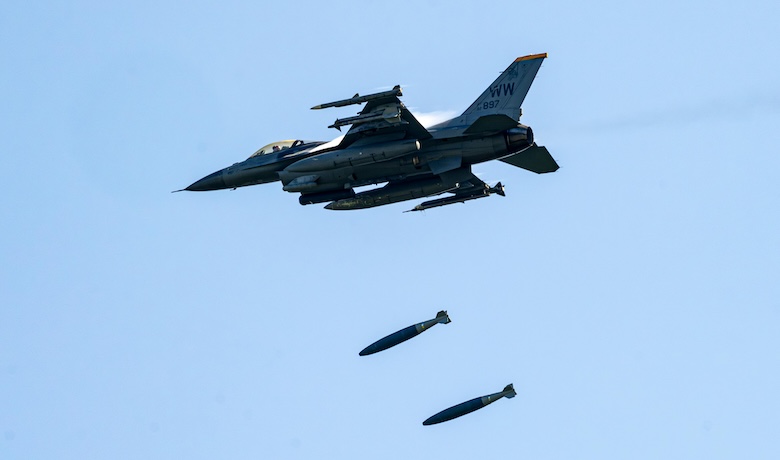
An air strike has caused heavy casualties, most of whom appear to be civilians. The “target” also appears to be a civilian object. Based on the result, there appears to be an attack on a civilian object, prohibited under LOAC. To ascertain whether there has indeed been a breach of the law, however, we need to look at the matter from the viewpoint of the attacker. What was the intended target? Was it in fact a “military objective” under the definition contained in Article 52(2) of AP I (or was it reasonably believed to be)? Only the attacker possesses such knowledge. Indeed, it may be that the building struck was not the target at all, but the strike was caused by the malfunction of a weapons system or even by actions taken by the defender, such as the use of an air defence system.
When it comes to the casualty figures, we have to return to the proportionality assessment that I mentioned earlier. Here, the test sets the expected “incidental loss of civilian life, injury to civilians, damage to civilian objects, or a combination thereof” against the anticipated “concrete and direct military advantage.” These are, again, matters only within the knowledge of the attacker. Even if the building was the target (having qualified as a military objective), was the attacker aware of the presence of civilians, and what assessment did the attacker make in relation to those civilians and the anticipated military advantage?
An example of this dilemma is the attack on the Al Firdos bunker during the First Gulf War. According to U.S. intelligence, this served as a command-and-control centre for the enemy. However, U.S. intelligence was not apparently aware that it was also being used as an air raid shelter by Iraqi civilians. Upwards of 500 people were reported to have been killed. There was also a dispute as to whether the bunker was still in use as a command-and-control centre at the time of the strike and whether the United States should have known of the civilian presence. This would depend on the intelligence that was reasonably available to those planning the attack. Most military targeting processes are, for sound military reasons, highly classified, and it is therefore unlikely that independent investigators will be allowed access. To establish the facts with a view to establishing accountability in a case like this is, therefore, almost impossible.
Precautions in Attack
But does this mean that, in this era of accountability, LOAC fact-finding loses out? I think not. Although it may be difficult to ascertain whether there has been a violation of the law in any particular incident involving the conduct of hostilities, there nonetheless remains a more general approach through the doctrine of precautions in attack. As well as defining military objectives and codifying the proportionality principle, AP I also has a chapter on “Precautionary Measures.” This begins in Article 57(1) with the statement that “In the conduct of military operations, constant care shall be taken to spare the civilian population, civilians and civilian objects.” This provision imposes a number of additional duties on the attacker to support the general principle. While proportionality is part of this, it is not the sole issue.
I commented in an earlier post on the line taken by the Group of Eminent Experts on Yemen. When faced with an inability to get access to the details of the Saudi targeting process, the Group found it nearly impossible to rule on whether individual strikes amounted to violations of LOAC, except in cases where the Saudi authorities had themselves admitted such a violation. They therefore decided to approach matters from the point of view of precautions in attack. When an attacker maintains that they have detailed systems to identify military objectives and to reduce civilian casualties to a minimum, but a large number of seemingly civilian targets appear to be hit and there are also large numbers of civilian casualties, the results become important.
It would seem that whatever the intent of the attacker, that intent is not reflected in the results. Is this because the steps taken to establish whether the proposed target is a military objective were faulty? Or is it because of problems in the assessment of possible collateral damage? It may not be possible to say, but what may become increasingly clear is that there is a problem somewhere in the planning process. That brings into play the underlying principle in Article 57(1) and, similarly to human rights fact-finding, places the burden back on the State to explain. If a weapon malfunction causes an error in targeting, that malfunction may be a circumstance of war. But if the weapons system continues to malfunction, what has been done to rectify it or to withdraw it from service? To quote from the James Bond film Goldfinger, “Once is happenstance. Twice is coincidence. The third time, it’s enemy action.”
When considering accountability, this approach also has an advantage in that it points the finger at higher levels of command. If mistakes are not rectified, whether in the reliability of weapons systems or in targeting procedures, this would point to a failure of command.
Concluding Remarks
Human rights fact-finding focuses on accountability, primarily that of the State but also, in cooperation with international criminal law, that of individuals. LOAC has no such focus on accountability fact-finding. However, fact-finding in a conflict situation must take into account both human rights law and LOAC. In doing so, it must reflect the different philosophies underlying these two great bodies of international law. Whilst it is much more difficult to achieve accountability in LOAC fact-finding in conduct of hostilities situations, it is far from impossible if the right approach is taken and indeed, it may have the advantage of placing responsibility at the higher level of command. There is thus a useful collaboration where both legal systems apply together.
***
Charles Garraway is a former Stockton Professor at the U.S. Naval War College. He was a member of the Group of Eminent Experts on Yemen from 2017 to 2019.
The views expressed are those of the author, and do not necessarily reflect the official position of the United States Military Academy, Department of the Army, or Department of Defense.
Articles of War is a forum for professionals to share opinions and cultivate ideas. Articles of War does not screen articles to fit a particular editorial agenda, nor endorse or advocate material that is published. Authorship does not indicate affiliation with Articles of War, the Lieber Institute, or the United States Military Academy West Point.
Photo credit: U.S. Air Force, Airman Hannah Bench
