

International Law, the Civil Law Tradition, and Sources of Law – Part II
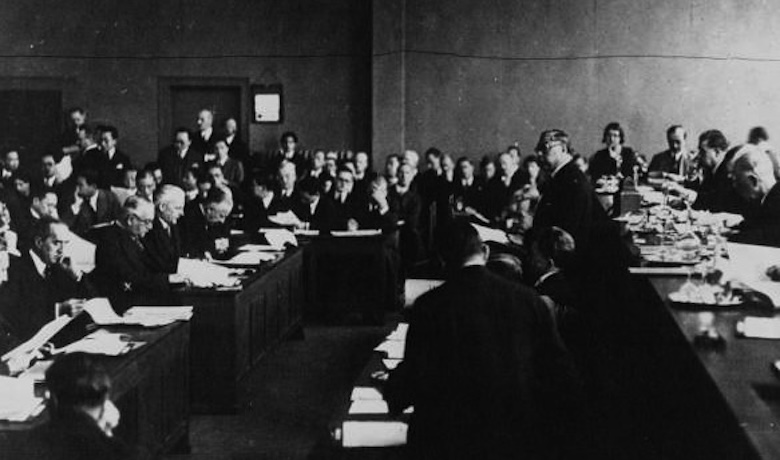
Editors’ note: This is the second in a two-part post illustrating the impact of the civil law tradition on the formation of international law including the law of war, specifically the sources of international law. This entry will focus on general principles of law, judicial decisions, and the writings of publicists as sources of law.
Pierre Legrand has conceptualized law as a kind of culture. For Legrand, law is something beyond words on paper, but something deeply embedded in the social psyche. It is a phenomenon that “embraces conscious and formal beliefs” and entails “[p]rotean perceptions, inchoate awareness,” as well as “unconscious assumptions.” Law is epistemically anchored in the legal culture in which it was formed. Legrand posits, “A rule does not have any empirical existence that can be significantly detached from the world of meanings that defines a legal culture; the part is a synthesis and expression of the whole: it resonates.”
So when concepts drawn from the civil law tradition are integrated into international law, infusing international law with civil law’s mentalité juridique, an exploration of the former becomes necessary to fully understand the latter. The previous post explored the impact of the civil law tradition on the sources of international law, specifically treaties and customary international law. This post will continue that discussion with a focus on general principles of law, judicial decisions, and the teachings of the most highly qualified publicists (doctrine).
Article 38(1)(c): General Principles
The third primary source of international law listed in Article 38 of the ICJ Statute is that of general principles or, as worded in the statute, “general principles of law recognized by civilized nations.” Commentators note that “scholars have not yet come to an agreement as to what general principles are,” but the definition of general principles most frequently cited in legal literature is that articulated by Hersch Lauterpacht who explained,
[General principles] are not, as such principles of moral justice as distinguished from law; they are not rules of “equity” in the ethical sense; nor are they a speculative law conceived by way of deductive reasoning from legal and moral principles. They are, in the first instance, those principles of law, private and public, which contemplation of the legal experience of civilized nations leads one to regard as obvious maxims of jurisprudence of a general and fundamental character.
As an example of such principles, Daiga Rezevska highlights how the general principle of in dubio pro reo (doubts regarding the facts must be decided in favor of the defendant), may not always be enshrined in written law (or “in normative legal acts”) in every jurisdiction, but is nonetheless generally applied across jurisdictions because it is a general principle of law. Commentators further provide other examples such as the prohibition on the abuse of rights (abus de droit), etc.
The United Nations International Law Commission (ILC) has explored the definition and concept of general principles as a source of international law. Its draft conclusions on the topic state that general principles comprise both: (a) principles that are derived from national legal systems; and (b) principles that may be formed within the international legal system. The ILC draft conclusions also highlight the degree to which ascertaining general principles is an inherently comparative legal endeavor.
Questions, nonetheless, linger about the nature and normative force of general principles. Otherwise stated, it remains unclear whether general principles are to be considered subordinate to treaties and customary international law. The ILC draft conclusions would suggest that general principles are not subordinate, proclaiming: “General principles of law, as a source of international law, are not in a hierarchical relationship with treaties and customary international law.” Other commentators suggest that this source of law was included in the PCIJ Statute by the Advisory Committee of Jurists to facilitate judicial resolution in cases where treaty and custom did not provide a solution to the legal issue being considered, thus indicating that while general principles are perhaps appropriately grouped among the primary sources of international law, they are still subordinate to the other primary sources.
An exploration of the civil law tradition can shed light on the idea of general principles as a source of law, a notion that dates back to ancient Rome (and likely ancient Greece). Underscoring the Roman origins of this idea, Ramona Duminică notes, “Etymologically, the notion of principle originates from the Latin principium which means beginning, origin, fundamental element.” In modern civil law systems, general principles are “derived either from norms of positive law or from the existence of the legal order itself.” General principles have been described as the hidden axioms of a legal system; they are at once both unwritten and essential rules that undergird the legal system and its proper functioning.
It is worth noting that “general principles of law” are not identified in many civil codes as a formal source of law. Even so, general principles have become recognized as such over time. The Austrian Civil Code of 1811 was the first modern civil code to mention such principles as a source of law, stating in Article 7, “If the case still remains in doubt, it shall be decided according to the principles of natural law, taking into account careful consideration all the circumstances of the case.” Today, one finds the notion of general principles as a source of law across the civil law universe, including in French law (principes généraux du droit) and in the German legal system (grundsatze). Likewise, Article 1(4) of the Spanish Civil Code reads, “General legal principles shall apply in the absence of applicable written law or custom, without prejudice to the fact that they contribute to shape the legal system.” Expounding on the concept, René David and John E. C. Brierley have emphasized the importance of general principles as a source of law in civil law systems, noting how they operate as a gap-filler when legislation leaves lacunae or as a corrective to prevent injustice.
The notion of general principles as a gap-filler loomed largely in the considerations of the discussions of the Advisory Committee of Jurists when crafting the original Article 38. Hugh Thirlway notes that,
[w]hen Article 38 of the Statute of the Permanent Court was being drafted, the Advisory Committee of Jurists was concerned that in some cases the future Court might find that the issues in dispute before it were not governed by any treaty, and that no established rule of customary law could be found to determine them.
To avoid the possibility of a non liquet (defined as “a judicial finding that a particular claim can neither be upheld nor rejected, for lack of any existing applicable rule of law”) the Advisory Committee of Jurists agreed that, in the absence of a treaty or customary rule, the future Court should be able to refer to general principles of law.
This history, coupled with a review of the particular way in which general principles of law are conceptualized in the civil law tradition, indicates that general principles of law occupy a lower rung within the hierarchy of norms. They are a source of law, but one to which a court may only resort when neither legislation nor custom can provide an answer to the question at hand. This necessarily gives general principles a lesser status. To draw from value theory or axiology in philosophy, if something only has value (or normative force) in the absence of another thing, it is inferior to that thing. This would lend support to a view that general principles of law, while significant, remain hierarchically subaltern to treaties and custom, operating as means to fill gaps in international law when neither treaties or customary international law can provide a clear answer.
Article 38(1)(d): Judicial Decisions
The fourth source of law listed in Article 38 of the ICJ Statute (and the first of the subsidiary sources of law to be mentioned) is “judicial decisions.” Judicial decisions are not defined in Article 38, but commentators have explained that they include “judgments, various orders and advisory opinions” of international tribunals and, in certain cases, national courts. Commentators have observed that the inclusion of judicial decisions as a subsidiary source of law “allows for the development of an international judicial system” because it permits “… international courts and tribunals, as a general rule, to take into account the jurisprudence of other judicial bodies when determining international law under the principal sources.” It is also notable that decisions from both international and national courts can be considered subsidiary sources of international law. As Professor and former ICJ judge Christopher Greenwood notes,
Article 38(1)(d) does not distinguish between decisions of international and national courts. The former are generally considered the more authoritative evidence of international law on most topics (though not those which are more commonly handled by national courts, such as the law on sovereign immunity). But decisions of a State’s courts are a part of the practice of that State and can therefore contribute directly to the formation of customary international law.
This is especially important given the proliferation of international judicial bodies over the past few decades.
With regard to the normative force of judicial decisions in international law, the procès-verbaux of the PCIJ Statute demonstrates that the Advisory Committee of Jurists “… did not consider such decisions as a source of international law in the proper sense of that term.” Rather, the members of the committee largely agreed that “the judge should only use [judicial decisions] in a supplementary way to clarify the rules of international law.” This relegation of judicial decisions to a subsidiary source of law “reflect[ed] the prevailing view at the time of drafting of the PCIJ Statute, of the ICJ Statute as well as at present … that only States have the power to make [international] law.” This view of jurisprudence in international law is noted as being at variance with the common law tradition insofar as judicial decisions do not create international law, though commentators are also careful to emphasize that subsidiary does not mean irrelevant.
In contrast to the position in common law countries, there is no doctrine of binding precedent in international law. Indeed, the Statute of the ICJ expressly provides that a decision of the Court is not binding on anyone except the parties to the case in which that decision is given and even then only in respect of that particular case (Article 59). Nevertheless, the ICJ refers frequently to its own past decisions and most international tribunals make use of past cases as a guide to the content of international law, so it would be a mistake to assume that “subsidiary” indicated a lack of importance.
Scholars have analyzed the practice of the ICJ and other courts of referring to their own past decisions as well as those of other national and international tribunals, and some research of ICJ decisions has led scholars to aver that the ICJ uses precedent in a manner indicative of a common law system. For instance, Wolfgang Alschner and Damien Charlotin posit that litigants before the World Court “… now tend to construct their arguments around precedent. Hence, litigation before the ICJ has become more common law-like.” Other research on ICJ decisions from 1948 to 2013, however, indicates that “… though a system of precedent does seem to be evolving at the Court, its strength is far from what would be seen for a common law tribunal[.]”
The problem of precedent in international adjudication is one of contradictions. On the one hand, there is no rule of stare decisis in international adjudication in general; on the other hand, all international courts and tribunals routinely cite precedents—their own and those of their counterparts[.]
Resolution to this potential confusion could be aided, at least in part, through a comparative analysis. In the civil law tradition, jurisprudence is also relegated to the realm of subsidiary sources of law as judicial decisions are not technically precedential. As Judge Albert Tate, Jr. noted, “[t]he primary basis of law for a civilian is legislation, and not (as in the common law) a great body of tradition in the form of prior decisions of the courts.” The subsidiary status of jurisprudence is derived from the potent view of separation of powers that developed in Europe over the eighteenth and nineteenth centuries (inspired by the work of Charles-Louis de Secondat, Baron de Montesquieu). Pursuant to this view, the doctrine of the separation of powers was understood to mean that, “[t]he role of the courts is to solve disputes that are brought before them, not to make laws or regulations.”
Even so, most civil law jurisdictions “accept the doctrine of jurisprudence constante, according to which a long series of previous decisions applying a particular rule of law carries great weight and may be determinative in subsequent cases.” Nikolaos A. Davrados and Olivier Moréteau explain that, according to this doctrine, a single decision is not binding on the courts, but a series of decisions that form “a constant stream of uniform and homogenous rulings having the same reasoning” form a persuasive source of law. Moreover, Davrados and Moréteau highlight that, according to at least one doctrinal view, in the civil law tradition, jurisprudence constante acquires the authority of customary law.
In remarks given before the UN General Assembly in 2021, Judge Joan E. Donoghue, President of the ICJ, explained that the Court’s practices are more akin to the civil law tradition’s use of jurisprudence constante.
The International Court of Justice is not bound by precedent in the manner of a common law court, of course. However, we attach great importance of the consistency of our jurisprudence, which we usually describe using the French expression a jurisprudence constante. When we take stock of what the Court has said in the past and think about the implications that one Judgment might have for matters that could arise in the future, the considerations that we face within the Court bear much similarity to the questions that are debated within your governments.
Understanding the civil law tradition and its approach to jurisprudence, therefore, can help illuminate the proper place of jurisprudence in the hierarchy of international legal norms as well as the undergirding legal philosophy influencing its use by international tribunals.
Article 38(1)(d): Teachings of the Most Highly Qualified Publicists (Doctrine)
The final subsidiary source of law listed in Article 38 is “the teachings of the most highly qualified publicists of the various nations[.]” The work of learned writers, therefore, can play a role in the articulation of international legal norms. The International Law Commission (ILC) has elaborated on this subsidiary source of law and highlighted that such “teachings” originate from either individuals or groups of eminent scholars, can entail written works as well as lectures, “… and, for that matter, materials in any other format for dissemination, including those which might be developed in the future.” With regard to who qualifies as a learned writer, commentators note that this category remains ambiguous and that the universe of authors cited for international legal propositions is rather broad. Professor Sandesh Sivakumaran has observed the significant heterogeneity of this subsidiary source of law.
The “teachings of publicists” is a heterogeneous category, including teachings and publicists of different types. Insofar as publicists are concerned, it includes entities that have been empowered by States to produce teachings; expert groups, standing and ad hoc and ordinary publicists. Teachings are also made up of different types, and include digests, treatises, textbooks, monographs, commentaries, journal articles and blog posts. All are of different types, have different goals in mind, and appeal to different audiences. Teachings of publicists should thus not be limited either to the individual publicist or to the repository of State practice.
Professor Anthea Roberts remarks, “The privileged status accorded to legal academics may partly reflect the influence of the civil law tradition on international law[.]” The writings of jurists have long been considered a subsidiary source of law in the civil law tradition. From the early Roman origins of civil law systems, “the writings of some Roman jurisconsults were recognized as sources of law.” Professor John Randall Trahan has elaborated on the unique role of the Roman jurisconsults, the body of writing they produced in response to questions put to them by the praetors, and how a unique class of authoritative legal experts emerged coextensively with the civil law tradition. As civil law systems developed on the continent of Europe, this reverance for the writings of jurists persisted and maintained a special place in the hierarchy of legal norms. Today, civil law jurisdictions use the term “doctrine” (from the Latin docere: to teach) to refer to ideas conveyed by scholars that qualify as a source of law. In describing the role of doctrine in modern civil law systems, eminent civil law jurists Planiol and Ripert note,
Doctrine … plays in legal science a role somewhat akin to that of public in politics, and that role is considerable. It gives to the law its orientation; it prepares ahead of time many of the legislative and jurisprudence changes through the influence of teaching. Even where the doctrine is unanimous [on an issue] it does not constitute a source of law because the commentators do not have any coercive power. It is, however, through their books that that their scientific principles and legal ideas are transmitted, whose authority dominates the thinking of judges and even of the legislator.
Accordingly, while the writings of jurists (doctrine) are rarely considered direct sources of law in civil law systems, such scholarship continues to play an important role as a subsidiary source of law. Such writings form a persuasive authority, and are of greatest utility in assisting in the legal interpretation of ambiguous issues or matters for which there is no established legal rule.
Jus Cogens
No analysis of the sources of international law would be complete without some mention of peremptory norms of general international law or, as they are otherwise called in Latin, jus cogens norms. As defined in international law, “A peremptory norm of general international law (jus cogens) is a norm accepted and recognized by the international community of States as a whole as a norm from which no derogation is permitted and which can be modified only by a subsequent norm of general international law having the same character.” The existence of such norms is recognized in Articles 53 and 64 of the Vienna Convention on the Law of Treaties, other various bilateral and multilateral conventions, international jurisprudence, and scholarly writing.
As to their nature, the ILC Draft conclusions on identification and legal consequences of peremptory norms of general international law (jus cogens) do not identify jus cogens as a separate source of law, but state that such norms can arise from treaty, custom, or general principles of international law, the primary sources of international law articulated by Article 38. (This is consistent with the views of other commentators, such as Professor Claudio Corradetti, who opines that “jus cogens cannot be considered as a source of international law that is separate from the formally listed sources presented in the Statute of the International Court of Justice.”)
The ILC Draft conclusions also set forth the criteria for the identification of jus cogens.
To identify a peremptory norm of general international law (jus cogens), it is necessary to establish that the norm in question meets the following criteria:
(a) it is a norm of general international law; and
(b) it is accepted and recognized by the international community of States as a whole as a norm from which no derogation is permitted and which can be modified only by a subsequent norm of general international law having the same character.
Professor Paul B. Stephan III has elaborated on the concept of jus cogens, noting that it gained prominence as a concept after the Second World War when “scholars began to try on the concept as a means of grappling with the German Reich’s enormities.” Professor Stephan also notes that, in their search for a concept “to construct moral qualifications for international law,” scholars turned to the civil law tradition, specifically concepts set forth in the German Civil Code (Bürgerliches Gesetzbuch) of 1900 such as the civil law concept of ordre public and its variants. Professor Corradetti traces the idea back even further in the civil law tradition, noting, “The concept of peremptory norms is old and traceable back to the Roman law distinction between peremptory law and jus dispositivum in [Justinian’s Digest].”
The notion of jus cogens has obviously evolved since its germinal phase. As Professor Stephan explains,
The older notion of jus cogens, which is expressed in the Vienna Convention on the Law of Treaties, limits the scope of international law by forbidding states from assuming an obligation (a treaty, or a customary obligation) that would violate certain overarching principles. In other words, jus cogens sets a boundary on what can be international law. That idea has been around for roughly fifty years. The newer version, which is not much more than two decades old, says that jus cogens imposes an obligation in and of itself, even if a state has not accepted it.
As explained in a report by Dire Tladi, a member of the UN ILC and Special Rapporteur on Peremptory Norm of General International Law (Jus Cogens), “Although having domestic law origins, in particular from the civil law tradition, [jus cogens] is now firmly rooted in international law.” Nonetheless, an understanding of the concept’s civil law origins can be instructive.
Conclusion
The sources of international law are the core elements of the international legal system, including the law of war. The three primary sources of international law articulated in Article 38 of the ICJ Statute (treaties, customary international law, and general principles of law) are supported by the two subsidiary sources of law (judicial decisions and the writings of eminent jurists). As this two-part post has demonstrated, these sources of international law are, in significant part, ideologically rooted in concepts derived from the civil law tradition. This is consistent with the broader history of international law; since its inception, core international legal concepts have been distilled from the civil law tradition’s theories, ideas, and undergirding philosophy. Civil law’s mentalité juridique, therefore, permeates international law.
To be sure, international law has been subject to a range of other influences (common law influences, influences unique to the international legal order, etc.) and both the history of international law and the work of the Advisory Committee of Jurists reflect the impact and contribution of those other traditions and influences. International law, after all, is characterized by a degree of polycentricity; lacking a single, prime authority, it is subject to multiple competing influences and interpretive approaches that make its evolutionary path unique.
But this does not mean international law is wildly untethered. Like everything, international law had a starting point. Its roots began in the civil law tradition, and those roots have served as both a philosophic and epistemic anchor from the critical period of its nascency until the present day. Though it feels the susurration of other forces, and though it continues to grow in new and intricate ways, international law remains rooted in the civil law tradition and has been continuously nurtured and shaped by that legal tradition in very specific ways, including with regard to the sources of law. Accordingly, an exploration of corollary concepts of the civil law tradition can help to amplify our understanding of international legal sources and how they interrelate. Likewise, such an exploration can enhance our overall understanding of international law, its origins, and its appropriate interpretation.
***
Dan E. Stigall is a policy advisor with the Office of the Secretary of War (Policy). He is also a Distinguished Professorial Lecturer in National Security Law at the George Washington University Law School where, among other subjects, he teaches a course on comparative law and talks to his students about the influence of civil law on international law. The author would like to thank Mr. Veselko “Veso” Brkić for his assistance with research for this post. Any opinion expressed is solely that of the author.
The views expressed are those of the author, and do not necessarily reflect the official position of the United States Military Academy, Department of the Army, or Department of Defense.
Articles of War is a forum for professionals to share opinions and cultivate ideas. Articles of War does not screen articles to fit a particular editorial agenda, nor endorse or advocate material that is published.
Photo credit: Robert Sennecke, Bibliothèque Nationale de France
