

Prisoner of War Repatriation and Interpretive Choice – Part I: The Legal Framework and Reciprocity
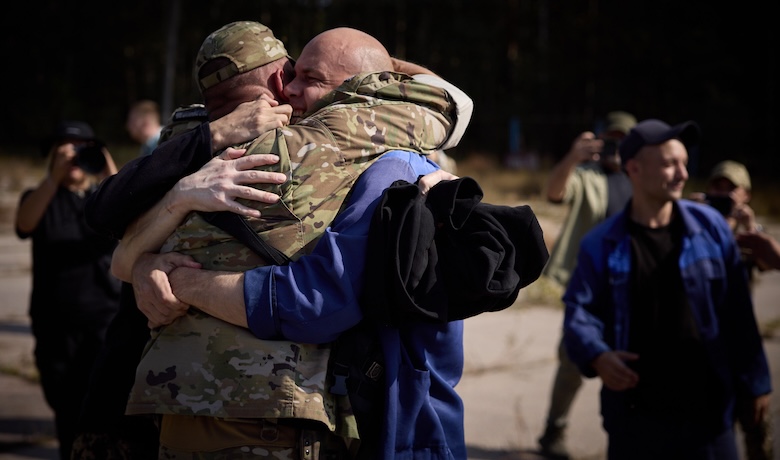
Prisoner of war repatriations have long been thorny, contentious post-war affairs. Disputes over their timing, scope, and implementation have routinely threatened relations between formerly warring States and resulted in prolonged and unconscionable suffering by prisoners of war. They have also hindered, and in one infamous case prevented the return to peace.
This three-part post explores the law of war applicable to post-conflict prisoner of war repatriation. The first post outlines the international legal framework and explores reciprocity as a fault line behind many repatriation disputes. The second post then explores the further interpretive fault line of involuntary repatriations. The final post recounts the years-long closing phase of the Korean War, when a notorious and protracted legal conflict over prisoner of war repatriation prolonged hostilities at enormous human cost. Together, these discussions highlight often forgotten aspects of prisoner of war treatment but also scrutinize growing pressure to achieve uniformity of interpretation on contentious law of war subjects, like repatriation.
Prisoner of War Repatriation
Although now a fundamental law of war obligation, prisoner of war repatriation was not always a standing, post-war legal duty. Prior to the late 19th century, belligerents largely left prisoner of war repatriation to ad hoc, end-of-war negotiations. Early European approaches managed repatriation through ransom arrangements. Later, as they sorted out other post-war legal details such as border adjustments, reparations, and demobilization, belligerents addressed returns and exchanges of war captives through armistices or peace treaties (see art. CX). The results were unpredictable and often shocking delays in repatriation involving great suffering and injustice (p. 64-65, 73-78).
At the 1899 Hague Peace Conferences—the diplomatic foundations for much of the 20th century project to record the multilateral laws of war—States began a decades-long process of converting prisoner of war repatriation into a standing, post-conflict obligation. Regulations added to both the 1899 and 1907 Hague Land Warfare Conventions required repatriation, “after conclusion of peace … as quickly as possible” (art. 20). States soon updated and recodified that obligation in the 1929 Geneva Convention on Prisoners of War. Although the 1929 Convention kept repatriation as a potential subject for armistice negotiations, it added that when agreement could not be reached, “repatriation shall be effected with the least possible delay after the conclusion of peace” (art. 75).
Neither instrument, however, secured consistent observance in the wars that followed. Many First World War repatriations did not begin until the Treaty of Versailles entered force, long after the conflict’s de facto conclusion (p. 44; see also Bugnion, p. 100). Following the Second World War, prisoners of war suffered nearly unfathomable delays in repatriation, particularly by States that retained them to repair extensive war damage (see Hately-Broad & Moore). These delays and abuses inspired further reform of prisoner of war repatriation in the post-Second World War revisions of the Geneva Conventions.
A product of those efforts, the 1949 Third Geneva Convention Relative to Prisoners of War expresses the now-universally applicable standard for prisoner of war repatriations following international armed conflict. It states that prisoners of war “shall be released and repatriated” (art. 118(1)). The Convention adopts “cessation of active hostilities” as the initiating event for the general release and repatriation of prisoners of war (art. 118(1)). And a similarly unequivocal clause directs that repatriations be conducted “without delay” (art. 118(1)). A further passage complements the baseline obligation, requiring that States individually plan and execute release and repatriation even if a peace instrument between the parties is silent on the issue or agreement cannot be reached between them (art. 118(2)).
A final 20th century update to prisoner of war release and repatriation can be found in Additional Protocol I, the 1977 supplement to the Geneva Conventions’ regulation of international armed conflict. Curiously, the Protocol made no change to clarify the substantive duty of repatriation. It is a somewhat surprising choice considering poor adherence to and interpretive debate concerning the Third Convention’s repatriation scheme that had already materialized by the time of the Protocol’s diplomatic conference. However, the Protocol helpfully classifies “unjustifiable delay in the repatriation of prisoners of war or civilians” as a grave breach for States party to the Protocol (art. 85(4)(b)). This designation requires States both to enact penal legislation and to search for and prosecute or extradite persons responsible for such breaches (GC III, art. 129).
Reciprocity
Despite these efforts to clarify and improve prisoner of war repatriation, important legal debates persist. Two particularly difficult questions concern the nature of the prisoner of war repatriation rule as being either absolute or conditional. The first concerns reciprocity and asks whether the duty to repatriate is contingent on similar performance by former enemies. The second concerns involuntary repatriations and asks whether a State may or must decline to repatriate prisoners who do not wish to be returned to their sponsoring State.
Reciprocity
The precise question concerning reciprocity in repatriation is whether failure by one State to release and repatriate prisoners of war permits another State to suspend its repatriations in kind. Arguments that reject reciprocity as a consideration in repatriation tend to emphasize the lack of conditional language in Article 118. Past abuses of discretion in returning prisoners of war inspired States to adopt the article’s unequivocal language (para. 4439). The Convention thus requires that prisoners of war “shall be released and repatriated” without reference to the agreements or contingencies that watered down preceding treaties.
Further textual support for the unconditional view can be found in the second paragraph of Article 118. It requires that when agreement between the parties is not reached, “each of the Detaining Powers shall itself establish and execute without delay a plan of repatriation” (emphasis added). By mentioning detaining powers individually, rather than referring to them collectively, the Convention appears to frame repatriation as an unconditional obligation. Read in conjunction with the preceding compulsory passage, repatriation can be understood as an absolute duty owed mutually between States, though not contingent on reciprocal performance.
Among military legal manuals, the UK Law of Armed Conflict Manual adopts this non-reciprocal reading. It instructs, “The duty of repatriation is absolute and may not be made conditional upon the behaviour of the state on which the prisoners depend” (para. 8.168). This view also finds potential support in the Vienna Convention on the Law of Treaties suspension regime. While the Vienna Convention admits suspension of performance in response to material breaches of treaty obligations, Article 60(5) prohibits States from suspending treaty obligations “relating to the protection of the human person contained in treaties of a humanitarian character.” Though prisoner of war repatriation is greatly concerned with the sovereignty and security of States, repatriation may also be characterized as a humanitarian protection and thus immune from suspension under the Vienna Convention, even if a State’s counterpart is in material breach of its own repatriation obligations.
Since States adopted the Third Geneva Convention, however, significant reciprocity-inspired delays and suspensions of repatriation have taken place, including between India and Pakistan, Iran and Iraq, and Ethiopia and Eritrea. In the latter instance, the Ethiopia-Eritrea Claims Commission, organized under the Permanent Court of Arbitration, adjudicated several repatriation disputes and excused nearly two years of delay on the basis of negative reciprocity. The Commission observed, “given the character of the repatriation obligation and state practice, it is appropriate to consider the behavior of both Parties in assessing … obligations under Article 118” (para. 149).
The U.S. DoD Law of War Manual adopts this approach as well, indicating that a degree of reciprocity in repatriations is to be expected between belligerents (§ 9.37.1). The U.S. Manual considers prisoner of war repatriation without reciprocal observance to be unreasonable. Judge Meron, though generally not supportive of reciprocity as a consideration in law of war obligations, echoes the point concerning prisoner of war repatriation when he observes, “In reality negotiations and a degree of mutuality have proved necessary” (p. 254).
On the point of the Vienna Convention’s rule for non-suspension of humanitarian provisions, it is useful to recall the non-retroactivity provision found in Article 4. By this article, the Vienna Convention, including the Article 60(5) non-suspension provision, is inapplicable to treaties, such as the Third Geneva Convention, that predate it, though some may regard a customary international law counterpart to Article 60(5) as nonetheless applicable.
For the present, and despite efforts to characterize the issue as resolved (paras. 4448-51), the better view likely regards the role of reciprocity in prisoner of war repatriation as unsettled, leaving States a margin of choice in adopting their legal policies and post-war practices (p. 475-76).
The next part of this post will address questions arising from involuntary repatriation of prisoners of war in post-conflict settings.
***
Sean Watts is a Professor in the Department of Law and Philosophy at the United States Military Academy, Co-Director of the Lieber Institute for Law and Warfare at West Point, and Co-Editor-in-Chief of Articles of War.
The views expressed are those of the authors, and do not necessarily reflect the official position of the United States Military Academy, Department of the Army, or Department of Defense.
Articles of War is a forum for professionals to share opinions and cultivate ideas. Articles of War does not screen articles to fit a particular editorial agenda, nor endorse or advocate material that is published.
Photo credit: President Of Ukraine
