

Laws of Yesterday’s Wars Symposium – Somali Traditions of Restraint
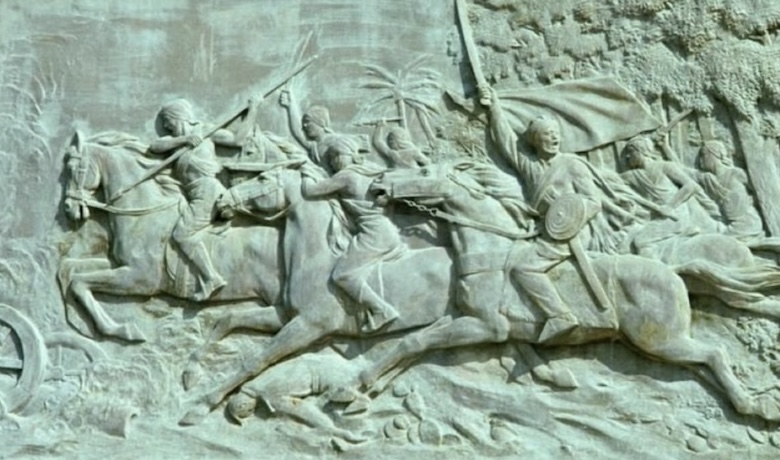
Editor’s note: The following post highlights a chapter that appears in Samuel White’s fourth edited volume of Laws of Yesterday’s Wars published with Brill. For a general introduction to the series, see Dr Samuel White’s introductory post.
Accounts of the laws of war often assume that meaningful restraint in armed conflict is a modern achievement dependent on written treaties, State authority, and international enforcement. Somali history, like many others, challenges that assumption. Long before formal statehood, Somali society developed a detailed and durable system for regulating violence constructed on customary law, collective responsibility, and oral authority rather than codification. In my chapter of Volume 4 of The Laws of Yesterday’s Wars, I examine these traditional Somali laws of war.
Chapter Highlights
The Somali system emerged from necessity. In a pastoral society dependent on shared access to land, water, and livestock, unrestrained warfare was destructive. Moreover, it was existentially dangerous. Conflict therefore had to be governed. Somali customary law is known as xeer. In particular, the Bir Ma Geydo (those spared from the spear) provided the relevant framework. Although decentralised and unwritten, xeer established clear expectations about when violence was permissible, how it could be conducted, and what limits could not be crossed.
Bir Ma Geydo articulated a set of universally understood protections across Somali society, while individual clans developed more particularised bodies of xeer regulating relations with specific neighbouring groups. These inter-clan legal arrangements were well known, mutually acknowledged, and respected as far as possible in practice. Once established, such xeer endured across generations thereby providing continuity, predictability, and restraint in relations between groups.
Warfare was never treated as a lawless domain. On the contrary, it was subject to rather strict constraints. Certain categories of people were recognised as immune from attack, including but not limited to women, children, religious figures, the vulnerable, elders, and prisoners of war. Violations against these groups were framed as tactical excess and as profound breaches of honour. Such violations carried serious social consequences for the offender and their wider clan.
Material restraint was equally central. Wells, grazing land, and livestock resources on which entire communities depended were placed beyond legitimate targets of violence. Destroying them risked famine, displacement, and long-term instability that extended far beyond the immediate conflict. These prohibitions reflect a legal consciousness attuned to human vulnerability, to environmental fragility, and collective survival.
Beyond their substance, one important distinguishing element in the Somali laws of war is how they were remembered, relayed, and enforced. People and practices wielded authority, rather than written judgments or permanent institutions. Elders played a central role in mediating disputes and interpreting precedent, while poetry functioned as a powerful legal and moral archive. Somali poems recorded conflicts, condemned unlawful conduct, and preserved collective judgments about right and wrong. Through reputation, memory, and shame, restraint in warfare was reinforced long after fighting ceased.
Accountability following conflict was organised through systems of collective compensation, which translated harm into shared economic responsibility. This mechanism was not intended to excuse violence, but to prevent its recurrence. By distributing liability across kin groups, it created strong incentives to restrain fighters and resolve disputes through negotiation rather than retaliation. Law functioned through reciprocity and consensus, not coercion.
Decades of political fragmentation and armed conflict have placed immense strain on these traditions. Some contemporary armed actors have disregarded customary restraints, particularly where warfare has become ideologically driven or externally sustained. Yet Somali customary law has not disappeared. In many contexts it continues to shape how violence is limited, how disputes are settled, and how lawful conduct in war is understood, often where State institutions are weak or absent.
My chapter also contributes at the level of documentation. It draws on interviews conducted in Somalia and Kenya, with particular attention to perspectives from southern Somali communities that have been less visible in existing scholarship. Much of the literature on Somali customary restraints in warfare, including the International Committee of the Red Cross’s Spared from the Spear, has focused primarily on northern Somali groups. The material I present is broadly consistent with those findings, while offering additional insight into how these norms are articulated and understood in the South.
Concluding Thoughts
The endurance of these norms matters. It challenges the tendency to treat humanitarian restraint as a Western export and non-Western societies as norm-takers rather than norm-producers. Somali xeer demonstrates that sophisticated systems of conflict regulation can exist without written law or central authority, drawing their strength from social legitimacy, historical continuity, and mutual dependence.
Understanding such traditions on their own terms is essential for any serious account of how societies have sought, across time and place, to place limits on war.
***
Ayan Abdirashid Ali is a Somali-Australian lawyer and researcher currently working with the South Australian Attorney-General’s Department.
The views expressed are those of the author, and do not necessarily reflect the official position of the United States Military Academy, Department of the Army, or Department of Defense.
Articles of War is a forum for professionals to share opinions and cultivate ideas. Articles of War does not screen articles to fit a particular editorial agenda, nor endorse or advocate material that is published. Authorship does not indicate affiliation with Articles of War, the Lieber Institute, or the United States Military Academy West Point.
Photo credit: Replayerr via Wikimedia Commons
RELATED POSTS
by Samuel White
February 9, 2026
–
by Rory Cox
February 11, 2026
–
Jewish Ethics of War in the Torah
February 13, 2026
