

In Honor of Françoise Hampson – Teaching and Operationalising LOAC
Editors’ note: This post is part of a series to honor Françoise Hampson, who passed away on April 18, 2025. These posts recognize Professor Hampson’s work and the significant contribution her scholarship made to our understanding of international law.
“In order for there to be any chance of the rules being respected, it must be possible to fight according to the rules.” Françoise Hampson.
Françoise Hampson was an excellent teacher who authoritatively taught law to “both sides” of the civilian and military worlds as well as the worlds of international human rights law (IHRL) and the law of armed conflict (LOAC). Her mentorship was one of the reasons I even dared to apply to the current position I hold as lecturer at the Royal Military Academy Sandhurst. How could a civilian teach LOAC to the military? She wrote to me soon after I got the job with the following advice.
You are talking to people who are there to learn about one thing and, in the process, have to learn about your thing. The only thing to do is to start with where they are and to explain why this stuff is important to them. All being well, the law keeps them honest and enables them to look at their face in the mirror in the morning, after they come back from deployment.
In this post, I would like to highlight some points relating to teaching and operationalising LOAC from the perspective of my relatively recent transition from the dark depths of academic LOAC to the very practical and kinetic questions from students, including, “Yes, but can I pull the trigger?” Two points repeatedly come up in my experience of teaching LOAC to the armed forces in different settings, including at the Royal Military Academy Sandhurst and the Sanremo International Institute of Humanitarian Law:
1. Military personnel need clear rules that are easy to understand and usable on the ground. How can legal provisions and academic debates be translated into operational language?
2. Most military personnel want to do the right thing. What does this mean for teaching LOAC when there is widespread scepticism of international law?
While reading various posts on teaching LOAC to the armed forces, including excellent pieces written by Françoise, Hays Parks, and Frédéric de Mulinen in the 1980s, it has been both comforting and frustrating to realise that much of what I am saying is not new. Comforting that I am learning the right lessons through personal experience; frustrating that we are having to continuously emphasise and revisit the same challenges that existed almost forty years ago. Yes, the law applies even in war; yes, even if the enemy doesn’t respect it; yes, compliance and enforcement have always been an issue; but no, reciprocal compliance is not the main reason we hold the law to be important in war.
LOAC can be perceived as cumbersome, irrelevant, and complicated by those it is meant to regulate. If taught properly, it should not be any of these things. As instructors, we need to carefully consider how we teach the subject, including by understanding how the body of law is perceived, and adapting the content specifically to the audience in front of us.
LOAC in Practice: From the Academic to the Kinetic
(Most) soldiers and officers are not, and should not be expected to be, lawyers. Because of this, legal provisions need to be “translated” into operational terms that provide practical guidance for military decision-makers. It was a point I was aware of beforehand, but it was not until I went on my first military exercise that I fully appreciated the extent to which LOAC is just one of the hundreds of considerations military personnel need to take into account when making decisions. It made me realise that “Yes, but can I pull the trigger?” was a very reasonable response to the statement, “Respect the principles of distinction and proportionality.”
There are missing steps in between that need to be broken down. As others have pointed out, teaching LOAC in this context means learning the appropriate jargon and terminology, and understanding how LOAC is implemented on the ground. Terms like rules of engagement (ROE), positive identification (PID), and collateral damage estimate (CDE) may mean a lot more to the average military person than “distinction” and “proportionality,” and these two languages need to be bridged.
One example in which this has been achieved is the operationalisation of some aspects of the lawful treatment of detainees through use of the term “CPERS” (captured persons). As far as I can gather, it is a term that was first used by the United Kingdom during operations in Iraq and Afghanistan and is now used by NATO and others. It absolutely matters that legal advisors (and some others) know the difference between a prisoner of war, a civilian internee, and a criminal detainee. But most military personnel will only encounter such persons at the point of capture and during initial holding procedures. At this stage, operational guidance can be summarised for all in the same way: treat CPERS humanely at all times. The catch-all term is not a legal one but it has practical use in providing guidance to those who must act lawfully on the ground.
Similarly, legal advisors need to understand the legal meaning of a “civilian” under LOAC, and also understand the debates around the concept in non-international armed conflicts. However, it probably doesn’t matter that those on the ground are not identifying persons directly participating in hostilities as “civilians.” It may in fact be counter-productive to insist that they are such, due to a frequent association of the concept with innocence and non-engagement in hostile acts. What matters is that accessible guidance, for example through ROE and targeting directives, allows them to make lawful decisions on the lethal use of force.
LOAC needs to be able to be clear and straightforward. This does not mean that LOAC can never be complicated: nuances of law can be crucial to adapt to new situations such as emerging technologies or new forms of conflict; a PhD dissertation on a single word within a treaty can be important to interpret a State’s obligations under that treaty; and the war crimes tribunals’ lengthy debates on various concepts have undoubtedly enhanced our understanding of the laws in armed conflict. All these clarifications matter, but for those rules that must be implemented on the ground, such complexities need to be re-translated into simple operational directions.
There is not a one-size fits all for this translation, otherwise the 1949 Geneva Conventions would probably have been written differently. The operationalisation and implementation of LOAC necessarily looks different depending on whether we are speaking about infantry making tactical decisions during the heat of combat, lawyers advising targeteers during pre-planned operations, detention officers making triage decisions of captured persons, or courts considering whether an act amounts to a war crime. This means that LOAC instruction needs to be tailored and bespoke to the specific service, career stage, role, and even deployment.
There has been much recent discussion on the “counter-insurgency hangover,” namely that some militaries have been so constrained by policy and other non-legal considerations during counter-insurgency operations that those on the ground do not understand the extent to which LOAC allows for “killing people and breaking things.” Rules on the ground are indeed often “less than what the law allows” for many reasons, including policy decisions. But I would suggest this has also happened because of the translation exercise described above in order to make LOAC operational. ROE are not LOAC, but they will often be taught in a LOAC class, because they are the end result of filtering through the parts of the law those persons need to hear at the time.
This is not a bad thing, and it may be necessary to make LOAC practical. The political, tactical, strategic, and reputational reasons for going above and beyond legal requirements won’t go away in large-scale combat operations, although they will necessarily be different. It is particularly crucial in these contexts to have ongoing engagement between the academic, legal, and kinetic realms, to make sure that the LOAC being taught at the operational level is both practical and reflective of international law.
The Humanity of Soldiers: Reasons for Compliance with LOAC
There has recently been a slew of posts suggesting we are seeing the decline or even death of international law. What, then, is the point of teaching a body of law which is systematically violated, has very little enforcement power, could allegedly put us at a strategic disadvantage, and may not matter in “battlefield next”? I find these discussions frustrating on multiple levels, but I will focus on one point: that the law can still matter to the individuals whose conduct it was meant to regulate.
The LOAC fundamental tenets of balancing “humanity” and “military necessity” may sometimes sound like we are putting humanity in opposition to all that is military, including the military personnel themselves. One of the points which has become evident to me in the last few years is that it is not just the humanity of those protected from the effects of operations (civilians and those hors de combat) which matters. Compliance with LOAC can also be as important for the humanity of those conducting military operations and may in fact be one of the most compelling reasons for restraint in behaviour during armed conflict. Those making targeting decisions and having to care for detainees also have to “look at their face in the mirror,” a point highlighted by military scholars as well as by Françoise. “Can you live with your decision?” is a question I frequently hear military instructors asking cadets when discussing possible solutions to grey areas.
There is increasing scholarship on the reasons why people comply (or don’t) with laws in war. Internal reasons for compliance, such as ethics, morality, honour, peer pressure, religion, and ideology, are cited as much more effective than external reasons such as the threat of legal sanctions. In fact, having had this conversation many times over the last few years with people from different countries, including those with recent conflict experience, the threat of criminal punishment seems to be one of the least effective ways of convincing people to respect the laws (although the lack of this threat would certainly not promote compliance).
Many people join the professional armed forces to contribute to society. While the military, like any other institution in society, is not full of saints, neither is it full of sinners (or warmongers). There may be systemic issues which can have particularly grave consequences within a hierarchical institution that handles lethal weapons, but professional armed forces can also be made up of people who want to “do the right thing.” This is a point which will sound obvious to a military audience, but it has come as a surprise to more than one (civilian) person I have spoken to, especially when I mention that multiple cadets have told me they applied to Sandhurst because of the humanitarian work performed by the Army.
Concern for morality and legality need not be, in my view, “a highly vulnerable center of gravity that [could] be exploited at every opportunity,” or necessarily a strategic weakness in a war with an adversary who does not perceive it as important. There are of course significant areas of potential legal-strategic tension such as the use of autonomous systems and anti-personnel mines which need to be discussed. I don’t believe these tensions to be insurmountable.
Unfortunately, respecting LOAC will not be a magical solution to prevent moral injury or other conflict-related trauma. War will never be nice, and respecting LOAC will not make it so. But respecting LOAC may be a good place to start to have a hope at protecting moral integrity, providing minimum standards to guide a decision-maker in a context within which “right” and “wrong” are not what they were in peacetime, and where one’s moral compass may be spinning.
Someone who is convinced of the importance of the rules is more likely to uphold them, regardless of enforcement mechanisms, and regardless of the adversary’s behaviour or non-compliance. It is a LOAC instructor’s duty to understand what will convince their audience, and the best mechanisms and teaching formats for doing so. Internal consolidation of knowledge requires discussion, debate, and a safe area within which to ask difficult questions. Every student knows they are supposed to answer “no” when their LOAC teacher asks if torture is ever justified. But if they have not had the opportunity to voice their doubts and be convinced otherwise (often by their own peers) they may not leave the classroom believing that response. Practical implementation of classroom knowledge and rehearsal is also key. It is absolutely necessary to take LOAC out of the classroom.
Conclusion
Scepticism of LOAC or international law is not new. In 1989, Françoise wrote, “It may be wondered how someone can bear to teach the same subject for thirty years, particularly when for most of that period the law in question has been repeatedly and systematically violated, for the most part with impunity.” There is much to be done to promote LOAC, and LOAC teachers have an important role to play. Adapting to one’s audience is fundamental, including by learning to translate LOAC into operational terms, as well as understanding which angles are most likely to convince students that the law matters to them. The humanity of individual soldiers and officers should not be underestimated as a tool for compliance.
Effective LOAC teaching to the armed forces requires a balance of legal and operational expertise, a combination which has been present in all the best teaching environments I have been a part of. Working on the bridge between different worlds requires an open mind, confidence in one’s subject matter expertise, and honesty in what one doesn’t know. Bridging these conceptual chasms, between the civilian and the military, the academic and the kinetic, and the legal and the practical, can be challenging, but it is crucial for the effective implementation of this body of law.
In answer to her own question, Françoise answered “It is awe at the scale and nature of the enterprise which LOAC represents that keeps me ‘hooked.’” She has inspired a generation of LOAC instructors who are equally hooked, and who are not yet ready to give up.
The views expressed are those of the author. They do not represent the views of UK Ministry of Defence or any affiliated entities.
***
Dr Claire Simmons is a Senior Lecturer at the Royal Military Academy Sandhurst (UK) Department of Defence and International Affairs, and fellow of the University of Essex Armed Conflict and Crisis Hub.
The views expressed are those of the author, and do not necessarily reflect the official position of the United States Military Academy, Department of the Army, or Department of Defense.
Articles of War is a forum for professionals to share opinions and cultivate ideas. Articles of War does not screen articles to fit a particular editorial agenda, nor endorse or advocate material that is published. Authorship does not indicate affiliation with Articles of War, the Lieber Institute, or the United States Military Academy West Point.
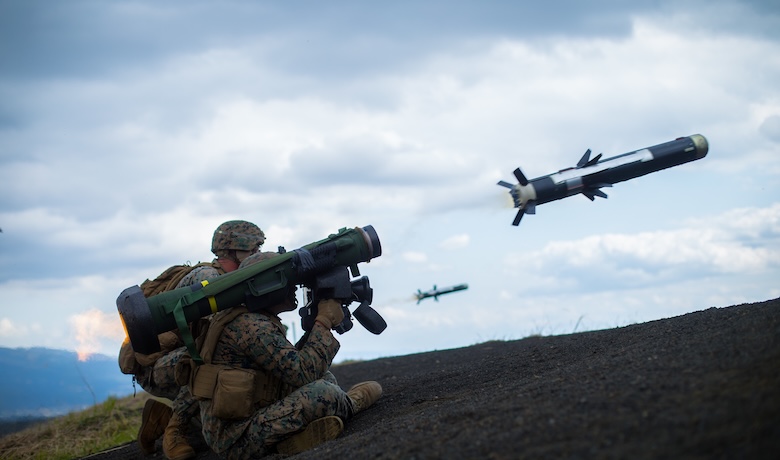
Photo credit: Lance Cpl. Jonathan Willcox
RELATED POSTS
by Sean Watts
October 6, 2025
–
by Noam Lubell
October 6, 2025
–
Fact-Finding in Law of Armed Conflict Investigations
October 10, 2025
–
Calibrating the Balance Between Military Necessity and Humanity in LOAC Practice
October 17, 2025
