

Unleashing Drone Dominance: Rethinking Department of Defense Weapons Reviews
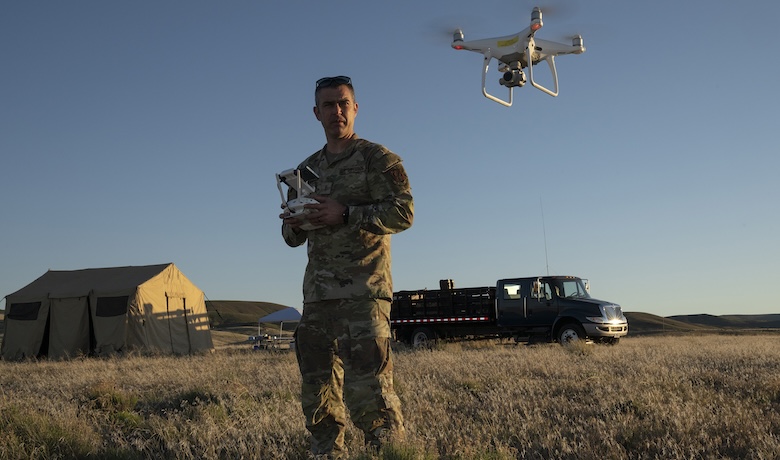
In November 2001, the United States conducted what is considered to be the first ever armed drone attack in Afghanistan. Over the next twenty years, the United States dominated the production of large unmanned systems that cost millions of dollars each to produce. In a January 2020 strike that showcased its drone dominance, the United States used an MQ-9 Reaper drone to kill Iranian Major General Qasem Soleimani in Baghdad. Five years later, this model of drone dominance no longer exists.
The Russian invasion of Ukraine in 2022 has demonstrated how necessity can fuel innovation on the battlefield, especially with its approach to drone warfare. Ukraine’s rapid development and deployment of new systems have enabled it to disrupt conventional military wisdom and effectively fight against a larger and better-equipped adversary. Ukraine’s experience in this conflict has been a combination of traditional manpower-intensive trench combat and technological innovation. However, it is this technological innovation that has enabled Ukraine to counter Russia’s advantage in conventional military strength. Today, Ukrainian drones account for around 70 percent of confirmed Russian casualties.
Militaries, especially the United States, are taking notice. On July 10, 2025, the Department of Defense (DoD) released a new directive, “Unleashing U.S. Military Drone Dominance,” designed to quickly increase its arsenal of unmanned systems by shaking up the Department’s procurement system. Innovation on the battlefield produces many benefits but it also brings challenges, specifically with ensuring that these new weapons can be used in compliance with the law of armed conflict (LOAC). This post will address: 1) how innovation through the use of drones is reshaping the battlefield; 2) how the new DoD directive is intended to support the drone industry and military forces; and 3) how the legal review of new weapons must undergo its own innovation to keep pace with these rapid changes.
Innovation – Use of Drones on the Battlefield
In December 2024, Ukraine released its voluntary report on compliance with LOAC. The report noted that drones “are the true masters of the battlefield in every classic domain.” They have become one of the most powerful tools in countering Russia’s superior numbers and resources in this conflict. One commentator noted that Ukraine now has a “a thriving domestic drone industry, with contributions from more than 500 manufacturers and production figures reaching into the millions.” As Dr. Oleksandra Molloy notes in her 2024 report, “Drones in Modern Warfare: Lessons Learnt from the War in Ukraine,” Ukraine has operated more than “300 different models” of drones. This ability to mass produce inexpensive, effective drones that are able to conduct a variety of missions such as reconnaissance missions, electronic warfare, and most importantly, kinetic strikes, has been critical to their success on the battlefield.
Ukraine’s approach to drone warfare is also changing the way militaries think about technology. Instead of focusing on expensive, highly sophisticated systems (as the United States has done with its Predator and Reaper unmanned systems), it has focused on drones that are affordable and adaptable. These drones, which are built from commercially available components, cost less than $1,000 and have been used to effectively disable armored vehicles and disrupt enemy supply lines.
A recent New York Times article reported that Ukrainian officials have made more than one million first person view drones (FPVs) in 2024. Not to be outdone, Russia claims it can now produce 4,000 FPVs a day. Drones have become so ubiquitous on the battlefield that it is impossible to count the total number of drone engagements taking place now.
The ability to quickly test and deploy drone solutions has given Ukraine an edge over Russia’s more centralized process, which has not been able to adapt as rapidly to this changing battlefield reality. Ukraine has instituted a decentralized approach to innovation, and it has relied on a combination of soldiers, technical experts, and other volunteers for input with respect to innovation. The New York Times reported that soldiers are quickly modifying drones to “drop hand grenades and other munitions on advancing enemy soldiers.” They are also making use of a wide range of explosives to arm the drones. They “repurpose anti-tank weapons and cluster munitions to fit onto drones, or they use anti-personnel fragmentation warheads with other thermobaric charges to destroy buildings and bunkers.”
A CSIS report noted the “Ukraine conflict has upended traditional cost-benefit calculations in military operations. The conventional emphasis on firepower-heavy forces built around expensive platforms—tanks, warships, and advanced aircraft—is being challenged by the effectiveness of low-cost attritable assets, particularly drones.” Innovation on the battlefield is critical to combat success. But what is also clear is that these technological advantages are temporary, as the opposing side will quickly adapt. It has become clear that the military that can adapt faster will maintain the upper hand. Ukraine’s advantage in this conflict has been its ability to outpace Russia in the innovation cycle. It is a lesson that the United States, NATO, and our other allies must emulate in order to maintain military readiness in the 21st century.
Unleashing U.S. Military Drone Dominance
In June 2025, the Trump Administration issued Executive Order 14307, “Unleashing American Drone Dominance.” In July, Secretary Hegseth issued his directive addressed to senior Pentagon leadership, combatant commanders, and directors of defense agencies regarding U.S. military drone dominance.
Secretary Hegseth stated that “drones are the biggest battlefield innovation in a generation, accounting for most of this year’s casualties in Ukraine.” He wrote that while “millions of cheap drones” are being produced globally, DoD forces are not being “outfitted with the lethal small drones the modern battlefield requires” due to unnecessary red tape. To counter what is seen as restrictive bureaucratic processes, he was “unleashing the combined potential of American manufacturing and warfighter ingenuity.”
According to one report, “[t]he directive calls for approving ‘hundreds’ of American products for purchase by the U.S. military, arming combat units with a variety of ‘low-cost drones made by America’s world-leading engineers and AI experts,’ and more widely integrating UAS into training exercises.” It also notes that the memorandum sets out some key deadlines for Pentagon leaders:
– By September 1: Each service must establish “deliberately screened, active-duty experimental formations purpose-built to enable rapid scaling of small UAS across the Joint Force by 2026, prioritizing initial fielding to U.S. lndo-Pacific Command units.”
– Within 30 days: The Office of Strategic Capital and Department of Government Efficiency will present options such as advance purchase commitments, direct loans, or other incentives to accelerate the growth of the U.S. industrial base for outfitting combat units with U.S.-made drones. Each military service will establish program offices focused solely on UAS, prioritizing small systems.
– Within 60 days: Military Departments must identify programs that would be more cost-effective or “lethal” if replaced by drones.
– Within 90 days: The services must designate at least three national ranges with diverse terrain for deep UAS training.
– January 2026: Transfer responsibility for publication and maintenance of the Blue List of DOD-approved unmanned aerial systems, components, and software from the Defense Innovation Unit (DIU) to the Defense Contract Management Agency. The Blue List will evolve into a dynamic digital platform, updated with certified parts, user ratings, and vendor information using AI tools.
– 2027: All major training events across DoD must integrate drones.
According to Secretary Hegseth, the goal is to have drone capabilities integrated into “all relevant combat training, including force-on-force drone wars.” He acknowledged that “[o]ur adversaries have a head start in small UAS, but we will perform a technological leapfrog and establish small UAS domain dominance by the end of 2027.”
This new directive is an important step if the United States is going to develop the necessary architecture required to establish drone dominance. The advantages these unmanned systems bring are diverse. They can help the United States gain tactical versatility across various types of missions, such as situational awareness, targeting and battle damage assessment, strike operations, electronic warfare and communication, and logistical support.
Although the use of small unmanned systems brings significant advantages, they also come with challenges. The remainder of this post will focus on the challenge of how to incorporate these systems quickly while still meeting U.S. obligations to conduct legal reviews of new weapons and weapons systems.
DoD Weapons Review Process
The United States is not a party to Additional Protocol (AP) I to the 1949 Geneva Conventions, so there is no explicit treaty obligation to conduct legal reviews of new weapons, means, or methods of warfare. Some commentators note that there is “an applied obligation” to conduct such reviews, as indicated by the practice of certain States prior to the adoption of AP I. The International Committee of the Red Cross, in its 2006 Guide to the Legal Review of New Weapons, Means and Methods of Warfare, also takes the view that the requirement to assess the “legality of all new weapons, means and methods of warfare … is arguably one that applies to all States, regardless of whether or not they are party to Additional Protocol I.” However, the DoD’s position is that there is no customary international law obligation to conduct a weapons review as “there is insufficient state practice and opinio juris… .”
The DoD Law of War Manual reiterates that long-standing U.S. policy requires a legal review of the intended acquisition of a weapon system to ensure its development and use are consistent with LOAC. This policy predates the adoption of AP I. Each military service has issued regulations implementing this policy. For example, Army Regulation 27-53 sets forth the requirements for legal reviews of new weapons. It states that the legal review of the acquisition or procurement of a weapon system should occur at an early stage of the acquisition process to ensure its legality under LOAC, domestic law, and international law, including the research and development phases. Even though it is important for the evaluation to be done at the earliest stages of the development or acquisition process, a final legal review must be conducted prior to the fielding of the weapon system.
Accordingly, whether a State conducts a weapon review under Article 36 of AP I (for States Party to AP I), or as a matter of policy (such as the United States), a legal review of a new weapon, or “means or method of warfare” is a critical component of ensuring that such weapons are used in compliance with that State’s international legal obligations.
This process, which has been in place since 1974, has worked very well until now. However, just as battlefield innovation is changing the way militaries think about procurement, it is also time to change the way the DoD conducts weapons reviews of these new capabilities to ensure it is an enabler of innovation.
Weapons Reviews as an Enabler of Innovation
Ukraine’s success has come from enabling innovation rather than trying to control it, which has helped accelerate the fielding of these new technologies on the front lines. As the United States and other States push to accelerate the integration of these new technologies, it raises concerns and potential legal issues with respect to weapons reviews. Pushing decisions to purchase and integrate these small drones down to lower levels could mean that new weapons make it to the battlefield without undergoing a review to ensure that they can be used in accordance with LOAC.
Here are two recommendations that the United States must consider to ensure that weapons reviews are seen as enabling rather than hindering innovation.
Decentralize Weapons Reviews
First, how weapons reviews are conducted must change. Currently, reviews are centralized in the Pentagon. A senior attorney designated by the respective judge advocate general of the service looking to develop or purchase the system conducts the weapons review. This must be delegated to judge advocates at the tactical and operational level. Ukraine has demonstrated that soldiers on the front lines of the battlefield have the most intimate knowledge of the problems they face and often have the best ideas to solve them. Soldiers in Ukraine, through their use and modification of drones, are quickly developing solutions to the complex problems they face in combat.
It is unrealistic to take away this capability from soldiers to conduct a centralized review process for new weapons. To enable innovation, the weapons review process must modernize. The DoD must develop a process for legal reviews to be conducted at the tactical/operational level, closer to the front lines. This, of course, should be with assistance from those individuals responsible for conducting the formal review process to ensure consistency in the reviews. Pushing these reviews to legal advisors at lower levels will encourage innovation while ensuring that weapons that are fielded comply with a State’s legal obligations under LOAC.
Ensure an Appropriate Procedure for Weapons Modifications
Second, the U.S. military must ensure an appropriate procedure for weapons modifications. Battlefield innovation means that, either due to a change in circumstance (such as acceptance of a new treaty obligation or change in policy), or more likely, a modification to a particular weapons system, a new legal review must be conducted. Accordingly, the DoD will need to ensure there is a process in place to conduct subsequent reviews.
As discussed above, drone technology is changing at a rapid pace, with different types of munitions being added and new targets being engaged. It is incumbent to review those modified weapons to ensure that they comply with the State’s legal obligations under LOAC. I am not suggesting that every change to a weapon requires a new review, but if there is a significant change in the weapon, the reviewer should consider whether a new review may be required.
Conclusion
The Ukraine conflict with Russia has provided many lessons for the United States, NATO, and our allies. Future conflicts will rely heavily on the use of emerging technology such as drones and the advancement of autonomous systems. Innovation on the battlefield will likely increase in a future conflict, and these weapons must comply with a State’s LOAC obligations. The legal review of new weapons must also change to keep up with the rapid developments on the battlefield to remain relevant and not be seen as a hindrance.
***
Michael W. Meier is currently an adjunct professor at Georgetown University Law Center (GULC) and an Associate Fellow at the Geneva Centre for Security Policy.
The views expressed are those of the author, and do not necessarily reflect the official position of the United States Military Academy, Department of the Army, or Department of Defense.
Articles of War is a forum for professionals to share opinions and cultivate ideas. Articles of War does not screen articles to fit a particular editorial agenda, nor endorse or advocate material that is published. Authorship does not indicate affiliation with Articles of War, the Lieber Institute, or the United States Military Academy West Point.
Photo credit: U.S. Air Force, Airman 1st Class Jordaan Kvale
