

Year in Review – 2025
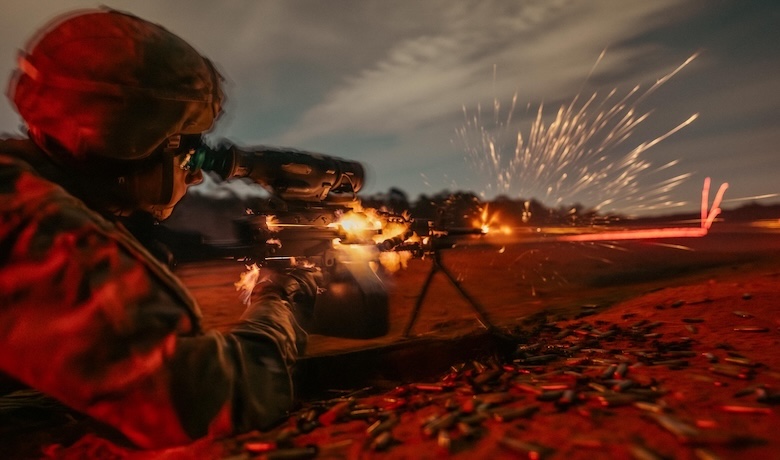
2025 has been a year of persistent conflicts, evolving law of armed conflict (LOAC) questions, and contrasting views. At Articles of War, we strived to provide a platform for nuanced legal analysis and timely discussion in 200 posts, exploring how law restrains war in an era of rapid technological change, protracted conflict, and eroding consensus, while honoring civilian protection, accountability, and the core LOAC principles.
Law Under Pressure, Reciprocity, and Compliance
A central thread from 2025 was whether and how LOAC functions in sustained and high-intensity conflicts. Several of our posts reexamined seemingly settled matters in light of conflict patterns that emerged in 2025. Our contributors grappled with large themes such as erosion of norms, instrumentalization of law, and stretching of legal categories. They also examined how law bends, adapts, or fractures under contemporary conflict realities and what that means for legitimacy and restraint. That even foundational tenets and principles provoked reconsideration was a comment on the very dynamic and fluid context in which our legal discipline operates.
Another major theme explored why parties comply with LOAC and what happens when they do not. Our series examining belligerent reprisals, posts surveying prisoners of war repatriation and reciprocity, and discussions of suspension or denunciation of long-standing treaties (e.g., Ottawa Convention) all gave attention to incentives, enforcement mechanisms, reciprocity, and operational logic as drivers for LOAC compliance and evolution.
Both of the aforementioned trends also allowed for contrasting views. As much as any year, we saw takes on events, trends, and the law that departed from one another. In most cases, their variety seemed attributable to perspective. Many contributors explored long-standing doctrinal separations that do not necessarily hold neatly any longer in modern conflict. These contrasting views remind us that our contributors and readers come to our subject from a wide range of perspectives including military, judicial, academic, and humanitarian viewpoints.
Technology as a Stress Test
Continuing from prior years, we saw heavy coverage of emerging technologies of war. What became clear in 2025 is that technology cannot be treated as a niche topic in armed conflict. Instead, it has become a core lens through which LOAC itself is re-examined. From artificial intelligence, autonomy, and algorithmic decision-making to biometrics, drones (and laser responses), and emerging weapons, our contributors’ analyses made clear that new technologies do not necessarily create new problems, rather they often expose latent ambiguities in existing law.
Similarly to the first trend, perspective seemed to drive the respective approaches and conclusions of these technology-focused posts as well. We hope that collectively, they highlight the value of convening the various sub-communities of our field to identify common ground and areas of possible consensus.
Learning from the Past
Admitting the changing character of war and its regulation, we nonetheless offered several posts that looked back at prior experience. Whether through historical inquiries into reservations in the Geneva Conventions of 1949, the gravitational points of the 19th century law of war, the Rousseau-Portalis Doctrine, or our series on customary IHL methodology, our contributors emphasized time and time again that how we identify, interpret, and teach the law shapes how it is applied on the battlefield. These posts highlighted underappreciated tools crafted by our predecessors that may find renewed relevance today and in the future.
Aforementioned glimpses into the past serve as valuable companions to newsworthy conflict analysis and remind readers that not all current challenges are novel. They offered readers insight into previous generations’ efforts and compromises to mitigate suffering while preserving effectiveness.
Lastly, alongside current events and questions of law, we closed the year with an important series of remembrance. We hope our series in honor of Françoise Hampson was a worthy reminder of a colleague who navigated the challenges and rewards of our shared field with admirable energy, rigor, and kindness.
Conclusion
2025 brought a stress test for LOAC and the international community, pressure point by pressure point. The year was a sustained inquiry into whether the laws of war can meaningfully constrain violence in an age of strategic competition, technological acceleration, and protracted conflict and if so, how.
Throughout the year, our contributors tackled this inquiry with zeal, care, and expertise. We would like to take the opportunity to thank everyone who has contributed to the success of Articles of War in 2025. To our readers and our benefactors—especially the Dean’s Office at the United States Military Academy at West Point—we extend our sincere gratitude for engaging with Articles of War.
As we move into 2026, we will continue the Lieber Institute’s core mission of hosting a range of perspectives and bridging theory with practice while advancing understanding of international law in armed conflict. 2026 will likely bring new LOAC challenges in many different settings. We will strive to cover these through timely analysis, debate, and commentary.
***
Liisi Adamson is the Managing Editor of Articles of War.
The views expressed are those of the author, and do not necessarily reflect the official position of the United States Military Academy, Department of the Army, or Department of Defense.
Articles of War is a forum for professionals to share opinions and cultivate ideas. Articles of War does not screen articles to fit a particular editorial agenda, nor endorse or advocate material that is published.
Photo credit: U.S. Army, Sgt. 1st Class Joseph Truesdale
