

Built Without a Battlefield: Challenges of a Cold Case War Crimes Prosecution
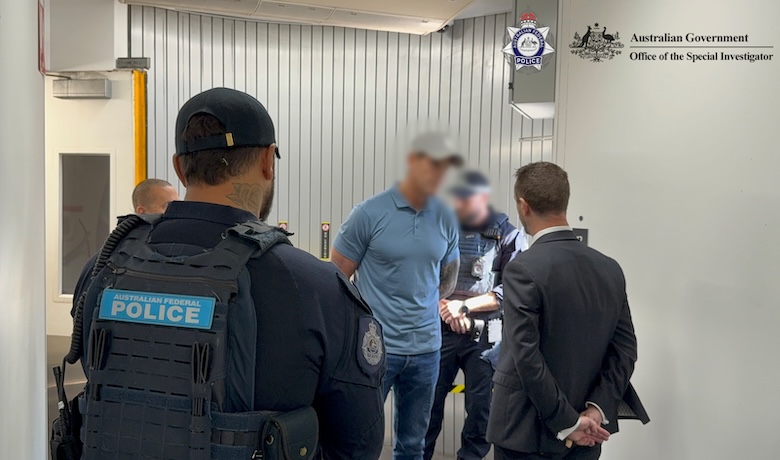
Australian authorities recently arrested Ben Roberts-Smith for war crimes including multiple unlawful killings of prisoners and non-combatants. Roberts-Smith, long regarded as one of Australia’s most decorated soldiers and a national celebrity, was previously awarded Australia’s highest award for battlefield valor. The case has sent shockwaves through Australian society and exposes a central tension in modern war crimes accountability: when prosecutions proceed without access to the battlefield, they rely on circumstantial evidence and testimony from within the same operational community of the person that stands accused.
Even when these hurdles can be overcome, accountability is not assured. Prosecutions of this kind are challenging for myriad reasons, including evidentiary issues, witness reliability, and political intervention. The Roberts-Smith case illustrates not only how difficult it is to prove a war crime, but how many things must go right, and keep going right, for accountability to follow.
Context for the Current Charges
The charges against Roberts-Smith stem from a “complex and discordant picture” surrounding Australian special operations deployments to Afghanistan from 2001-2014. These deployments were dogged by rumors of misconduct ranging from indiscipline to atrocity. A steady drumbeat of media reporting and internal concern eventually culminated in a landmark inquiry by the Australian Defence Force (ADF) Inspector General, known as the Brereton Report.
The years-long inquiry discovered credible information of 23 incidents in which persons were unlawfully killed “in circumstances which would be the war crime of murder.” It uncovered a toxic and piratical culture within Australia’s elite special operations units that resulted in the deaths of 39 innocent people; misleading operational reports; planted evidence; and normalized murder as an initiation rite for junior soldiers. The Brereton Report led to the abolition of a decorated special operations unit, public recrimination, efforts at reparations, and, crucially, a sprawling cold case criminal investigation.
Legal Framework and Duty to Investigate
As Durward Johnson and Michael Schmitt elucidate in their comprehensive post on the duty to investigate war crimes, the law of war requires States to investigate alleged war crimes and, where appropriate, prosecute those responsible. The 1949 Geneva Conventions establish a specific grave-breaches regime in international armed conflict, obliging States “to search for persons alleged to have committed … grave breaches,” and to bring them to trial or extradite them. Although neither Common Article 3 nor Additional Protocol II creates a grave-breaches regime for non-international armed conflict (NIAC), serious violations of these provisions constitute war crimes under customary international law and, for States Parties to the Rome Statute, under Article 8.
At the same time, commentators contend that NIAC war crimes prosecutions in domestic courts remain a “largely uncharted area.” Australia has treaty obligations to repress grave breaches of the Geneva Conventions and, as a State Party to the Rome Statute of the International Criminal Court, to ensure the investigation and prosecution of war crimes covered by that statute. Australia has incorporated those offenses into its domestic law through Division 268 of the Criminal Code Act 1995 (Cth.), including a specific offense for the war crime of murder in section 268.70.
To give effect to individual criminal accountability for incidents uncovered by the Brereton inquiry, the Australian government established an Office of the Special Investigator, tasked to review the Brereton findings, supervise additional investigation by Australian Federal Police, and refer viable cases to the Commonwealth Director of Public Prosecutions.
Given the time that has passed since the alleged offenses, the fact that most suspects have left military service, and past failures to prosecute war crimes at courts-martial, any prosecutions will proceed in civilian courts. In those proceedings, potentially classified evidence will be managed under the National Security Information Act 2004 (Cth.), supported by detailed regulations and court practice.
A Proxy Trial and a Higher Burden
Although the criminal case against Roberts-Smith has yet to reach trial, the gravamen of the offenses already captivated a courtroom and the national psyche through a civil lawsuit described as a “proxy war crimes trial.” In 2018, newspapers published a series of stories based on anonymous sources from within Roberts-Smith’s unit alleging unlawful killings in Afghanistan. Although Roberts-Smith was not named, he sued for defamation, alleging a character assassination campaign by those jealous of his recognition for valor. The newspapers defended on the basis that their reporting was true. Over the course of more than 110 days of evidence, the court found that the defendant newspaper
had established a substantial truth defence for the majority of the allegations, including ordering the murder of an unarmed Afghan civilian … after kicking him off a cliff; killing an unarmed man with a prosthetic leg and then taking that leg which was later used by soldiers as a drinking vessel; authorising the execution of an unarmed Afghan; bullying a fellow soldier; assaulting unarmed Afghans; disgracing Australia and the ADF through his conduct in Afghanistan; and violating the laws of war.
The court also found that Roberts-Smith, who testified for several days, “was not an honest and reliable witness.” The judgment was upheld on appeal and affirmed by the High Court.
The defamation trial proved facts in a court of law “to a standard that would certainly meet the judgment of history.” Yet, the forthcoming criminal prosecution must prove the charges beyond a reasonable doubt, a substantially higher burden than the balance of probabilities (akin to the American preponderance of the evidence) standard for the civil defamation case. In addition to this elevated burden of proof, the criminal trial will almost certainly confront stark evidentiary issues.
Building a Case Without a Battlefield
The passage of time is generally unfavorable to the prosecution, who bears the burden of proof. Roberts-Smith stands charged with killings that occurred between fourteen and seventeen years ago. A prescient 2016 paper on war crimes cases prosecutions in Australian courts identified “[a] clear obstacle” in the “unreliability or unavailability of eyewitness evidence in light of the time that had passed since the alleged events.” Yet, so-called cold war crimes cases have been successfully prosecuted: on average, verdicts at the International Criminal Tribunal for the former Yugoslavia (ICTY) were delivered more than a decade after the offenses, and Australia prosecuted Nazi perpetrators four or five decades after their crimes.
As the lead investigator in the Roberts-Smith case acknowledged, even in ideal circumstances, “war crimes allegations are extremely complex matters to investigate.” Of the 23 murders identified in the Brereton inquiry, Roberts-Smith is only the second individual to face charges. Another former SAS operator is expected to stand trial for a detainee killing infamously captured on helmet camera. The lead investigator noted that “because we can’t go to that country, we don’t have access to the crime scene.”
Australia advises its citizens not to travel to Afghanistan, and official contacts with the Taliban government are extremely limited. Despite previously reported Taliban offers to allow investigators to enter the country and guarantee their security, Australian investigators have historically found “access to individuals in Afghanistan or even evidence or places is extremely difficult, if not impossible.” Australia’s current public view is that even victim/witness liaison activities may endanger people in Afghanistan.
War crimes prosecutors in the Roberts-Smith case are therefore likely to face two major hurdles: proving their case with very limited physical evidence, and relying heavily on testimony from witnesses who were themselves special operations soldiers, some of whom may also be culpable.
Lack of Physical Evidence
The standard method of proving a cold case is through physical and forensic evidence. Here, the lead investigator lamented that prosecutors “don’t have photographs, site plans, measurements, the recovery of projectiles, blood spatter analysis … [or] access to the deceased,” and thus no post-mortem analysis. These evidentiary shortfalls are significant, but not necessarily fatal. There is Australian precedent for successful no-body murder prosecutions, and the Brereton inquiry and contemporaneous military investigations produced a substantial evidentiary record, though which portions will be admissible remains undetermined.
Another consequence of the lack of battlefield access and the passage of time is that some victims may not be identifiable by name. International criminal law does not require named victims. Rather, it requires proof that protected persons were unlawfully killed. There is substantial precedent for war crimes murder convictions without individual names. Premeditated murder charges in the Mai Lai massacre, for example, alleged only approximate numbers of “human beings, males and females of various ages” killed by Lieutenant William Calley.
More recent war crimes murder cases identify victims merely by gender and apparent nationality. The ICTY’s conviction of Radislav Krstic for his role in the 1995 Srebrenica massacre, where more than 7,000 Bosnian Muslim men and boys were killed, likewise proceeded without naming every victim. The Trial Chamber relied on survivor accounts, forensic evidence, expert analysis of mass graves, and aerial imagery to convict Kristic of genocide and related offenses, even though many individuals remain unidentified to this day. ICTY jurisprudence thus confirms that war crimes and genocide can be proven without individually naming all victims.
In Srebrenica, investigators ultimately gained extensive access to crime scenes and remains. War crimes investigator John Cencich, in The Devil’s Garden, describes British forensic teams exhuming and examining mass graves to build ICTY cases. In Afghanistan, that reconstruction may never occur. Even so, the longstanding practice of charging unidentified or unnamed victims that stretches back to the International Military Tribunal at Nuremberg and continues in contemporary war crimes prosecutions, combined with Australian no-body precedent, suggests that the lack of a corpus delicti is an evidentiary hurdle that can be cleared with convincing witness testimony.
Insider Witness Testimony
In the absence of crime-scene access and forensic reconstruction, prosecutions must depend heavily on testimony from insider witnesses, including fellow soldiers who observed or participated in the alleged war crimes. This raises a separate set of challenges.
First, prosecutors must navigate limits on the use of evidence generated by the Brereton inquiry. As an administrative investigation, witnesses were compelled to answer potentially self-incriminating questions. This compelled evidence cannot be used against them in civil or criminal proceedings, and that protection extends to “any information, document or thing obtained as a direct or indirect consequence” of their statements.
The Brereton team recognized this dynamic, noting that “without those immunities, it is unlikely that the culture of silence would have been breached” (para 63, et seq) and the conduct exposed. That same dynamic almost certainly led investigators to document independent evidentiary development carefully, but the broad fruit of the poisonous tree exclusionary rule is likely to generate significant pre-trial litigation and, according to reporting, has already complicated matters.
Even when admissible, insider testimony can be unpredictable. In the high-profile court-martial of U.S. Navy Chief Petty Officer Eddie Gallagher for allegedly murdering an (initially unidentified) incapacitated prisoner, a fellow SEAL testified that he—not Gallagher—caused the detainee’s death. This example underscores the pivotal yet precarious role of insider testimony in such cases. The Gallagher case also illustrates the difficulty of securing reliable accountability within a tightly knit operational community where members share risk, allegiance, and at times culpability.
Despite these risks, it is highly likely that some unit members will testify against Roberts-Smith, whether motivated by immunity arrangements or by a sense of integrity. The defense has sought to limit law enforcement access to certain records stemming from the defamation trial, and one of the journalists who bested Roberts-Smith in that case reported that investigators “collected statements from over a dozen SAS R[egiment] soldiers” alleging his involvement in multiple executions, including an incident in which he “kicked a bound civilian off a small cliff” and ordered another soldier to shoot the civilian to death.
Commonwealth prosecutors may offer immunity to less culpable witnesses where their evidence is “necessary to secure the conviction of the defendant” and immunity is in the interests of justice. Immunized testimony, however, raises policy concerns and may affect how a jury assesses credibility, especially where witnesses face competing loyalties, political or unit pressure, fears of self-incrimination, reputational harm, and memories long eroded by time.
Conclusion
Even when prosecutors can navigate these evidentiary and procedural obstacles, accountability for war crimes is not guaranteed. The United States has seen service members accused or convicted of war crimes lionized and pardoned, and war crimes trials circumvented by Presidential intervention, while other cases, such as the Gallagher proceedings or the so-called Haditha massacre trials, have collapsed under procedural or evidentiary strain.
Against that backdrop, Australia’s willingness to pursue aggressive investigation, significant remediation, and challenging, controversial prosecutions is notable. Many States struggle to sustain comparable levels of transparency and accountability. It reflects a significant investment of institutional will and State capacity to enforce the laws and customs of war. Months remain before a verdict in the Ben Roberts-Smith war crimes trial, and the challenges outlined here make the outcome far from certain. Yet at a moment when international law is as unsettled as it has been in some time, Australia deserves commendation for having the guts to try.
***
Caitlin Chiaramonte is a Lieutenant Colonel in the United States Army and an Academy Professor of Law in the Department of Law at the United States Military Academy, West Point.
Matt Montazzoli is a Lieutenant Colonel in the United States Army. He previously served as the U.S. Army JAG Corps exchange officer to the Australian Army Legal Corps.
The views expressed are those of the authors, and do not necessarily reflect the official position of the United States Military Academy, Department of the Army, or Department of Defense.
Articles of War is a forum for professionals to share opinions and cultivate ideas. Articles of War does not screen articles to fit a particular editorial agenda, nor endorse or advocate material that is published. Authorship does not indicate affiliation with Articles of War, the Lieber Institute, or the United States Military Academy West Point.
Photo credit: Australian Federal Police/Office of the Special Investigator
