

Articles of War

(Past) Debates on the Legal Nature of Belligerent Occupation
The many theories on belligerent occupation that were raging at the beginning of the 20th century are little known, especially in the English-speaking world. This post will shed light on competing constructions of that time-honored notion, highlighting the breadth of...
featured post
No Results Found
The page you requested could not be found. Try refining your search, or use the navigation above to locate the post.
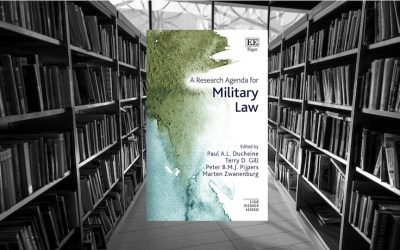
The Evolving Architecture of the International Law of Military Operations: Mapping the Future of Legal Research in Armed Conflict
International law governing military operations is undergoing a period of profound transformation. Rapid technological innovation including...

Armenia’s Military Procurement from India and Article 36 of the Additional Protocol I
Armenia is rearming. Following the catastrophic losses of the 2020 Nagorno-Karabakh War and the complete collapse of Russian reliability as a...

The Regulation of Levées en Masse: Extending Participation to Diaspora Populations
The levée en masse (i.e., mass uprising) is a relatively rare form of conflict participation recognised by international humanitarian law (IHL). It...

The Role of Municipal Law Analogies in the Law of Armed Conflicts
It is common wisdom that the law of armed conflict (LOAC) contains many “principles” or rules of considerable normative breadth and importance. Some...

The Alleged Poisoning of Alexei Navalny: Why do Toxin Allegations Go to the Hague?
During the 2026 Munich Security Conference, the United Kingdom, Sweden, France, Germany, and the Netherlands made a joint statement concerning the...
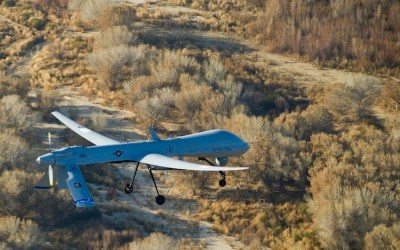
Legal Accountability for AI-Driven Autonomous Weapons
Editors' note: This is the first post in a series dedicated to Lethal Autonomous Weapons Systems (LAWS) and the questions of human oversight and...

When Red Lines Cross Blue Lines: Cyber Attacks on Poland’s Water Infrastructure – Part II
In Part I of this post, we addressed the threshold issue of whether cyber operations targeting water infrastructure qualify as attacks, thus...
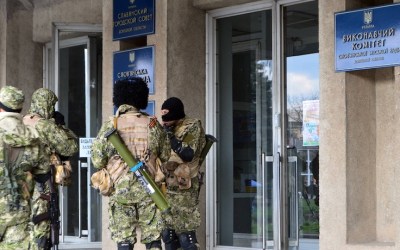
An Occupying Power’s Authority to Conclude Treaties for Occupied Territories
Can an occupying power conclude treaties relating to the occupied territory? Can it do so solely in its own name or also in the name of the State...

When Red Lines Cross Blue Lines: Cyber Attacks on Poland’s Water Infrastructure – Part I
While the digital transformation of water treatment plants, distribution networks, and dams has created significant efficiencies, few civilian...

Anti-Personnel Mines in a Post-Hostilities Environment: The Case of Armenia-Azerbaijan Conflict
Few contemporary conflicts have been as deeply saturated with landmines as the protracted confrontation between Armenia and Azerbaijan. Over three...

Laws of Yesterday’s Wars Symposium – Conclusion
As this symposium draws to a close, one principle emerges as the unifying thread across the societies examined in Volume 4 of The Laws of...

Laws of Yesterday’s Wars Symposium – African Traditions and the Preservation of Humanity during Warfare
Editor’s note: The following post highlights a chapter that appears in Samuel White’s fourth edited volume of Laws of Yesterday’s Wars published...
