

Articles of War
Lieber Studies Indo-Pacific Volume – Interpretative Choice and Risk in Indo-Pacific Air Domain Challenges
Legal challenges in the Indo-Pacific air domain have typically been overshadowed by legal issues arising in, under, and from the sea. Yet resolution of many of these challenges remains dependent on the appetite for risk in the law governing maritime operations....
featured post
No Results Found
The page you requested could not be found. Try refining your search, or use the navigation above to locate the post.

Legal Interoperability Lessons from the Red Sea
The landscape of 21st century warfare is rapidly changing. After 20 years of fighting terrorism by non-State actors, great power competition and...
The Sack of Cities: Laws of War and Evolving Attitudes in Historical Perspective
Throughout most of Western history, stretching back to the Homeric tradition of Troy, the right to sack a besieged city that refused to surrender...
Statehood in Conflict Classification: Revisiting Recognition in Contemporary IHL
After more than a decade since the unilateral declaration of independence of Kosovo and the independence and admission of South Sudan into the...
Dual-Use Objects and Dual-Purpose Attacks
Editors’ note: This post highlights work in the author’s recent chapter, “Objective and Subjective Tests for Determining Violations of the Law of...
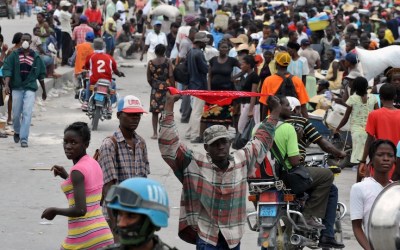
Haiti’s Gang Violence and the Armed Conflict Threshold: An IHL Analysis
Haiti’s armed violence and humanitarian crisis remain acute. Armed gangs control significant territory, reportedly perpetrating killings, sexual...
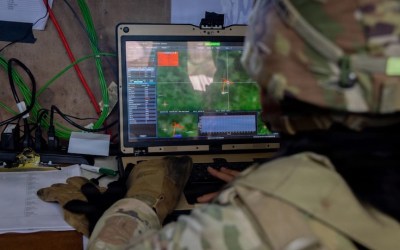
Warification and the Illusion of Precision: AI, Targeting, and Increasing Civilian Harm
Editors’ note: This post features analysis included in the authors’ recently published article, “The Warification of International Humanitarian Law...

Unity in Principle, Variation in Practice: European Approaches to Meaningful Human Control for LAWS
Editors' note: This is the fifth post in a series dedicated to Lethal Autonomous Weapons Systems (LAWS) and the questions of human oversight and...
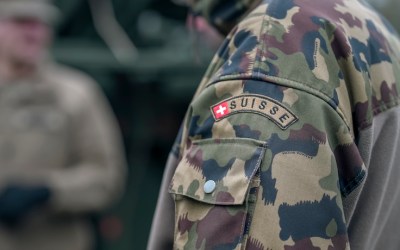
Targeting in the Swiss Army
Many members of the press and media are generally uninformed, dismissive, and even sneer at matters related to international humanitarian law (IHL)....
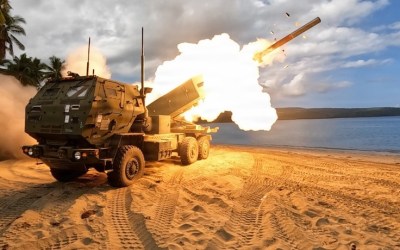
Revisiting Application of Jus ad Bellum during an Ongoing International Armed Conflict
The relationship between the existence of an international armed conflict (IAC) and the legality of the use of force under the jus ad bellum (JAB)...
Human Responsibility Retained: U.S. Positions on Judgment and Oversight for LAWS
Editors’ note: This is the fourth post in a series dedicated to Lethal Autonomous Weapons Systems (LAWS) and the questions of human oversight and...

Patriotic War: Total Defence, Resistance, and Additional Protocol I
Russia’s clear aggression towards Ukraine and its thinly veiled “hybrid war” against its other European neighbours has rightly caused alarm amongst...
Modern Attack Balloons and the 1907 Hague Balloons Declaration
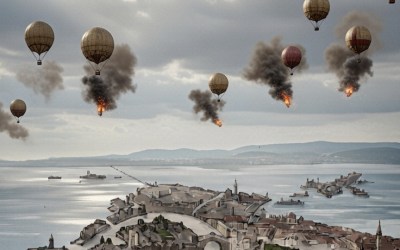
In the days leading up to the 1812 Battle of Borodino, Russia devised a plan to float a large shark-shaped hot air balloon over French forces to...
