

Occupation
An Occupying Power’s Authority to Conclude Treaties for Occupied Territories
Can an occupying power conclude treaties relating to the occupied territory? Can it do so solely in its own name or also in the name of the State whose territory is occupied? No clear answer yet exists for these questions, though a short and recent account, especially...
The ICJ Obligations of Israel Advisory Opinion – Mass Deprivation and Preventive Protection
Editors’ note: This post is part of a series featuring analysis of the 2025 International Court of Justice advisory opinion on obligations of Israel in and in relation to the Occupied Palestinian Territory. The introductory post to the series by Sean Watts is...

Of Evolving Belligerent Occupation Law: Old “Hague” Occupation and New “Geneva” Occupation
For years, the legal status of so-called “functional occupation” was unclear in international humanitarian law (IHL) (see, e.g., this 2012 work by Zwanenburg, Bothe, and Sassòli). In 2024, however, the International Court of Justice (ICJ) adopted a new take on...
The Law of Neutrality in Situations of Belligerent Occupation
Today, very few situations of belligerent occupation exist. Yet, in a recent advisory opinion, the International Court of Justice (ICJ) analyzed international legal obligations that stem from belligerent occupation, including those respecting offers of humanitarian...

The ICJ Obligations of Israel Advisory Opinion – Qualifying Israel as an Occupying Power in the Gaza Strip
Editors’ note: This post is part of a series featuring analysis of the 2025 International Court of Justice advisory opinion on obligations of Israel in and in relation to the Occupied Palestinian Territory. The introductory post to the series by Sean Watts is...
In Honor of Françoise Hampson – Parsing Proportionality
Editors’ note: This post is part of a series to honor Françoise Hampson, who passed away on April 18, 2025. These posts recognize Professor Hampson’s work and the significant contribution her scholarship made to our understanding of international law. It is a...

The ICJ Obligations of Israel Advisory Opinion – How Indispensable Is the UN After All?
Editors’ note: This post is part of a series featuring analysis of the International Court of Justice advisory opinion on Obligations of Israel as an Occupying Power. The introductory post to the series by Sean Watts is available here. In late October 2025, the...

The ICJ Obligations of Israel Advisory Opinion: A Quasi-Occupying Power?
On 22 October 2025, the International Court of Justice (ICJ) published an advisory opinion under the descriptive yet unwieldy title, Obligations of Israel in Relation to the Presence and Activities of the United Nations, Other International Organizations and Third...
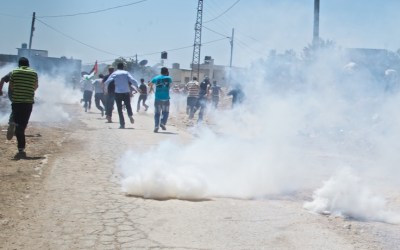
Protecting Inhabitants of Occupied Territory: Settler Violence in the West Bank
On July 11, 2025, Israeli settlers allegedly beat Sayfollah Kamel Musallet, a Palestinian-American U.S. citizen and Florida native, to death during a confrontation near Al-Mazra’a Al-Sharqiya, a village in the West Bank where most residents hold U.S. citizenship. A...
Statehood and the Law of Armed Conflict
This post highlights an important aspect of my latest monograph, The Essence and Reality of States – Effectiveness, Recognition and Legitimacy. The monograph is mainly about the genealogy of notions that have long informed discourse on international law, as well as...

Protection of Cultural Property in Prolonged Military Occupation
This year marks the eleventh anniversary of Russia’s occupation and illegal annexation of Crimea, a region internationally recognized as part of Ukraine. Against this backdrop and Russia’s 2022 full-scale invasion and war of aggression against Ukraine, Russian forces...

Ukraine Symposium – Seizure of Private Real Property and Transfer of Civilians into Occupied Territory
In May 2025, the Institute for the Study of War (ISW) reported that “Russia is inventorying real estate in occupied Ukraine in order to seize property from Ukrainian residents, likely in part to facilitate the transfer of Russian citizens to occupied territories” (see...

Carving Up Ukraine: What About the Azov Sea?
Among other things, the ongoing negotiations to end hostilities in the Russia-Ukraine War include a maritime ceasefire agreement for halting hostilities in the Black Sea. At this stage, no publicly available details exist concerning practice and implementation....

Israel-Hamas 2025 Symposium – Reoccupied? The Israel Supreme Court’s Judgment in Gisha v Government of Israel
On March 27, 2025, the Supreme Court of Israel, sitting as High Court of Justice (HCJ), published its judgment (in Hebrew) in Gisha v Government of Israel. The judgment concerns the passage of relief to the Gaza Strip during the war which began on October 7, 2023. It...

The ICC Palestine Case in the Aftermath of the Arrest Warrants Decisions – Part Two
On November 21, 2024, the Pre-trial Chamber of the International Criminal Court (ICC) issued four decisions dealing with various legal matters arising out of the Prosecutor’s May 20 request to issue arrest warrants in connection with the war in Gaza. In Part One of...
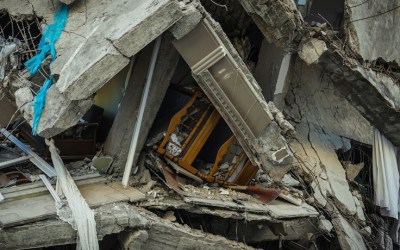
Understanding the Distinction Between Property Destruction Governed by Hague Article 23(g) and the Rules Governing Attacks
This analysis follows my prior post explaining the obligations imposed by Article 23(g) of the Hague Regulations of 1907, annexed to Hague Convention IV. For the reasons stated below, the attack rules contained in Additional Protocol I (AP I) control destruction of...

Crimea and the Interrelationship Between Military Occupation and Annexation
Every State in the world is protected from the use of force against its sovereignty and territorial integrity. This protection and the corresponding right of self-defense, enshrined in Article 51 of the UN Charter, lie at the heart of international law. Put simply,...

The ICJ’s Advisory Opinion on the Occupied Palestinian Territory
Twenty years after the International Court of Justice (ICJ) issued its advisory opinion on the consequences of the Israeli Wall, the UN General Assembly asked the ICJ to issue another advisory opinion regarding Israel’s practices and policies in occupied Palestinian...

Ukraine Symposium – Is Ukraine Occupying Territory in Russia?
In the early morning hours of August 6, Ukrainian forces in armored vehicles moved into the Kursk region of Russia. This surprise offensive by Ukraine into Russia represents the largest foreign incursion into Russia since the Second World War. By August 15, the...

The ICJ’s Advisory Opinion on the Occupied Palestinian Territory and the Court’s Discretion
On July 19, 2024, the International Court of Justice (ICJ) delivered its advisory opinion (AO) on the Legal Consequences Arising From the Policies and Practices of Israel in the Occupied Palestinian Territory, Including East Jerusalem (OPT AO). The Court responded to...
Authoritatively Stating International Law? The ICJ and Israeli Withdrawal from the OPT
On July 21, 2024, the International Court of Justice (“ICJ” or “Court”) delivered its advisory opinion on the Legal Consequences arising from the Policies and Practices of Israel in the Occupied Palestinian Territory, including East Jerusalem. On its own terms, the...

Israel – Hamas 2023 Symposium – The Question of Whether Gaza Is Occupied Territory
On October 7, Hamas launched a brutal attack that killed more than 1,400 people and injured another 6,900 individuals, including at least 32 Americans. Hamas also took over 240 hostages in violation of the law of armed conflict (LOAC). After the recent pause in...
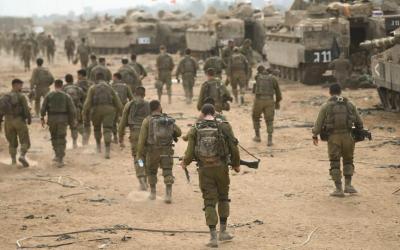
Israel – Hamas 2023 Symposium – International Law “Made in Israel” v. International Law “Made for Israel”
International lawyers inside and outside Israel have long been critical of Israel’s tendency to rely on very specific and problematic interpretations of international law to justify certain military acts and foreign policies (see e.g., here, here, and here). Such...
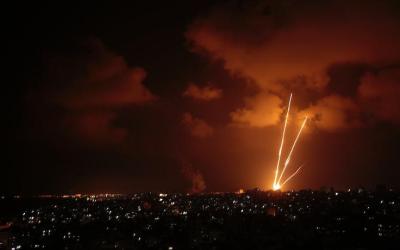
Israel – Hamas 2023 Symposium – The ICRC’s Statement on the Israel-Hamas Hostilities and Violence: Discerning the Legal Intricacies
On October 13, 2023, the International Committee of the Red Cross (ICRC) released an extraordinary statement, which among other things called for the release of Israeli hostages, condemned Israel’s “limitless destruction of Gaza,” and termed Israel’s calls to evacuate...

Ukraine Symposium – The Law of Belligerent Occupation
The ongoing conflict in Ukraine has raised important and timely issues regarding the application, implementation, and enforcement of the law of armed conflict. Particularly relevant, is the law of occupation. Unfortunately, this discrete subset of the law of armed...
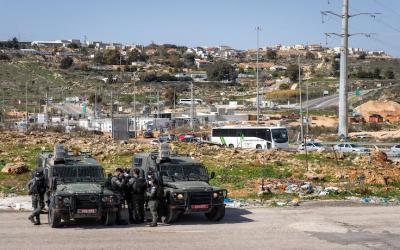
The Forthcoming ICJ Advisory Opinion on Israel/Palestine and the Doctrine of Illegal Occupation
On January 9th, 2023, the UN General Assembly requested the International Court of Justice (ICJ) to provide an advisory opinion on two questions. The first concerns the legal consequences arising from the ongoing violation by Israel of the right of the Palestinian...
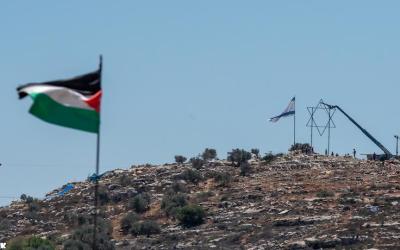
Advisory Opinion 2.0: The Israeli-Palestinian Conflict Returns to The Hague
The United Nations General Assembly Fourth Committee, also known as the Special Political and Decolonization Committee, addresses a range of issues, including matters relating to the Israeli-Palestinian conflict. The committee’s latest resolution, which the UN General...

Ukraine Symposium – Russia’s Forcible Transfer of Children
Earlier last month, the European Parliament adopted a resolution condemning the forced transfer of Ukrainian children to Russia. The resolution follows months of reporting that Russian authorities have been separating children from their parents, conducting abductions...
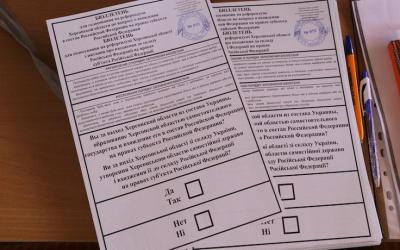
Ukraine Symposium – Illegality of Russia’s Annexations in Ukraine
On 30 September 2022, a ceremony took place in Moscow’s Kremlin in which Vladimir Putin, President of the Russian Federation, signed “treaties” with representatives of four entities formed in the territory of Ukraine: the so-called People’s Republics of Donetsk and...
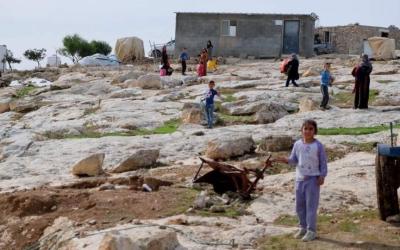
Abu ‘Aram: Displacement of Persons, Displacement of Law
On May 4, 2022, Israel’s Supreme Court sitting as High Court of Justice handed down its decision in HCJ 413/13 Abu ‘Aram v. The Minister of Defense. This decision granted the Israeli military authorities permission to displace over 1,000 Palestinians (and possibly as...
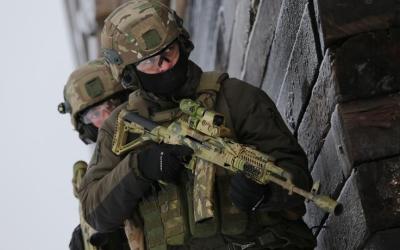
Abducting Dissent: Kidnapping Public Officials in Occupied Ukraine
In the last two weeks, it has been reported that Russian occupying forces have abducted up to three Ukrainian mayors with new mayors installed in their place. On Friday 11 March, it was reported that Russian soldiers occupying the city of Melitopol had taken the...

Levée en Masse in Ukraine: Applications, Implications, and Open Questions
On February 24, 2022, facing an existential threat, President Volodymyr Zelensky signed a decree ordering a general mobilization to defend Ukraine against a Russian invasion. Posted on the presidential website, the decree intended "to ensure the defence of the state”...

Prisoners of War in Occupied Territory
It seems increasingly likely that the international armed conflict raging in Ukraine will devolve into a partial Russian occupation of large portions of Ukrainian territory. President Putin may very well declare annexation—or reincorporation—of that territory into...
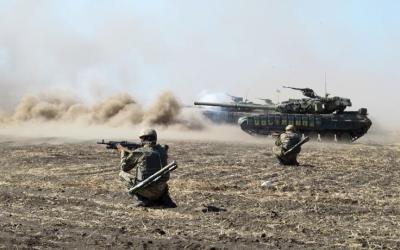
Application of IHL by and to Proxies: The “Republics” of Donetsk and Luhansk
From March 2014 until 23 February 2022, Russia denied any involvement in Ukraine (other than Crimea which it has annexed). It claimed that hostilities in the Donbas were conducted by forces of the “republics” of Donetsk and Luhansk (the “republics”). Ukraine argued...

Reflections on the Law of Occupation: Afghanistan and Iraq
A recent New York Times article discussed, in part, the occupations of Iraq and Afghanistan, raising important, yet underexplored, questions about occupations under the law of armed conflict (LOAC). The article focuses primarily on the U.S. armed forces’ transition...
Russian Cyber Operations and Ukraine: The Legal Framework
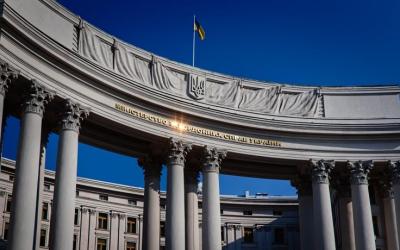
Last week, hostile cyber operations targeted approximately 70 Ukrainian government websites, including that of the Cabinet. Affected sites included Diia, the most widely used site for handling online government services. The operations included posting the message,...
Occupation Resistance, War-Rebels, and the Lieber Code
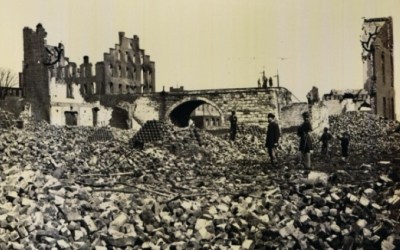
The origin of the codified law of belligerent occupation is often traced to the Hague Regulations of 1899 (updated in 1907). However, the Lieber Code of 1863 laid important and underappreciated legal groundwork for the Hague treaties’ occupation provisions. In it,...
TOPICS
