

Asia-Pacific Journal Series – Introduction: Military AI Has Left the Laboratory
Editors’ note: This post appears as part of a series highlighting articles in a recent volume of the Asia-Pacific Journal of International Law, on which presentations were made at a workshop hosted by National University of Singapore’s Centre for International Law.
For years, discussions about artificial intelligence (AI) and international humanitarian law (IHL) occupied a curious space. They were important, but comfortably theoretical. Lawyers debated autonomous weapons that had not yet been fielded, and speculated about how IHL would respond when machines began making decisions once reserved for humans. That future has arrived, although perhaps not in the way many expected.
AI in Military Decision-Making
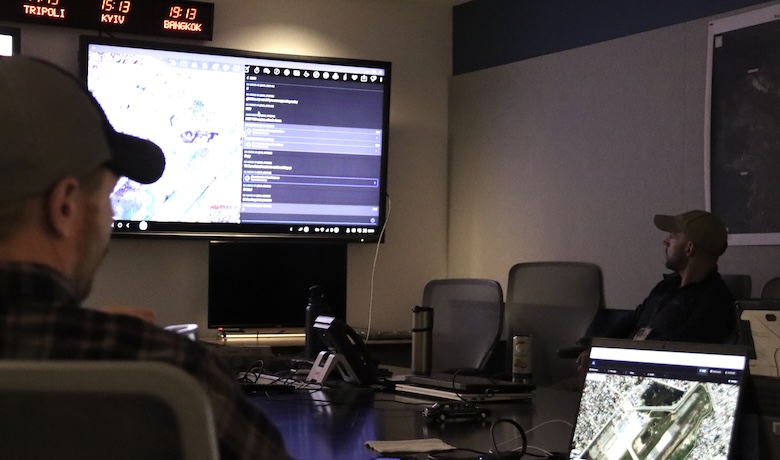
The defining military AI story is not autonomous robots replacing soldiers. It is the quiet integration of AI into almost every stage of military decision-making. AI systems now assist with intelligence analysis, process satellite imagery and drone feeds, identify patterns invisible to human analysts, recommend targets, prioritise logistics, allocate scarce resources, and shape the information environment in ways that were impossible to imagine only a few years ago. They increasingly influence how commanders understand the battlefield before a single decision is made.
This represents something more significant than another technological advance. Previous military innovations increased the speed, range, or destructive power of warfare. AI increasingly participates in the production of military knowledge itself. It does not simply execute human decisions; it helps generate them. That shift places longstanding legal assumptions under considerable pressure. Concepts such as human judgment, accountability, intent, reasonableness, and effective control remain central to IHL, yet AI challenges each of them in subtle and often unexpected ways.
Recent conflicts have brought these questions into sharp focus. AI-enabled decision-support systems have accelerated intelligence analysis and targeting processes to speeds unimaginable a decade ago. Commercial cloud infrastructure now underpins military operations on a scale few anticipated, blurring traditional distinctions between civilian and military infrastructure. At the same time, concerns surrounding data integrity, algorithmic reliability, model manipulation, and the growing dependence of defence organisations on private technology companies have moved from academic speculation to operational reality.
The legal debate has changed accordingly. The question is no longer whether AI will affect military operations. It already does. The more difficult question is whether existing legal frameworks remain sufficient to regulate technologies that evolve continuously, rely on opaque computational processes, and increasingly influence decisions without ever formally replacing the human decision-maker.
From Workshop to Symposium
It was against this backdrop that the Centre for International Law at the National University of Singapore convened a regional workshop in April 2026 in support of the ongoing West Point Manual on International Law Applicable to Artificial Intelligence in Warfare (AI Manual). Many of the papers presented there have since been published in the Asia-Pacific Journal of International Humanitarian Law Special Issue on Military Artificial Intelligence.
This Articles of War symposium seeks to continue that discussion in a format designed for practitioners. The contributors return to the central ideas developed in the Special Issue, but with a sharper focus on the practical legal and operational questions confronting military lawyers, commanders, policymakers, and governments. The objective is not simply to explain emerging technologies. It is to examine how international law continues to function when military capability increasingly depends upon algorithms, data, and machine learning.
Where Existing Doctrine Struggles
One theme appears repeatedly throughout the symposium: distinguishing what is genuinely new about AI from the mere evolution of existing legal problems.
Military lawyers have confronted technological disruption before. Precision-guided weapons, cyber capabilities, space systems, and autonomous defensive software all forced the law to adapt. Not every challenge associated with AI is unprecedented. Automation, for example, has long existed within cyber operations, while increasingly sophisticated decision-support systems have accompanied military planning for decades. Yet AI also possesses characteristics that have no obvious historical analogue. Systems may behave stochastically rather than deterministically. They may produce outputs that cannot easily be explained, even by their developers. They can be manipulated through poisoned training data, altered through continual updates, or discover strategies that were never explicitly programmed. These are not simply technical curiosities. They create legal questions that existing doctrine never anticipated.
The symposium also demonstrates that many of the most significant legal challenges posed by AI arise outside the traditional framework of targeting law. IHL understandably concentrates on attacks, proportionality, precautions, and distinction. Yet AI systems are vulnerable long before weapons are employed. Data poisoning, model corruption, adversarial manipulation, and algorithmic interference frequently occur during development, procurement, or peacetime competition, often below the threshold of armed conflict. Understanding military AI therefore requires engagement not only with IHL, but with broader questions of governance, State responsibility, cyber operations, procurement, and military policy.
Perhaps unsurprisingly, accountability remains the thread connecting almost every contribution. Military AI has generated understandable concern that responsibility may disappear into increasingly complex interactions between commanders, operators, software engineers, commercial providers, and adaptive systems. The contributors challenge that assumption from multiple directions. Rather than asking whether AI makes accountability impossible, they explore how existing legal principles can continue to attribute responsibility within human-machine systems that are becoming progressively more integrated.
Bringing a Regional Perspective
A final strength of this symposium lies in its regional perspective. Much of the global discussion surrounding military AI has been shaped by the priorities of major technological powers. The Asia-Pacific presents different strategic realities, different institutional capacities, and different operational challenges. Issues such as regional datasets (or the lack thereof), technological dependence, digital forensics, and the perennial issue of bias produce legal questions that deserve attention in their own right.
These perspectives do more than diversify the existing debate: they expose and deconstruct assumptions that have too often gone unquestioned in discussions dominated by Western and Chinese approaches to military AI.
The Central Challenge
None of the contributors claim to provide definitive answers. That would be an impossible ambition in a field evolving as rapidly as military AI. What they do provide is something more valuable: careful analysis of where existing international law remains resilient, where it is beginning to strain, and where genuinely new legal thinking may be required. Collectively, these posts reinforce an important point. The central challenge posed by military AI is not simply technological. It is whether legal systems designed for human decision-makers can continue to regulate warfare when human judgment is increasingly mediated by machines.
That question will not be answered by lawyers alone. It demands sustained engagement between military practitioners, technologists, policymakers, industry, and scholars. If this symposium succeeds, it will not close that conversation. It will help ensure that it continues in the place where it matters most: alongside the operational realities that are already reshaping the future of armed conflict.
***
Dr Samuel White is the Scientia Senior Researcher in Military Law and War Studies at UNSW Canberra (based within the Australian Defence Force Academy).
Danielle Yeow is an Adjunct Associate Professor at NUS Law and Adjunct Senior Fellow at the NUS Centre for International Law, where she leads work on climate change law and policy, cyber law and governance, and broader public international law issues.
Dr Jonathan Kwik is Researcher in international law at the Asser Institute in The Hague, Netherlands, specialised in international humanitarian law and militarised emerging technologies.
The views expressed are those of the authors, and do not necessarily reflect the official position of the United States Military Academy, Department of the Army, or Department of Defense.
Articles of War is a forum for professionals to share opinions and cultivate ideas. Articles of War does not screen articles to fit a particular editorial agenda, nor endorse or advocate material that is published. Authorship does not indicate affiliation with Articles of War, the Lieber Institute, or the United States Military Academy West Point.
Photo credit: U.S. Department of State
