

Lieber Studies Attribution of Non-State Actor Conduct Volume – Attribution of Non-State Actor Conduct During Armed Conflict
Editors’ note: This post appears as an entry in a series dedicated to Dr Jennifer Maddocks’ monograph, Attribution of Non-State Actor Conduct during Armed Conflict, appearing in the Lieber Studies book series with Oxford University Press. Dr Maddocks will participate in a panel discussion on the topic of attribution on Tuesday September 29 at 16:30 BST at the University of Reading. To attend the discussion in person or online, please register at this link.
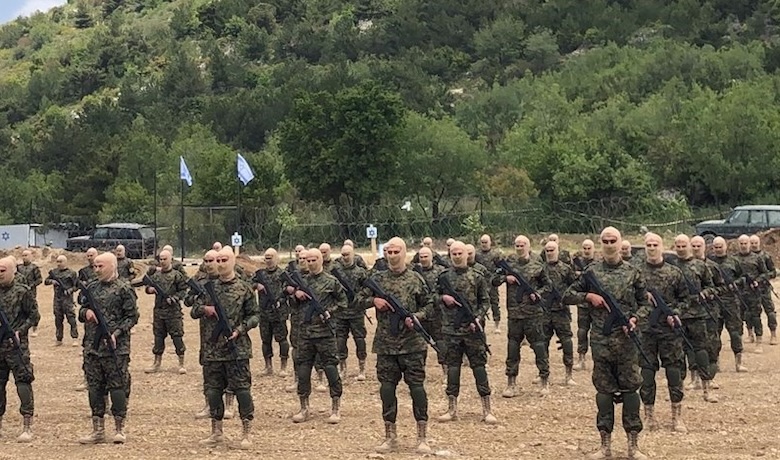
The modern battlefield features not only State military forces, but also a plethora of non-State actors. Armed groups fight for power and influence in territories across the globe, as illustrated by the Rapid Support Forces (RSF) in Sudan and Hezbollah in Lebanon. Private military contractors (PMCs) perform an increasingly important role in combat operations, supplying, maintaining, and operating advanced military capabilities. Meanwhile, civilians also participate in hostilities, conducting operations in the cyber domain, for example, or committing acts of sabotage.
The involvement of non-State actors in armed conflict raises challenging issues of accountability. As the RSF’s atrocities in Sudan vividly demonstrate, armed groups often target civilians in breach of the law of armed conflict (LOAC). With technological advancements on the battlefield, PMCs play a critical role in operations that could potentially breach international law, for example, when operating AI-enabled drones. Individual civilians might equally act in a way that violates LOAC, such as by launching harmful cyber operations against civilian objects.
When non-State actors violate international law, the perpetrators can bear individual criminal responsibility for war crimes. However, only States can violate LOAC and international human rights law. For the victims of a non-State actor’s harmful conduct, often, the only realistic option to secure reparations is to invoke the responsibility of a State. This reality brings to the fore the issue of attribution. When are the harmful acts of non-State actors during armed conflict attributable to a State, leading to State responsibility? This question is the principal focus of my new book, Attribution of Non-State Actor Conduct During Armed Conflict, which forms part of the Lieber Studies Series. In this post, I offer a brief overview of the monograph and highlight some of my conclusions.
States and Non-State Actors in Armed Conflict
Non-State actors on the modern battlefield frequently operate with the assistance of one or more States. The RSF in Sudan receives assistance from the United Arab Emirates, for example, while Hezbollah and other armed groups receive considerable support from Iran. To understand when the acts of such groups may be attributable to a State, it assists to apply the law to specific violations by non-State actors, perpetrated with State support. This approach brings the analysis to life and helps to demonstrate the law’s practical application during situations of conflict.
My book uses three case studies to illustrate when real-world examples of non-State actor conduct may be attributable to a State. The first is the conflict in Syria, which involved numerous proxy relationships. In the early stages of the hostilities, for instance, the Syrian regime used local militias to repress the protests. Later, Shi’a militia groups, including Hezbollah, bolstered the regime’s forces with support from Iran. Once Russia became involved in the fight, it employed PMCs such as the Wagner Group to reinforce the regime. Meanwhile, the United States and its allies assisted first, the rebels opposing the government, before switching focus to the fight against ISIS, conducted principally via another non-State actor, the Syrian Democratic Forces.
The conflict in Syria exemplifies several common features of contemporary armed conflict that are relevant when assessing the potential attribution of conduct to a State. These include the diversity of non-State actors on the battlefield and the varied relationship between those non-State actors and the States involved in the conflict. The remaining two case studies, focusing on the conflicts in Ukraine and the Democratic Republic of the Congo (DRC), provide further examples of proxy relationships as well as numerous acts on the part of those proxies that potentially violate international law.
The factual realities that the three case studies highlight pose fundamental challenges to the traditional framework of international law. This assumes that States are the predominant actors on the world stage with a monopoly on the use of force. Thus, the law of State responsibility as reflected in the International Law Commission (ILC)’s Articles on State Responsibility (ASR) creates a strict public-private divide. Conduct is either public in character, meaning that it is attributable to a State and can constitute an internationally wrongful act, or it is private and cannot lead to State responsibility.
When a non-State actor acts with State support, its conduct falls at the intersection of the public-private divide. It is not entirely private in nature in view of the State support that enables its commission, but neither is it entirely public given the private character of the perpetrator. During armed conflict, activities involving elements of both the public and the private abound. This reality raises difficult questions about when such conduct should—or should not—be attributable to a State and engage a State’s international responsibility.
The Six Rules of Attribution
My book’s principal focus is the six rules of attribution reflected in the ASR. These determine when ostensibly private conduct can be attributed to a State and reflect the principle that a State should bear responsibility only for conduct that can be properly characterized as its own. The fact that conduct occurs within a State’s territory or it is perpetrated by one of its nationals is insufficient to attribute the relevant act to a State. A far stronger link must exist between the State and the act at issue, established either by the factual relationship between the State and the non-State actor or by their legal relationship under the State’s domestic law.
Three of the rules of attribution address the conduct of State organs and agents, meaning those persons or entities through which the State chooses to act to achieve its conflict goals. These rules, reflected in Articles 4, 5, and 8 ARSIWA, are those that are most likely to apply to attribute non-State actor conduct to a State during armed conflict. Part Three of the book devotes a chapter to each of these rules, using examples from the case studies to demonstrate their scope and application during armed conflict.
The chapters conduct a deep dive into questions such as: When does an entity attain de facto State organ status for the purposes of Article 4 ASR? What does it mean for an entity to be “empowered by the law” of a State to exercise “elements of governmental authority” for the purposes of Article 5? And what does the Article 8 “effective control” test require in terms of the degree of State influence over the relevant violations of international law? In each case, the book reviews the rule’s drafting history within the ILC as well as relevant jurisprudence to assess the rule’s meaning and status in customary international law, bringing the analysis to life using examples from the case studies.
Part Four of the book focuses on the remaining three rules of attribution, reflected in Articles 9, 10, and 11 ASR. They differ from the rules examined in Part Three in that they can attribute conduct to a State even if there are no factual or legal links between the State and the non-State actor at the time the latter acts in potential violation of international law. These rules address certain exceptional situations in which attribution of non-State actor conduct to a State is deemed appropriate, and they are invoked far less frequently than the rules addressed in Part Three.
There is considerable ambiguity regarding these three rules of attribution and the precise conduct to which they would apply. The chapters examining these rules therefore seek to shed light on their meaning, using the case studies as well as examples from other conflicts. They address questions such as: When are acts performed “in the absence or default of the official authorities” and when are they deemed to be “called for” for the purposes of the rule reflected in Article 9 ASR? What counts as an “insurrectional movement” for the purposes of Article 10? What does it mean for a State to “acknowledge and adopt” prior non-State actor conduct under the rule expressed in Article 11?
Notwithstanding the numerous uncertainties surrounding these rules, the analysis recognizes their potential relevance to contemporary conflict. For example, Ukrainian civilians actively participated in the hostilities following Russia’s 2022 invasion, raising the question whether any LOAC violations they committed are attributable to Ukraine pursuant to the rule reflected in Article 9. Meanwhile, the success of the Islamist group Hay’at Tahrir al-Sham (HTS) in toppling the Assad regime in Syria demonstrates the continued relevance of the rule reflected in Article 10. As HTS succeeded in becoming the new government, the rule potentially attributes to Syria the group’s human rights violations in Idlib province, perpetrated before the group took power.
A Gap in Accountability?
As the preceding paragraphs explain, the book’s first objective is to clarify the precise circumstances in which non-State actor conduct is attributable to a State during armed conflict. Its second is to evaluate the sufficiency of the rules of attribution in this context. This latter enquiry is most pertinent to the rules related to State organs and agents, reflected in Articles 4, 5, and 8 ASR. In contrast with the other rules the book examines (expressed in Articles 9-11), attribution pursuant to these rules results from some form of action, taken by a State organ prior to or during the conduct that potentially violates international law, to empower, instruct, or enable the non-State actor to act on the State’s behalf. It is these rules of attribution that are most likely to apply when States use non-State actors to further their national security and foreign policy goals during armed conflict.
The analysis of the rules expressed in Articles 4, 5, and 8 reveals that States can act via proxy in a manner that they could not lawfully act via their own organs. An examination of Russia’s relationship with the Wagner Group, for example, exposes the difficulties that arise when applying each of the rules of attribution to conduct that was clearly performed for the State and aimed to promote its foreign policy goals. It is not the rules themselves that are at fault but rather their predominant interpretation. The way in which the ILC and the International Court of Justice (ICJ) have construed certain elements of the three rules severely limits their practical relevance.
One prominent example is the effective control test relevant to Article 8 ASR. This requires evidence that the State controlled the specific acts performed by the non-State actor that potentially violate international law (ICJ, Paramilitary Activities, paras. 115-16; ICJ, Bosnian Genocide, paras. 398-407). The stringent test formulated by the ICJ ignores pertinent aspects of the wider relationship between States and non-State actors during armed conflict and places a heavy evidential burden on injured States. The practical result is that States can provide significant support to non-State actors engaged in conflict and exercise considerable influence over their activities while bearing a low risk of State responsibility if the non-State actor acts in a way that violates international law.
The analysis in Part Three of the book reveals that a more relaxed interpretation of the three rules reflected in Articles 4, 5, and 8 ASR would allow each to better meet its object and purpose in attributing conduct to States in the particular circumstances it is designed to address. However, this would not close the gap in accountability entirely. Attribution should occur only when the conduct concerned can properly be classified as an act of State. Often, States contribute significantly to a non-State actor’s ability to commit violent acts in contravention of international law, for example by providing the necessary arms and ammunition, but the recipient acts with such a high degree autonomy that attribution is not appropriate.
Thus, the attribution regime reflected in the ASR cannot address States’ involvement in all categories of private conduct. Armed conflicts involve a wide variety of actors, which act with varying degrees of State support. When a State facilitates a non-State actor’s conduct in potential violation of international law, it does not necessarily follow that the non-State actor is acting on the State’s behalf, or that its conduct should be considered an act of the State.
If attribution is not appropriate, the relevant acts remain private in character and cannot amount to an internationally wrongful act. The law of State responsibility, as reflected in the ASR, does not include any mechanism by which States can bear responsibility for their complicity in non-State actor conduct, even when they knowingly facilitate the relevant abuses. Thus, the law fails to address the reality that during armed conflict, States often enable undisciplined individuals and groups to act in a way that would violate the State’s international legal obligations and thereby cause considerable harm.
In my book, I briefly consider how international law should address this gap in accountability. One possibility is to extend the scope of the provision regulating States’ aid or assistance to other States, reflected in Article 16 ASR, to their support to non-State actors. Notwithstanding non-State actors’ lack of international legal personality, it makes little sense for the law to prohibit States from assisting other States to violate international law but to allow them to provide equivalent assistance to non-State actors. This is particularly the case given the power and autonomy exercised by many non-State actors and their growing propensity to act in a State-like manner.
An alternative—and perhaps more effective—way to tackle the gap in accountability is to strengthen certain primary norms of international law. Relevant norms in this context include the prohibition on the use of force and the principle of due diligence. Importantly, primary norms hold States to account for their own organs’ conduct in relation to the non-Sate actor concerned, meaning that they regulate States’ behavior towards non-State actors without requiring injured States to cross the high evidential bar set by the rules of attribution. Primary norms can also impose positive duties on States to ensure their proxies’ compliance with international law; a type of obligation that the secondary law of State responsibility simply cannot impose. The strengthening of relevant primary norms, such as the duty to respect and ensure respect for LOAC enshrined in common Article 1 of the Geneva Conventions, could represent a significant step forward in the quest to hold States properly to account when they facilitate harmful conduct by non-State actors engaged in conflict.
Conclusion
The ILC’s work on the law of State responsibility highlights the difficulties that arise when seeking to determine States’ responsibility for the conduct of actors that fall outside the structure of the State. These difficulties are particularly acute during armed conflict due to the often-unclear boundaries between the conduct of States on the one hand and the acts of armed groups and other non-State actors on the other. The black-and-white process of establishing whether conduct is attributable to a State—or it is not—presents a considerable challenge and brings to light tensions between competing interests.
One such interest is the need for accountability, to ensure that States respect the law and are held to account if they do not. Accountability concerns call for less stringent rules of attribution to ensure that States bear international responsibility when the non-State actors that act on their behalf violate international law. But counter to this is the principle that States should bear responsibility only for conduct that can be categorized as their own. Holding States accountable for a wide range of non-State actor conduct, with which they might be only marginally involved, would extend State responsibility too far, particularly in situations of armed conflict in which armed groups and other non-State actors often act with considerable autonomy and with varying levels of State support (see ICJ, Bosnian Genocide, para. 406). A delicate balance must therefore be struck.
My book explores that balance, seeking to ascertain whether it is correctly poised or tips too far in one direction. While its principal aim is to clarify the meaning of the six rules of attribution, it also evaluates their effectiveness in holding States to account for conduct performed on their behalf. This is done principally via examples from the case studies, namely the conflicts in Syria, Ukraine, and the DRC. However, the conclusions reached have wider implications for conflicts around the world, both today and in the future.
***
Jenny Maddocks is a Lecturer in International and Operational Law at the University of Reading.
The views expressed are those of the author, and do not necessarily reflect the official position of the United States Military Academy, Department of the Army, or Department of Defense.
Articles of War is a forum for professionals to share opinions and cultivate ideas. Articles of War does not screen articles to fit a particular editorial agenda, nor endorse or advocate material that is published. Authorship does not indicate affiliation with Articles of War, the Lieber Institute, or the United States Military Academy West Point.
Photo credit: Tasnim News Agency via Wikimedia Commons
