

Lieber Studies Non-State Actor Attribution Volume Series – Defining an “Insurrectional Movement”
Editors’ note: This post appears as an entry in a series dedicated to Dr Jennifer Maddocks’ monograph, Attribution of Non-State Actor Conduct during Armed Conflict, appearing in the Lieber Studies book series with Oxford University Press.
This post focuses on one aspect dealt with by Dr Maddocks in her excellent new book on the attribution of the conduct of non-State actors during armed conflicts. Specifically, I focus on her ninth chapter, “The Conduct of a Successful Insurrectional Movement.” As background, I wrote a book a few years ago about the different “rules” and “principles” arising from Article 10 of Articles on the Responsibility of States for Internationally Wrongful Acts (ARSIWA), which were drafted by the International Law Commission (ILC) and commended to States by a United Nations General Assembly resolution in 2001.
The relevant provisions of Article 10, Conduct of an insurrectional or other movement, read as follows:
1. The conduct of an insurrectional movement which becomes the new Government of a State shall be considered an act of that State under international law.
2. The conduct of a movement, insurrectional or other, which succeeds in establishing a new State in part of the territory of a pre-existing State or in a territory under its administration shall be considered an act of the new State under international law.
This short post first addresses the contours of one of the rules contained in Article 10 and then examines Dr Maddocks’s convincing analysis of defining “insurrectional movements” and the types of conduct that should be attributed to them.
Legal Consequences When an Insurrectional Movement Becomes the New Government
I will only examine one of the many rules in Article 10(1). When an insurrectional movement succeeds in its struggle for power during a revolution or an insurrection and becomes the new government (or establishes a new State, under Article 10(2)), what the movement did during the conflict is now considered to be the conduct of the State. In other words, when victory occurs, the conduct of a non-State private actor becomes retrospectively attributable to the State based on the actor’s subsequent change of status to an organ of the State. Ultimately, the principle is based on the “organic” or “structural” continuity which exists between the new government and the insurrectional movement. I have explained elsewhere that while the principle is well-established and sound, the theoretical rationale for its foundation is surprisingly weak.
This rule may seem rather odd at first. Thus, normally under ARSIWA, the “conduct of an insurrectional or other movement is not attributable to the State.” This is simply because the “structures and organization of the movement are and remain independent of those of the State.” Not only are the rebels and the government different organizations, but they were also, in fact, fighting each other for power. Yet, the concrete application of this rule would be problematic. Thus, while the rebels are (at least theoretically) responsible for their own acts committed during the uprising, the problem is that they will no longer exist as an autonomous entity after their victory. This means that no one could be responsible for war crimes or other wrongful acts and that the victims would have no remedy for the damage suffered.
Faced with such an extraordinary outcome, the ILC Commentary to ARSIWA stated that “it would be anomalous if the new regime … could avoid responsibility for conduct earlier committed by it.” For this reason, “in these exceptional circumstances, Article 10 provides for the attribution of the conduct of the successful insurrectional or other movement to the State” (emphasis added). Importantly, this rule does not involve a State being responsible for the acts of rebels; it is simply a “special case of attribution to a State.”
Article 10 is therefore a special rule aimed at filling potential gaps in accountability. Yet, as Dr Maddocks explains, there are “difficulties related to the rule’s practical application” which have the effect of “minimiz[ing] its significance in achieving this goal of accountability” (p. 294). In her book, she examines the practical difficulties related to the question of which type of group can be deemed an “insurrectional movement” and which individuals can be considered to be acting on its behalf.
What is an “Insurrectional Movement”?
While the mention of “other movements” at Article 10(2) is a reference to “national liberation movements” fighting for the creation of a new State in the context of decolonization, what qualifies as an “insurrectional movement” is not defined by the ILC. In his First Report, Professor James Crawford, the Special Rapporteur on State Responsibility for the ILC, said that “this is a matter which can only be determined on the basis of the facts in each case.” This is obviously correct. One of Dr Maddocks’s most important contributions is to provide guidelines to help define the contours of this concept.
It is generally considered that a certain threshold in terms of organization and structure is needed for a group to be considered an “insurrectional movement.” The ILC Commentary indicates that the definition of “dissident armed forces” contained in the Protocol Additional to the Geneva Conventions of 12 August 1949, and relating to the protection of victims of non-international armed conflicts (Protocol II) “may be taken as a guide” for the application of Article 10 because it reflects the “essential idea of an insurrectional movement,” including being “under responsible command,” exercising “control over a part” of the territory and being able “to carry out sustained and concerted military operations and to implement this Protocol.”
Dr Maddocks considers that this renvoi to the notion of dissident armed forces “appears to limit Article 10’s application to those insurrectional movements that are highly organized and exercise territorial control” (p. 308). With respect to the requirement of exercising territorial control, she believes that the ILC’s early deliberations regarding the rule of attribution indicate that this was not its “original intent” (p. 308) and that what matters ultimately is the degree of continuity between the group and the new government. She points out to the revolution in Iran in 1979 as an example where “a very popular insurgent movement could take power without engaging in prolonged hostilities or exercising de facto control over territory” (p. 309). On the second aspect of “organization,” she considers that, based on the “principle of continuity,” a movement must necessarily “have some degree of organization for the structures of the government it later establishes to bear a resemblance to those it had” before victory, but adds that this degree of organization “will vary from case to case” (p. 309).
On a related point, Dr Maddocks considers that while “rebel groups would normally succeed following an armed struggle, this is not an express requirement for Article 10’s application” (p. 310). Moreover, if “successful rebels normally employ some degree of violence,” she believes that “there is no requirement for this to reach a certain level of intensity before the [non-State actor] amounts to an insurrectional movement” (p. 310). In my view, that position may have the effect of broadening the scope of application of Article 10 too much. Thus, in his 1972 Report, Mr. Roberto Ago, serving as the ILC’s Special Rapporteur on State Responsibility, referred to the “quantitative difference—determined by the intensity of the disruption” between, on the one hand, “acts committed by private individuals in the course of riots, mass demonstrations, or other disturbances and disorders, and even in the course of an insurrection which has not, or has not yet, resulted in the formation of a movement endowed with separate international personality” and, on the other hand, those acts “in which an insurrectional movement assumes power over a portion of the State’s territory… .”
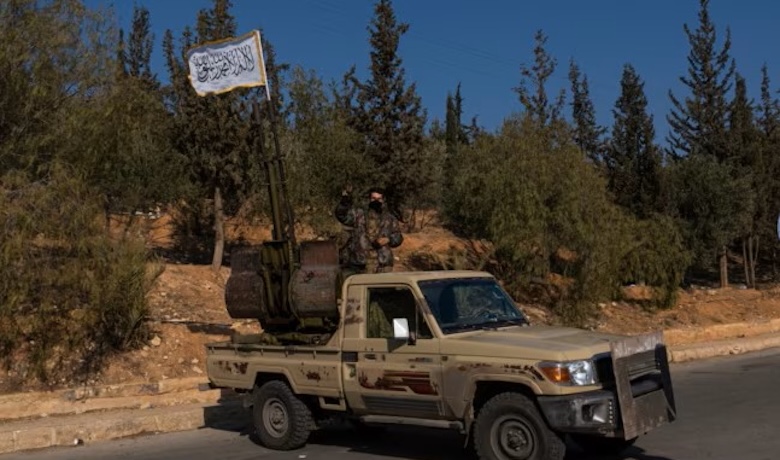
The ILC Commentary also highlights the difference between “dissident armed forces” (which are able “to carry out sustained and concerted military operations”) and “situations of internal disturbances and tensions, such as riots, isolated and sporadic acts of violence and other acts of a similar nature … .” The Commentary suggests that the latter situations are not covered by Article 10. In my view (and the view taken in Tatyana Eatwell’s doctoral thesis), the participants in the uprisings during the Arab Spring (2010-11), for instance in Tunisia and Egypt, do not fit the definition of an “insurrectional movement.” In contrast, the rebel group Hay’at Tahrir al-Sham, which took power in December 2024 in Syria and set up a new government, is a perfect example where Article 10 applies. The same is true regarding the ongoing conflict in Sudan and Yemen and the (so far) unsuccessful attempt by insurgent groups to take power.
Dr Maddocks provides a convincing approach to assess what constitutes the “conduct” of an insurrectional movement. The difficulty is that not all rebel groups are organized and structured with “organs” that act on their behalf. This is why she considers that it is more appropriate to look at the de facto role and function of individuals or entities in relation to the group. Given the flexible structure of these groups with actors exercising different degrees of autonomy, she considers that the test applied by the International Court of Justice in the context of the 2007 Genocide case is not appropriate. A more flexible test is required to assess whether an individual/entity can be considered as an “organ” of the group, including looking at the role it plays in the organization and its place within the organizational structure. Importantly, one needs to assess whether “its sole or principal function is to promote the movement’s goals,” which excludes others who may be acting on behalf of the group on an ad hoc basis for a short period of time and may be “merely taking advantage of the revolutionary turmoil for personal gain” (p. 314). In other words, one needs to distinguish between “mere supporters of the organization, over whom the movement has no means of control” from those “acting pursuant to some form of tasking or authority from the movement’s organs or leadership” (p. 315). Ultimately, one can agree with her conclusion that “rather than applying a strict rule of attribution, the sheer diversity of revolutionary movements calls for a more flexible approach, allowing for the assessment of claims on a case-by-case basis” (p. 315).
Conclusion
Dr Maddocks’s chapter dealing with insurrectional movements provides scholars with very useful practical tools to help define the actors covered by Article 10. The guidelines will also help judges and arbitrators to decide cases involving civil wars and insurrection. The current chaotic state of international relations and the endemic occurrence of civil wars and insurrections in places like Yemen, Sudan, the Sahel, etc., show the need to further develop legal rules applicable to such conflicts. Dr Maddocks’s new book is a welcome contribution to this field of international law.
***
Patrick Dumberry, Ph.D. (Graduate Institute of International Studies, Geneva, Switzerland), is a Full Professor at the University of Ottawa (Faculty of Law, Civil Law Section).
The views expressed are those of the author, and do not necessarily reflect the official position of the United States Military Academy, Department of the Army, or Department of Defense.
Articles of War is a forum for professionals to share opinions and cultivate ideas. Articles of War does not screen articles to fit a particular editorial agenda, nor endorse or advocate material that is published. Authorship does not indicate affiliation with Articles of War, the Lieber Institute, or the United States Military Academy West Point.
Photo credit: VOA, Yan Boechat via Wikimedia Commons
RELATED POSTS
by Joshua F. Berry, Liisi Adamson, Sean Watts
September 16, 2026
–
Attribution of Non-State Actor Conduct During Armed Conflict
September 16, 2026
–
Shadow Warfare, State Attribution and Substantial Involvement
by Ken Watkin
September 18, 2026
–
Blowing the Dust Off Article 9 of ARSIWA: Some Clarity and Some Questions
September 21, 2026
