

GC IV Commentary Series – Common Article 2(2) and (3)
Editors’ note: The following series considers ICRC’s 2025 updated Commentary on the Fourth Geneva Convention. Rosa-Lena Lauterbach, Liisi Adamson, and Sean Watts’s introduction to the series is available here.
Most discussion concerning Article 2 common (CA 2) to the four 1949 Geneva Conventions involves the first paragraph of the article, the application trigger for the law of armed conflict (LOAC) to “armed conflict which may arise between two or more of the High Contracting Parties,” or international armed conflict (IAC), as it has come to be known. However, the text of CA 2 also includes two additional, though much less frequently discussed paragraphs: a second paragraph addressing occupation; and a third paragraph discussing the application of LOAC to armed conflicts between States when not all belligerents are parties to the Conventions.
These paragraphs state,
[(2)] The Convention shall also apply to all cases of partial or total occupation of the territory of a High Contracting Party, even if the said occupation meets with no armed resistance.
[(3)] Although one of the Powers in conflict may not be a party to the present Convention, the Powers who are parties thereto shall remain bound by it in their mutual relations. They shall furthermore be bound by the Convention in relation to the said Power, if the latter accepts and applies the provisions thereof.
A 2025 Commentary on the Fourth Geneva Convention (the Commentary), by the International Committee of the Red Cross (ICRC), on paragraphs 2(2) and 2(3) is more extensive than a preceding 1958 Commentary (1956 in French) and is a very helpful addition to the corpus of discussion of these two paragraphs. However, the updated Commentary also raises three points worth closer examination: 1) belligerent occupation, including missed opportunities to clarify contemporary issues; 2) the requirement of an explicit statement for non-parties to not be bound by the Conventions; and 3) the potential application of the Conventions to “International Organizations” but not to non-States. This post addresses each of these three points in detail below.
Belligerent Occupation
Common Article 2 says very little about occupation, though the Fourth Geneva Convention (GC IV) offers quite a bit of detail in subsequent provisions with respect to laws that apply during occupation. It is important to note that CA 2(2) is not intended to refer to occupation generally, but only applies to the narrow situation of an unopposed occupation. As the 1958 Commentary makes clear,
The sense in which the paragraph under consideration should be understood is thus quite clear. It does not refer to cases in which territory is occupied during hostilities; in such cases the Convention will have been in force since the outbreak of hostilities or since the time war was declared. The paragraph only refers to cases where the occupation has taken place without a declaration of war and without hostilities, and makes provision for the entry into force of the Convention in those particular circumstances (p. 21).
Because of this, the 1958 Commentary is quite sparse regarding many aspects of the onset of occupation. One of the innovations of the 2025 Commentary is a much more extensive discussion on occupation. The Commentary states that, “for editorial reasons, all issues related to occupation are addressed in this section of the commentary,” meaning the Commentary on paragraph 2(2) (para. 355). Hence, the updated Commentary adds a great deal of discussion that was lacking from the earlier 1958 Commentary.
For example, the Geneva Conventions don’t define occupation. However, the 2025 Commentary clarifies what has become the common understanding by noting,
Since common Article 2 explicitly recognizes the application of these instruments to all cases of occupation but fails to define the notion of occupation, one can logically conclude that the applicability of the relevant norms of the Conventions is predicated on the definition of occupation laid down in Article 42 of the Hague Regulations.
Another important clarification from the 2025 Commentary is the factual standard for occupation. Common Article 2(1) makes it clear that the parties intended the state of armed conflict to be a factual determination, not a political conclusion. The pertinent part of paragraph one states, “the present Convention shall apply to all cases of declared war or of any other armed conflict which may arise between two or more of the High Contracting Parties, even if the state of war is not recognized by one of them.” Both the 1958 Commentary (p. 20) and the 2025 Commentary (para. 279) provide background and support for that conclusion. However, the text does not use similar language in either CA 2(1) or CA 2(2) with respect to occupation.
The 1958 Commentary (p. 21-22) provides some support for the conclusion that occupation is a factual determination, but the 2025 Commentary (paras. 280, 370) is even more explicit. The updated Commentary argues that the state of occupation should also be a fact-based determination, just as the determination of the existence of an armed conflict, quoting the International Military Tribunal at Nuremburg for support. While this appears to be the current approach taken by most States, the clarity provided by the updated Commentary is useful.
Missed Opportunities on Occupation
There are several other areas of law concerning occupation where the new Commentary provides added information, including occupation by proxies (paras. 399-403), as well as the temporal (paras. 389-93) and geographic (paras. 385-88) aspects of occupation. However, I think that the Commentary also missed a couple of real opportunities to clarify other aspects of the law.
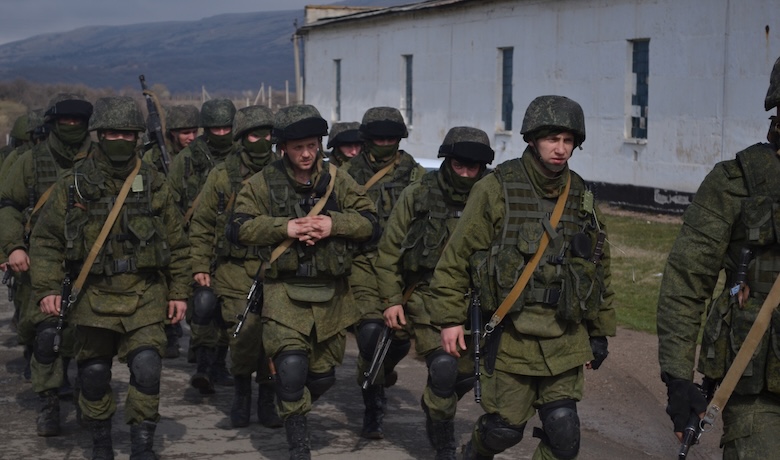
One such missed opportunity has to do with non-resisted occupations covered in Article 2(2). In clarifying this specific and limited application of occupation law, the 1958 Commentary makes general reference to the experiences of the Second World War to support this assertion. The 2025 Commentary is even more explicit by invoking Denmark’s lack of resistance to Nazi Germany’s occupation and noting it as an example of when occupation law would apply based on paragraph 2(2) (para. 356). But a more recent and significant example could have been relied on and provided much more contemporary clarity, namely, the Russian occupation of Crimea.
Though as a matter of policy the ICRC does not disclose ongoing discussions with States involved in current conflicts, the ICRC had a perfect opportunity to use Crimea as a modern example of an uncontested occupation and demonstrate the clarity of its assertions through the comments of the Commentary. The facts are well established that Russian armed forces entered and took physical control of Crimean territory in February-March 2014 without the consent of the Ukrainian government, and have maintained continuous military and administrative control over the territory since., and the Russian “occupation” and subsequent illegal annexation has been recognized by the UN General Assembly, the EU, and the United Kingdom, among others. Undoubtedly, the ICRC is hesitant to officially identify Russia as an occupying power in such a public way, in an effort to retain access to the Russian government. Nevertheless, this was an excellent opportunity to reinforce the factual nature of occupation and to provide a modern example, particularly of Article 2(2) unopposed occupation. The Commentary’s willingness to identify historical examples like Denmark but to remain silent on Crimea may do more harm than good. For its readers, the 2025 Commentary’s silence on Crimea is deafening.
Another important missed opportunity involves non-physical occupation. The 2025 Commentary addresses cyber armed conflict and proxy occupation, but it fails to consider the potential next step where these two concepts might merge: a cyber occupation. Is it possible with a combination of emerging technologies such as cyber and AI to exert sufficient “control” to effectively occupy territory? This question remains unanswered currently, and States have not spoken on this point. Given that ICRC’s commentaries have appeared only every 60 or so years, the Commentary missed an opportunity to be forward looking by not addressing a question that is certain to arise in the very near future.
Non-Parties
The 2025 Commentary discusses the application of CA 2, paragraph (3), by first noting the abolition of the troublesome si omnes, or “if all,” clause that States used historically to avoid the application of treaty obligations if a member of the armed conflict was not a party to the treaty. This clause loses some of its salience in a world where the Geneva Conventions are universally ratified, but as the Commentary notes, “such situations should rarely arise” noting that this may only occur after the formation of a new State in a window before likely ratification of the Conventions (para. 413). Though these situations might indeed be rare, the updated Commentary provides insight into how the Convention might apply should such a situation arise.
The preparatory work indicates that States did not want to make a State Party’s obligations solely contingent on another State’s formal declaration of acceptance. Consequently, a State acting in a way that shows that it accepts and applies the Conventions is sufficient for both Parties to be fully subject to the obligations set out in the Conventions. This has occurred on a number of occasions, for example during the Suez crisis in 1956. Conversely, if a State that is not party to the Conventions explicitly refuses to accept that it is bound by them, Article 2(3) cannot operate to bring the Conventions into force for either Party (para. 420).
The Commentary here raises two specific issues that deserve more clarity.
First, the last sentence of paragraph 420 states that a non-party would have to “explicitly” refuse the application of the Convention. It is unclear from the Commentary why a non-party would have to make an explicit refusal. Contrary to the Commentary, the “explicit” requirement from the text of the article appears to require a non-party to “accept[] and appl[y]” the provisions of the Conventions in order to be bound by them. This language sets the default at non-application of the Conventions to a non-party, pending an explicit acceptance, rather than application pending an explicit denial. Here the ICRC has muddied the application of CA 2(3) by contradicting its actual text.
Second, while the two examples given (a non-party accepting or not accepting the obligation of the Conventions) are very useful, the Commentary doesn’t deal with a situation where a party declares that such obligations don’t apply. Certainly, the application trigger is a factual and not a political determination, similar to defining an occupation. But what if a party explicitly denies the factual trigger has occurred? This is not only interesting from the perspective of the nation denying the application of the GCs, but also the other nations in the conflict. It is an interesting twist on the si omnes clause.
Again, the Russia-Ukraine conflict makes this a pertinent point. Russia has applied the Geneva Conventions in some respects, though claiming at various points that they don’t apply to certain persons or certain actions such as occupying Crimea. Though the ICRC adopts the view that occupation is a factual determination, the Commentary could also have addressed the situation where Russia claims that provisions of the GCs don’t apply its operations in Ukraine, because of the nature of the operations. I think most States would argue (and have argued) that Russia is still bound. Equally important is the question of the reaction of Ukraine in the face on Russia’s claim on non-application. Again, most States would claim that Ukraine was still bound, but the Commentary could have reaffirmed these legal conclusions based on current events.
International Organizations and Non-States
One of the most interesting statements of the 2025 Commentary on CA 2 claims,
The importance of the de facto application of the Conventions is reduced in practice today because the Geneva Conventions have been universally ratified. In addition, their provisions are generally considered part of customary international law. Nevertheless, in the event that an international organization becomes a party to an international armed conflict, a declaration pursuant to Article 2(3) by the organization could usefully clarify the applicable legal framework (para. 421).
Two points deserve attention here. First, assuming that these international organizations would be made up of States, and given the “universally ratified” Conventions and their “being part of customary international law,” it is unclear why there would be any need for such a statement because the State members of that international organization would presumably already be bound. Earlier, the Commentary effectively addresses application of the occupation rules to “multinational forces” (paras. 404-12) which I assume would cover organizations such as NATO.
I am not arguing here that the Conventions wouldn’t apply to international organizations and that it wouldn’t be helpful to have the international organization officially say so. I agree with that argument, assuming the organization is made up of States. I am arguing, however, that if the Commentary was going to carve out a way to expand the application of CA 2(3) beyond States, there was a better direction to take this argument, namely, non-States involved in non-international armed conflicts (NIACs).
I have previously posted on the application of paragraph 2(3), which I call the “Reciprocity Clause,” and argued,
Applying the “Reciprocity Clause” of CA2 to NIACs would provide a strong incentive for non-State actors to acknowledge and adhere to LOAC standards, a development that would be universally welcomed. The reciprocal requirement for States to treat detained members of organizations such as ISIS as prisoners of war would be a small price to pay compared to the global benefits of ensuring terrorist organizations actually complied with the LOAC.
The arguments of that prior post, and the article the post was based on, relied largely on the travaux from the diplomatic conference that led to the Geneva Conventions and on Dr. Jean Pictet’s commentaries. We recognize that there was no consensus by States at the time to include non-States in the reciprocity clause. However, given current situations such as Taiwan and the on-going conflicts with transnational terrorists such as al-Qaeda and ISIS, if the ICRC was going to use the Commentary to expand the reach of paragraph 2(3), non-States in NIACs seem like the much more useful direction to go.
Conclusion
Focusing on the 2025 Commentary’s discussion of CA 2(2) and 2(3), I believe the ICRC has done a very good job of clarifying these provisions from the 1958 Commentary and has done so in accordance with State practice. However, I think more could have been done, perhaps not to claim official positions, but rather to account more thoroughly for current and near future events that undoubtedly implicate these paragraphs. Acknowledging the potential impact on these provisions from the Russia-Ukraine armed conflict and turning their view slightly to the future with respect to emerging technologies and non-State actors would have provided useful commentary for States to consider.
***
Eric Talbot Jensen is a Professor of Law at Brigham Young University.
The views expressed are those of the author, and do not necessarily reflect the official position of the United States Military Academy, Department of the Army, or Department of Defense.
Articles of War is a forum for professionals to share opinions and cultivate ideas. Articles of War does not screen articles to fit a particular editorial agenda, nor endorse or advocate material that is published. Authorship does not indicate affiliation with Articles of War, the Lieber Institute, or the United States Military Academy West Point.
Photo credit: Anton Holoborodko
RELATED POSTS
by Rosa-Lena Lauterbach, Liisi Adamson, Sean Watts
September 29, 2026
–
Individualization in Civilian Internment Decisions
by Christina Colclough, Robert Lawless
September 29, 2026
–
Article 23 and Humanitarian Relief: What’s Right, What’s Left Unclear
September 30, 2026
–
by Hitoshi Nasu
October 7, 2026
–
The Prohibition of Deportation and Forcible Transfer
October 9, 2026
–
Navigating the Complexities of Common Article 3
by Geoffrey Corn, Benzion Aron
October 14, 2026
–
Reprisals in NIACs: What Is the Commentary’s Take?
October 16, 2026
–
October 21, 2026
–
Allegiance and Protected Persons in Proxy Warfare
by Eugénie Duss
October 23, 2026
–
Brain Computer Interface-Assisted Interrogations and Articles 27, 31, & 32
October 27, 2026
–
Two Answers and Two Open Questions on Taxing Humanitarian Relief
October 28, 2026
–
Article 13: The Personal Field of Application of Part II
by Sean Watts
October 30, 2026
